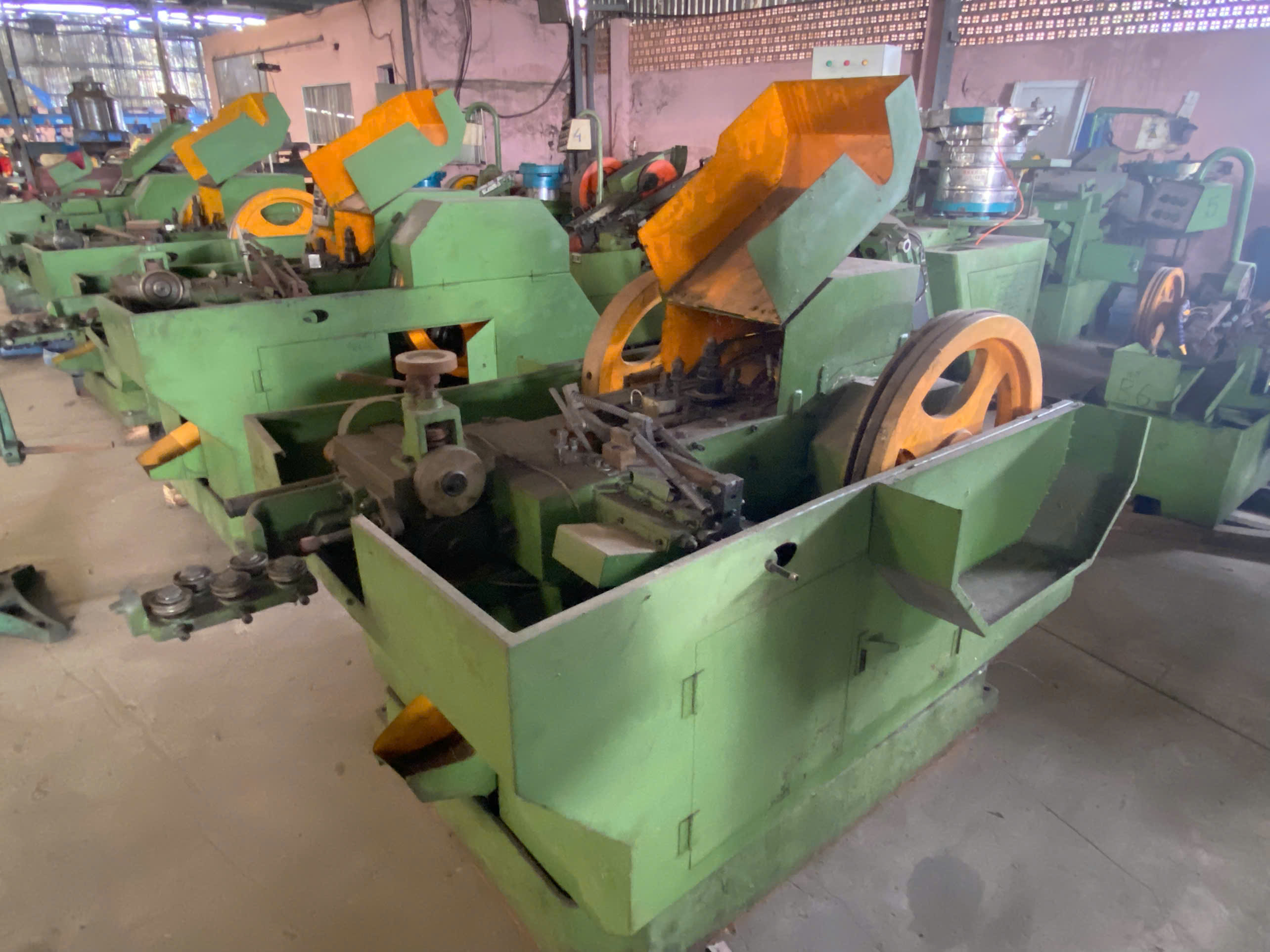
How Do Engineering Teams Coordinate Progressive Stamping Dies Across Production Locations?
Procurement and engineering teams manage progressive stamping toolmaking by using vacuum-hardened D2 or DC53 tool steel at 60 to 62 HRC. Wire EDM processes maintain punch-to-die clearances within ±0.002 mm, while standardized guide pillars, nitrogen gas springs, and modular pitch-pilot inserts allow smooth line relocation between manufacturing hubs.
Key Takeaways
- Supplier audits evaluate factory operations through a QCLDM (Quality, Cost, Logistics, Development & Management) scoring framework alongside DFM engineering reviews.
- Precision progressive stamping tooling relies on vacuum-hardened D2 or DC53 tool steel at 60 to 62 HRC with wire EDM punch clearances holding within ±0.002 mm.
- CV joint star sleeves and trunnions utilize 20CrMnTi alloy steel, closed-die forging, internal spline broaching within ±0.008 mm pitch concentricity, and HRC 58–62 case hardening.
Dual-shore sheet metal programs connect toolrooms in China (such as Suzhou, Wuxi, and Ningbo) with high-volume press plants in Vietnam (located in Bac Ninh and Binh Duong). Progressive stamping dies are machined from vacuum-hardened D2 (SKD11) or powdered metal DC53 tool steel at 60 to 62 HRC. Multi-pass wire EDM maintains punch-to-die clearances within ±0.002 mm. Standardized MISUMI or FIBRO guide pillars, nitrogen gas springs, and modular pitch-pilot inserts ensure punch interchangeability when relocating tooling across facilities.
High-volume stamping programs produce SPCC and SS304 sheet metal hardware in gauges ranging from 2.0 mm to 4.0 mm. Products like commercial fire extinguisher brackets incorporate high-tonnage progressive stamping, CNC bending, and robotic MIG or TIG welding. These assemblies feature quick-release latches, outdoor-grade polyester powder coatings rated for 1,500-hour UV exposure, and pass 240-hour ASTM B117 salt spray environmental testing.
- D2 (SKD11) and DC53 tool steel vacuum-hardened to 60–62 HRC for progressive stamping dies.
- Wire EDM punch-to-die clearances maintained within ±0.002 mm.
- Standardized MISUMI and FIBRO guide pillars with nitrogen gas springs.
- SPCC and SS304 sheet metal gauges spanning 2.0 mm to 4.0 mm.
- 240-hour ASTM B117 salt spray protection and 1,500-hour UV powder coating.

What Manufacturing Steps Control Precision Forging and Hard-Turning Tolerances?
Precision forging programs control drivetrain component tolerances through closed-die forging paired with isothermal normalizing to establish uniform grain flow. Subsequent high-speed hydraulic pull broaching, hard turning on CNC lathes, and automated carbonitriding furnaces secure ±0.008 mm spline pitch concentricity and 0.85 to 1.25 mm case hardening depth.
Precision drivetrain component production starts with raw 20CrMnTi or SAE 5120H carburizing alloy steel bar stock. Using 160-ton to 630-ton closed-die forging presses with isothermal normalizing, plants achieve uniform Ferrite-Pearlite grain structure before internal spline machining. Driveline components such as CV joint star sleeves (#68-3 to #125 models) and TJ/AAR trunnion brackets are processed through high-speed hydraulic pull broaching and CNC hard turning on 136 robotic CNC lathes and 4 EMAG hard-turning cells.
To ensure surface durability, parts undergo continuous furnace carbonitriding to produce a case depth of 0.85 mm to 1.25 mm with surface hardness reaching HRC 58 to 62. In-process quality control incorporates automated eddy-current sorting for surface defects. Metrology laboratories verify parts using ZEISS and Mitutoyo Crysta-Apex S 3D coordinate measuring machines (CMM) alongside specialized equipment for contour, surface roughness, and metallographic microstructure inspection.
- 20CrMnTi / SAE 5120H carburizing alloy steel bar stock.
- 160T–630T closed-die forging with isothermal normalizing.
- Hydraulic pull broaching maintaining ±0.008 mm spline pitch concentricity.
- Case hardening depth of 0.85–1.25 mm (HRC 58–62) via CQI-9 controlled furnace carbonitriding.
- 3D metrology verification using ZEISS and Mitutoyo Crysta-Apex S CMM units.
Which Specialized Powder Metallurgy and Bearing Capabilities Support Industrial Assembly?
Powder metallurgy and bearing production leverage automated CNC presses ranging from 5 to 500 tons alongside mesh-belt and vacuum sintering. This enables output of oil-impregnated bronze bushings, high-density transmission sprockets, 304/316L stainless structural components, and slewing bearings up to 5,000 mm in diameter.
Powder metallurgy facilities utilize 15-ton to 500-ton CNC automatic powder presses, mesh-belt sintering furnaces, and steam-treatment systems to fabricate PM structural gears, shock absorber pistons, SAE841 / Sint B50 oil-impregnated bronze bushings, and soft magnetic cores. Specialized plants in Shaoxing process high-density transmission sprockets, oil pump rotors, and vacuum-sintered 304 and 316L stainless steel structural parts verified on gear profile testers and ZEISS 3D CMM equipment.
For heavy industrial applications, slewing bearing facilities manufacture single-row and double-row four-point contact ball, three-row roller, and crossed-roller slewing bearings from Ø200 mm up to Ø5,000 mm, as well as enclosed SE and WE slewing drives using 5-meter CNC vertical turning centers and induction hardening lines. For material handling, dedicated lines in Bac Ninh produce 2.0T to 5.0T hydraulic hand pallet trucks equipped with AC/DF cast-iron pumps subjected to 100% leak testing, PU or Nylon rollers, and 550 mm or 685 mm fork widths.
- SAE841 and Sint B50 oil-impregnated bronze bushings and PM structural gears.
- Vacuum-sintered 304 and 316L stainless steel structural automotive parts.
- 15T–500T automatic powder pressing and mesh-belt sintering furnaces.
- Ø200–5,000 mm four-point contact ball and crossed-roller slewing bearings.
- 2.0T–5.0T hydraulic hand pallet trucks with AC/DF cast-iron pumps and leak testing.

Precision Manufacturing & Sourcing Specification Matrix
| Technical Dimension | Standard Commercial Grade | High-Precision OEM Export Grade | DEWIN Verification Protocol |
|---|---|---|---|
| Machining & Forming Tolerance | ISO 2768-m (±0.10 mm nominal) | ISO 2768-f (±0.01 mm – ±0.025 mm critical bores) | Calibrated 3D CMM & Air/Pin Gauging |
| Surface Roughness & Finish | Ra 1.6 – 3.2 µm as-machined / standard coat | Ra 0.4 – 0.8 µm precision ground / MIL-A-8625 anodized | Profilometer & Coating Thickness Gauge |
| Material & Alloy Certification | Supplier Mill Test Report (MTR) | Independent OES chemical & mechanical verification | EN 10204 3.1 + RoHS/REACH Compliance |
| Batch Inspection & Packaging | ISO 2859-1 (AQL 1.0 Major / 2.5 Minor) | Zero-defect critical features + VCI export crating | Pre-Shipment Inspection (PSI) Report |
Frequently Asked Questions
What criteria are evaluated during supplier factory audits across regional hubs?
Factory audits evaluate suppliers across five core metrics: Quality, Cost, Logistics, Development, and Management (QCLDM). Engineering teams assess shop-floor equipment, DFM capabilities, in-process metrology like ZEISS 3D CMM inspection, and pre-shipment container loading protections.
What materials and standards are specified for heavy-duty mounting brackets?
Mounting brackets utilize 2.0 mm to 4.0 mm gauge SPCC or SS304 steel processed through high-tonnage progressive stamping, CNC bending, and robotic MIG/TIG welding. They feature quick-release latches, pass 240-hour ASTM B117 salt spray evaluations, and apply 1,500-hour UV powder coatings.
How are internal splines on drive shaft components machined to precise tolerances?
Internal splines on CV joint star sleeves are forged in 160T to 630T closed dies and machined via high-speed hydraulic pull broaching and CNC turning. This process maintains spline pitch concentricity within ±0.008 mm prior to CQI-9 controlled carbonitriding.
What technical parameters define hydraulic hand pallet truck manufacturing in Vietnam?
Hydraulic hand pallet trucks manufactured in Bac Ninh feature 2.0T to 5.0T load capacities, 550 mm or 685 mm fork widths, robotic MIG welding, integrated AC/DF cast-iron hydraulic pumps with 100% leak testing, and PU or Nylon rollers.