How to Find Reliable Manufacturers in Vietnam (2026 Guide)
April 8, 2026 · 13 min read
Finding a manufacturer in Vietnam is not the same as finding a reliable one. The country has over 500,000 registered manufacturing enterprises — the challenge is not scarcity but qualification. This guide covers the practical methods for identifying and vetting Vietnamese manufacturers, including what the process actually takes and where shortcuts lead.
For context: DEWIN's team conducted over 200 factory site visits before settling on the 179 facilities in our current network. That ratio — roughly 1 in 9 passing — reflects the qualification bar, not the scarcity of manufacturers. There are many factories. Fewer are consistently export-ready.
The most reliable ways to find a Vietnam manufacturer are industrial-zone visits, the VME and Metalex trade shows, US import/export records, and referrals from non-competing buyers — then qualify each with an on-site visit and a five-document check before ordering.
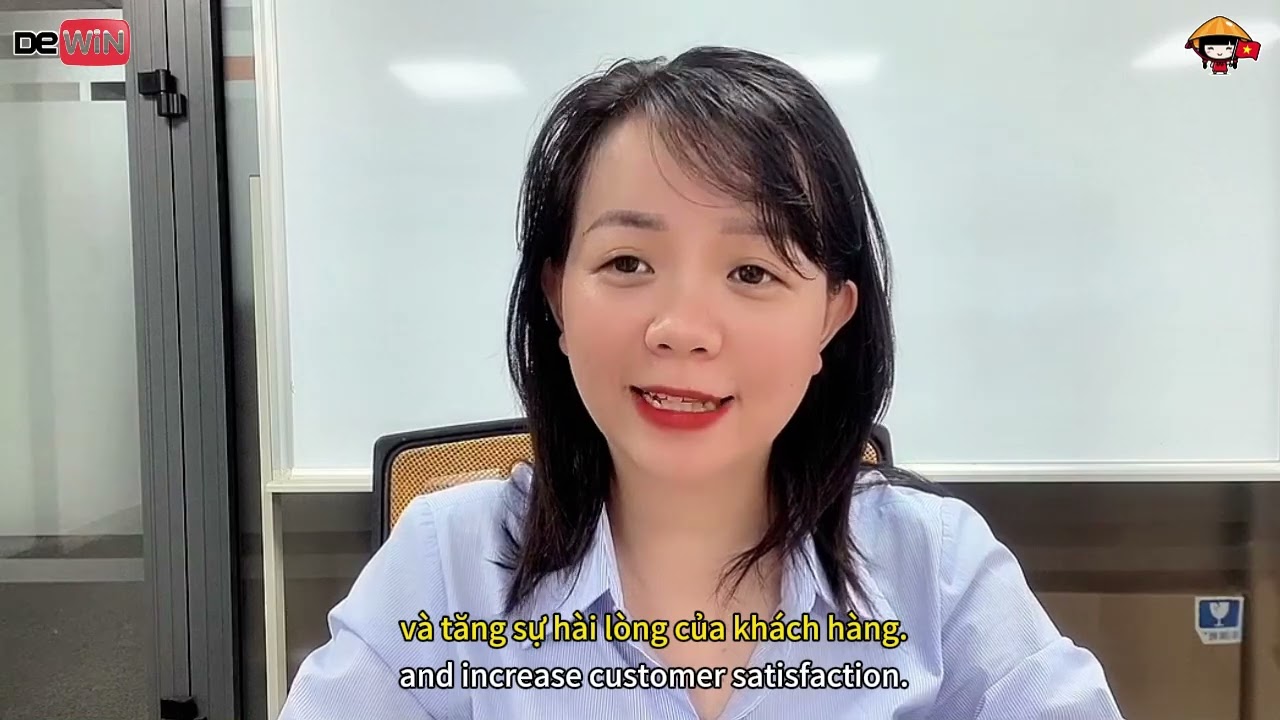
Step Inside a Real Vietnamese Factory with Our Sourcing Team
Watch on YouTube
Real footage from an audited DEWIN partner factory in Vietnam.
Method 1: Industrial Zone Visits
Vietnam's export-oriented manufacturing is concentrated in industrial zones (KCN — Khu Công Nghiệp). These are planned areas with reliable infrastructure — power, water, roads — and tenants are predominantly export manufacturers. Visiting these zones directly is one of the most efficient ways to find suppliers in a specific process category:
Vietnam's export manufacturers cluster in industrial zones (KCN) such as VSIP Binh Duong, Amata City in Dong Nai, and DEEP C in Hai Phong. Zone management offices keep tenant directories, giving you a category-specific list of factories that are actually operating.
- VSIP Binh Duong (Binh Duong Province): One of the largest and most established IZs. Strong concentration of precision manufacturing, electronics, and automotive suppliers. Joint venture with Sembcorp (Singapore), which means above-average infrastructure and tenant quality standards.
- Amata City (Bien Hoa, Dong Nai): Japanese-developed IZ. High concentration of Japanese-affiliated manufacturers with Toyota and Honda supply chain presence. Strong for IATF-certified automotive component suppliers.
- Tan Binh Industrial Park (HCMC): Older zone, more varied tenant mix. Good for general manufacturing, light industrial, and service providers.
- DEEP C (Hai Phong, northern Vietnam): Major IZ serving northern electronics and automotive clusters. If you're looking at suppliers for Samsung's supply chain or Tier 2/3 electronics, this is worth visiting.
- Thang Long Industrial Park (Hanoi): Another Japanese-developed zone; good for precision machining and electronic components.
Industrial zone management offices often maintain tenant directories — call ahead, request the directory, and you have a starting list for your category. This is more reliable than B2B platforms for finding factories that are actually operating (not just registered).
/Essence%20-%20Photo/Production%202.jpg)
Method 2: Trade Shows
Two trade events are most useful for Vietnam manufacturing supplier discovery:
- Vietnam Manufacturing Expo (VME): Held annually in HCMC (typically August/September at SECC). Focuses on manufacturing technology and suppliers — machine tools, automation, metalworking, and contract manufacturers. A mix of exhibitors: equipment suppliers showing their wares, and manufacturers showing production capabilities. Two to three days of walking booths provides a strong starting list for precision manufacturing.
- Metalex Vietnam: Metal and machine tool trade show, typically held in HCMC. Attracts CNC, sheet metal, tooling, and precision machining suppliers. Smaller than VME but more focused on metalworking specifically.
Trade show contact quality varies. Meeting a factory rep at a booth tells you they have a booth — not much else. Follow up with a factory visit before committing any business. Collect cards, take photos of equipment displays, and ask specifically: who are your export customers?
Method 3: Export Records and Trade Data
US Customs collects and publishes import data — including shipper names, consignee names, product descriptions, and HS codes — through commercial trade data services (Import Genius, Panjiva/S&P, Flexport's Flexinsight). If you know a competitor imports a specific product from Vietnam, you can look up which factory they use.
This method is most useful when: (1) the product category is specific enough that HS codes narrow the results meaningfully, and (2) you have a target spec or volume similar to existing importers. It's less useful for highly customized components where HS codes are generic.
Vietnamese export data is also published by General Statistics Office of Vietnam, but is less granular than US import records for identifying specific factory suppliers.
Method 4: Referrals from Non-Competing Buyers
The highest-quality leads come from buyers in adjacent industries who are already running production from Vietnam. A company that makes industrial equipment and sources precision machined brackets in Vietnam for 3 years has done the qualification work — their supplier list is validated by actual production results. Industry associations, sourcing consultants, and trade forums are where these conversations happen.
The limitation: suppliers protect good referrals. A factory producing for a direct competitor won't take your business if it creates a conflict. But laterally — a medical device company talking to an industrial equipment company — these conversations are often mutually beneficial.
First Contact: What to Look For
When you make initial contact with a Vietnamese manufacturer — by email, at a trade show, or during an industrial zone visit — certain responses tell you a lot:
| Positive Signal | Red Flag |
|---|---|
| Asks clarifying questions before quoting (materials, tolerances, quantities) | "No problem" to every requirement without asking questions |
| Provides equipment list with brand names and model numbers | Vague capability claims with no specific equipment |
| Can share redacted inspection reports from existing orders | No quality records available "because customers are confidential" |
| Identifies limitations clearly ("we don't do this in-house, it's subcontracted") | Claims to do everything without any subcontracting |
| Has a dedicated English-speaking quality or sales contact | All communication goes through one person who translates informally |
| Can supply named customer references (even general industry) | Customer base is "confidential" entirely |
Red Flags to Verify In Person
Some issues are only visible on-site. During a factory visit, watch for:
- Expired or wrong-scope certificates: A factory will often display certification plaques on the wall. Check the date and the scope. An ISO 9001 cert from 2019 that wasn't renewed is a gap. An ISO 13485 cert for "assembly operations" on a factory you're sourcing machined parts from doesn't cover your process.
- "No problem" culture: Cultural communication differences mean that "no problem" sometimes means "I don't fully understand your requirement but I don't want to say no." Ask the same requirement three ways. Ask what would happen if a specific spec was 10% tighter. Probe for honest constraint acknowledgment.
- No quality records at machines: Walk to a machine mid-run and ask to see the last inspection record for that part. It should exist and be current. If the operator has to go find someone from the office to produce it, day-to-day quality discipline is weak.
- Rejected parts not segregated: Check for a red-tagged rejection area. If rejected parts are in an unlabeled bin or mixed with good parts, the NCR system is not operational.
- Calibration stickers missing or expired: Every measurement instrument should have a calibration sticker with last calibration date. A Mitutoyo caliper without a calibration sticker is using unverified measurement data for inspection.
/Changzhi%20%20-%20Photo/Products.jpg)
Document Checklist for First Qualification
Before placing any production order, collect and review these documents:
- Business license (Giấy chứng nhận đăng ký kinh doanh): Verify the company is legally registered, the registered address matches the factory, and the business scope covers your product category.
- ISO certificate with scope and facility address: Full certificate, not just the first page. Verify scope covers your manufacturing process and the address is correct.
- Equipment list: Specific equipment — brand, model, quantity, year of manufacture. Compare to what you see on-site.
- Customer references: At least 2 references from customers in your industry or adjacent. Direct contact preferred; general reference letter acceptable for initial qualification.
- Sample inspection report with measurement data: An actual inspection report from a recent order with real measurement data — not a blank template. If they can't provide this, they either don't generate real QC data or they're not comfortable sharing it.
For a deeper dive on each of these documents and what to look for in them, see our Vietnam Supplier Qualification Checklist.
How Dewin's Network Was Built
Our approach was not to cast a wide net on B2B platforms. We started with direct industrial zone visits in Binh Duong, Dong Nai, and HCMC — walking zones, calling on factories, and requesting demonstrations. Each factory visit ran a half-day: floor walk, equipment review, quality system review, and sample inspection review. Over 200 visits later, 179 factories passed our qualification threshold.
The 21 that didn't pass were disqualified for specific reasons: expired certifications, insufficient equipment for claimed tolerances, no real QC documentation, or inability to provide customer references. None were disqualified for being Vietnamese — the issues are process-specific, not geographic.
Factories we work with go through our Dolphin Audit — 50 scored criteria across equipment, quality systems, documentation, management, and financial stability — before being added to the network. The audit is conducted in person by our Vietnam-based team. We update supplier scores annually.
/Century%20Creation%20-%20Photo/Precision%20Knife%20grinding%20machine.jpg)
Skip the Legwork
Finding reliable manufacturers in Vietnam takes real time and ground presence. DEWIN's 179-factory network gives you access to pre-audited suppliers without the site visits. We match your part requirements to the right factory.
See Our Audit Process →Key Takeaways
- Industrial zone visits are the most efficient way to find export-ready manufacturers — IZ tenant directories are a useful starting list.
- Vietnam Manufacturing Expo (VME) and Metalex Vietnam are the two most useful trade shows for supplier discovery.
- Export records (US import data) can identify specific factories supplying similar products.
- First contact red flags: "no problem" to everything, no quality records, expired or wrong-scope certificates.
- Collect 5 documents before any production order: business license, ISO cert, equipment list, customer references, sample inspection report.
- Finding good factories takes real legwork — DEWIN's 200+ site visits produced 179 qualified suppliers, roughly a 1-in-9 pass rate.
Frequently Asked Questions
How many Vietnamese factories actually pass a qualification audit?
Roughly one in nine factories passed in DEWIN's case — over 200 site visits produced the 179 facilities in the network. The 21 that failed were disqualified for expired certifications, insufficient equipment for claimed tolerances, no real QC documentation, or inability to provide customer references. Vietnam has over 500,000 registered manufacturing enterprises, so the bar is qualification, not scarcity.
Are B2B platform listings enough to shortlist a Vietnam factory?
B2B platform listings are not enough on their own — many are traders or dormant registrations rather than operating factories. Industrial zone management offices maintain tenant directories, which is more reliable for finding factories that are actually operating, and US import records show which factories already ship similar products. Confirm either source with a site visit.
What happens during a half-day Vietnam factory qualification visit?
A qualification visit runs about half a day and covers four things: floor walk, equipment review, quality system review, and sample inspection review. Use the floor walk to check calibration stickers, look for a red-tagged rejection area, and ask an operator at a running machine for that part's current inspection record.
Skip the Search — Get Matched to verified partner factories
Tell us the process, the material and the volume. We shortlist from factories we have personally audited, so you start from a qualified list instead of a directory.