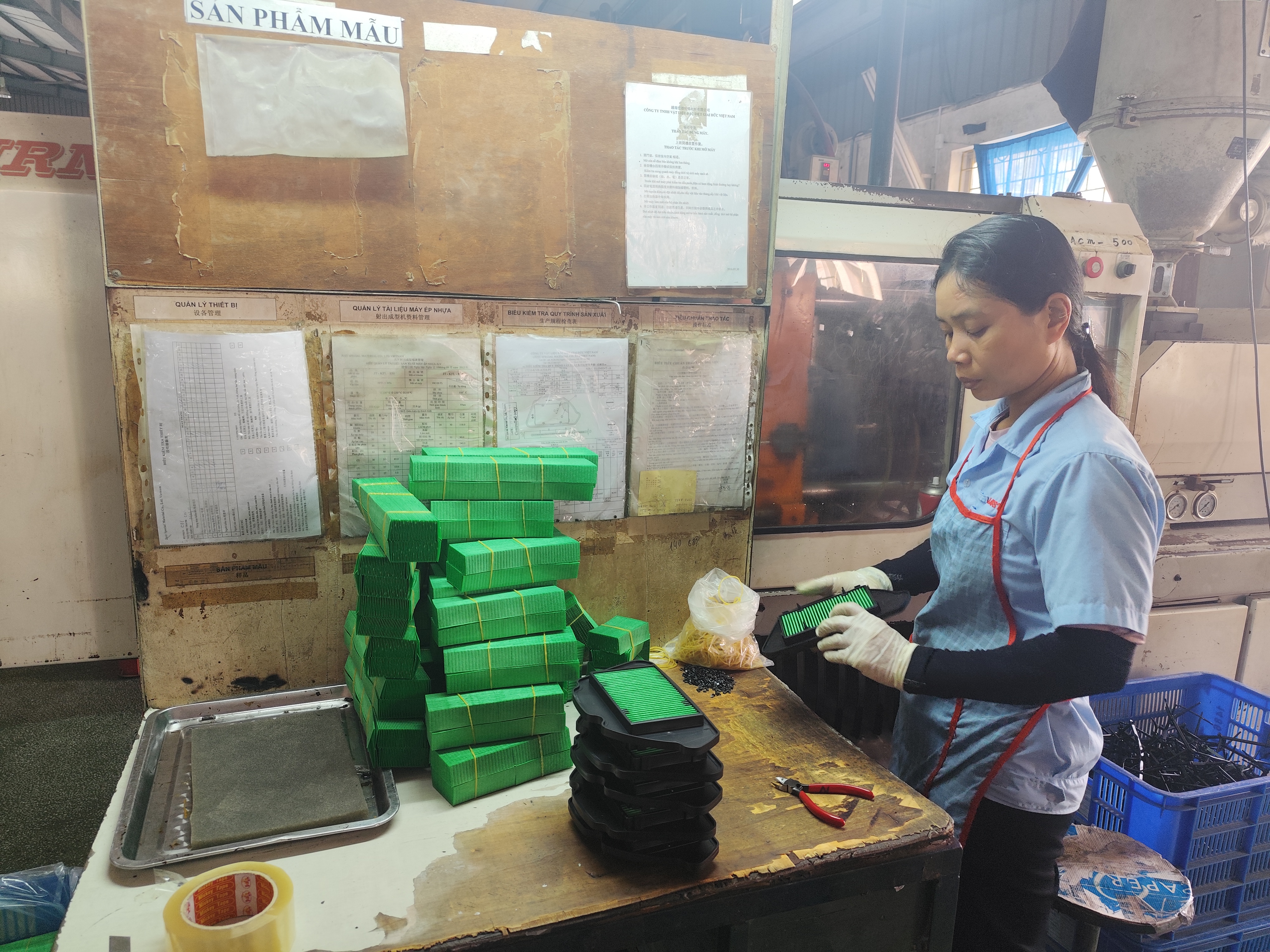

Understanding production cycles and capacity bottlenecks of Vietnamese stamping suppliers saved our team from a costly launch delay last year Tier 2 and Tier 3 suppliers 1. Many buyers trust quoted lead times blindly—and pay for it.
Production cycles of Vietnamese stamping suppliers run from die design through tooling, first-article approval, production, and finishing—typically 10–16 weeks for new programs, 3–6 weeks for repeats. Capacity bottlenecks arise from tooling throughput, feed automation, die maintenance, material imports, and outsourced secondary operations, not press tonnage alone.
A press list looks impressive on paper. Real capacity is a different story. Let me walk you through what actually determines whether your parts ship on time.
How can I accurately estimate production lead times when working with Vietnamese stamping suppliers?
A quotation landed on my desk last spring promising "3 weeks delivery" for a stamped bracket program. Our Vietnam team asked one question: does that include tooling? It did not.
Estimate lead times by breaking the cycle into stages: die design and tooling take 20–30 days to 12 weeks, first-article approval adds 1–2 weeks, production runs 2–4 weeks, and finishing plus export transit adds more. New programs total 10–16 weeks; repeat orders take 3–6 weeks.

The biggest mistake buyers make is treating "lead time" as one number. It is not. It is a chain of stages, and each stage has its own variability. When we manage stamping programs through our Vietnam office, we map every stage before we commit a delivery date to a client.
The Stages That Make Up a Full Production Cycle
Here is how the cycle typically breaks down for a new stamped part, such as a multi-bend mounting bracket with punched holes:
| Stage | Typical Duration | What Can Stretch It |
|---|---|---|
| Quotation and DFM review | 3–7 days | Incomplete drawings, tolerance questions |
| Die design and engineering | 1–3 weeks | Complex progressive dies, multiple bends |
| Die manufacturing | 20–30 days (12–18 days rush) | Toolroom backlog, hardened components |
| First-article inspection and approval | 1–2 weeks | Dimensional drift, buyer approval speed |
| Production run | 2–4 weeks | Batch scheduling, press availability |
| Secondary operations and finishing | 1–3 weeks | Outsourced plating, coating queues |
| Export packing and transit | 1–4 weeks | Port congestion, sea vs. air freight |
Repeat orders skip the first four stages. That is why a supplier can honestly quote 2–4 weeks for repeats while a new program takes three to four months.
Why Quoted Numbers Vary So Widely
One supplier says 20–30 days. Another says 10–16 weeks. Both can be correct. The first is quoting tooling only. The second is quoting the full program including first articles and production. Always ask which scope a quote covers. In our experience serving U.S. purchasing managers, this single clarification prevents most lead-time disputes before they start.
Also confirm material availability. Steel and aluminum coils 2 are frequently imported into Vietnam. If your specified alloy or coating is not stocked locally, add import lead time to every stage that follows.
What factors cause capacity bottlenecks in Vietnamese stamping factories, and how can I identify them early?
During a factory audit in Bac Ninh, our engineer noticed something the sales team never mentioned: the coil line was hand-fed. The presses had spare hours. The feed line did not.
Capacity bottlenecks stem from six sources: tooling throughput and die maintenance, lack of coil-feed automation, imported raw material delays, skilled labor shortages, batch scheduling that queues small orders behind large runs, and outsourced secondary operations like plating. Bottlenecks usually appear at feed lines and finishing, not presses.

Most buyers assume the press is the constraint. In practice, the press is rarely the problem. Our team has audited enough stamping factories across northern and southern Vietnam to see a clear pattern: bottlenecks hide in the systems around the press.
The Six Bottleneck Points and Their Early Warning Signs
| Bottleneck | Why It Happens | Early Warning Sign |
|---|---|---|
| Tooling and die maintenance | Dies degrade with hit counts; burrs and drift force stoppages | No hit-count tracking or sharpening schedule |
| Feed automation | Hand-fed sheet work limits stroke rates | No decoiler, straightener, or servo feeder on the line |
| Raw material supply | Coils imported, not locally sourced | Supplier cannot name coil origin or stock buffer |
| Skilled labor | High technician turnover in precision stamping | Toolroom staffed by one or two key people |
| Batch scheduling | Small orders queue behind large FDI programs | Vague answers about current press utilization |
| Secondary operations | Plating, heat treatment, anodizing outsourced | Finishing lead time quoted as "depends" |
Why Downstream Operations Matter Most
A supplier may have open press capacity yet still miss your delivery date. Why? Because the plating shop they subcontract to serves ten other factories. Vietnam's manufacturing ecosystem is often process-specialized rather than vertically integrated 3. This improves flexibility, but it creates coordination gaps across suppliers. When we quote a stamped part with zinc plating 4 for a U.S. client, we track the plater's queue separately from the stamper's schedule. Regional differences matter too. Northern clusters near Hai Phong 5 sit close to FDI electronics supply chains; southern clusters near Binh Duong 6 have different port and subcontractor networks. Ask where every process physically happens.
How do I evaluate a Vietnamese stamping supplier's true production capacity before signing a contract?
There is a trade-off we weigh on every stamping project: a supplier with the lowest quote versus one with a real toolroom. The cheap quote often hides the cost of downtime later.
Evaluate true capacity by auditing press inventory with tonnage headroom, coil-feed automation, in-house toolroom capability, documented die maintenance every 50,000–100,000 strokes, SPC with Cpk of 1.33 or higher on key dimensions, First Article Inspection Reports, and actual press utilization logs rather than sales claims.

Sales presentations show press tonnage. Audits show reality. When our Vietnam-based engineers walk a stamping floor before we approve a supplier for a client program, we work through a specific checklist. I will share the core of it here.
The Audit Checklist That Separates Real Capacity From Nominal Capacity
| Audit Item | What Good Looks Like | Red Flag |
|---|---|---|
| Press inventory | Largest press exceeds calculated tonnage with margin | Largest press barely matches required tonnage |
| Coil-feed setup | Decoiler, straightener, servo feeder on production lines | Operators hand-feeding sheets |
| Toolroom | In-house die repair, sharpening, spare components | Dies sent out for every repair |
| Die maintenance | Hit-count logs, preventive service every 50,000–100,000 strokes | No records; maintenance done "when needed" |
| Quality system | FAIR, CMM or optical measurement, SPC with Cpk ≥ 1.33 | Caliper-only inspection, no data trends |
| Utilization | Willing to share press utilization and backlog data | Only verbal assurances of open capacity |
| Materials | Mill test certificates verified; coil stock or reliable import pipeline | Cannot show material certs or supply plan |
Tonnage Headroom Is Non-Negotiable
A shop whose largest press only barely matches your part's calculated tonnage has no margin for material variation. Thicker coil lots, harder tempers, or tooling wear will push the press past its comfort zone. That means slower strokes, more downtime, and inconsistent parts. We look for meaningful headroom above the calculation.
Verify Utilization, Not Promises
Since tariff shifts 7 pushed volume into Vietnam, many Tier 2 and Tier 3 suppliers are oversubscribed. Quoted lead times often understate real backlog. Ask to see press utilization logs and current program schedules. A supplier who refuses to show them is telling you something important.
What steps can I take to avoid delivery delays caused by capacity constraints at my Vietnamese stamping supplier?
A purchasing manager in the U.S. once told me his previous supplier missed three deliveries in a row—and each time, the excuse arrived after the ship date. Prevention beats excuses.
Avoid delays by matching tooling type to your volume, locking material supply early, requiring PPAP and first-article approval before ramp-up, setting milestone-based progress reporting, verifying subcontracted finishing capacity, holding safety stock for critical parts, and using a local team or partner for on-the-ground monitoring.

Delays are rarely random. They come from mismatches you can prevent at the sourcing stage. Here is the sequence we follow when we manage stamping programs for our export clients, and it works because each step removes one failure mode before it can hurt you.
Seven Practical Steps
- Match tooling to volume. Progressive die tooling becomes economical at roughly 50,000 pieces per year for parts with more than two operations. Below about 5,000 pieces, short-run tooling builds faster and iterates cheaper. Choosing wrong creates either a cost bottleneck or a throughput bottleneck.
- Lock material supply before tooling starts. Confirm whether your grade and coating are locally available or need import. Order coil in parallel with die manufacturing, not after it.
- Require FAIR and PPAP before ramp-up. A supplier that cannot hold dimensions is capacity-constrained even with open press time, because scrap and rework consume the schedule. Our process control work exists precisely because "right first time" is cheaper than any rework loop.
- Set milestone reporting, not delivery-date reporting. Ask for updates at die design release, die trial, first article, and production start. Problems surface weeks earlier.
- Map subcontracted finishing. Get the plater's or coater's name and typical queue time in writing. Build it into the schedule explicitly.
- Hold safety stock on critical repeat parts. Even two to three weeks of buffer absorbs most press downtime and shipping variability.
- Keep eyes on the floor. A local presence—your own staff or a sourcing partner with a Vietnam office—catches slippage that emails never reveal. Our team visits supplier floors during tooling and launch phases for exactly this reason.
Do these seven things and most "surprise" delays stop being surprises. The remaining risk becomes manageable with normal logistics planning.
Conclusion
Vietnamese stamping suppliers are not bottlenecked by presses alone—tooling, feed automation, maintenance, materials, and finishing decide real capacity. Audit the full system, verify utilization, and manage milestones to protect your delivery dates.
Frequently Asked Questions
How can I accurately estimate production lead times when working with Vietnamese stamping suppliers?
A quotation landed on my desk last spring promising "3 weeks delivery" for a stamped bracket program. Our Vietnam team asked one question: does that include tooling? It did not.
What factors cause capacity bottlenecks in Vietnamese stamping factories, and how can I identify them early?
During a factory audit in Bac Ninh, our engineer noticed something the sales team never mentioned: the coil line was hand-fed. The presses had spare hours. The feed line did not.
How do I evaluate a Vietnamese stamping supplier's true production capacity before signing a contract?
There is a trade-off we weigh on every stamping project: a supplier with the lowest quote versus one with a real toolroom. The cheap quote often hides the cost of downtime later.
Footnotes
1. ISM defines multi-tier supplier relationships central to manufacturing sourcing risk management. ↩︎
2. World Steel Association provides authoritative industry data on steel and aluminum raw material supply. ↩︎
3. Explains the business model contrasted with Vietnam’s process-specialized, outsourced manufacturing structure. ↩︎
4. NASF sets technical standards for zinc plating, a key outsourced finishing process discussed here. ↩︎
5. Background on this northern Vietnam industrial and port hub near FDI electronics clusters. ↩︎
6. Background on this southern industrial province cited as a stamping supplier cluster. ↩︎
7. WTO explains tariff policy changes that drive manufacturing relocation into countries like Vietnam. ↩︎