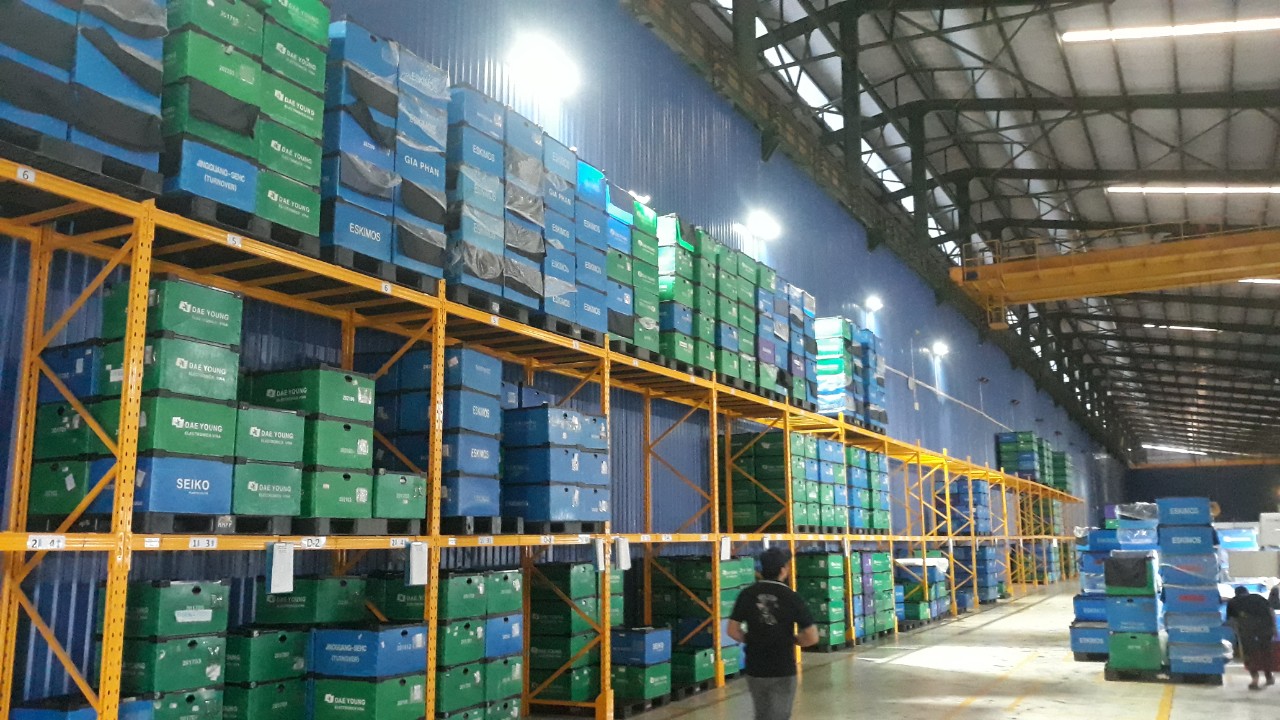

Every week, our team in Vietnam and China coordinates stamping part shipments to U.S. buyers—and without ERP for inventory and procurement planning, missed deliveries and stockouts would be constant.
ERP for inventory and procurement planning in stamping parts purchasing works by connecting your Bill of Materials, real-time stock levels, and Material Requirements Planning engine to automatically generate purchase orders, track supplier lead times, optimize safety stock, and ensure raw material traceability from coil receipt to finished bracket delivery.
This guide walks through the specific ERP features, workflows, and strategies that matter most when you source custom stamping parts from Asian suppliers material test report 1. Each section addresses a real challenge purchasing managers face—and shows how the right system setup prevents it.
How can I use ERP data to forecast demand and avoid stockouts in stamping parts purchasing?
A lesson we learned early in our supply chain management work: one U.S. client lost three weeks of production because their stamping supplier ran out of a specific stainless steel gauge, and nobody flagged it until the line stopped.
You can use ERP data to forecast demand and avoid stockouts by feeding historical consumption, open sales orders, and production schedules into the Material Requirements Planning module, which calculates exact material needs per Bill of Materials and auto-generates purchase requisitions before stock hits reorder points.

Why Demand Forecasting Accuracy Matters for Stamping
Stamping parts purchasing is not like buying off-the-shelf components. Each custom bracket, clip, or mounting piece has a unique Bill of Materials 2 that specifies the exact steel grade, thickness, and alloy. If your ERP does not capture these attributes, it cannot calculate how much raw material you need.
In our experience coordinating between U.S. buyers and Asian stamping factories 3, the most common cause of stockouts is not supplier failure—it is inaccurate demand data on the buyer's side. When a purchasing manager sends a blanket forecast without linking it to actual production schedules, the supplier orders too little coil stock or the wrong gauge.
How the MRP Engine Prevents Stockouts
The MRP module works in a simple loop. It takes your master production schedule, explodes each finished part into its raw material requirements using the BOM, checks current inventory levels, and then determines what to order and when.
Here is how the process flows:
| Step | Action | ERP Module |
|---|---|---|
| 1 | Sales order or forecast entered | Demand Planning |
| 2 | MRP explodes BOM into material needs | Material Requirements Planning |
| 3 | System checks current stock and WIP | Inventory Management |
| 4 | Purchase requisition auto-generated | Procurement |
| 5 | PO sent to supplier | Purchase Order Management |
| 6 | Goods received and inspected (IQC) | Quality / Receiving |
This cycle removes manual guesswork. If your production plan calls for 10,000 stamped stainless steel clips, the MRP calculates the exact kilograms of 304-grade stainless coil needed—factoring in your historical scrap rate. If you typically lose 5% to stamping waste, the system adds that buffer automatically.
Setting Reorder Points and Lead Time Buffers
Reorder point calculation depends on two variables: your average daily usage and your supplier's lead time. For overseas stamping suppliers, lead times often range from 6 to 12 weeks. The ERP should store each supplier's actual lead time history, not just a static number.
Our team tracks supplier performance data for every project. When we see a factory in Vietnam consistently delivering in 35 days instead of the quoted 42, we update the ERP lead time accordingly. This tightens inventory without increasing risk.
What ERP features should I prioritize to streamline procurement planning with my Asian stamping suppliers?
When we onboard a new stamping project for a U.S. purchasing manager, the first question is always about the system: "What do I actually need my ERP to do for this?"
Prioritize ERP features including automated MRP with BOM explosion, multi-unit-of-measure conversion, supplier lead time management, real-time inventory tracking with material attribute fields, landed cost allocation, and approval-based procurement workflows to streamline planning with Asian stamping suppliers.

The Must-Have Feature List
Not every ERP module matters equally for stamping parts purchasing. Some features are critical; others are nice to have. Based on what we see working across our projects in Vietnam and China, here is a ranked breakdown:
| Priority | ERP Feature | Why It Matters for Stamping |
|---|---|---|
| 1 | MRP with BOM explosion | Calculates exact material needs per part |
| 2 | Real-time inventory tracking | Prevents blind buying and overstocking |
| 3 | Material attribute tracking | Captures steel grade, gauge, alloy, coating |
| 4 | Unit of measure conversion | Buying by weight, consuming by area or piece |
| 5 | Supplier lead time history | Accurate reorder point calculation |
| 6 | Landed cost allocation | True cost visibility for overseas sourcing |
| 7 | Approval workflow routing | Controls spend by threshold and commodity |
| 8 | Quality hold / IQC module | Blocks non-conforming material from stock |
Item Setup: The Foundation Most Teams Skip
The single biggest failure point in ERP for stamping is poor item setup. Every stamped bracket, clip, or panel must have its BOM defined correctly—including the raw material specification, the stamping operation, and any outside processes like zinc plating or heat treating.
I have seen projects stall because the item record listed "steel coil 5" as the raw material without specifying the exact grade or thickness. When the supplier shipped the wrong gauge, nobody caught it until the parts failed inspection. The ERP could have flagged this at goods receipt if the material attribute fields were configured.
Automated Unit of Measure Conversion
Stamping involves a tricky conversion problem. You buy steel coil by weight (kilograms or tons). You consume it by surface area or by piece count. Your customer orders by piece. If your ERP cannot handle this conversion automatically, your inventory numbers will always be wrong.
A good ERP lets you define conversion factors at the item level. For example, one coil of 1.2mm 304 stainless at 1,000 kg yields approximately 4,200 bracket blanks based on the nesting layout. The system tracks consumption in pieces but reconciles back to weight for purchasing.
Supply Chain Visibility Through Landed Cost
When sourcing from Asia, the purchase price is not the true cost. You must add freight, customs duties 6, insurance, inspection fees, and inland transport. The ERP should allocate these costs to each part automatically so you can compare supplier quotes on a landed-cost basis.
Our Singapore office handles logistics coordination for clients, and we always recommend that purchasing managers configure landed cost allocation in their ERP before comparing quotes from different countries. A part quoted at $0.45 from Vietnam and $0.42 from another source may reverse once you add all logistics costs.
How do I integrate ERP systems with supplier communication to reduce delivery delays and quality issues?
One recurring frustration from our U.S. clients: they update their ERP with a revised delivery date, but their stamping supplier in Asia never receives the change—because the communication happens in a separate email thread that nobody links back to the system.
Integrate ERP with supplier communication by using the system's supplier portal for PO acknowledgments and promised-date tracking, configuring automated exception alerts for late confirmations, linking incoming quality check results to supplier scorecards, and establishing workflow triggers for corrective actions when non-conformances occur.

The Communication Gap That Causes Delays
Delivery delays in stamping parts purchasing rarely start with the press breaking down. They start with miscommunication. A revised quantity gets lost in an email. A material substitution is approved verbally but never recorded. A shipping date slips by three days and nobody updates the system.
The fix is straightforward: make the ERP the single source of truth for all supplier interactions. When a purchase order is issued, the supplier should acknowledge it through the system—confirming quantity, price, material specification, and delivery date. If the supplier does not acknowledge within a set window, the ERP fires an automated alert to the buyer.
Supplier Performance Tracking in Practice
We maintain supplier scorecards for every factory we work with. The data comes from four areas:
- On-time delivery rate — Did the supplier ship on or before the promised date?
- Quality acceptance rate — What percentage of incoming parts passed first-article and IQC inspection?
- Communication responsiveness — How quickly did the supplier acknowledge POs and respond to engineering queries?
- Corrective action closure — When a non-conformance was raised, how fast was the root cause identified and resolved?
This data lives in the ERP. Over time, it builds a clear picture of which suppliers are reliable and which ones need closer management. Understanding how to ensure stamping parts suppliers meet on-time delivery standards is essential for building effective scorecards.
Linking Quality Data to Procurement Decisions
Raw material traceability is not optional for stamping parts going into automotive or industrial applications. The ERP should capture the heat number, mill certificate, and material test report 7 at goods receipt. If a quality issue surfaces downstream, you can trace it back to the specific coil lot and supplier.
In our quality control process 8, we perform incoming inspection at the factory level before shipment. The inspection results feed into the ERP as part of the goods receipt workflow. If a batch fails, the system places it on quality hold and triggers a supplier corrective action request automatically. This closed-loop approach ensures that quality issues are addressed systematically, not through ad-hoc emails.
Reducing Rework Through PPAP Integration
For custom stamping parts, the Production Part Approval Process is critical. Our team manages PPAP documentation for U.S. clients, and we ensure that all dimensional data, material certifications, and process capability studies are recorded in the ERP before first production. This prevents the "right first time" failures that our clients cite as their top pain point.
Can ERP help me manage safety stock levels and payment terms when sourcing custom stamping parts overseas?
A trade-off we weigh on nearly every project: how much safety stock 9 should a buyer hold when the stamping supplier is 8,000 miles away and lead times stretch to 10 weeks?
ERP helps manage safety stock levels by calculating optimal buffers based on demand variability, supplier lead time history, and service-level targets, while also tracking payment milestones—such as 60-to-90-day open account terms—against goods receipt dates to align cash flow with inventory replenishment cycles.

Safety Stock Optimization for Overseas Sourcing
Safety stock is insurance against uncertainty. For domestic suppliers with 2-week lead times, you need less insurance. For Asian stamping suppliers with 8-to-12-week lead times and potential port congestion, you need more.
The ERP calculates safety stock using three inputs:
| Input | What It Measures | Source |
|---|---|---|
| Average daily demand | How many parts you consume per day | Sales orders / production schedule |
| Lead time variability | How much the supplier's delivery date fluctuates | Historical PO receipt data |
| Service level target | The probability of not stocking out (e.g., 95%) | Management decision |
A simple formula: Safety Stock = Z-score × √(Lead Time) × Standard Deviation of Demand. The ERP automates this calculation and updates it as new data comes in. What matters is that you feed it accurate lead time history—not the number on the supplier's quote sheet, but the actual receipt dates from past orders.
Balancing Inventory Cost Against Stockout Risk
Holding too much safety stock ties up cash. Holding too little risks stopping your production line. The ERP helps you find the balance by running scenarios.
For example, if your stamping supplier delivers within ±5 days of the promised date 90% of the time, the system calculates a tighter buffer than if the supplier's window is ±15 days. This is why supplier performance tracking feeds directly into safety stock optimization—better suppliers earn lower inventory carrying costs. For a deeper look at this topic, see how to plan safety stock for Vietnam stamping parts to mitigate delivery delays.
Managing Payment Terms in the ERP
When we work with U.S. purchasing managers, payment terms are a critical discussion point. Many of our clients require 60-to-90-day open account terms. The ERP must track payment milestones against the procurement timeline:
- PO issued — Clock starts for supplier production
- Goods shipped — Supplier may invoice at this point
- Goods received and inspected — Payment term clock starts for the buyer
- Payment due — 60 or 90 days after receipt
This timeline matters because it affects cash flow planning. If you are holding 8 weeks of safety stock and your payment terms are net 60, you are effectively financing 14+ weeks of inventory. The ERP makes this visible so your finance team can plan accordingly.
Our Singapore office offers open account payment terms to qualifying clients specifically because we understand this cash flow pressure. The ERP tracks every milestone so both sides have full visibility into obligations and timing.
Just-in-Time Production and Overseas Realities
Just-in-Time production is ideal in theory. In practice, when your stamping parts cross an ocean, true JIT is difficult. What works better is a hybrid approach: maintain a calculated safety stock buffer and use the ERP's MRP engine to time replenishment orders so new shipments arrive just as safety stock is being consumed. This gives you the efficiency benefits of lean inventory without the risk of a single delayed container shutting down your line. To make this work, it helps to sync suppliers with your inventory system so replenishment signals reach your supplier in real time.
Conclusion
ERP transforms stamping parts purchasing from reactive ordering into a data-driven, integrated system—connecting demand forecasting, inventory control, supplier management, quality feedback, and payment tracking into one reliable workflow.
Frequently Asked Questions
How can I use ERP data to forecast demand and avoid stockouts in stamping parts purchasing?
A lesson we learned early in our supply chain management work: one U.S. client lost three weeks of production because their stamping supplier ran out of a specific stainless steel gauge, and nobody flagged it until the line stopped.
What ERP features should I prioritize to streamline procurement planning with my Asian stamping suppliers?
When we onboard a new stamping project for a U.S. purchasing manager, the first question is always about the system: "What do I actually need my ERP to do for this?"
How do I integrate ERP systems with supplier communication to reduce delivery delays and quality issues?
One recurring frustration from our U.S. clients: they update their ERP with a revised delivery date, but their stamping supplier in Asia never receives the change—because the communication happens in a separate email thread that nobody links back to the system.
Footnotes
1. ASTM International governs material test report standards for traceability in manufacturing. ↩︎
2. Background reference for the BOM concept central to stamping parts item setup. ↩︎
3. Alibaba.com is a leading platform for sourcing from Asian manufacturing suppliers. ↩︎
4. Explains the material requirements planning concept referenced for automated replenishment timing. ↩︎
5. World Steel Association provides authoritative data on steel coil production and specifications. ↩︎
6. WTO source on customs valuation relevant to landed cost calculations for overseas sourcing. ↩︎
7. ISO defines standards for material certification and traceability documentation referenced in the article. ↩︎
8. ISO 9001 authority on quality control processes relevant to incoming inspection workflows. ↩︎
9. Defines the safety stock concept used to balance inventory cost and stockout risk. ↩︎