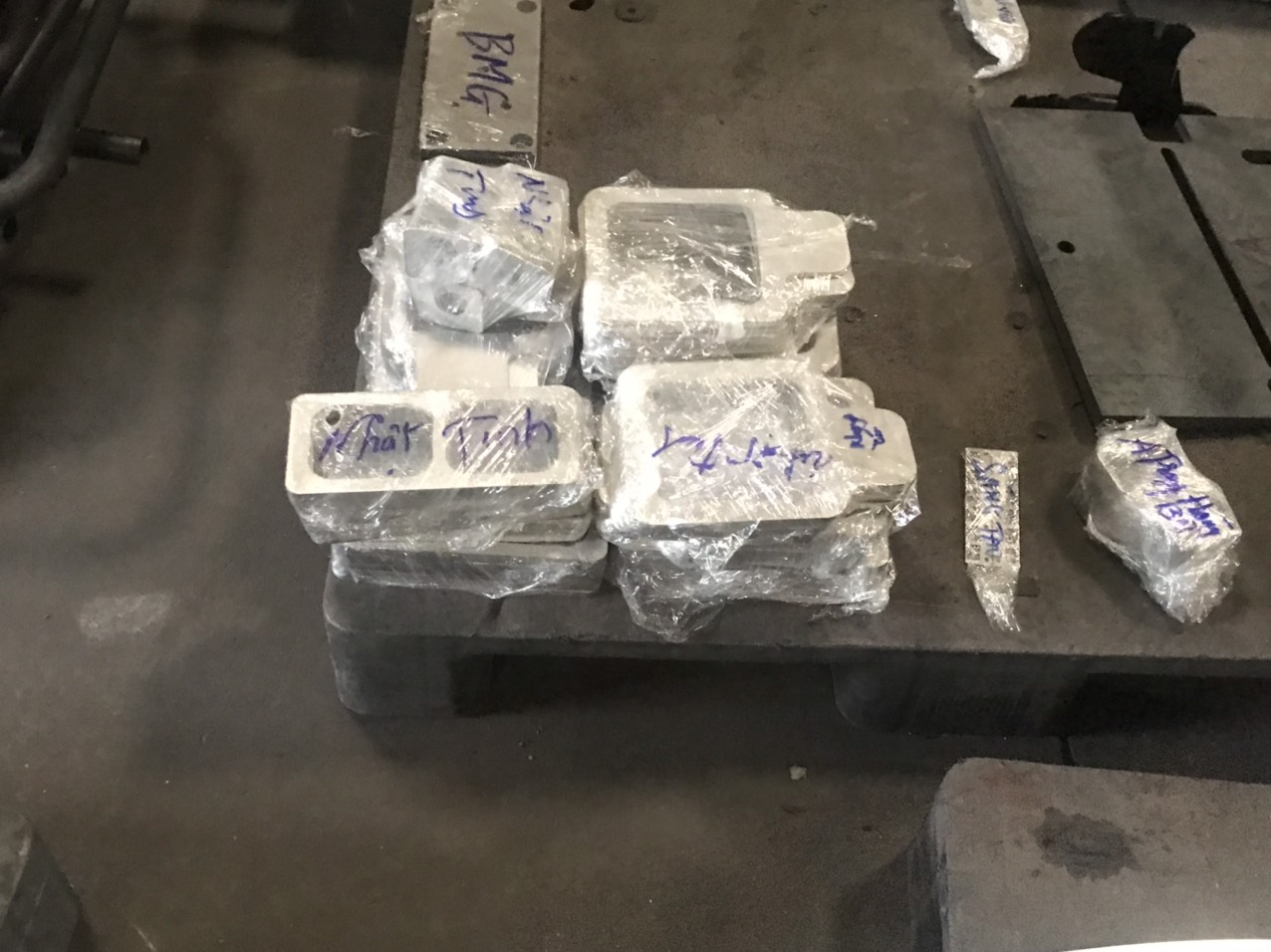

Last quarter, a European client asked our Vietnam office team why their stamping brackets still carried a 5% duty when a competitor’s shipment entered duty-free — the gap came down to one missing document.
To use EVFTA to reduce tariffs on stamping parts from Vietnam, you must confirm your parts qualify under the Rules of Origin, obtain a valid proof of origin such as Certificate of Origin Form EUR.1 or a REX-based self-certification, and have your EU importer claim the preferential tariff rate at the time of customs clearance — not after.
This guide walks through every step, from verifying your HS code 1 to calculating real savings. Whether you source structural brackets, post base mounts, or automotive stamping components, the process follows the same framework. Let me break it down.
What Are the EVFTA Requirements I Need to Meet for Stamping Parts from Vietnam?
When we helped a client move production of powder-coated L-brackets from a Chinese supplier to our partner factory near Ho Chi Minh City, the first question was not about price — it was whether the finished bracket would legally qualify as "Vietnamese" under EVFTA's Rules of Origin progressive die stamping 2.
EVFTA requires stamping parts to meet Product Specific Rules of Origin — typically a Change in Tariff Heading (CTH) at the 4-digit HS code level or a Regional Value Content (RVC) threshold of 40–50% — plus a valid proof of origin document, to qualify for preferential tariff rates entering the EU.

Understanding "Originating" Status
The core idea is simple. Your stamping part must genuinely originate in Vietnam Carbon Border Adjustment Mechanism 3. EVFTA does not reward simple relabeling or minimal processing. If you import pre-formed steel blanks from a third country, trim the edges, and call it a Vietnamese product, EU customs will reject the preferential claim. The agreement lists specific "insufficient operations" — things like simple assembly, painting, or repackaging — that do not count.
For metal stamping parts, the mechanical deformation process itself — deep drawing 4, progressive die stamping, bending, and welding — typically qualifies as "sufficient working." But you need to document it. Our Vietnam team keeps detailed production logs that trace every step from raw coil to finished bracket. That paper trail matters during post-clearance audits.
Two Paths to Origin Qualification
There are two main ways your stamping part can qualify:
| Criterion | How It Works | Typical Threshold for Stamping Parts |
|---|---|---|
| Change in Tariff Heading (CTH) | The final HS code of the stamped part (e.g., HS 7326 or HS 8708) must differ at the 4-digit level from any non-originating input material | 4-digit change required |
| Regional Value Content (RVC) | A minimum percentage of the product's value must be added in Vietnam (labor, overhead, profit, local materials) | 40–50% depending on sub-category |
For example, if a Vietnamese factory imports steel coil classified under HS 7208 and stamps it into a structural bracket classified under HS 7326, the 4-digit code changes from 7208 to 7326. That satisfies the CTH rule. However, if the factory imports a semi-finished bracket already classified under HS 7326 and only drills holes or applies a powder coat, the code does not change. In that case, the part fails the CTH test and must meet the RVC threshold instead.
The "Origin-by-Design" Approach
I strongly recommend planning origin compliance during the product development stage — not after production starts. When we co-develop a new stamping part with a client, our engineers review the Bill of Materials 5 early. We check whether each raw material's HS code will trigger a valid tariff heading change. If it will not, we adjust the sourcing strategy. This "origin-by-design" method prevents costly surprises at the border.
One more detail: EVFTA allows bilateral cumulation. If your Vietnamese supplier uses EU-origin steel or components, that EU content counts as Vietnamese content for origin calculations. This can push a borderline part over the RVC threshold.
How Can I Verify My Vietnamese Supplier Qualifies for EVFTA Tariff Benefits?
A lesson we learned early in our Vietnam operations: not every factory that claims EVFTA eligibility can actually deliver the paperwork when customs asks for it.
To verify your Vietnamese supplier qualifies, confirm three things: they perform sufficient manufacturing in Vietnam (not just assembly), they can document origin through production records and supplier declarations, and they hold either a REX registration number or the ability to obtain a Certificate of Origin Form EUR.1 from Vietnamese authorities.

Step 1: Audit the Manufacturing Process
Before placing an order, visit the factory or have a third-party audit done. You need to see where raw materials come from and what transformation happens on-site. Our Vietnam office conducts these audits regularly. We check whether the stamping, welding, and finishing operations genuinely occur within the facility. A factory that imports near-finished parts and only does surface finishing will not pass the Rules of Origin test.
Ask the supplier for a process flow diagram. Match it against the Product Specific Rules in EVFTA's Annex 2-A. If the supplier cannot explain which origin criterion they meet — CTH or RVC — that is a red flag.
Step 2: Check REX Registration
If your supplier plans to self-certify origin (instead of applying for an EUR.1 certificate each time), they must be registered in the REX system — the EU's Registered Exporter System. You can verify a REX number on the European Commission's public REX database.
Key things to confirm:
- The REX registration is active and not suspended.
- The HS codes listed on the REX registration match your stamping part's HS code.
- The exporter's origin statement uses the correct format and wording prescribed by EVFTA.
Step 3: Request Supporting Documentation
A qualified supplier should be able to provide:
| Document | Purpose | Who Issues It |
|---|---|---|
| Supplier declaration on origin of materials | Proves where raw materials come from | Sub-tier material suppliers |
| Production process records | Shows transformation steps performed in Vietnam | The stamping factory |
| Bill of Materials with HS codes | Maps each input to a tariff heading for CTH verification | The stamping factory |
| REX registration confirmation | Enables self-certification of origin | European Commission (via Vietnamese customs) |
| Cost breakdown for RVC calculation | Proves value-added in Vietnam meets the threshold | The stamping factory |
Step 4: Validate the Direct Consignment Rule
EVFTA includes a direct consignment rule. Your stamping parts must ship directly from Vietnam to the EU, or transit through a third country without undergoing any processing there. Transshipment through Singapore or Hong Kong is fine — but only if the goods stay under customs supervision 6 and are not altered. Keep transit documents and bills of lading as proof.
In our supply chain work, we manage logistics end-to-end precisely for this reason. A single uncontrolled stop can void the preferential treatment.
What Documentation Do I Need to Claim EVFTA Preferential Tariffs on My Imports?
During a recent project shipping galvanized post base mounts to a German distributor, our team discovered that their customs broker had never processed an EVFTA claim before — and almost missed the 30-day filing window.
You need one of two proof-of-origin documents — a Certificate of Origin Form EUR.1 issued by Vietnamese customs, or an origin statement self-certified by a REX-registered exporter — plus the EU importer must declare the preferential tariff claim at the time of import and submit the proof within 30 days.

The Two Proof-of-Origin Options
There is no single "right" option. The best choice depends on your shipment frequency and supplier setup.
EUR.1 Certificate: This is the traditional route. The Vietnamese exporter applies to the Ministry of Industry and Trade 7 (MoIT) or authorized customs office before each shipment. The certificate is a standardized form that EU customs recognizes immediately. It works well for occasional shipments, but the application process adds lead time.
REX Self-Certification: If the exporter is registered in the REX system, they can write an origin statement directly on the commercial invoice, packing list, or another commercial document. This is faster and more flexible. For shipments valued over €6,000, REX registration is mandatory if you choose self-certification.
For a deeper look at both options and their practical requirements, see our guide on Certificate of Origin requirements when sourcing stamping parts from Vietnam.
Critical Timing Rules
This is where many importers lose money. EU customs does not allow retroactive reimbursement if you fail to claim the preferential tariff at import. Let me repeat that: if your customs broker clears the goods at the standard MFN duty rate and forgets to check the EVFTA preference box, you cannot recover that overpaid duty later.
| Action | Deadline | Consequence of Missing It |
|---|---|---|
| Claim preferential tariff | At time of import declaration | Cannot recover overpaid duty |
| Submit proof of origin to EU customs | Within 30 days of importation | Preference may be denied |
| Retain origin records for audit | Minimum 3 years | Penalties and duty recovery by customs |
Document Checklist for Customs Clearance
Here is what we prepare for every EVFTA shipment from our Vietnam operations:
- Commercial invoice with origin statement (if using REX) or EUR.1 certificate.
- Packing list matching the invoice quantities.
- Bill of lading showing direct consignment from Vietnam to the EU port.
- HS code classification confirmed against EVFTA Annex 2-A.
- Transit documentation if goods pass through a third-country hub.
- Supplier declarations on origin of raw materials (kept on file, not always submitted but required if audited).
What Happens During a Post-Clearance Audit
EU customs authorities can audit your imports up to three years after clearance. They may request production logs, material purchase records, and RVC calculations. If you cannot prove origin, they will recover the duty difference plus potential penalties. We maintain a digital archive of all origin documentation for every shipment, organized by HS code, shipment date, and destination country. This trade compliance discipline saves headaches later.
A Note on HS Code Accuracy
Misclassifying your stamping part can void the entire EVFTA benefit. A structural mounting bracket might fall under HS 7326 (other articles of iron or steel) or HS 8708 (motor vehicle parts), depending on its end use. The tariff elimination schedule and Product Specific Rules differ between these codes. Always confirm with your customs broker before shipping — our guide on how to handle HS code classification when sourcing stamping parts from Vietnam covers this in detail.
How Much Can I Actually Save by Sourcing Stamping Parts from Vietnam Under EVFTA?
When I run cost comparisons for clients evaluating Vietnam versus other sourcing countries, the EVFTA tariff savings are often the deciding factor — especially for high-volume stamping programs shipping into Europe.
Depending on your product's HS code, EVFTA can eliminate EU import duties of up to 32% on stamping parts from Vietnam, with most metal stamping categories reaching 0% duty by August 2027. Even now in 2026, duties are already reduced to roughly 4–5% for products that originally faced the highest rates.

The Tariff Elimination Schedule
EVFTA entered into force on August 1, 2020. It uses a phased approach. Some tariff lines dropped to zero immediately. Others follow a 3-year, 5-year, or 7-year reduction schedule. For automotive stamping parts under HS 8708 and structural stamping parts under HS 7326, the longest phase-out period is 7 years — meaning full import duty exemption by August 2027.
Here is an approximate timeline for a product that originally carried a 32% duty:
| Year | Approximate EU Duty Rate | Savings vs. MFN Rate |
|---|---|---|
| 2020 (entry into force) | ~27.4% | ~4.6% |
| 2022 | ~22.9% | ~9.1% |
| 2024 | ~13.7% | ~18.3% |
| 2026 (current) | ~4.6% | ~27.4% |
| 2027 (full elimination) | 0% | 32% |
These are illustrative figures assuming linear reduction. The exact rate depends on your product's specific HS code and the tariff schedule in EVFTA Annex 2-A. I recommend checking the EU's Access2Markets tool 8 for the precise current rate.
Real-World Savings Example
Consider a European automotive tier-1 supplier importing stamped mounting brackets from Vietnam. Assume:
- Annual import value: €500,000
- Original MFN duty: 4.5% (a common rate for HS 7326 articles)
- EVFTA preferential rate in 2026: 0% (many HS 7326 items already reached zero under the shorter phase-out)
In this case, the annual saving is €22,500 — money that goes straight to the bottom line. For higher-duty items under HS 8708, the savings can be substantially larger. Multiply that across multiple part numbers and the numbers become compelling.
Beyond Tariffs: Total Cost Considerations
Tariff savings are important, but they are not the only factor. I always remind clients to consider the full picture:
- Compliance costs: REX registration, documentation, and audit preparation require time and modest investment. Budget for this.
- CBAM exposure: The EU's Carbon Border Adjustment Mechanism 9 may eventually apply to steel-intensive imports. Sourcing low-carbon steel in Vietnam can offset future environmental levies.
- Quality and delivery risk: A tariff saving means nothing if parts arrive late or out of spec. This is exactly why our team in Vietnam runs PPAP, in-process inspection, and final inspection before every shipment. Getting it right the first time protects the savings.
- Origin software: For companies with large, complex BOMs, automated Rules of Origin software can track real-time material cost fluctuations. If steel prices spike and your non-originating material value creeps above the 40–50% threshold, you could lose preferential status without realizing it. We monitor this as part of our supply chain management.
Comparing EVFTA with Other Trade Routes
Some clients ask whether EVFTA is better than sourcing from other ASEAN countries or from China. Here is a simplified comparison for stamping parts entering the EU:
| Source Country | Applicable FTA | Typical EU Duty (2026) | Notes |
|---|---|---|---|
| Vietnam | EVFTA | 0–5% (declining to 0% by 2027) | Strong tariff elimination schedule |
| China | None (no comprehensive FTA with EU) | Standard MFN rates (varies, often 2.7–4.5% for HS 7326) | No preferential treatment; subject to trade tensions |
| Thailand | No EU FTA in force (under negotiation) | Standard MFN rates | Future FTA possible but not yet available |
| South Korea | EU-Korea FTA | 0% on most industrial goods | Established, but Korea's labor costs are higher |
Vietnam offers a unique combination: competitive manufacturing costs, an active FTA with duty elimination, and growing capacity in metal stamping. That is why we expanded our Vietnam office and continue to invest in supplier development there.
Conclusion
EVFTA offers a clear, structured path to reduce or eliminate EU import duties on stamping parts from Vietnam — but only if you handle origin qualification, documentation, and customs declarations correctly from the start.
Frequently Asked Questions
What Are the EVFTA Requirements I Need to Meet for Stamping Parts from Vietnam?
When we helped a client move production of powder-coated L-brackets from a Chinese supplier to our partner factory near Ho Chi Minh City, the first question was not about price — it was whether the finished bracket would legally qualify as "Vietnamese" under EVFTA's Rules of Origin progressive die stamping 2 .
How Can I Verify My Vietnamese Supplier Qualifies for EVFTA Tariff Benefits?
A lesson we learned early in our Vietnam operations: not every factory that claims EVFTA eligibility can actually deliver the paperwork when customs asks for it.
What Documentation Do I Need to Claim EVFTA Preferential Tariffs on My Imports?
During a recent project shipping galvanized post base mounts to a German distributor, our team discovered that their customs broker had never processed an EVFTA claim before — and almost missed the 30-day filing window.
Footnotes
1. Explains the global standard for classifying traded products. ↩︎
2. Technical overview of the high-volume manufacturing process. ↩︎
3. Official information on the EU’s environmental trade policy. ↩︎
4. Technical definition of the metal forming process. ↩︎
5. Definition of the comprehensive list of raw materials. ↩︎
6. Explains requirements for goods to be transported directly between parties. ↩︎
7. Official website of the Vietnamese government agency overseeing trade. ↩︎
8. Official EU tool for verifying current preferential tariff rates under EVFTA. ↩︎
9. Official EU page explaining CBAM, referenced as future exposure for steel imports. ↩︎