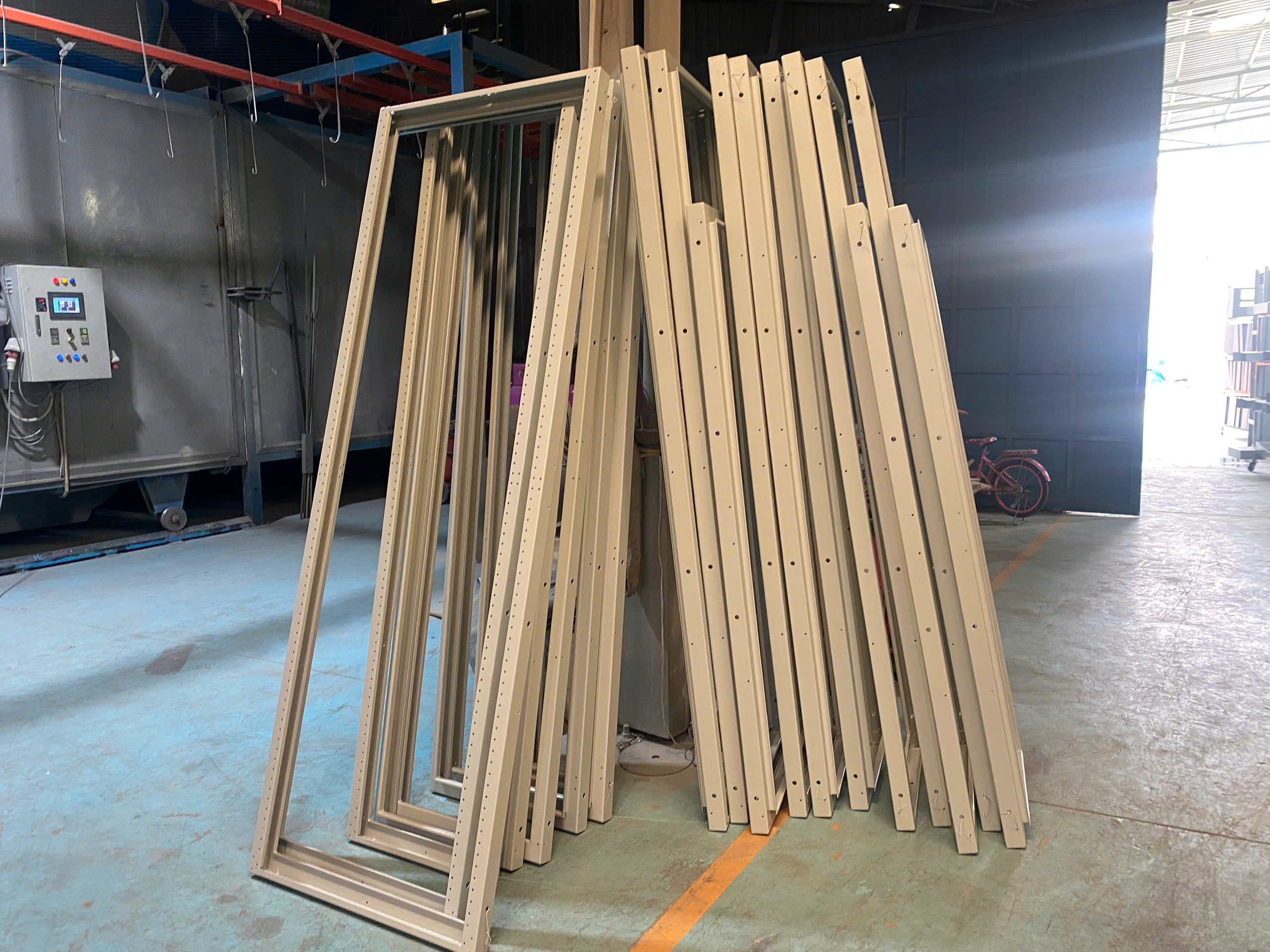

When our Vietnam office started handling stamping bracket orders for U.S. clients, payment security was the first concern every purchasing manager raised with us.
You can use a letter of credit to secure stamping parts sourcing from Vietnam by instructing your issuing bank to open an irrevocable LC via SWIFT MT700, listing precise document requirements—commercial invoice, bill of lading, certificate of origin, and a third-party pre-shipment inspection certificate—so payment releases only after the Vietnamese supplier proves compliant shipment under UCP 600 rules.
This article walks through each step of that process. It covers setup, risk reduction, required documents, and why some suppliers may push back on LC terms. Every section draws on real sourcing scenarios we manage between Vietnam and the United States.
What Steps Are Involved in Setting Up a Letter of Credit for Vietnamese Suppliers?
A client in the Midwest once asked me to map out the entire LC timeline before he would even approve the first purchase order for a stamping bracket project we were quoting from our Ho Chi Minh City partner facility.
Setting up a letter of credit for Vietnamese suppliers involves seven core steps: agreeing on LC terms in the purchase contract, applying at your bank, issuing the LC via SWIFT, advising through the supplier's bank, shipping goods, presenting compliant documents, and verifying those documents for payment release.

Let me break these steps down the way we actually execute them when coordinating between a U.S. buyer and a Vietnamese stamping factory.
Step 1 – Agree on LC Terms in the Contract
Before any bank gets involved, both sides must lock down the commercial terms. The purchase order or contract should state the LC type (irrevocable is standard), the currency and amount, the latest shipment date, the LC expiry date, and every document the supplier must present. We always recommend specifying Incoterms 2020 1 clearly—FOB Ho Chi Minh City or CIF destination port—because these terms determine who pays freight, insurance, and when risk transfers.
Step 2 – Apply at Your Bank
The importer fills out an LC application at their issuing bank. The bank reviews the applicant's creditworthiness or asks for cash collateral. Processing typically takes five to ten business days.
Step 3 – Issue and Transmit
The issuing bank sends the LC to the Vietnamese supplier's advising bank using the SWIFT MT700 message format 2. This is a standardized, secure channel that both banks recognize.
Step 4 – Advising
The advising bank in Vietnam—commonly Vietcombank 3 or BIDV—reviews the LC and notifies the supplier that a payment guarantee is in place, along with all the conditions they must meet.
Step 5 – Ship and Collect Documents
The supplier manufactures and ships the stamping parts. After shipment, they gather every required document: the commercial invoice, a full set of clean on-board bills of lading 4 (usually three originals), a certificate of origin, and a quality control inspection certificate from a named third-party firm.
Step 6 – Present Documents
The supplier submits documents to their advising bank within the deadline, often 21 days after shipment. The advising bank checks for discrepancies.
Step 7 – Verification and Payment
The issuing bank performs its own review. If everything matches the LC terms, it releases payment. The importer receives the documents and uses them to clear customs.
| Step | Action | Who Does It | Typical Timeline |
|---|---|---|---|
| 1 | Agree on LC terms in contract | Buyer + Supplier | Before LC application |
| 2 | Apply for LC | Buyer (importer) | 5–10 business days |
| 3 | Issue LC via SWIFT MT700 | Issuing bank | 1–3 business days |
| 4 | Advise LC to supplier | Advising bank (Vietnam) | 1–2 business days |
| 5 | Ship goods, collect documents | Supplier | Per contract schedule |
| 6 | Present documents | Supplier → Advising bank | Within 21 days of shipment |
| 7 | Verify and release payment | Issuing bank | 3–5 business days |
One detail that trips up first-time buyers: the LC expiry date must leave enough buffer after the latest shipment date for the supplier to compile and present documents. We usually advise a 30-day gap at minimum.
How Can I Reduce Risks When Paying Vietnamese Stamping Parts Suppliers via Letter of Credit?
Last year, a bracket order worth over $40,000 nearly fell apart because the Vietnamese factory's invoice described the parts as "metal components" while the LC read "stamping parts." That single wording mismatch almost blocked payment for weeks.
You can reduce risks by requiring a third-party pre-shipment inspection certificate in the LC, using an "at sight" payment term for first orders, choosing a reputable issuing bank, and reviewing every document description against the LC text before the supplier ships to prevent discrepancies that trigger payment delays.

Supply chain risk management 5 is not abstract theory when you handle stamping parts with tight tolerances. Here are the specific levers we pull to protect our clients.
Mandate Third-Party Inspection
Stamping parts for automotive or industrial hardware often require tolerances within fractions of a millimeter. A pre-shipment inspection by SGS Vietnam or Bureau Veritas 6 verifies dimensions, material grade, surface finish, and packaging before the parts leave the factory. By naming the inspection firm inside the LC, you ensure the supplier cannot skip this step and still claim payment. Inspection typically costs $500–$1,500 per shipment—far less than a rejected container.
Start with "At Sight" Terms
For new supplier relationships, I always recommend an "at sight" LC. This means the issuing bank pays promptly once compliant documents arrive. It keeps the transaction simple and avoids the credit exposure of 60- or 90-day deferred terms. Once the supplier proves consistent delivery and quality over three to five shipments, you can negotiate deferred payment.
Prevent Document Discrepancies
Discrepancy rates in Southeast Asian LC transactions run around 15–20%. Most errors are avoidable: a misspelled company name, a description that does not match word-for-word, or a bill of lading that says "received for shipment" instead of "shipped on board." Our Vietnam office reviews every document against the LC text before the supplier presents to the advising bank. This single checkpoint has saved multiple orders from payment freezes.
Choose the Right Bank Pairing
The strength of an LC depends on the banks behind it. If the Vietnamese advising bank has a weaker credit rating, the supplier may worry about payment. In those cases, we suggest a confirmed LC where a major international bank—HSBC or Citibank, for example—adds its own guarantee on top of the issuing bank's commitment. Yes, confirmation adds cost, but for high-value stamping tooling orders, the peace of mind is worth it.
| Risk | Mitigation Strategy | Cost Impact |
|---|---|---|
| Defective parts shipped | Third-party pre-shipment inspection named in LC | $500–$1,500 per shipment |
| Document discrepancy delays payment | Pre-submission document review by sourcing agent | Minimal (built into service fee) |
| Weak advising bank credit | Confirmed LC via international bank | 0.2%–0.5% additional fee |
| Supplier defaults after tooling paid | Red Clause LC for advance payment tied to tooling milestones | Negotiated case by case |
| Description mismatch on invoice | Mirror LC language exactly on all commercial documents | Zero incremental cost |
Consider a Standby Letter of Credit for Performance
A standby letter of credit 7 (SBLC) works differently from a commercial LC. It acts as a performance bond. If the supplier fails to meet the micron-level tolerances specified for precision stamping brackets, the SBLC gives you a financial remedy. We have seen U.S. buyers use an SBLC alongside open account terms once the relationship matures. It keeps cash flow flexible while still holding the supplier accountable.
What Documents Do I Need to Prepare for a Smooth Letter of Credit Transaction?
One lesson we learned early in our Vietnam operations: a missing certificate of origin once held up customs clearance for a U.S. client by twelve days, costing him demurrage fees at the port.
For a smooth LC transaction sourcing stamping parts from Vietnam, you need a commercial invoice matching LC terms exactly, a full set of clean on-board bills of lading, a certificate of origin (Form D or Form A), a third-party inspection certificate, a packing list, and an insurance certificate if shipping CIF.

Document precision is non-negotiable in trade finance. Every word, number, and date must align with what the LC states. Here is a practical guide to each document.
Commercial Invoice
The invoice must show the exact goods description from the LC. If the LC says "custom stamping parts – steel mounting brackets, powder-coated black," the invoice must use that identical phrase. It must also show the correct LC number, the buyer and seller names as they appear in the LC, the unit price, total amount, and Incoterms 2020 delivery term. Even a missing hyphen can trigger a discrepancy.
Bill of Lading
Banks typically require a full set of three original clean on-board bills of lading. "Clean" means no clause noting damage to goods or packaging. "On-board" confirms the cargo is loaded on the vessel, not merely received at the port. For shipments from Cat Lai port in Ho Chi Minh City, we coordinate with the freight forwarder to ensure the bill of lading is issued promptly to avoid the 21-day presentation deadline.
Certificate of Origin
This document confirms the parts were manufactured in Vietnam. For U.S. importers, a standard certificate from the Vietnam Chamber of Commerce 8 is common. If the buyer wants preferential tariff treatment under a free trade agreement, a Form D (for ASEAN trade) or other specific form may be required. We always clarify the correct form type in the LC to avoid rejection.
Inspection Certificate
A pre-shipment inspection report from a named third party—SGS, Bureau Veritas, or Intertek—confirms that the stamping parts meet the buyer's dimensional and material specifications. This document is the buyer's strongest quality control safeguard in an LC transaction.
Packing List and Insurance Certificate
The packing list details quantities, weights, and packaging type per carton or pallet. If the shipment is on CIF terms, the LC will require an insurance certificate covering at least 110% of the invoice value against transit risks like rust or deformation for metal parts.
| Document | Who Prepares It | Key Detail to Match |
|---|---|---|
| Commercial Invoice | Supplier | Goods description, amount, LC number |
| Bill of Lading (3 originals) | Shipping line / Freight forwarder | "Clean on-board," port names, consignee |
| Certificate of Origin | Vietnam Chamber of Commerce | Correct form type (A, D, or standard) |
| Inspection Certificate | Third-party inspector (e.g., SGS) | Inspector name must match LC requirement |
| Packing List | Supplier | Quantities, weights, packaging method |
| Insurance Certificate (CIF only) | Insurance company | Coverage ≥ 110% of invoice value |
Common Errors We Catch Before Presentation
Our team in Vietnam reviews draft documents side by side with the LC. The most frequent mistakes include:
- Invoice amount that differs from the LC by even a few cents due to rounding.
- Bill of lading showing a port name abbreviation instead of the full name in the LC.
- Certificate of origin issued on the wrong form.
- Inspection certificate missing the LC number reference.
These are small errors, but under UCP 600 rules, banks examine documents on their face. They do not interpret intent. A mismatch is a mismatch. For a deeper look at how to avoid these pitfalls, see our guide on how to ensure accurate export documents when sourcing stamping parts from Vietnam.
Electronic Document Presentation
Some banks now accept electronic presentation under eUCP rules 9. This can bypass physical courier delays, which matter for congested ports. However, most Vietnam trade still relies on physical originals, especially for the bill of lading. We recommend confirming with both banks whether electronic presentation is accepted before drafting the LC.
Why Might a Vietnamese Stamping Supplier Prefer Open Account Terms Over a Letter of Credit?
During a recent negotiation with a stamping factory outside Hanoi, the owner told me flatly: "We do not want an LC. Too much paperwork, too many bank fees. Just pay us on a 60-day open account."
A Vietnamese stamping supplier may prefer open account terms because LCs require high collateral deposits at local banks, involve complex documentation, incur fees of 0.5%–2% of the transaction value, and demand strict compliance with UCP 600 rules—all of which strain smaller factories that lack dedicated trade finance staff.

This is a real tension in Vietnam sourcing. Understanding the supplier's perspective helps you negotiate better and find middle ground.
The Collateral Burden
When a Vietnamese factory receives an LC, their local bank often requires them to deposit collateral—sometimes as high as the full LC value—before releasing any advance or confirming the LC. For a small stamping shop running on thin margins, tying up that much cash defeats the purpose of the payment guarantee. Larger factories with established banking relationships face lower collateral demands, but the requirement still exists.
Documentation Complexity
A factory that stamps mounting brackets all day is not staffed with trade finance specialists. Preparing a perfectly compliant document set—matching every comma and date format—is a burden. One wrong word on the commercial invoice and the bank rejects the presentation. The factory then scrambles to correct and re-present, which delays their cash inflow. Open account terms eliminate this friction entirely.
Bank Fees Add Up
LC-related bank charges in Vietnam typically include an advising fee, a document handling fee, and possibly a confirmation fee. These costs can total 0.5%–2% of the LC amount. On a $100,000 stamping order, that is $500–$2,000 the supplier absorbs. For repeat orders, those fees compound.
When Open Account Makes Sense
From our experience managing supply chains for U.S. clients, open account terms work well once a supplier has a proven track record—typically after three to five successful deliveries with consistent quality and on-time shipment. Our company offers open account payment terms 10 to qualified U.S. clients precisely because we understand this dynamic. We absorb the payment risk on our end so the client gets flexible 60–90 day terms while the Vietnamese factory gets paid on schedule.
When to Insist on an LC
For first-time orders, high-value tooling investments, or suppliers with no export history, an LC remains the safest instrument. The cost is a form of insurance. A defective shipment of stamping brackets that fails incoming inspection at a U.S. automotive plant can cost far more than the 1–2% LC fee. To understand the full scope of L/C operations when sourcing stamping parts from Vietnam, it helps to weigh these trade-offs carefully.
| Payment Method | Supplier Preference | Buyer Risk | Supplier Risk | Best For |
|---|---|---|---|---|
| Irrevocable LC (at sight) | Low (paperwork, fees) | Low | Low | New suppliers, high-value orders |
| Open Account (60–90 days) | High (simple, no fees) | Higher | Very low | Established relationships |
| Cash Before Shipment | Very high | Very high | None | Rarely used for stamping parts |
| Standby LC (SBLC) | Medium | Low–Medium | Low | Performance guarantee alongside open account |
A Practical Middle Path
We often structure a hybrid approach for our clients. The first two orders use an irrevocable LC at sight with a third-party inspection requirement. Once the supplier demonstrates quality discipline and document accuracy, we transition to open account terms with an SBLC as a performance backstop. This phased approach satisfies the buyer's need for supply chain risk management and the supplier's desire for simpler payment flows.
The key is communication. We sit down with the factory before the first order and walk them through the LC requirements line by line. When the supplier understands exactly what the bank expects, discrepancy rates drop dramatically. For practical guidance on structuring those initial LC terms, see our article on how to choose secure L/C terms when sourcing welding parts from Vietnam—the principles apply equally to stamping orders.
Conclusion
Using a letter of credit to secure stamping parts sourcing from Vietnam protects both buyer and supplier when structured correctly, with precise documents, third-party inspection, and a phased transition toward open account terms as trust builds.
Frequently Asked Questions
What Steps Are Involved in Setting Up a Letter of Credit for Vietnamese Suppliers?
A client in the Midwest once asked me to map out the entire LC timeline before he would even approve the first purchase order for a stamping bracket project we were quoting from our Ho Chi Minh City partner facility.
How Can I Reduce Risks When Paying Vietnamese Stamping Parts Suppliers via Letter of Credit?
Last year, a bracket order worth over $40,000 nearly fell apart because the Vietnamese factory's invoice described the parts as "metal components" while the LC read "stamping parts." That single wording mismatch almost blocked payment for weeks.
What Documents Do I Need to Prepare for a Smooth Letter of Credit Transaction?
One lesson we learned early in our Vietnam operations: a missing certificate of origin once held up customs clearance for a U.S. client by twelve days, costing him demurrage fees at the port.
Footnotes
1. Official International Chamber of Commerce page defining the global trade terms used in the article. ↩︎
2. Authoritative Wikipedia overview of SWIFT message types, including the MT700 format for documentary credits. ↩︎
3. Official website of one of the largest commercial banks in Vietnam mentioned as a common advising bank. ↩︎
4. Comprehensive overview of the legal and commercial functions of a bill of lading in international trade. ↩︎
5. Detailed explanation of strategies used to identify and mitigate risks within a global supply chain. ↩︎
6. Official site of a leading global inspection and certification body mentioned as a third-party verifier. ↩︎
7. Technical definition of SBLCs and how they function as performance guarantees in trade. ↩︎
8. Official organization in Vietnam responsible for issuing certificates of origin for exported goods. ↩︎
9. Official ICC page for the supplement to UCP 600 governing electronic document presentation. ↩︎
10. Official U.S. government resource detailing various international payment methods, including open account terms and risks. ↩︎