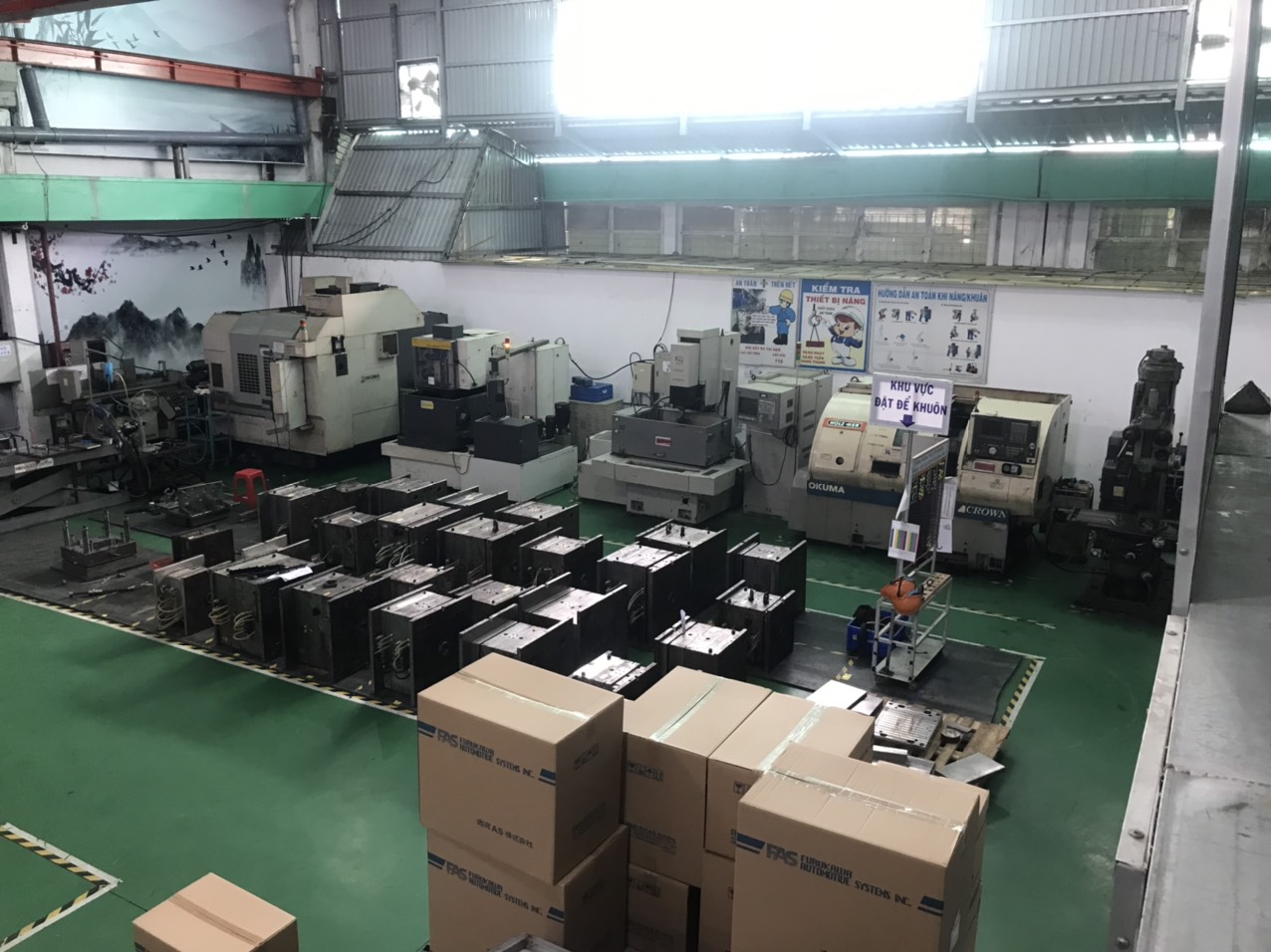

Last quarter, our Vietnam office helped a U.S. client reroute stamping part imports through a bonded warehouse — and the cash flow difference was immediate and significant.
Vietnam’s bonded zones let stamping part buyers defer 100% of import duties and VAT on raw materials until goods enter the domestic market, while enabling duty-free re-export. By staging inventory in these zones, manufacturers optimize cash flow, reduce supply chain lead time, and leverage Vietnam’s free trade agreements to lower tariffs on exports to the U.S. and EU.
This article breaks down exactly how bonded zones work for stamping parts, the financial math behind tax deferral benefits, and the compliance steps you need to follow China+1 1. Whether you source steel coils from Korea or tooling from Japan, this guide covers the logistics strategy that keeps your working capital free.
What Exactly Are Vietnam's Bonded Zones and How Can I Benefit From Them?
One of the first things our team in Hanoi had to learn when we set up operations was the distinction between a bonded warehouse, a free trade zone, and an Export Processing Zone 2 — because each one offers a different set of advantages for the stamping parts we help clients source.
Vietnam's bonded zones are customs-supervised areas where imported goods are treated as "foreign cargo." This means import duties and VAT are suspended entirely while goods remain inside. Manufacturers benefit by deferring taxes, consolidating shipments from multiple suppliers, and re-exporting stamped parts duty-free to global markets.

How Bonded Zones Differ From Standard Warehouses
A standard warehouse in Vietnam means your goods clear customs at the port. You pay import duties and VAT immediately. A bonded zone flips this. Goods enter without triggering any tax event. They sit under customs supervision 3. You only pay when — and if — those goods leave the zone for domestic consumption.
For stamping parts, this is powerful. Imagine you import 10 containers of steel coils from a Korean mill. In a standard setup, you owe duties and VAT on all 10 containers the moment they arrive. In a bonded warehouse, you pay nothing upfront. You pull material as your production line needs it. You declare and pay taxes only on what enters the domestic market that month.
Types of Bonded Zones Relevant to Stamping
| Zone Type | Key Feature | Best For |
|---|---|---|
| Bonded Warehouse | Duty and VAT suspension on stored goods | Consolidation, re-export, phased domestic release |
| Export Processing Zone (EPZ) | 0% VAT on imported materials for export production | High-volume stamping for export-only operations |
| Free Trade Zone (FTZ) | Broader trade facilitation, multi-tenant industrial parks | Mixed export/domestic stamping operations |
| Non-Tariff Zone (within industrial parks) | On-the-spot export-import between EPEs | Intra-supply-chain transfers without physical movement |
Who Benefits Most?
From our experience managing supply chains for U.S. purchasing managers, the biggest beneficiaries are companies that import raw materials in bulk but sell finished stamping parts in variable quantities. The pay-only-when-necessary model aligns tax payments with actual revenue collection. If you are sourcing custom brackets, post bases, or mounting hardware — the kinds of parts we handle daily — bonded zones let you hold inventory without bleeding cash on taxes for goods that may not ship domestically for weeks or months.
Export Processing Zones are especially relevant if your stamping operation is 100% export-focused. In that scenario, you can achieve a 0% VAT rate on all imported raw materials and specialized machinery, provided you maintain proper customs clearance procedures and documentation.
How Do I Reduce Import Duties on Stamping Parts Using Bonded Warehouses?
A conversation with a client in Ohio changed how we think about bonded warehouses. He was paying roughly $75,000 in duties and VAT per quarter on steel coil imports — money that sat locked up for months before finished parts even shipped to his end customers.
You reduce import duties on stamping parts by storing raw materials in a bonded warehouse where taxes are deferred indefinitely. You only pay duties on the specific volume released for domestic sale each month. Parts re-exported from the bonded zone incur zero duties and zero VAT, turning the warehouse into a tax-efficient staging hub.

The Cash Flow Math
Let me walk through a real scenario. Say you import $500,000 worth of steel coils per quarter for stamping brackets and mounting fixtures. At a combined duty and VAT rate of approximately 15%, you would owe $75,000 immediately under normal import procedures.
With a bonded warehouse, that $75,000 stays in your pocket. You pull material as needed. If you only stamp and sell domestically $100,000 worth of material in Month 1, you pay duties on $100,000 — not $500,000. The rest waits.
| Scenario | Upfront Tax Payment | Cash Available for Operations |
|---|---|---|
| Standard import (no bonded zone) | $75,000 on full $500K | $425,000 |
| Bonded warehouse — Month 1 domestic release of $100K | $15,000 | $485,000 |
| Bonded warehouse — full re-export | $0 | $500,000 |
That freed-up capital can go toward tooling upgrades, additional QC inspection equipment, or simply improving payment terms for your own buyers. Our clients in the U.S. often request 60–90 day payment terms from us. The bonded warehouse model helps us accommodate that without straining our own cash flow.
Duty-Free Re-Export
If your stamped parts — brackets, flanges, channel mounts — are destined for export, the import-export duty exemptions are complete. No duties. No VAT. The parts enter the bonded zone as foreign cargo and leave as foreign cargo. Vietnam never considers them "imported."
This is particularly valuable in a metal fabrication supply chain where raw steel enters from one country, gets stamped into precision parts, and ships out to a third country. The bonded zone acts as a tax-neutral processing node.
VAT Refund Pitfalls to Watch
There is a catch. If goods are exported to a bonded warehouse and later returned to Vietnam's domestic market, the VAT incurred in the first leg may not be recoverable for foreign traders. Our compliance team flags this risk early in every project. The recent VAT policy updates require strict adherence to customs definitions of "export transactions" to secure refunds. Your commercial contracts must explicitly state export terms. Without that documentation, a Value Added Tax 4 refund claim can be denied.
Can I Streamline My Supply Chain by Combining Vietnam Bonded Zones With China Sourcing?
When we started building our Vietnam office seven years ago, the goal was straightforward: give our U.S. clients an alternative to 100% China-dependent supply chains without sacrificing quality or speed. The bonded zone strategy turned out to be the missing link.
Yes. Vietnam's bonded zones serve as ideal consolidation hubs for a "China+1" strategy. You can import Chinese raw materials duty-free, stamp parts in Vietnam, and re-export to the U.S. or EU under favorable trade agreements like EVFTA and CPTPP — reducing tariffs, shortening supply chain lead time, and avoiding direct China-origin duties.

The Bac Ninh Advantage
Bac Ninh province sits just south of the Chinese border. Its bonded zones and industrial parks are positioned perfectly for manufacturers who source steel, aluminum, or tooling from Chinese mills. Goods cross the border, enter the bonded zone, and sit without customs exposure. This geographic advantage enables faster fulfillment and agile production schedules.
Our team coordinates shipments from Chinese steel suppliers into Bac Ninh regularly. The proximity means a truck delivery from Guangxi province 5 can arrive within a day. Compare that to ocean freight from Shanghai to Ho Chi Minh City, which takes five to seven days.
Consolidation and Light Processing
Bonded warehouses are not just for storage. They permit light processing activities that add value without triggering immediate tax liability:
- Repackaging stamped parts for regional distribution
- Quality inspection and dimensional verification
- Protective oiling and anti-corrosion treatment
- Technical labeling and barcoding
- Kitting multiple stamped components into assembly sets
For example, when we source L-brackets from one Vietnamese supplier and post base mounts from another, the bonded zone allows us to consolidate both into a single shipment for a U.S. buyer. This reduces inventory management costs and cuts the number of customs declarations. supply chain management 6
Trade Agreement Arbitrage
This is where the strategy becomes especially compelling. Vietnam has signed trade agreements that China has not. The EVFTA 7 eliminates or reduces tariffs on Vietnamese exports to Europe. The CPTPP 8 opens preferential access to markets across the Asia-Pacific.
| Trade Agreement | Key Market Access | Tariff Advantage Over China |
|---|---|---|
| EVFTA (EU–Vietnam FTA) | European Union | Elimination of up to 99% of tariff lines over 7–10 years |
| CPTPP | Japan, Canada, Australia, Mexico, and others | Significant reductions on manufactured metal parts |
| US Tariff Context | United States | Parts stamped in Vietnam avoid China Section 301 tariffs 9 (up to 25%) |
By stamping parts in Vietnam rather than China, our clients can ship to the EU and claim preferential tariff treatment. For U.S.-bound shipments, the parts avoid Section 301 tariffs entirely because they originate in Vietnam, not China — even if the raw steel came from a Chinese mill.
On-the-Spot Export-Import
Vietnam's on-the-spot export-import mechanism further streamlines the process. When two Export Processing Enterprises within the same industrial park need to transfer stamping parts, they can do so as a virtual export and import. No physical movement to a port. No extra trucking. The transaction is documented through the VNACCS/VCIS e-customs system, and ownership transfers digitally.
This reduces logistics friction, handling damage, and transit time. For high-precision stamping parts — the kind where surface finish and dimensional accuracy matter — fewer handling touchpoints mean fewer quality issues.
What Should I Know Before Setting Up Logistics Through a Vietnam Bonded Zone?
A lesson we learned early: the tax deferral benefits of bonded zones are real, but so are the compliance requirements. One missed inventory audit or one incorrectly documented contract can erase the advantages overnight.
Before setting up logistics through a Vietnam bonded zone, you must prepare for strict customs clearance procedures including accurate record-keeping, timely declarations, annual inventory audits, storage period monitoring, and properly documented export contracts. Non-compliance can result in penalties, denied VAT refunds, and unexpected tax liabilities.

The 6-Point Compliance Checklist
Here is what our Vietnam team tracks for every bonded zone operation:
-
Record keeping. Every inbound and outbound movement must be logged with quantities, dates, and customs codes. This is not optional. Vietnam customs regulations require ongoing, accurate records.
-
Customs declarations. Each shipment entering or leaving the bonded zone needs a timely, correct customs submission. Our team uses the VNACCS/VCIS e-customs system for real-time digital tracking of stamping parts, which reduces the risk of manual documentation errors.
-
Inventory audits. Vietnam customs conducts annual inspections. Your physical inventory must match your declared records exactly. Discrepancies trigger investigations.
-
Storage period monitoring. Goods cannot sit in a bonded warehouse indefinitely. You must monitor storage periods monthly to avoid overstay penalties.
-
Export contract documentation. Your commercial contracts must explicitly state export terms. Without this, you may not qualify for import-export duty exemptions or VAT refund eligibility.
-
Scrap metal management. Stamping operations generate waste. Advanced scrap metal management protocols in bonded zones allow you to re-export stamping waste or sell it domestically after paying applicable duties. This turns production byproduct into a compliant revenue stream rather than a compliance headache.
Emerging Trends Worth Watching
The logistics landscape in Vietnam is evolving fast. Here are three developments that affect stamping part operations:
Smart Bonded Warehouses. The integration of Vietnam's e-customs system with warehouse management platforms enables real-time inventory tracking. For high-precision stamping parts like the brackets and mounting hardware we handle, this digital visibility reduces audit risk and speeds up customs clearance procedures.
Green Bonded Zones. Some newer zones are incorporating solar-powered climate control and carbon auditing. If your end customers are Tier-1 automotive OEMs with strict ESG requirements, operating from a green bonded zone can be a differentiator.
Policy Uncertainty. The Vietnam Logistics Association has proposed abolishing contractor tax policies for foreign entities using bonded warehouses. This would be a significant boost for companies like ours that manage inventory on behalf of foreign clients. However, as of now, certain contractor taxes may still apply to specific transaction types. We recommend verifying the current status with a local customs broker before committing to a structure.
When a Bonded Zone Does Not Make Sense
Bonded zones are not always the right answer. If your stamping operation is small-volume and entirely for the Vietnamese domestic market, the compliance overhead may outweigh the tax deferral benefits. Similarly, if your parts require heavy manufacturing processes beyond light assembly, you may need a full Export Processing Zone or industrial park setup rather than a bonded warehouse alone. To understand the full picture of Vietnam’s tax incentives and export rebates when sourcing stamping parts, it's worth evaluating whether a bonded zone or a direct tax benefit approach works better for your specific volume and market mix.
| Factor | Bonded Zone Recommended | Standard Import Recommended |
|---|---|---|
| High-volume import with phased domestic release | ✔ | ✘ |
| 100% export-oriented stamping | ✔ | ✘ |
| Low-volume, single domestic buyer | ✘ | ✔ |
| Need for heavy manufacturing on-site | ✘ (EPZ better) | Depends |
| Multiple international supplier consolidation | ✔ | ✘ |
Conclusion
Vietnam's bonded zones offer stamping part buyers a proven way to defer taxes, consolidate multi-country shipments, and leverage trade agreements for duty-free re-export — but only with disciplined compliance and the right logistics partner.
Frequently Asked Questions
Types of Bonded Zones Relevant to Stamping Zone Type Key Feature Best For Bonded Warehouse Duty and VAT suspension on stored goods Consolidation, re-export, phased domestic release Export Processing Zone (EPZ) 0% VAT on imported materials for export production High-volume stamping for export-only operations Free Trade Zone (FTZ) Broader trade facilitation, multi-tenant industrial parks Mixed export/domestic stamping operations Non-Tariff Zone (within industrial parks) On-the-spot export-import between EPEs Intra-supply-chain transfers without physical movement Who Benefits Most?
From our experience managing supply chains for U.S. purchasing managers, the biggest beneficiaries are companies that import raw materials in bulk but sell finished stamping parts in variable quantities. The pay-only-when-necessary model aligns tax payments with actual revenue collection. If you are sourcing custom brackets, post bases, or mounting hardware — the kinds of parts we handle daily — bonded zones let you hold inventory without bleeding cash on taxes for goods that may not ship domestically for weeks or months.
What Exactly Are Vietnam's Bonded Zones and How Can I Benefit From Them?
One of the first things our team in Hanoi had to learn when we set up operations was the distinction between a bonded warehouse, a free trade zone , and an Export Processing Zone 2 — because each one offers a different set of advantages for the stamping parts we help clients source.
How Do I Reduce Import Duties on Stamping Parts Using Bonded Warehouses?
A conversation with a client in Ohio changed how we think about bonded warehouses. He was paying roughly $75,000 in duties and VAT per quarter on steel coil imports — money that sat locked up for months before finished parts even shipped to his end customers.
Footnotes
1. Explains the China+1 diversification strategy central to this section’s sourcing approach. ↩︎
2. Defines the EPZ concept referenced as a key bonded zone type for stamping operations. ↩︎
3. Background on customs supervision concept underlying bonded zone tax suspension mechanics. ↩︎
4. WTO trade policy resource relevant to VAT refund and tariff documentation requirements discussed. ↩︎
5. Background on the Chinese border province cited for cross-border trucking to Bac Ninh. ↩︎
6. Foundational concept underlying logistics consolidation and inventory strategy described. ↩︎
7. Official EU trade page explaining the EU-Vietnam Free Trade Agreement referenced for tariff arbitrage. ↩︎
8. Background on the CPTPP trade pact cited for preferential Asia-Pacific market access. ↩︎
9. USTR official page explaining Section 301 tariffs mentioned as avoided via Vietnam origin. ↩︎