
When our Vietnam office started handling sheet metal fabrication 1 projects last year, one U.S. client asked a question that stumped even our trade compliance team: “Can I actually use Vietnam’s free trade agreements to cut my import duties 2?”
You can reduce import duties on sheet metal fabrication by leveraging Vietnam’s FTAs — including EVFTA, CPTPP, and RCEP — if your parts meet Rules of Origin requirements, undergo substantial transformation in Vietnam, and you provide proper Certificates of Origin to your customs broker.
This guide breaks down each step. We will cover qualification criteria, required documents, cost comparisons with China, and how to verify your supplier meets local value-added thresholds Certificates of Origin 3. Let us get into it.
How do I determine if my custom sheet metal parts qualify for Vietnam's free trade agreements?
A buyer we work with in the Midwest once assumed that any part made in Vietnam automatically qualified for preferential tariffs. That assumption cost him three months of back-and-forth with customs before we helped sort it out.
Your custom sheet metal parts qualify for Vietnam's FTAs if they meet the specific Rules of Origin under each agreement — typically requiring at least 40% local value content or substantial transformation such as cutting, bending, welding, and assembly performed in Vietnam.
The first thing to understand is that Vietnam's FTA network is extensive. But not every agreement helps every buyer. The benefit depends on where you are importing the finished parts and where the raw materials come from.
Which FTAs matter for sheet metal fabrication?
Vietnam is party to over a dozen trade agreements. For sheet metal sourcing, five agreements matter most. Here is a quick comparison:
| FTA | Key Partners | Tariff Elimination | Best For |
|---|---|---|---|
| EVFTA | EU–Vietnam | ~99% of tariff lines eliminated by 2027 | Exporters shipping to EU markets |
| CPTPP | 11 Pacific Rim nations | 97–100% of tariff lines | Sourcing raw metal from Japan, Australia |
| RCEP | ASEAN + China, Japan, South Korea, Australia, NZ | Gradual reductions across members | Regional cumulation of materials |
| VKFTA | Vietnam–South Korea | 506 tariff lines removed by Korea | Importing Korean steel into Vietnam |
| UK-Vietnam FTA | UK–Vietnam | Mirrors EVFTA structure | Exporting fabricated parts to UK |
Understanding Rules of Origin
Rules of Origin 4 are the gatekeepers. They determine whether your part truly "originates" in Vietnam. For sheet metal fabrication, this usually means:
- Change in tariff classification. The finished part must fall under a different Harmonized System Code 5 than the raw sheet metal input.
- Local value content threshold. Typically around 40% of the product's FOB value must originate in Vietnam.
- Substantial transformation. Processes like laser cutting, CNC bending, welding, powder coating, and assembly count. Simple trimming or repackaging does not.
Our team in Vietnam has seen customs officers reject claims where the only local process was drilling a few holes in imported plates. The transformation must be meaningful.
The tolerance rule
Under EVFTA, there is a tolerance rule that allows up to 10% of non-originating material by weight or value for industrial products. This gives some flexibility. If your sheet metal bracket uses a small imported specialty fastener, it will not disqualify the entire part.
Under RCEP, cumulation rules are even more powerful. Raw materials from any RCEP member — Japan, South Korea, Australia, China — can count toward the origin calculation. This is a game-changer for sourcing strategies.
How to check your Harmonized System Code
Start with your HS code. Sheet metal parts typically fall under HS Chapter 73 (articles of iron or steel) or Chapter 76 (articles of aluminum). The specific 6-digit or 8-digit code determines the applicable tariff rate and whether preferential treatment applies under a given FTA.
I recommend working with your customs broker 6 to confirm the correct HS code before production begins. A wrong code can mean unexpected duties or even penalties at the port of entry.
What specific documentation must I provide to my customs broker to claim FTA benefits for my Vietnam-made parts?
One lesson we learned early on is that having the right part at the right price means nothing if the paperwork is wrong. A missing Certificate of Origin can turn a 0% preferential tariff into a full MFN duty at the port.
To claim FTA benefits, you must provide your customs broker with a valid Certificate of Origin (C/O) specific to the FTA being invoked, a commercial invoice showing FOB value breakdown, a bill of lading, packing list, and — in many cases — a detailed production process declaration proving substantial transformation in Vietnam.
Each FTA has its own Certificate of Origin form. Using the wrong one will result in denial of preferential treatment. Here is what you need to know.
Certificates of Origin by FTA
| FTA | C/O Form | Issuing Authority | Self-Certification Allowed? |
|---|---|---|---|
| EVFTA | EUR.1 or Self-Declaration | Vietnam Chamber of Commerce (VCCI) or exporter | Yes, for approved exporters |
| CPTPP | Declaration of Origin | Exporter, producer, or importer | Yes |
| RCEP | Form RCEP | VCCI or authorized body | Yes, after transition period |
| VKFTA | Form VK | VCCI | No |
| ASEAN (ATIGA) | Form D | VCCI | No |
The complete document checklist
Beyond the Certificate of Origin, your customs broker will need:
- Commercial invoice with itemized costs (material, labor, overhead, profit)
- Bill of lading or air waybill
- Packing list with net and gross weights
- Production process declaration detailing each fabrication step performed in Vietnam
- Material sourcing records showing country of origin for raw inputs
- HS code classification for each line item
- Value content calculation worksheet if the FTA requires LVC proof
Why digital tracking matters
We have started implementing digital tracking for component origin and value-added stages across our Vietnam projects. This is not optional anymore. Customs authorities are increasingly requesting production records and supplier invoices during post-clearance audits.
If your Vietnam sheet metal supplier cannot produce a clear paper trail showing where the steel came from, what processes were performed, and what percentage of value was added locally, you risk losing your preferential tariff status — sometimes retroactively.
Our recommendation: request these documents from your supplier at the quoting stage. If they cannot provide them, that is a red flag.
Common mistakes that delay customs clearance
Three errors we see repeatedly:
- Using a generic C/O instead of the FTA-specific form. A standard C/O from VCCI does not grant preferential treatment. You need the correct form for the specific agreement.
- Mismatched HS codes between the C/O and the commercial invoice. Even a minor discrepancy can trigger a review.
- Failing to declare all non-originating materials. Customs officers will compare your material list against the tolerance rule. Omissions look like fraud.
Can I significantly lower my total landed cost by switching my sheet metal sourcing from China to Vietnam?
This is the question that comes up in nearly every initial call with U.S. purchasing managers exploring supply chain diversification 9. The short answer surprised even me when we ran the numbers for the first time.
Yes, switching sheet metal sourcing from China to Vietnam can significantly lower your total landed cost — primarily through reduced or eliminated tariffs under FTAs like CPTPP and EVFTA, avoidance of U.S. anti-dumping duties on Chinese steel products, and competitive Vietnamese labor rates, though savings vary by part complexity and destination market.
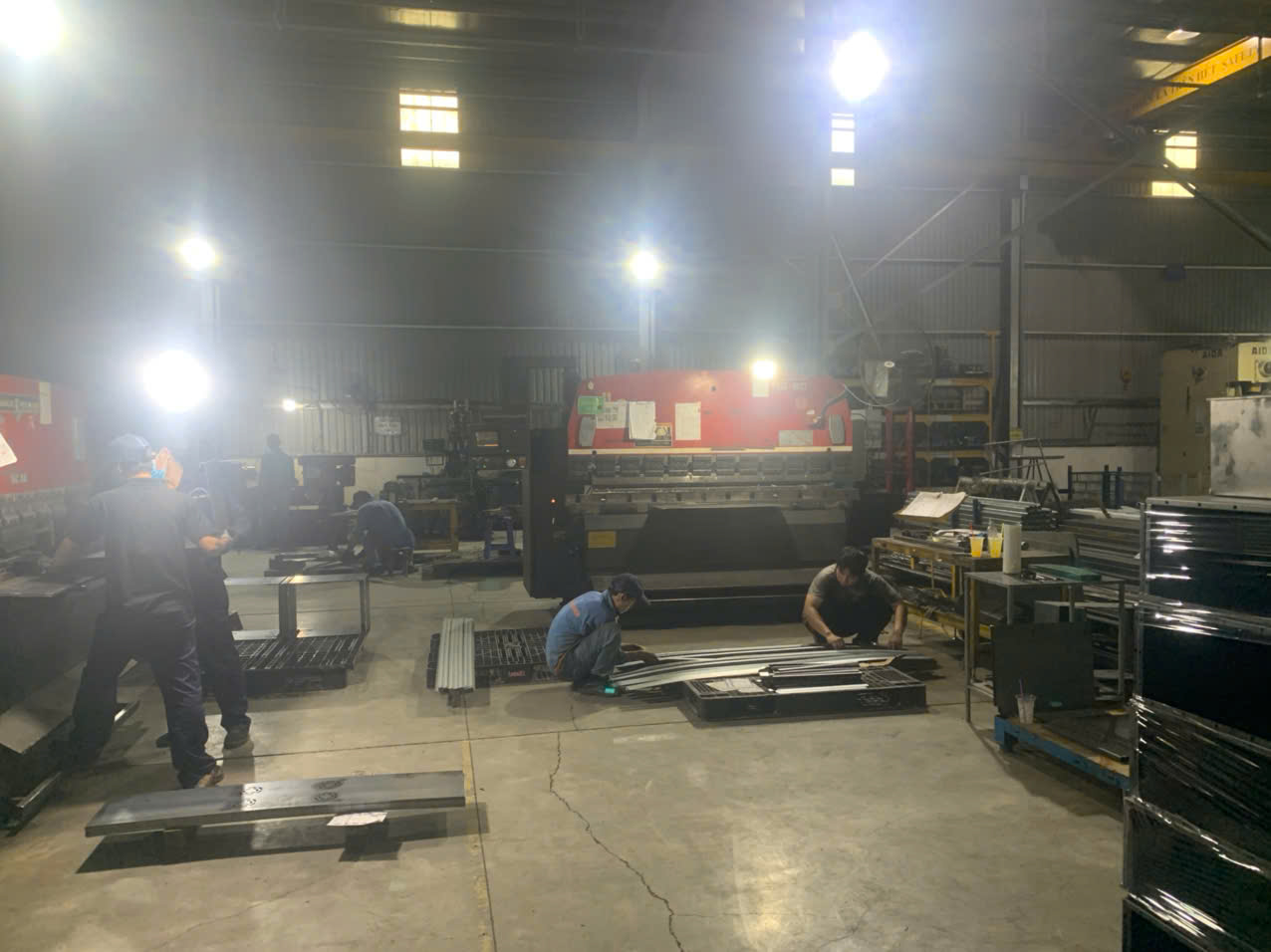
Let me walk you through a realistic cost comparison. The numbers below are based on scenarios we have modeled for clients sourcing precision sheet metal brackets — similar to the mounting components and angular brackets with powder-coated finishes that we regularly produce.
Cost comparison: China vs. Vietnam for a typical sheet metal bracket
| Cost Element | China (to U.S.) | Vietnam (to U.S.) | Vietnam (to EU via EVFTA) |
|---|---|---|---|
| Unit manufacturing cost | $4.20 | $4.50 | $4.50 |
| Raw material (steel plate) | $1.80 | $2.00 | $2.00 |
| Ocean freight per unit | $0.30 | $0.35 | $0.40 |
| Standard MFN tariff | 3.5–6% | 3.5–6% | 0% (EVFTA) |
| Section 301 tariff (U.S. only) | 25% | 0% | N/A |
| Anti-dumping duty risk | 40–88% on coated steel | Low risk | N/A |
| Estimated landed cost | $7.50–$10.00+ | $5.50–$6.50 | $5.20–$5.80 |
These figures illustrate a critical point. Vietnam's manufacturing cost per unit may be slightly higher than China's for some processes. But the tariff savings — especially avoiding Section 301 duties and anti-dumping duties 10 — can more than offset that difference. For a deeper dive into all the cost components involved, see our guide on how to estimate total landed cost for sheet metal fabrication from Vietnam to the US.
Where Vietnam excels
Vietnam has become a legitimate manufacturing hub for sheet metal fabrication. The country's strengths include:
- Lower labor costs than coastal China, with a growing pool of skilled welders and CNC operators
- Foreign direct investment from Japanese and Korean companies that have built modern fabrication facilities
- Strategic port access — Ho Chi Minh City and Hai Phong offer direct shipping routes to the U.S. West Coast and Europe
- FTA coverage that China simply does not have with the EU or many CPTPP members
Where China still has an edge
I would be dishonest if I did not acknowledge China's advantages. For high-volume, commodity-grade sheet metal parts, China's scale and supply chain depth remain hard to beat. Tooling lead times are often shorter. Material variety is broader. And for parts destined for markets without preferential tariffs from Vietnam, the cost difference may not justify the switch.
The anti-dumping factor
U.S. anti-dumping duties on Vietnamese coated steel can reach 40–88%. However, these duties apply to raw steel products, not necessarily to fabricated parts with substantial transformation. If your sheet metal bracket undergoes significant processing in Vietnam — cutting, forming, welding, powder coating, assembly — it is classified as a manufactured article, not a steel product. This distinction matters enormously for customs clearance. For more details on navigating this issue, read our article on how to handle US anti-dumping duties on steel sheet metal fabrication from Vietnam.
Still, I always advise clients to verify their specific HS code against the U.S. International Trade Commission database before committing to a sourcing shift. The last thing you want is a surprise anti-dumping duty on arrival.
How can I verify that my Vietnam sheet metal supplier meets the local value-added requirements for duty exemptions?
During a supplier audit our team conducted in Binh Duong province last year, we discovered that what the factory called "full local fabrication" actually involved importing pre-cut blanks from China and only performing final bending and spot welding in Vietnam. That would not meet most FTA origin thresholds.
To verify your Vietnam supplier meets local value-added requirements, request a detailed bill of materials with country-of-origin data for each input, conduct on-site audits of fabrication processes, review their value content calculations, and confirm they can issue the correct FTA-specific Certificate of Origin through authorized bodies like VCCI.
Verification is not optional. With stricter enforcement of Rules of Origin by customs authorities worldwide, the risk of non-compliance has real financial consequences — including retroactive duty assessments, penalties, and even loss of importing privileges.
What counts as local value-added?
Not all fabrication steps carry equal weight. Here is how typical sheet metal processes contribute to local value content:
| Process | Adds Significant Local Value? | Notes |
|---|---|---|
| Laser/plasma cutting from raw sheet | Yes | Major transformation step |
| CNC punching | Yes | Changes form and function |
| Bending/forming | Yes | Creates new geometry |
| Welding and joining | Yes | Permanent assembly |
| Surface treatment (powder coating, anodizing) | Yes | Adds functional value |
| Hardware insertion (PEM nuts, studs) | Moderate | Depends on hardware origin |
| Simple drilling of imported blanks | No | Minimal transformation |
| Repackaging or relabeling | No | Not considered processing |
| Final inspection and packing | No | Administrative, not manufacturing |
The 40% LVC calculation
Most of Vietnam's FTAs use a formula like this:
LVC = (FOB Price – Value of Non-Originating Materials) / FOB Price × 100
If the result is 40% or higher, the part qualifies. Let me show a simplified example for a sheet metal mounting bracket:
- FOB price: $10.00
- Imported steel plate (from non-FTA country): $3.00
- Imported fasteners: $0.50
- Total non-originating materials: $3.50
- LVC = ($10.00 – $3.50) / $10.00 × 100 = 65% ✓ Qualifies
Now consider the same bracket but with pre-cut blanks imported at $6.00:
- LVC = ($10.00 – $6.00) / $10.00 × 100 = 40% — barely qualifies
This is why sourcing raw sheet metal from FTA partners matters. If that steel plate comes from Japan (RCEP/CPTPP member) or South Korea (VKFTA/RCEP member), it may be treated as originating material under cumulation rules. That dramatically improves your LVC calculation.
Practical verification steps
Here is what our team does when auditing a Vietnam supplier for FTA compliance:
- Request the full bill of materials with unit costs and country of origin for every input.
- Walk the production floor and confirm each fabrication step happens on-site. Look for the actual machines — laser cutters, press brakes, welding stations, coating lines.
- Review purchase orders for raw materials to verify supplier claims about material origin.
- Ask for a sample LVC calculation on a representative part. If they cannot produce one, they likely have not done the compliance work.
- Confirm VCCI registration and their ability to issue the correct C/O form for your target FTA.
- Check for any anti-dumping or safeguard measures on their specific raw material imports using Vietnam's customs database.
Our Vietnam office performs these audits as part of our standard supplier qualification process. We have found that suppliers who invest in digital tracking systems for component origin and process documentation are the ones most likely to maintain compliance long-term.
Cumulation as a strategic tool
If your supplier sources steel from a non-FTA country, consider proposing alternative sources. Japanese steel mills (CPTPP/RCEP), Korean steel suppliers (VKFTA/RCEP), and Australian aluminum producers (CPTPP/RCEP) all offer materials that can be cumulated under the Regional Comprehensive Economic Partnership or other applicable agreements. This turns a potentially non-qualifying part into one that clears origin thresholds comfortably. Understanding which Vietnam export policies impact sheet metal fabrication delivery stability can also help you anticipate regulatory changes that affect your sourcing strategy.
Conclusion
Vietnam's FTA network offers real duty savings for sheet metal fabrication — but only with proper origin compliance, correct documentation, and verified local value-added. Work with a sourcing partner who understands these requirements on the ground.
Frequently Asked Questions
Which FTAs matter for sheet metal fabrication?
Vietnam is party to over a dozen trade agreements. For sheet metal sourcing, five agreements matter most. Here is a quick comparison:
What counts as local value-added?
Not all fabrication steps carry equal weight. Here is how typical sheet metal processes contribute to local value content:
How do I determine if my custom sheet metal parts qualify for Vietnam's free trade agreements?
A buyer we work with in the Midwest once assumed that any part made in Vietnam automatically qualified for preferential tariffs. That assumption cost him three months of back-and-forth with customs before we helped sort it out.
Footnotes
1. Explains the fundamental processes and applications of sheet metal fabrication. ↩︎
2. Defines import duties as taxes on imported goods, explaining their purpose and calculation. ↩︎
3. Replaced with an authoritative .gov source from the International Trade Administration focusing on FTA Certificates of Origin, relevant to the article context. ↩︎
4. Provides a comprehensive overview of Rules of Origin in international trade agreements. ↩︎
5. Explains HS codes as a global standard for classifying traded products for customs and statistics. ↩︎
6. Outlines the role of customs brokers in facilitating goods clearance through customs. ↩︎
7. Describes regional value content rules as a method to determine origin in trade agreements. ↩︎
8. Defines substantial transformation as a fundamental change in a good’s form, character, or use. ↩︎
9. Replaced with an authoritative Wikipedia page providing a clear definition and overview of supply chain diversification. ↩︎
10. Replaced with an authoritative .gov source from the International Trade Administration providing a comprehensive guide on anti-dumping measures. ↩︎