
I learned the hard way that a supplier’s certification binder can look impressive — until a failed batch reveals the documents were expired, forged, or irrelevant to the parts you actually ordered.
To verify sheet metal fabrication supplier certifications, cross-check each certificate against the issuing accreditation body’s online database, confirm the scope covers your specific processes and materials, validate expiration dates, and use third-party audits or nondestructive testing like XRF to independently confirm material traceability claims.
The steps below break down exactly how our team validates supplier credentials before a single part ships. Whether you source from Vietnam, Taiwan, or India, these practices protect your supply chain from costly quality failures.
How can I verify that my sheet metal supplier's ISO certifications are actually authentic?
A few years back, one of our U.S. clients forwarded an ISO 9001 certificate 1 from a prospective supplier — and something felt off. The certificate number didn't match any record in the accreditation body 2's public database. That single check saved them months of wasted tooling investment.
To verify an ISO certification is authentic, locate the accreditation body's logo on the certificate, visit that body's official website, and search their public database using the supplier's name or certificate number. Legitimate ISO 9001 certification will always appear in a searchable, publicly accessible registry.
Start With the Certificate Itself
Every genuine ISO certificate contains specific data points. Before you go online, read the document carefully. Look for:
- The name of the Certification Body (CB) that issued it.
- The Accreditation Body (AB) mark or logo.
- A unique certificate number.
- The scope statement 3 describing which processes and locations are covered.
- Issue and expiry dates.
If any of these are missing, that is your first red flag.
Use Official Accreditation Body Databases
Accreditation bodies maintain public registries. Here are the most common ones relevant to sheet metal fabrication:
| Accreditation Body | Region | Database URL |
|---|---|---|
| UKAS | United Kingdom | ukas.com |
| ANAB (ANSI) | United States | anab.ansi.org |
| JAS-ANZ | Australia / New Zealand | jas-anz.org |
| DAkkS | Germany | dakks.de |
| SAC | Singapore | sac-accreditation.gov.sg |
When we run a supplier qualification process for our clients, the first thing our team does is visit the relevant database and search by the supplier's legal entity name. If the certificate doesn't appear, we contact the CB directly to confirm.
Distinguish Between Self-Declared and Third-Party Certified
Some suppliers display "ISO compliant" or "following ISO standards" on their websites. This is not the same as holding a valid ISO 9001 certification. A genuine quality management system certification requires an independent, accredited third-party audit. Self-declaration carries zero weight in regulated supply chains.
Watch for Common Forgery Indicators
In our experience auditing suppliers across Asia, we've encountered several forgery patterns:
- Certificates with no accreditation body logo.
- Mismatched company names or addresses.
- Certificate numbers that return no results in any database.
- Expired certificates presented as current.
- Certificates issued by organizations that are not themselves accredited.
A quick 10-minute check against an official database can prevent a quality disaster that costs your company thousands in scrap, rework, or regulatory penalties.
What steps should I take to confirm my supplier's quality credentials are still valid and not expired?
During a recent project involving custom mounting brackets for a U.S. engineering firm, we discovered that their incumbent supplier's AS9100 certificate 4 had lapsed six months earlier — yet no one on the buying side had noticed. The parts kept shipping, but the quality management system behind them was no longer being audited.
To confirm a supplier's credentials are still valid, check the expiration date on every certificate, verify current status in the issuing body's online registry, request the most recent surveillance audit report, and set up a recurring internal reminder to re-verify at least every six months.
Why Certificates Expire — and Why It Matters
ISO 9001 and AS9100 certificates are typically valid for three years, with mandatory annual surveillance audits 5 in between. If a supplier fails a surveillance audit or simply doesn't schedule one, their certificate can be suspended or withdrawn. An expired certificate means no independent body is currently confirming the supplier's quality management system works.
Build a Verification Schedule
We manage this for our clients by maintaining a supplier credential tracker. Here is a simplified version of what that looks like:
| Supplier | Certification | Issue Date | Expiry Date | Last Surveillance Audit | Next Check Due |
|---|---|---|---|---|---|
| Supplier A | ISO 9001:2015 | 2023-03-15 | 2026-03-14 | 2024-03-20 | 2024-09-15 |
| Supplier B | AS9100D | 2022-07-01 | 2025-06-30 | 2024-07-10 | 2025-01-01 |
| Supplier C | IATF 16949 | 2021-11-20 | 2024-11-19 | 2023-11-25 | Immediate |
This table is reviewed every quarter. If a certification is within 90 days of expiry and the supplier hasn't provided renewal evidence, we flag it to the client immediately.
Request Surveillance Audit Reports
A valid certificate is necessary but not sufficient. Ask your supplier for the most recent surveillance audit report. This document reveals:
- Whether any nonconformities were found.
- Whether corrective actions were completed.
- Whether the auditor noted any areas of concern.
Surveillance reports give you insight into the health of the supplier's quality management system between full recertification cycles.
Automate Where Possible
Modern supply chain risk management platforms can monitor certification databases automatically and alert you when a supplier's status changes. If your organization doesn't use such a platform, a simple calendar reminder every six months works. The key is that someone owns the task and it doesn't fall through the cracks.
Our team in Vietnam checks certification status as part of every pre-production review. It adds maybe 15 minutes to the process, but it has caught expired credentials more than once — before parts were cut.
How do I ensure the scope of my fabricator's certification actually covers the custom parts I need?
One lesson we've learned working with U.S. purchasing managers is that a valid certificate can still be irrelevant. A supplier might hold ISO 9001 for "assembly of electrical enclosures" — but the custom sheet metal brackets you need involve laser cutting, CNC bending, and powder coating. Their certification scope simply doesn't cover your processes.
To ensure a fabricator's certification scope covers your parts, read the scope statement on the certificate carefully, compare it to the specific processes, materials, and product types your project requires, and confirm with the Certification Body if any ambiguity exists. A certification is only meaningful when its scope matches your needs.
What a Scope Statement Actually Tells You
The scope statement on an ISO or AS9100 certificate is a short paragraph that defines exactly what the certification covers. It specifies:
- The types of products or services (e.g., "precision sheet metal fabrication").
- The processes included (e.g., "laser cutting, welding, surface finishing").
- The facility or location covered.
- Sometimes, the industries served (e.g., "aerospace components").
A scope that says "manufacture of metal stampings" does not automatically cover custom CNC machined parts, even if the supplier makes both at the same factory.
Matching Scope to Your Project Requirements
Here is how we approach this for clients who need custom parts across different industries:
| Your Project Requirement | Required Certification | Required Scope Must Include |
|---|---|---|
| Aerospace structural bracket | AS9100D | Sheet metal fabrication, welding, surface treatment for aerospace applications |
| Defense communication housing | ISO 9001 + ITAR Registration | Precision fabrication of ITAR-controlled components |
| Automotive mounting plate | IATF 16949 | Stamping, bending, or forming of automotive parts |
| Structural steel connector | AISC Certification | Code-compliant structural steel fabrication |
| Commercial HVAC enclosure | ISO 9001 | Sheet metal fabrication, assembly |
If a supplier's scope does not explicitly mention the processes or product categories your project demands, that certification provides limited assurance for your order.
Go Beyond the Certificate — Review Process Documentation
Scope verification doesn't stop at reading the certificate. When we conduct supplier audits for our clients, we also review:
- Standard Operating Procedures (SOPs) for each critical process. Are they documented, current, and followed?
- Calibration logs for measuring equipment. Are instruments calibrated within their due dates?
- Welding procedure specifications (WPS) and welder qualification records, if welding is involved.
- First Article Inspection reports from previous orders. These show whether the supplier's process actually produces conforming parts.
A Certificate of Conformance is only as reliable as the process behind it. If the quality management system has gaps in its SOPs or calibration records, the scope statement on the certificate doesn't protect you from defective parts.
Ask the Right Questions
When evaluating a new fabricator, I recommend asking:
- Can you provide a copy of your current certificate with the scope statement visible?
- Does your scope cover [specific process, e.g., TIG welding of stainless steel]?
- Have you manufactured parts similar to mine under this certification?
- Can you share a recent First Article Inspection report from a comparable project?
These questions quickly reveal whether the supplier's credential is genuinely relevant or just decorative.
How can I cross-reference a foreign supplier's documentation with official accreditation bodies?
When our Singapore office evaluates suppliers in Vietnam or other Asian countries for U.S. clients, document verification becomes more complex. Language barriers, unfamiliar accreditation bodies, and different regulatory frameworks all add friction. But the verification process is not optional — it's the foundation of effective supply chain risk management.
To cross-reference a foreign supplier's documentation, identify the accreditation body listed on their certificate, access that body's online database to confirm the certificate's status and scope, verify material test reports against recognized standards like ASTM or AMS, and consider independent material verification through XRF analysis or third-party laboratory testing.
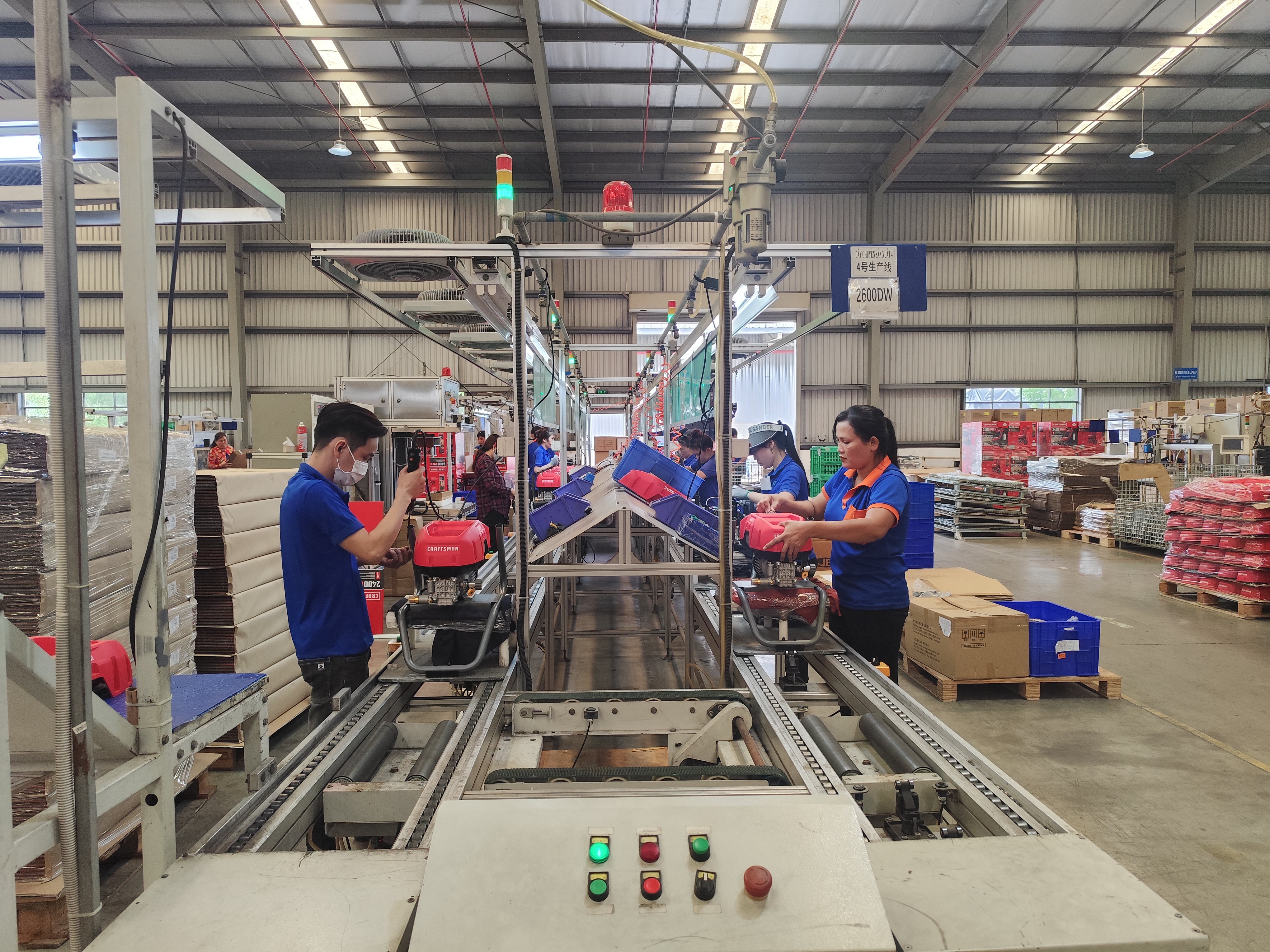
Navigating Foreign Accreditation Systems
Accreditation bodies around the world are linked through mutual recognition agreements (MRAs). The International Accreditation Forum (IAF) 6 maintains a global directory of its member bodies. If a foreign supplier's certificate is issued under an IAF-recognized accreditation body, the certification carries international credibility.
Here is a quick reference for common Asian accreditation bodies:
| Country | Accreditation Body | IAF Member? |
|---|---|---|
| China | CNAS | Yes |
| Vietnam | BoA (Bureau of Accreditation) | Yes |
| Taiwan | TAF | Yes |
| India | NABCB | Yes |
| South Korea | KAB | Yes |
| Japan | JAB | Yes |
If the accreditation body on the supplier's certificate is not an IAF member, treat that certification with extra caution.
Verifying Mill Test Reports and Material Traceability
Mill test reports (MTRs) 7, also called mill test certificates (MTCs), are critical documents in sheet metal fabrication. They trace raw material back to the producing mill and confirm chemical composition, mechanical properties, and compliance with standards like ASTM A240 or AMS 5510.
When reviewing an MTR from a foreign supplier, check for:
- Heat number traceability — the heat number on the MTR should match the material marking on the actual stock.
- Chemical composition — values should fall within the specified ranges for the declared grade.
- Mechanical properties — yield strength, tensile strength, and elongation should meet the standard.
- Testing laboratory — was the testing done by the mill itself, or by an independent lab?
Self-issued MTRs without third-party validation are a known risk. In industries like aerospace and defense, third-party material testing is not optional — it's a regulatory compliance requirement. Understanding what material certifications to request is essential for ensuring your parts meet U.S. compliance standards.
Independent Verification With XRF
X-ray Fluorescence (XRF) analysis 8 is a nondestructive method our team uses during incoming material inspection. A handheld XRF gun can confirm the elemental composition of a sheet metal part in seconds. This lets us cross-check whether the material actually matches what the MTR claims.
We've caught discrepancies this way — cases where an MTR stated 304 stainless steel, but XRF analysis showed the material was actually 201 grade. Without this step, the nonconforming material would have gone into production.
When to Insist on a Third-Party Audit
For high-value or safety-critical projects, document review alone may not be enough. A physical supplier audit — conducted by your own team or a contracted third-party auditor — provides the deepest level of assurance. During an on-site audit, you can verify:
- That the certified processes are actually implemented on the shop floor.
- That operators are trained and follow the documented SOPs.
- That equipment is maintained and calibrated.
- That NADCAP accreditation 9 or other special process certifications are genuinely in place, if required.
Our offices in Vietnam and China regularly conduct these audits as part of our supplier qualification process. We follow a supplier audit checklist that covers documentation, process capability, equipment condition, workforce competency, and finished part inspection. This comprehensive approach is what gives our clients confidence that the parts arriving at their U.S. warehouse will meet spec the first time.
Digital Traceability Is Gaining Ground
A growing number of supply chains are adopting digital platforms — some blockchain-based — to create immutable records for certifications, MTRs, and Certificates of Conformance. These platforms make it possible to verify a document's authenticity instantly, without relying on email exchanges or PDF files that could be altered. While adoption is still early, it's a trend worth watching and asking about when evaluating new suppliers.
Conclusion
Verifying sheet metal fabrication supplier certifications requires checking authenticity against official databases, confirming validity dates, matching scope to your project, and independently cross-referencing foreign documentation — every time.
Frequently Asked Questions
How can I verify that my sheet metal supplier's ISO certifications are actually authentic?
A few years back, one of our U.S. clients forwarded an ISO 9001 certificate 1 from a prospective supplier — and something felt off. The certificate number didn't match any record in the accreditation body 2 's public database. That single check saved them months of wasted tooling investment.
What steps should I take to confirm my supplier's quality credentials are still valid and not expired?
During a recent project involving custom mounting brackets for a U.S. engineering firm, we discovered that their incumbent supplier's AS9100 certificate 4 had lapsed six months earlier — yet no one on the buying side had noticed. The parts kept shipping, but the quality management system behind them was no longer being audited.
How do I ensure the scope of my fabricator's certification actually covers the custom parts I need?
One lesson we've learned working with U.S. purchasing managers is that a valid certificate can still be irrelevant. A supplier might hold ISO 9001 for "assembly of electrical enclosures" — but the custom sheet metal brackets you need involve laser cutting, CNC bending, and powder coating. Their certification scope simply doesn't cover your processes.
Footnotes
1. Explains the globally recognized ISO 9001 standard for quality management systems. ↩︎
2. Defines the authoritative body that performs accreditation for conformity assessment. ↩︎
3. Explains what a scope statement is and its importance in defining certification boundaries. ↩︎
4. Describes AS9100 as the international quality management system standard for aerospace industries. ↩︎
5. Details the purpose and frequency of annual surveillance audits for maintaining ISO certification. ↩︎
6. Explains the global association of accreditation bodies facilitating worldwide conformity assessment. ↩︎
7. Explains documents certifying chemical composition and physical properties of materials. ↩︎
8. Describes XRF as a non-destructive analytical technique for determining elemental composition. ↩︎
9. Explains the industry-managed program for critical process accreditation in aerospace and defense. ↩︎