
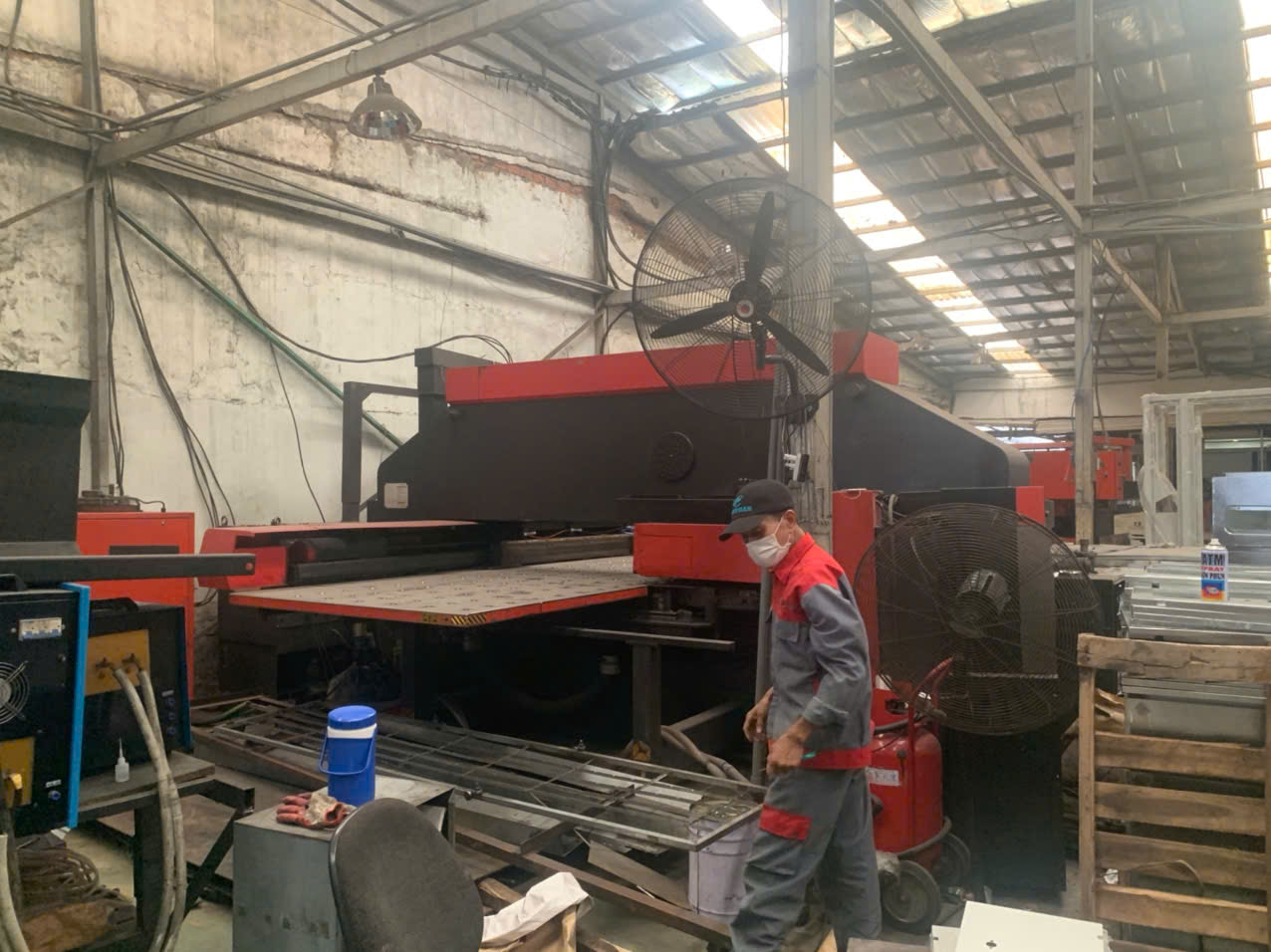
Last year, our team in Vietnam helped a U.S. defense subcontractor trace a batch of stamped steel brackets back to their melt origin — and the results almost cost them a six-figure contract.
To verify DFARS-compliant specialty metals from stamping parts suppliers, demand Certified Mill Test Reports showing the country of melt, confirm heat-lot traceability from finished part to mill, validate qualifying country status, and audit the supplier’s material flow-down clauses before production begins.
The stakes are high. A single non-compliant bracket can trigger part rejection, contract termination, and financial penalties. This guide walks you through the exact steps, documents, and red flags to watch for — whether your stamping supplier is in the U.S., Vietnam, Taiwan, or anywhere else.
How can I confirm my stamping parts supplier's specialty metals actually meet DFARS compliance requirements?
A buyer we work with in the Midwest once assumed his Taiwan-based stamping supplier was DFARS compliant because the parts "looked right" and came with a basic material certificate. He never checked the country of melt. That oversight delayed his delivery to a Tier-1 defense prime by three months.
Confirm DFARS compliance by requiring your stamping supplier to provide a Certified Mill Test Report that explicitly states the country of melt, a matching heat-lot number, and proof that the metal was melted in the U.S. or a qualifying country under DFARS 252.225-7009.

What Counts as a "Specialty Metal"?
Before you can verify compliance, you need to know what falls under the regulation. DFARS 252.225-7009 1 defines specialty metals as specific categories of steel, titanium, zirconium alloys, and superalloys. Not every metal your stamping supplier uses will qualify. But if it does, the rules are strict.
Here is a quick reference:
| Specialty Metal Category | Examples | Key Trigger |
|---|---|---|
| High-strength steel | Alloy steels with manganese >1.65%, silicon >0.60%, or copper >0.60% | Alloying element percentages |
| Stainless steel | 300-series, 400-series stainless | Chromium content ≥10.5% |
| Titanium and titanium alloys | Ti-6Al-4V, commercially pure titanium | Any titanium alloy |
| Superalloys | Inconel, Hastelloy, Waspaloy | Nickel or cobalt base with high-temp performance |
| Zirconium alloys | Zircaloy-2, Zircaloy-4 | Any zirconium alloy |
Stamping parts often use high-strength steels 2 and stainless steels. These are the categories most likely to trip up buyers who don't ask the right questions upfront.
The "Melt" Rule Is Everything
The critical point many buyers miss: compliance is determined by where the metal was melted, not where it was stamped, cut, or formed. A bracket stamped in Vietnam from steel melted in the United States is compliant. A bracket stamped in Ohio from steel melted in China is not.
This is the domestic melting requirement 3 at the heart of the regulation. The melt must occur in the U.S. or a qualifying country. The qualifying countries list includes nations with defense cooperation agreements — Australia, Canada, the United Kingdom, and several NATO allies.
The 3-Step Confirmation Process
Here is how I recommend buyers approach this:
- Request the CMTR before quoting. Ask for a sample Certified Mill Test Report 4 from the supplier's material stock. Look for the "Country of Melt" or "Heat Origin" field. If it is blank, stop.
- Match the heat-lot number. The heat number on the CMTR must match the heat number on the material tag or marking on the raw stock. We always photograph these tags during our supplier audits.
- Validate the qualifying country. Cross-reference the stated melt country against the current DFARS qualifying countries list. This list can change, so check it at the time of procurement.
When we conduct supplier audits in Vietnam, we walk the shop floor and physically verify that material tags correlate with the documentation. Paper compliance alone is not enough.
What documentation should I request to verify DFARS-compliant material sourcing before placing an order?
One lesson we learned early in our supply chain management 5 work: the time to verify documentation is before the purchase order, not after the parts arrive at your dock. Retrofitting compliance paperwork is expensive, slow, and sometimes impossible.
Before placing an order, request five key documents: a Certified Mill Test Report with country of melt, a Certificate of Conformance referencing DFARS 252.225-7009, the supplier's written sourcing statement, their ISO 9001 or AS9100 quality certificate, and proof that the material specification matches your engineering drawing.

The Five-Document Verification Kit
Each document serves a different purpose. Here is the breakdown:
| Document | What It Proves | What to Look For |
|---|---|---|
| Certified Mill Test Report (CMTR) | Metal chemistry, melt origin, heat number | Country of Melt field filled in; qualifying country listed; actual measured chemistry (not nominal) |
| Certificate of Conformance (COC) | Supplier certifies compliance to a specific clause | Explicit reference to DFARS 252.225-7009; matching heat/lot number |
| Supplier Sourcing Statement | Supplier's internal process for sourcing compliant metals | Written policy on qualifying country sourcing; named approved mills or distributors |
| ISO 9001 or AS9100 Certificate | Quality management system capable of maintaining traceability | Current certification; scope covers metal stamping or fabrication |
| Material Identification Match | Material matches the engineering drawing callout | Correct alloy, temper, revision level; no substitutions without approval |
Why the CMTR Is Not Enough on Its Own
Many buyers treat the Mill Test Report as the single source of truth. It is the most important document, yes. But it has limits. Some distributors keep DFARS certificates as separate documents from standard MTRs. If you do not explicitly ask for both, you may receive a perfectly valid MTR that simply does not mention the country of melt.
Our team always includes a line in the RFQ that reads: "Supplier must provide CMTR showing country of melt and country of manufacture prior to PO acceptance." This one sentence has saved multiple projects from compliance gaps.
The Certificate of Conformance Fills the Gap
When the MTR lacks origin data — which happens more often than you would expect — the Certificate of Conformance becomes your safety net. A properly written COC will state: "The material used in this part was melted and manufactured in [qualifying country] in accordance with DFARS 252.225-7009."
Without this explicit statement, you are relying on assumption. And assumption does not survive a DoD audit.
Embedding Requirements into Your RFQ
The most effective approach is to build melt origin verification into your quoting process. This is what we call the "Pre-Quote Defense." When we help U.S. clients source stamped brackets, post base mounts, or structural connectors from our vetted suppliers, we include DFARS compliance language in every RFQ package. This way, non-compliant suppliers self-select out of the bidding process before any time or money is wasted.
How do I identify red flags that a Vietnam or Taiwan-based supplier isn't truly DFARS compliant?
During a recent supplier audit at a stamping facility outside Ho Chi Minh City, our Vietnam team noticed something troubling: the shop had bins of raw stainless steel coil with no material tags at all. The owner insisted the material was "American steel." But there was no way to prove it.
Red flags include blank or missing country-of-melt fields on Mill Test Reports, inability to trace finished parts to specific heat lots, mixing of DFARS and non-DFARS stock without physical segregation, COTS exemption claims without formal documentation, and reluctance to allow supply chain audits.

The Most Common Red Flags
Working across Vietnam, Taiwan, and other Asian manufacturing hubs, we have developed an instinct for the warning signs. Here are the ones that come up most often:
Blank or ambiguous melt fields. If the country of melt on the CMTR is blank, listed as "various," or names a non-qualifying country like China or Russia, the material is non-compliant. Full stop. No amount of good chemistry data or correct alloy grade fixes this problem.
No heat-lot traceability. A compliant supplier can trace any finished stamped part — whether it is an L-bracket, a post base mount, or a trailer-hitch-style connector — back to a specific heat lot at the mill. If the supplier cannot do this, supply chain traceability is broken.
No material segregation. This is a physical, shop-floor issue. Compliant specialty metals must be stored separately from non-compliant commercial stock. When we audit a facility, we look for clearly labeled bins, dedicated storage racks, and color-coded tags. If DFARS and non-DFARS coils sit side by side with no distinction, cross-contamination is inevitable.
The COTS Trap
The Commercially Available Off-The-Shelf 6 exception is one of the most misused loopholes in DFARS compliance. Some suppliers claim their stamped parts qualify as COTS to bypass documentation requirements entirely. But COTS is a narrow exception. It applies only to items sold in substantial quantities to the general public at established catalog or market prices.
A custom stamped bracket made to your engineering drawing is almost certainly not COTS. If a supplier claims it is, demand a formal "Determination of Applicability" document. Without it, the COTS claim will not survive an audit.
Regional Risk Factors
| Risk Factor | Vietnam-Based Suppliers | Taiwan-Based Suppliers |
|---|---|---|
| Common raw material source | China, India, local mills | China, Japan, domestic mills |
| Melt origin documentation | Often missing or incomplete | Usually available but may lack DFARS-specific fields |
| Material segregation practices | Varies widely; smaller shops often lack segregation | Generally better; larger shops have formal systems |
| Willingness to allow audits | Generally open if relationship is established | Open but may require advance notice and formal process |
| COTS misclassification risk | Moderate | Moderate to high |
What to Do When You Spot a Red Flag
Do not walk away immediately. Instead, escalate. Ask the supplier to provide the missing documentation within a defined timeframe. If they cannot, request a meeting with their material procurement team. Our experience shows that many suppliers in Vietnam and Taiwan genuinely want to comply but lack the knowledge of what DFARS requires. Sometimes the fix is as simple as requiring them to source from a different distributor who maintains proper melt origin records.
But if the supplier resists transparency, cannot produce any melt origin documentation, or refuses to allow a supply chain audit, that is a clear signal to find a different partner.
Can I trust third-party mill certificates alone, or should I audit my supplier's specialty metals supply chain directly?
A few years ago, we helped a U.S. buyer validate a batch of stamped mounting flanges sourced through a multi-tier supply chain. The mill certificate looked perfect. The chemistry matched. The heat number was present. But when we dug deeper, the certificate belonged to a different batch of material entirely. The actual metal in the parts had no traceable origin.
You should not trust third-party mill certificates alone. Certificates can be copied, reused, or mismatched to different material lots. Direct audits of your supplier's specialty metals supply chain — including their material receiving, storage, and flow-down processes — are essential for genuine DFARS compliance verification.

Why Certificates Alone Are Insufficient
Mill certificates are essential documents. They are the starting point of melt origin verification. But they are paper. And paper can be wrong, outdated, or deliberately misleading.
The core problem is the gap between what the certificate says and what actually sits on the supplier's shelf. Without physical verification, you are trusting a chain of custody that may include multiple distributors, each adding a layer of distance from the original mill. Learning how to verify authenticity and validity of supplier certifications is a critical skill for any defense buyer.
The Case for Direct Audits
When our team conducts supplier audits — whether for stamped brackets, post base mounts, or complex welded assemblies — we follow a structured process:
- Review incoming material records. We check whether the supplier logs every incoming coil or sheet with its heat number, alloy grade, and source.
- Inspect physical material tags. We walk the shop floor and compare the tags on raw stock to the CMTRs on file.
- Verify segregation. We confirm that DFARS-compliant material is physically separated from commercial stock.
- Check flow-down clauses. We review the supplier's purchase orders to their own material vendors. The DFARS clause must be flowed down in writing to every tier.
- Test the material. For high-risk orders, we recommend independent handheld XRF testing on finished stamped parts. This verifies that the alloy composition matches the MTR. It is a fast, non-destructive check that catches "paperwork-only" compliance.
Handheld XRF: A Practical Verification Tool
X-ray fluorescence testing 7 is increasingly used in defense supply chains. A handheld XRF gun can identify the elemental composition of a metal part in seconds. It will not tell you where the metal was melted. But it will tell you whether the alloy grade on the certificate matches the alloy in the actual part. If the certificate says 304 stainless and the XRF reads a different composition, you have a problem that no amount of paperwork can fix.
Digital Traceability Is the Future
Some forward-thinking suppliers are adopting digital heat-lot tracking systems 8. These create an audit trail from the melt shop through the stamping press to the final packaged part. Blockchain-based traceability and digital material twins are emerging concepts, though they are not yet widespread in the stamping industry. For now, the practical standard remains: physical audits plus verified paper documentation.
How Often Should You Audit?
The answer depends on your risk exposure. For ongoing defense contracts, we recommend an initial qualification audit plus annual surveillance audits. For one-time orders, a pre-production audit — before the first part is stamped — is the minimum. Retain all MTRs, COCs, and audit reports for the entire life of the contract. This is not optional. It is a DFARS requirement.
The Berry Amendment 9 and related regulations add another layer for certain textile and food items, but for specialty metals in stamping, DFARS 252.225-7009 is the governing clause. Buyers working with government contracts should also understand how to confirm a stamping parts supplier meets Buy America traceability requirements, as these obligations often overlap. Make sure your audit protocol is built around it.
Conclusion
Verifying DFARS-compliant specialty metals requires more than trusting paperwork. Demand CMTRs with melt origin, audit your supplier's shop floor, and build compliance requirements into every RFQ before production starts.
Frequently Asked Questions
What Counts as a "Specialty Metal"?
Before you can verify compliance, you need to know what falls under the regulation. DFARS 252.225-7009 1 defines specialty metals as specific categories of steel, titanium, zirconium alloys, and superalloys. Not every metal your stamping supplier uses will qualify. But if it does, the rules are strict.
How Often Should You Audit?
The answer depends on your risk exposure. For ongoing defense contracts, we recommend an initial qualification audit plus annual surveillance audits. For one-time orders, a pre-production audit — before the first part is stamped — is the minimum. Retain all MTRs, COCs, and audit reports for the entire life of the contract. This is not optional. It is a DFARS requirement.
How can I confirm my stamping parts supplier's specialty metals actually meet DFARS compliance requirements?
A buyer we work with in the Midwest once assumed his Taiwan-based stamping supplier was DFARS compliant because the parts "looked right" and came with a basic material certificate. He never checked the country of melt. That oversight delayed his delivery to a Tier-1 defense prime by three months.
Footnotes
1. Official regulation defining specialty metals and domestic sourcing requirements for defense contractors. ↩︎
2. ISO standards classify and define properties for high-strength steel alloys used in manufacturing. ↩︎
3. DCMA enforces defense contractor compliance including verification of domestic melt origin rules. ↩︎
4. ASTM standards govern the chemical and mechanical data reported in mill test documents. ↩︎
5. Background concept explaining the discipline behind verifying supplier sourcing and documentation processes. ↩︎
6. Explains the narrow COTS exception frequently misapplied to custom-made stamped parts. ↩︎
7. Describes the non-destructive testing method used to confirm alloy composition matches certificates. ↩︎
8. Official GS1 global standards for supply chain traceability and material tracking. ↩︎
9. Official International Trade Administration guide on Berry Amendment procurement requirements. ↩︎