When our team in Vietnam started fielding requests for stamping parts bound for the European market, one problem surfaced fast: buyers could not tell which supplier certificates were real and which were just decorative PDFs.
To verify EU environmental compliance for stamping parts suppliers, request IPC-1752A material declarations, validate RoHS and REACH certificates against accredited databases, confirm SCIP database submissions for SVHCs above 0.1% w/w, audit ISO 14001 systems on-site, and establish ongoing monitoring for material or process changes.
This guide walks you through every practical step — from the documents you should demand on day one to the emerging Digital Product Passport requirements you need to plan for now IPC-1752A format 1. Let’s break it down section by section.
What documents should I request to confirm my stamping parts supplier meets RoHS and REACH requirements?
A few years back, one of our procurement engineers discovered that a supplier's REACH Regulation 2 compliance letter referenced an SVHC candidate list that was two revisions out of date — a gap that would have triggered border rejections in Germany.
Request a part-specific RoHS Declaration of Conformity, a REACH SVHC disclosure referencing the latest candidate list, IPC-1752A material declarations in XML format, third-party lab test reports for restricted substances, and proof of SCIP database notification for any SVHCs above 0.1% w/w.

Why Generic PDF Letters Are No Longer Enough
Many stamping parts suppliers still hand over a one-page PDF that says "We comply with RoHS." That document tells you almost nothing. It does not link to a specific part number. It does not reference the exact version of the SVHC candidate list. And it cannot be read by any compliance management software.
The industry standard today is the IPC-1752A format — a machine-readable XML file that maps each substance to each component in your bill of materials. If your supplier does not have the tools to generate one, the free Anthesis IPC-1752A template is publicly available for them to use. Insist on it. Reject non-XML declarations because they create manual data-entry errors and hide inconsistencies.
The Core Document Checklist
| Document | What It Proves | Format Required |
|---|---|---|
| RoHS Declaration of Conformity | Parts meet Directive 2011/65/EU substance restrictions | Signed, part-number-specific PDF + XML |
| REACH SVHC Disclosure | SVHCs above 0.1% w/w are identified and reported | IPC-1752A XML referencing the current candidate list |
| SCIP Database 3 Submission Proof | Supplier has notified ECHA of articles containing SVHCs | Submission confirmation from ECHA portal |
| Third-Party Lab Test Report | Independent verification of chemical composition | Report from an accredited lab (ISO 17025) |
| Material Test Report / Mill Certificate | Raw metal composition matches declared specifications | Mill certificate tied to heat/lot number |
| Safety Data Sheets for Process Chemicals | Stamping lubricants and cleaners meet local wastewater and REACH rules | Current SDS in GHS format |
Understanding the 0.1% Threshold
The RoHS Directive standards 4 restrict six original substances (plus four phthalates) at specific thresholds. REACH operates differently. Under REACH, if any Substance of Very High Concern is present above 0.1% weight by weight in an article, the supplier must communicate that down the supply chain and submit data to the SCIP database. Many suppliers miss this because they think REACH only applies to chemicals sold in bulk — it does not. It applies to articles, including stamping brackets and clips.
When we audit suppliers for our European-bound projects, we specifically ask: "Have you submitted SVHC data to the SCIP database for this exact part number?" If the answer is vague, that is a red flag. For a deeper look at what REACH obligations apply when sourcing from Southeast Asia, see our guide on EU REACH compliance requirements when sourcing stamping parts from Vietnam.
Don't Forget Process Chemicals
The finished stamping part is only half the picture. Stamping lubricants, surface treatment chemicals, and aqueous cleaners leave a "chemical footprint" at the factory. While residues may not remain on the final part, European buyers increasingly ask about the supplier's local environmental permits and wastewater compliance. Material Data Sheets for these process chemicals should be part of your document request.
How can I verify my supplier's environmental compliance certificates are genuine and not outdated?
During a supplier audit in southern China last year, our quality team found an ISO 14001 certification 5 hanging on the factory wall — with an expiry date nine months past. The supplier genuinely did not realize it had lapsed.
Verify certificates by cross-checking the certificate number and supplier name in the issuing body's online database, confirming the accreditation body is IAF-recognized, checking expiry dates against current validity, and requesting the latest surveillance audit report to confirm the management system is still active.

Step-by-Step Verification Process
Certificates are only as good as the system behind them. Here is the process we follow at DEWIN whenever we onboard a new stamping parts supplier:
- Record the certificate number, the name of the certification body (CB), and the accreditation body (AB).
- Go to the accreditation body's website (e.g., UKAS, DAkkS, JAS-ANZ, or CNAS) and search for the CB. Confirm it is accredited to issue that specific standard.
- Search the CB's own certificate database (most major CBs like TÜV, SGS, BSI, and Bureau Veritas have online portals). Enter the certificate number and verify it matches the supplier's legal entity name, scope, and site address.
- Check the expiry date and the date of the last surveillance audit. ISO 14001 certification follows a three-year cycle with annual surveillance audits. A valid certificate with no recent surveillance audit is a warning sign.
- Request the audit report summary. Reputable suppliers will share at least the findings summary. If they refuse, that tells you something.
For a detailed walkthrough of this process specifically for verifying ISO 14001 certification for Vietnamese stamping parts suppliers, we have a dedicated guide covering the nuances of the Vietnamese certification landscape.
Common Certificate Red Flags
| Red Flag | What It Means | Your Action |
|---|---|---|
| Certificate number not found in CB database | Possibly fabricated or issued by an unaccredited body | Reject and request clarification |
| Scope does not mention "stamping" or "metal forming" | Certification may cover a different division or product line | Ask for scope extension evidence |
| Expiry date passed; no renewal visible | Management system lapsed | Require renewed certificate before proceeding |
| No accreditation body logo on certificate | CB may not be IAF-recognized | Verify CB's accreditation independently |
| Supplier shows only a self-declaration | No third-party verification behind it | Demand accredited third-party certification |
Beyond ISO 14001: Other Markers to Validate
An ISO 14001 certification confirms the supplier has an Environmental Management System. But it does not guarantee REACH or RoHS compliance on its own. For automotive stamping, look for IATF 16949:2016 certification 6 as well — it indicates the supplier follows continuous quality and process auditing. Some European buyers now also request an EcoVadis sustainability rating, which scores suppliers on environment, labor practices, ethics, and sustainable procurement. This is voluntary, but it adds a layer of third-party credibility.
We also advise checking if the supplier can produce records going back 10 years and deliver them within 5 business days. This retention policy is an industry best practice that aligns with REACH requirements and signals a mature compliance operation.
Self-Declaration vs. Third-Party Testing
There is a legitimate debate here. Self-declarations save cost and time. Third-party lab testing from an ISO 17025-accredited lab provides hard data. Our recommendation: use self-declarations for low-risk commodity parts. For any high-value or safety-critical stamping component — or any part with surface treatments like zinc plating or chromate conversion — mandate third-party testing. The cost of one lab report is trivial compared to a border seizure.
What questions should I ask during a supplier audit to assess their environmental management system?
The single most revealing moment in any supplier audit I have conducted is not reading binders — it is watching the shop-floor operator answer a question about waste segregation. If the operator knows the answer without looking it up, the system is real.
During a supplier audit, ask about their SVHC tracking process, SCIP database submission workflow, incoming material inspection for restricted substances, corrective action procedures for non-conformances, chemical inventory management, waste disposal records, and their readiness plan for the Digital Product Passport and Ecodesign for Sustainable Products requirements.

Structuring the Audit: Desktop Review Before the Visit
Before you set foot in the factory, conduct a desktop review. Collect and cross-check the following:
- Production control sheets showing material traceability
- Safety Data Sheets for all stamping oils, cleaners, and plating chemicals
- Marketing materials and product data sheets (check for inconsistencies with technical declarations)
- Conflict Minerals reporting documentation if tin, tantalum, tungsten, or gold are in the supply chain
This desktop phase filters out suppliers who cannot even assemble their paperwork. It also gives you a list of targeted questions for the on-site visit.
On-Site Audit Questions Organized by Topic
| Audit Area | Key Questions | What Good Looks Like |
|---|---|---|
| Chemical Management | "Show me how you track SVHCs in incoming raw materials." | A digital system linking mill certificates to part numbers, with alerts when SVHC candidate list updates |
| SCIP Compliance | "Walk me through the SCIP database submission process for this bracket." | Demonstrated portal login, submission confirmations linked to specific SKUs |
| Waste & Emissions | "Where does your stamping lubricant waste go? Show me the disposal contract." | Licensed waste handler contract, manifest records, and wastewater test results |
| Change Management | "If you switch to a new steel coil supplier, what approvals are triggered?" | Formal change-control procedure requiring re-testing and buyer notification |
| Life Cycle Assessment Awareness | "Have you assessed the carbon footprint of this part from cradle to gate?" | Even a basic Life Cycle Assessment or embedded emissions calculation shows forward thinking |
| Supply Chain Due Diligence | "How do you verify your sub-suppliers' environmental compliance?" | Written Supply Chain Due Diligence Act awareness, sub-supplier audit schedule |
| DPP Readiness | "How are you preparing to provide machine-readable lifecycle data per batch?" | Awareness of Digital Product Passport timelines and a preliminary data architecture |
Going Beyond the Binder: What to Observe on the Shop Floor
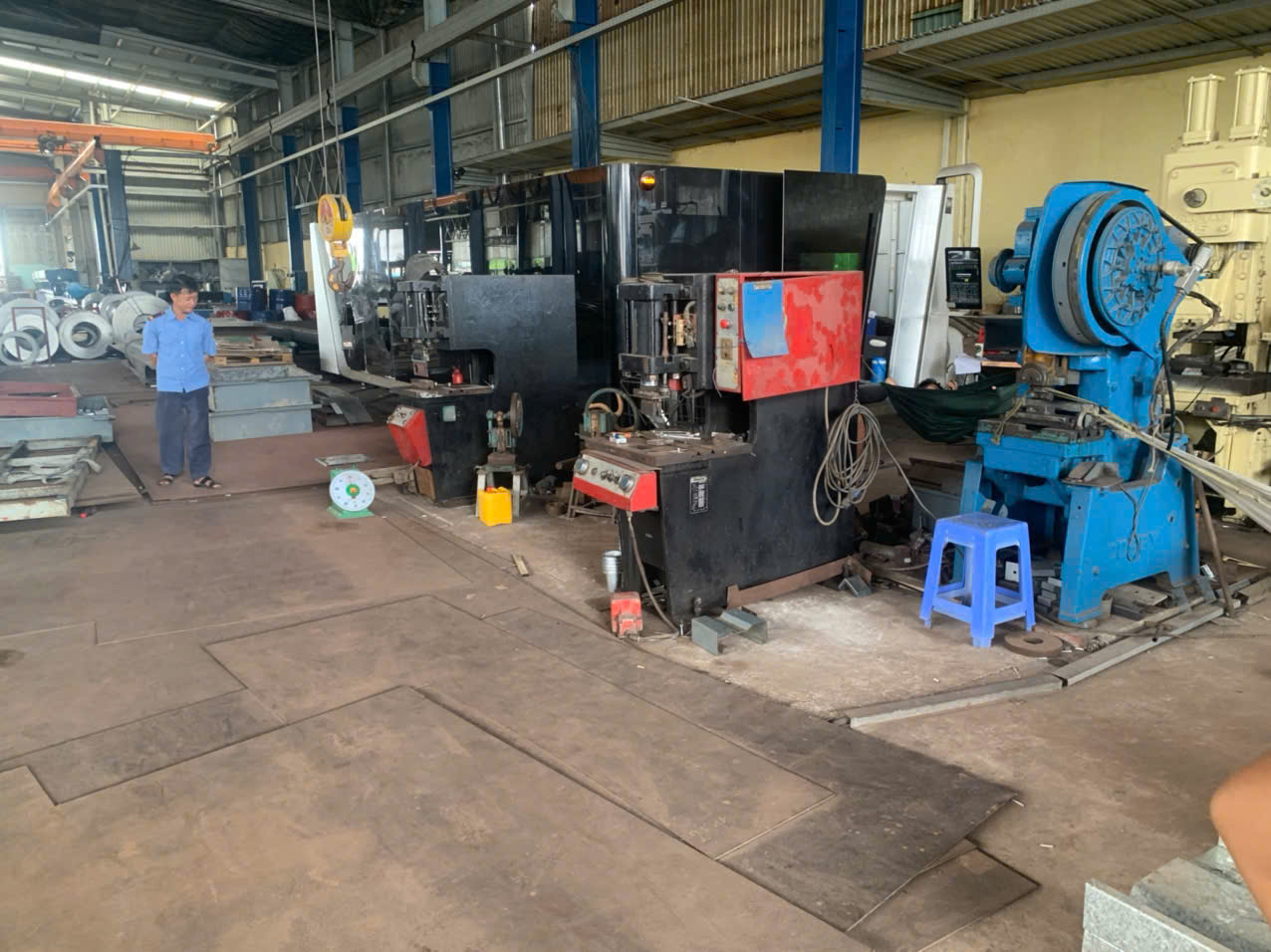
Documents can be fabricated. The shop floor cannot. During our audits, we look for:
- Labeled chemical storage areas with current SDS posted nearby.
- Waste segregation bins that are actually used correctly (not just present).
- Traceability markings on raw coil stock matching the incoming inspection log.
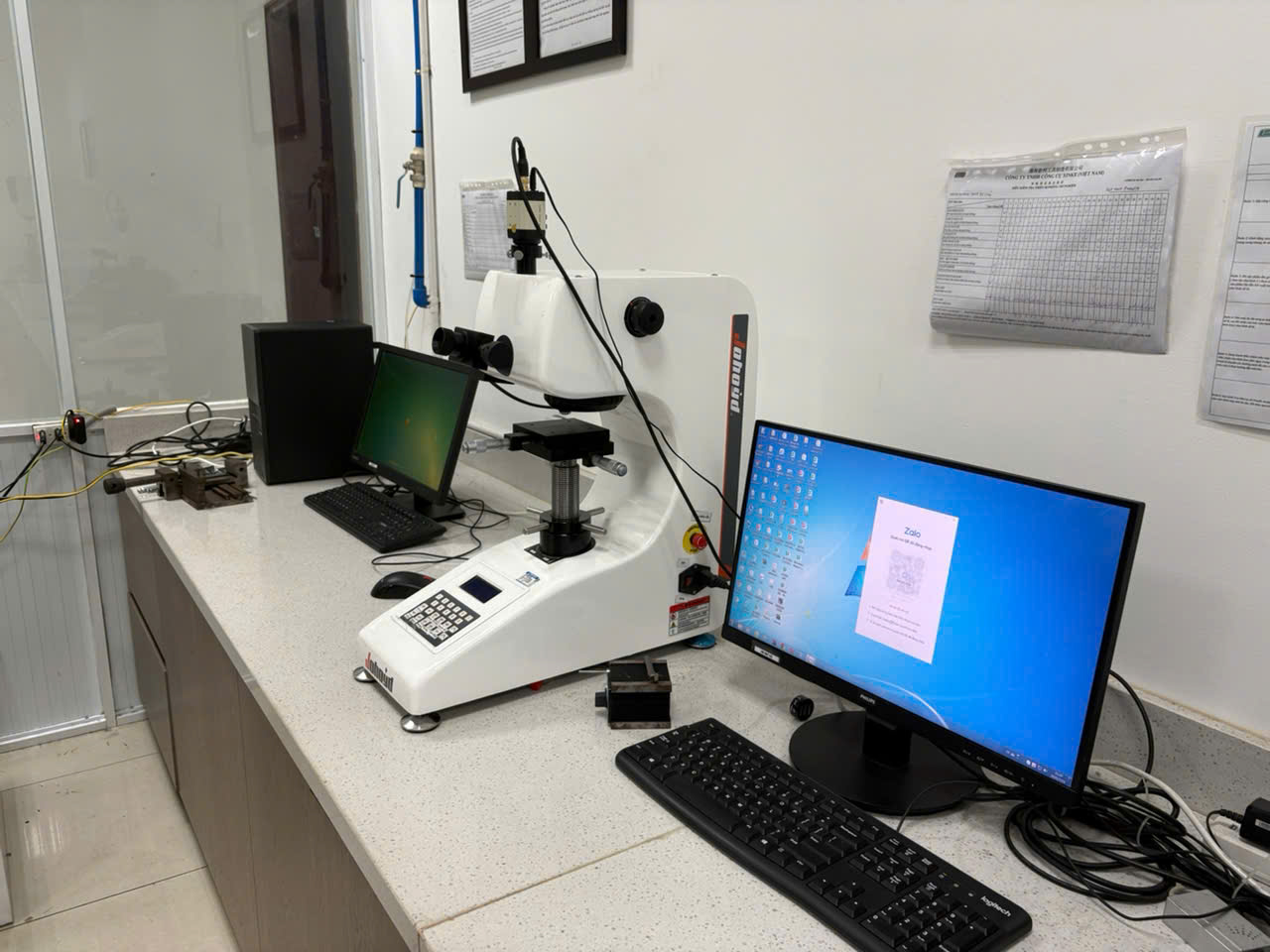
- Calibrated testing equipment for coating thickness or material hardness, with current calibration stickers.
If the supplier claims ISO 14001 certification but the shop floor shows unlabeled chemical drums and mixed waste bins, the certificate is not translating into practice. That gap is where non-conforming parts originate.
The Carbon Border Adjustment Mechanism Question
For stamping parts made from ferrous or non-ferrous metals imported into the EU, the Carbon Border Adjustment Mechanism 7 is becoming relevant. Ask the supplier: "Can you provide verified embedded emissions data for this part?" Most suppliers cannot answer this yet. But the ones who are working on it — tracking energy sources, requesting Guarantees of Origin for green electricity, or measuring Scope 1 and 2 emissions — are the ones positioning themselves for the next wave of EU regulation. For practical methods to evaluate supplier sustainability and carbon footprint for stamping parts, we have outlined a structured approach in a separate article.
How do I ensure ongoing compliance if my stamping parts supplier changes materials or processes later?
One lesson we learned the hard way: a supplier passed every audit beautifully, then quietly switched their zinc plating sub-contractor to save cost. The new plater used a hexavalent chromium process. We caught it only because our final inspection included an XRF scan — but it nearly caused a shipment rejection at the EU border.
Ensure ongoing compliance by requiring contractual change-notification clauses, mandating re-testing after any material or process change, scheduling annual surveillance audits, maintaining a living approved-materials list, and building periodic third-party sampling into your quality agreement.

Why Initial Compliance Is Not Enough
EU environmental regulations are not static. The SVHC candidate list under REACH grows twice a year. RoHS exemptions expire and must be renewed. Extended Producer Responsibility 8 schemes — covering packaging, WEEE, and batteries — are being enforced with fines up to €200,000 and immediate sales blockades for non-registration. If your supplier changes a surface finish, switches a raw material source, or modifies a heat treatment process, the compliance status of the finished part can change overnight.
Building a Change-Control Framework
The most effective tool we use is a contractual change-notification clause embedded in every supply agreement. It requires the supplier to notify us in writing before implementing any change to:
- Base material grade or supplier
- Surface treatment chemistry or sub-contractor
- Stamping lubricant or cleaning agent
- Manufacturing process sequence
- Packaging materials entering the EU under EPR obligations
Upon notification, we trigger a re-qualification process. This includes updated IPC-1752A material declarations, fresh third-party lab testing if the change involves restricted substances, and a review of the SCIP database submission status.
Monitoring Tools and Frequency
| Monitoring Activity | Frequency | Responsible Party |
|---|---|---|
| SVHC candidate list review | Every 6 months (aligned with ECHA updates) | Buyer's compliance team |
| Supplier self-assessment questionnaire | Annually | Supplier, reviewed by buyer |
| Third-party lab testing (XRF/ICP) | At every material or process change, plus annually for critical parts | Accredited lab |
| On-site surveillance audit | Annually for critical suppliers; biannually for low-risk | Buyer's audit team or third-party auditor |
| EPR registration status check | Annually, per each EU market | Buyer's regulatory or logistics team |
| Mass balance verification for recycled content claims | At contract renewal or upon claim change | Supplier provides; buyer verifies |
Preparing for Digital Product Passport and ESPR
The Ecodesign for Sustainable Products Regulation 9 will require granular, machine-readable data on a part's lifecycle, recyclability, and environmental footprint — delivered through a Digital Product Passport. While stamping parts may not be in the first wave of product categories covered, preparation should start now.
Ask your supplier today: "Can you provide batch-level data on material origin, energy consumption, and recyclability in a structured digital format?" If the answer is no, work with them on a roadmap. The suppliers who invest in this data infrastructure now will be the ones who can serve the EU market smoothly in two to three years.
The Importer Liability Trap
A critical nuance: if you import stamping parts into the EU and sell them under your own brand, or modify them before resale, you assume all manufacturer obligations under ESPR — including compliance marking and Digital Product Passport availability. You cannot outsource this liability entirely to your Asian supplier. You must verify, document, and retain evidence yourself. This is why our role as a supply chain services partner includes not just sourcing but also ongoing compliance monitoring — because our clients' exposure does not end at the factory gate.
Also keep in mind: Extended Producer Responsibility registration is country-specific. Germany requires LUCID registration 10. France has Citeo. The Netherlands has its own system. If you sell stamping parts into multiple EU countries, you — or your supplier's packaging — must be registered in each relevant national scheme. Failure to register before placing products on the market triggers immediate sales blockades, not just fines.
Conclusion
Verifying EU environmental compliance for stamping parts suppliers demands active, ongoing work — not a one-time certificate check. Build a system of documented declarations, third-party testing, regular audits, and contractual change controls to protect your market access.
Frequently Asked Questions
What documents should I request to confirm my stamping parts supplier meets RoHS and REACH requirements?
A few years back, one of our procurement engineers discovered that a supplier's REACH Regulation 2 compliance letter referenced an SVHC candidate list that was two revisions out of date — a gap that would have triggered border rejections in Germany.
How can I verify my supplier's environmental compliance certificates are genuine and not outdated?
During a supplier audit in southern China last year, our quality team found an ISO 14001 certification 5 hanging on the factory wall — with an expiry date nine months past. The supplier genuinely did not realize it had lapsed.
What questions should I ask during a supplier audit to assess their environmental management system?
The single most revealing moment in any supplier audit I have conducted is not reading binders — it is watching the shop-floor operator answer a question about waste segregation. If the operator knows the answer without looking it up, the system is real.
Footnotes
1. Official IPC site for the industry standard on material declaration data exchange. ↩︎
2. Official ECHA page explaining the REACH regulation framework and compliance requirements. ↩︎
3. Official ECHA portal for the SCIP database regarding substances of concern in articles. ↩︎
4. European Commission overview of the RoHS directive and restricted hazardous substances. ↩︎
5. Official ISO page for the international standard for environmental management systems. ↩︎
6. Authoritative source (AIAG) for the standard, avoiding the 403 error on the IATF global oversight site. ↩︎
7. European Commission page explaining the CBAM policy for carbon-intensive imports. ↩︎
8. Wikipedia overview of the EPR environmental policy approach for product lifecycles. ↩︎
9. Official EU page for the ESPR framework and sustainable product requirements. ↩︎
10. Official German packaging register site for LUCID environmental compliance. ↩︎