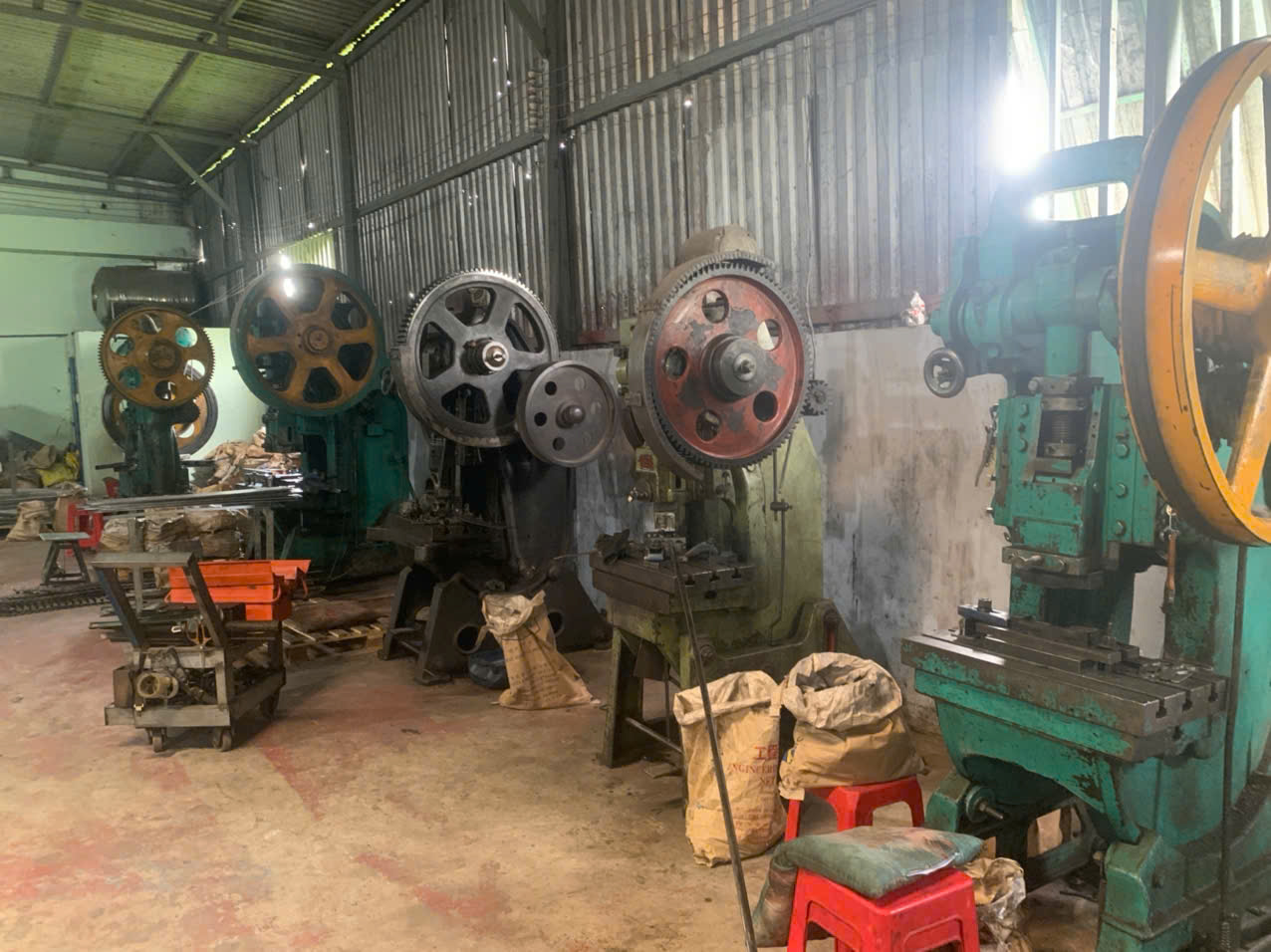

Last quarter, our team in Vietnam flagged a stamping supplier 1 whose IATF 16949 certificate looked perfect on paper — but the IATF database search told a very different story.
To verify IATF 16949 certification when sourcing stamping parts suppliers, you must cross-reference the certificate number on the official IATF Global Oversight registry, confirm the scope explicitly covers stamping processes, validate the site address matches the production facility, and check certificate validity dates — never rely solely on a supplier-provided PDF.
The steps sound simple, but each one hides pitfalls that can cost you months and thousands of dollars. Below, I break down the full verification process we use when qualifying stamping suppliers across Asia for our U.S. and European clients.
How can I verify if a stamping parts supplier's IATF 16949 certificate is genuine and current?
A buyer we work with in Ohio once asked us to rush-qualify a stamping supplier in Southeast Asia. The supplier emailed a clean-looking certificate PDF within an hour. That speed itself was the first thing that made our quality team pause.
To verify a stamping supplier's IATF 16949 certificate, go to the official IATF Global Oversight website (iatfglobaloversight.org), enter the unique 6-to-7-digit certificate number, and confirm the certificate status, site address, issuing Certification Body, scope, and expiration date all match what the supplier provided.

Why You Should Never Trust a PDF Alone
Fake certificates are more common than most purchasing managers realize. A well-formatted PDF with an IATF logo means nothing if it cannot be confirmed on the live registry. When we audit suppliers for our clients, the very first thing we do is open the IATF Global Oversight portal 2 and type in the certificate number. If nothing comes up, that supplier is disqualified immediately — no exceptions.
The Step-by-Step Verification Process
Here is exactly how our team runs a certificate check:
- Get the certificate number. Ask the supplier for their IATF certificate. Look for a 6-to-7-digit number printed on it.
- Go to the official registry. Navigate to
www.iatfglobaloversight.org. Do not use third-party verification sites. Do not trust links from the supplier's own website. - Search by certificate number. This is the most precise method. You can also search by company name and location, but the number eliminates ambiguity.
- Cross-reference every field. Compare the registry entry against the supplier's document line by line.
What to Compare on the Registry
| Field to Check | What to Look For | Red Flag If… |
|---|---|---|
| Certificate Number | Exact match with the supplier's document | Number does not exist or digits differ |
| Site Address | Must be the physical stamping plant address | Address is corporate HQ only, not the factory |
| Certification Body 3 | Must be an IATF-recognized CB (e.g., SGS, TÜV, BSI) | CB is unknown or not on the IATF list |
| Certificate Status | "Active" or "Valid" | Shows "Suspended," "Withdrawn," or "Expired" |
| Expiration Date | Within the current 3-year cycle | Date has passed with no renewal |
| IATF Logo | Globe logo with the registered "R" mark | Logo is missing or looks altered |
Secondary Verification Through the Certification Body
After the IATF database search, we often take one extra step. We visit the issuing Certification Body's own online database — for example, SGS or TÜV — and search for the same certificate. This secondary check catches edge cases where a certificate was recently suspended but the IATF registry has a short update lag. It takes five minutes and adds real confidence.
The certification cycle runs three years, with annual surveillance audits required in between. So even if a certificate is valid today, ask the supplier for their most recent surveillance audit summary. A genuine supplier will share it without hesitation. One that stalls or deflects is telling you something.
What should I check in a supplier's IATF 16949 scope to confirm it covers my stamping parts?
One trade-off we constantly weigh when qualifying suppliers is speed versus thoroughness. A client needs parts fast, but if the supplier's scope says "assembly" and your parts require progressive die stamping, that certificate is irrelevant — no matter how quickly they can quote.
Check that the supplier's IATF 16949 scope statement explicitly lists processes like "die stamping," "progressive die stamping," or "metal forming," and confirms coverage of the specific material grades (e.g., AHSS, aluminum alloys) and product categories matching your stamping parts requirements.

Why the Scope Is the Most Critical Field
The scope statement defines exactly what the quality management system 6 covers. A supplier can hold a perfectly valid IATF 16949 certificate and still be completely unqualified for your project. I have seen certificates with scopes like "machining of plastic components" presented by suppliers bidding on steel stamping work. The certificate was real. It was just irrelevant.
What the Scope Must Include for Stamping
When we review a scope for a stamping project, we look for three things:
| Scope Element | Acceptable Language | Unacceptable Language |
|---|---|---|
| Manufacturing Process | "Die stamping," "progressive stamping," "metal forming," "press forming" | "Machining," "injection molding," "assembly only" |
| Material Coverage | References to steel, aluminum, AHSS, or the specific alloy grades you need | No material reference, or references to plastics or composites |
| Product Category | "Automotive stamped components," "structural brackets," "mounting hardware" | "Electronic assemblies," "rubber seals," generic "components" |
Understanding Remote Support Locations
A detail many buyers overlook is the "Remote Support Location 7" (RSL) section. If the supplier's tool design is done at a separate office, or if raw material procurement is handled from a different site, those locations should be listed on the certificate as RSLs. This means the quality management system extends to cover those functions too. If the RSL list is missing or incomplete, critical parts of the supply chain may fall outside the certified system.
Sub-Tier Supplier Validation
Here is another lesson we have learned through experience: your Tier 1 stamping supplier 8 may outsource certain operations to a sub-tier stamper. In our supplier audits across Vietnam and other Asian markets, we always ask whether any stamping, plating, or heat-treating is subcontracted. If it is, we verify whether those sub-tier suppliers are also IATF certified or, at minimum, appear on the primary supplier's approved supplier list with documented qualification records. A break in the quality chain at the sub-tier level can cause the same problems as sourcing from an uncertified supplier directly.
Letters of Conformance vs. Full Certificates
New facilities sometimes present a "Letter of Conformance" instead of a full certificate. This is a temporary document issued to sites that have not yet accumulated 12 months of production data. It is legitimate, but it is not the same as full certification. If a supplier hands you a Letter of Conformance, understand the limitation: they are in the process, not at the finish line. Factor this into your risk assessment.
Which red flags suggest a supplier is misrepresenting their IATF 16949 certification status?
During a recent supplier qualification project for a U.S. client, our China office encountered a stamping shop that had the IATF logo prominently displayed on their homepage, in their email signature, and on their business cards — but could not produce the actual certificate number when asked.
Key red flags include: inability to provide a specific IATF certificate number, certificates missing the official IATF globe logo, scope statements that do not match the offered services, site addresses that differ from the actual production facility, expired validity dates, and refusal to share recent audit results or PPAP documentation.

The Red Flag Checklist
Over years of auditing suppliers across China, Vietnam, Taiwan, and India, our team has compiled a practical checklist. Here are the warning signs we watch for, ranked by how frequently we encounter them:
| Red Flag | What It Looks Like | How Common |
|---|---|---|
| Logo on website, no certificate available | Supplier displays the IATF logo but cannot email the certificate within 24 hours | Very common |
| PDF only, no registry match | Supplier provides a certificate that does not appear on iatfglobaloversight.org | Common |
| Scope mismatch | Certificate covers a different process (e.g., "welding") than the stamping work you need | Common |
| Address mismatch | Certificate lists a different city or facility than where production actually happens | Moderately common |
| Expired or suspended certificate | Dates on the document have passed; supplier claims "renewal is in process" | Moderately common |
| Refuses to share audit summary | Supplier says audit results are "confidential" when asked for recent surveillance findings | Less common but serious |
| Fake verification websites | Supplier provides a link to a registry that is not iatfglobaloversight.org | Rare but dangerous |
How Fake Verification Sites Work
This one deserves special attention. Some suppliers create or link to third-party websites that mimic the look of the official IATF Global Oversight portal. The URL will be slightly different — maybe an extra word or a different domain extension. Always type the URL directly into your browser: www.iatfglobaloversight.org. Do not click links sent by the supplier.
The "Renewal in Process" Excuse
When a certificate is expired and the supplier says they are "in the process of renewing," treat this as a pause, not a green light. An expired certificate means the quality management system has not been verified by a Certification Body for the current period. It may be fine. It may not. Either way, you are taking on risk. In our workflow, we flag these suppliers and revisit them in 60 days. We do not place orders against an expired certificate.
Behavioral Red Flags Beyond Documentation
Sometimes the red flags are not on paper. They show up in conversations. A supplier that cannot explain their APQP process, has never heard of a control plan, or cannot describe how they run SPC on critical stamping dimensions is likely holding a certificate they do not operationally support. We call these "paper tigers" — the system exists in binders but not on the shop floor. When we conduct supplier audits, we always ask the production team — not just the sales team — about their quality processes. The gap between what sales says and what production knows is often revealing. For a broader look at what to examine when verifying stamping parts suppliers for custom OEM manufacturing, we recommend a parallel due-diligence process.
How do I use IATF 16949 verification alongside audits to choose a reliable stamping supplier in Asia?
A client interaction last year taught us something important. The client had already verified a Vietnamese stamping supplier's IATF certificate on the registry — everything checked out. But when our local team visited the plant for a supplier audit, the reality was different from what the paperwork suggested. The certificate was real. The capability was not.
Combine IATF 16949 registry verification with an on-site supplier audit that evaluates live SPC on critical dimensions, reviews a PPAP Level 3 submission from a comparable program, inspects PFMEA and control plan execution on the shop floor, and confirms material traceability back to the raw material heat number.

Certificate Verification Is Step One, Not the Finish Line
Think of the IATF database search as a filter. It removes obviously unqualified suppliers. But it does not tell you whether the supplier can actually hold tight tolerances on your progressive-die stamped brackets or maintain consistent Cpk values on safety-critical dimensions. That requires a deeper look.
The PPAP Documentation Test
We always request a PPAP Level 3 package 9 from a comparable prior program — same process family, similar material. This is one of the most telling requests you can make. A supplier with genuine automotive experience will know exactly what you are asking for and deliver it promptly. Here is what we look for inside the package:
- Process Flow Charts and Control Plans: These must be specific to the stamping process, not generic templates.
- PFMEA (Process Failure Mode and Effects Analysis): We read the PFMEA to see if the identified risks are realistic for stamping — things like die wear, material springback, and burr formation. A generic PFMEA that could apply to any manufacturing process is a warning sign.
- Initial Capability Studies: For critical dimensions, we expect a Cpk of 1.67 or above. This is the automotive standard for safety-critical features.
- Material Certifications: We verify these trace back to the mill, including the heat number.
What to Observe During a Site Visit
When our team in Vietnam or China conducts an on-site audit, we go beyond the conference room. We walk the production floor. Here is what we specifically look for at a stamping facility:
| Observation Area | What to Look For | What It Tells You |
|---|---|---|
| SPC Charts at Press Stations | Live, current data on critical dimensions — not just summary reports | Whether the supplier actually uses SPC to make real-time decisions |
| Die Maintenance Logs | Scheduled preventive maintenance records for dies and tooling | Whether they practice defect prevention or just react to failures |
| Material Traceability | Ability to trace a specific lot of parts to the raw material heat number and shift | How robust their quality management system really is |
| Customer-Specific Requirements | Evidence of embedded CSR processes for Tier 1 automotive supplier customers or OEMs | Whether they understand and manage OEM-level expectations |
| Calibration Records | Up-to-date calibration stickers and records on gauges and measuring equipment | Whether their measurement system analysis (MSA) is credible |
The Core Tools Conversation
IATF 16949 requires proficiency in five Core Tools 10: APQP, PPAP, FMEA, MSA, and SPC. During audits, we have a simple test. We ask the quality manager to walk us through a recent PFMEA — not from a binder, but from memory. Can they explain why a specific risk priority number was assigned? Can they show us the corrective action that resulted? If the quality manager needs to look everything up from scratch, the system is likely decorative rather than functional.
Combining Verification with Ongoing Monitoring
Verification is not a one-time event. Certificates renew every three years with annual surveillance audits. We recommend checking the IATF Oversight registry at least once a year for each active supplier. We also build quality checkpoints into every production run — dimensional inspection, material verification, and surface finish checks — because even a certified supplier can drift if not monitored. Beyond IATF 16949, understanding what quality certifications are required for Vietnamese stamping parts in the US market helps ensure comprehensive compliance. Our approach to process control and final inspection before shipment gives our clients confidence that the parts arriving at their U.S. or European facilities meet specification every time.
Conclusion
Verifying IATF 16949 certification for stamping parts suppliers requires registry checks, scope validation, red flag awareness, and hands-on audits — never rely on a PDF alone. Reach out to our team at DEWIN if you need help qualifying stamping suppliers across Asia.
Frequently Asked Questions
How can I verify if a stamping parts supplier's IATF 16949 certificate is genuine and current?
A buyer we work with in Ohio once asked us to rush-qualify a stamping supplier in Southeast Asia. The supplier emailed a clean-looking certificate PDF within an hour. That speed itself was the first thing that made our quality team pause.
What should I check in a supplier's IATF 16949 scope to confirm it covers my stamping parts?
One trade-off we constantly weigh when qualifying suppliers is speed versus thoroughness. A client needs parts fast, but if the supplier's scope says "assembly" and your parts require progressive die stamping, that certificate is irrelevant — no matter how quickly they can quote.
Which red flags suggest a supplier is misrepresenting their IATF 16949 certification status?
During a recent supplier qualification project for a U.S. client, our China office encountered a stamping shop that had the IATF logo prominently displayed on their homepage, in their email signature, and on their business cards — but could not produce the actual certificate number when asked.
Footnotes
1. Provides a technical overview of the metal stamping process used by automotive suppliers. ↩︎
2. The official primary source for verifying IATF 16949 certificates and certification body status. ↩︎
3. Explains the role of independent certification bodies in auditing and issuing management system certificates. ↩︎
4. Direct access to the IATF 16949 standard information and official oversight registry links. ↩︎
5. Details the Advanced Product Quality Planning framework essential for automotive part development. ↩︎
6. Authoritative Wikipedia entry defining Quality Management Systems (QMS) and industry standards. ↩︎
7. Official IATF terminology regarding off-site functions that support certified manufacturing facilities. ↩︎
8. Explains the hierarchical structure of the automotive supply chain and tier classifications. ↩︎
9. Authoritative resource on the Production Part Approval Process required for automotive component validation. ↩︎
10. Describes the five essential quality tools required for IATF 16949 compliance. ↩︎