
Learning how to verify ISO 14001 certification 1 for stamping parts suppliers in Vietnam saved our sourcing team from costly mistakes. A polished PDF certificate proves nothing until you check it properly.
To verify ISO 14001 certification for Vietnamese stamping suppliers, search the certificate number on IAF CertSearch, confirm the certification body holds IAF-recognized accreditation, check the scope covers stamping at the audited site, verify the expiry date, and request the latest annual surveillance audit report.
That is the short answer. Below, I break down each step in detail, based on how our Vietnam audit team actually does this work every week.
How can I check if my Vietnam stamping supplier's ISO 14001 certificate is genuine and current?
A supplier near Hai Phong once sent our team a certificate that looked flawless. Ten minutes on a database showed the issuing body had no IAF accreditation at all. That check cost nothing and saved a contract.
Check the certificate on IAF CertSearch by entering the company name or certificate number. Confirm the certification body appears as accredited, the certificate status shows active, and the listed facility address matches the stamping plant you intend to source from.

Digital verification is your first filter. It is fast, free, and it eliminates the most obvious fakes before you spend money on flights or third-party audits. Our sourcing office in Vietnam runs this check before we even schedule a factory call.
Step-by-step digital verification
Here is the exact workflow we follow:
- Request the full certificate copy. It must show the certificate number, issuing body, scope of registration, facility address, and issue and expiry dates.
- Search IAF CertSearch. This is the global database managed by the International Accreditation Forum 2. Enter the company name or certificate number.
- Check the certification body's registry. Bodies like BSI and TÜV run their own online client directories. Cross-check there too. Never rely on the PDF alone.
- Confirm accreditation. The certification body must be accredited by a national body that signed the IAF Multilateral Recognition Arrangement. For domestic Vietnamese bodies, check Vietnam's Bureau of Accreditation (BoA) under STAMEQ.
- Match the address. Some suppliers hold a valid certificate for one plant but stamp your parts at another. The audited site must be the production site.
What each database tells you
| Verification source | What it confirms | What it cannot confirm |
|---|---|---|
| IAF CertSearch 3 | Certificate validity, accreditation status | Day-to-day environmental practice |
| Certification body registry (BSI, TÜV, etc.) | Active status, scope wording | Whether scope matches your parts |
| Vietnam BoA / STAMEQ | Accreditation of local Vietnamese bodies | International recognition alone |
| Supplier's PDF | Nothing, on its own | Everything — it can be edited |
If the certificate does not appear in any database, do not assume a clerical error. Ask the supplier to contact their certification body and provide written confirmation. In our experience, genuine certificate holders resolve this within days. Fake holders go quiet.
What documents should I request to confirm a supplier's environmental management system compliance?
Document requests are where most buyers stop too early. When our Vietnam team screens a stamping plant, the certificate itself is only the first of six or seven files we ask for before any site visit.
Request the full ISO 14001 certificate, the most recent surveillance audit report, the environmental aspects register, waste transfer and disposal records, Vietnamese environmental permits from MONRE, corrective action logs, and the documented environmental policy signed by top management.

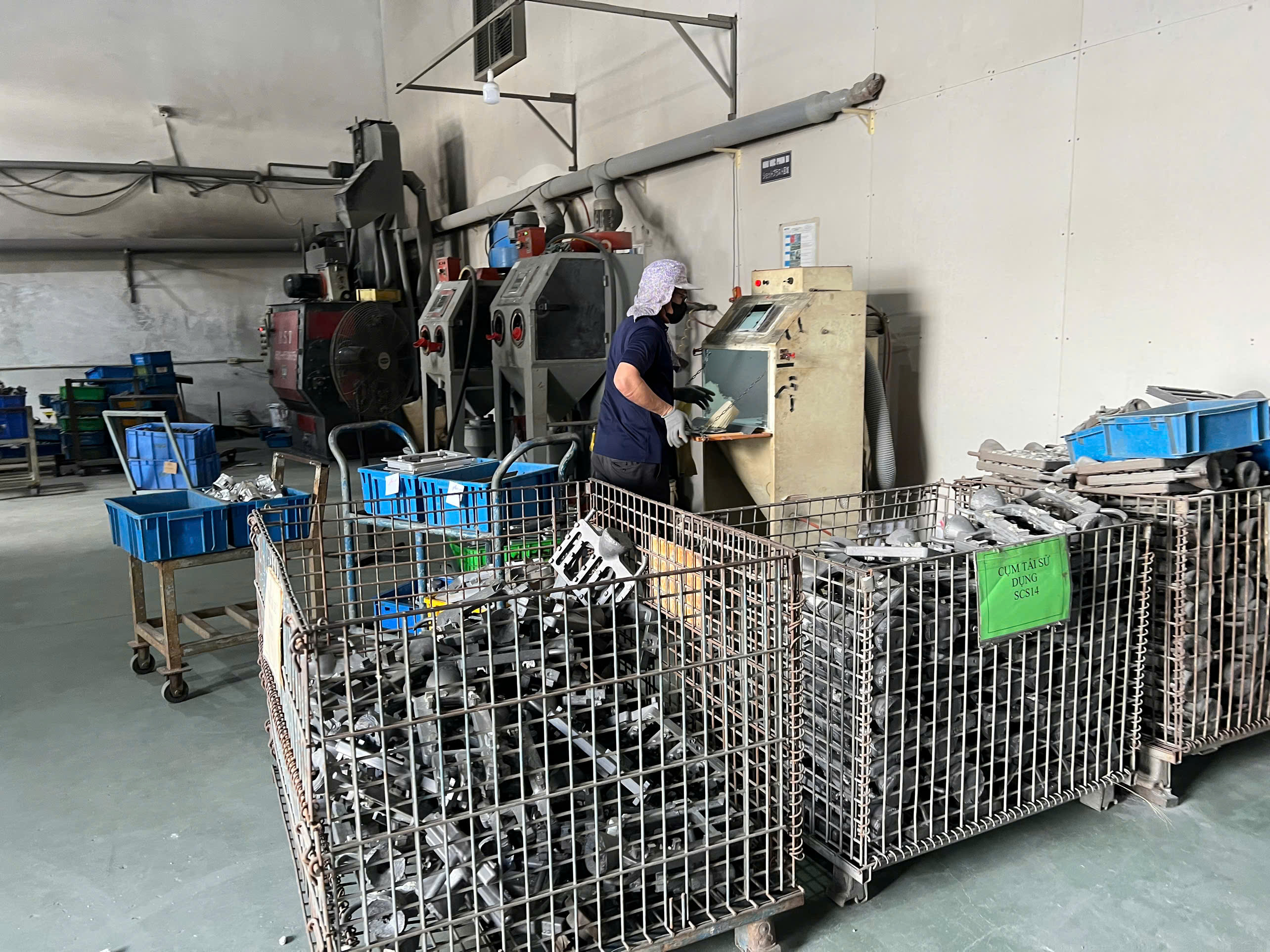
The certificate proves a system existed at audit time. The supporting documents prove the system is alive today. Stamping operations generate scrap metal 4, spent lubricants and drawing oils, coolant, and high energy consumption. Each of these should leave a paper trail. If the paper trail is thin, the environmental management system probably exists only on the wall of the meeting room.
The core document checklist
| Document | Why it matters for stamping | Warning sign |
|---|---|---|
| ISO 14001 certificate | Baseline proof of certification | Missing scope or address details |
| Latest surveillance audit report | Certificates need annual surveillance to stay valid | Last audit more than 12–14 months ago |
| Environmental aspects register | Should list scrap metal, stamping oils, coolant, noise, energy | Generic register with no stamping-specific items |
| Waste transfer records | Scrap and hazardous waste must go to licensed handlers | No records, or handlers with no license numbers |
| MONRE environmental permits | Vietnamese law requires permits for wastewater and hazardous waste | Permits expired or covering a different address |
| NCR and corrective action logs | Shows the system responds to real problems | Zero non-conformances ever recorded |
| Environmental policy | Must be signed and communicated by top management | Unsigned template downloaded from the internet |
Read the surveillance report carefully
ISO 14001 certificates run on a three-year cycle with annual surveillance audits 5. A supplier who skipped last year's surveillance may hold a certificate that looks in-date but has actually been suspended. Ask for the audit report cover page and the findings summary. We also cross-reference the environmental permits with Vietnam's Ministry of Natural Resources and Environment records where possible, because permit compliance reflects real-world practice, not paperwork.
One more tip from our project files: ask how the supplier controls raw material sourcing. Many Vietnamese stamping plants import steel coil from China. A mature EMS addresses supplier environmental requirements too, and the answer tells you a lot about system depth.
Which red flags suggest a Vietnamese stamping parts supplier's ISO 14001 certification might be fake or expired?
There is a pattern we have learned to spot after years of running supplier audits across northern and southern Vietnam. The fakes and the lapsed certificates almost always share the same handful of tells.
Major red flags include certificates from non-IAF-accredited bodies, expired dates or missed surveillance audits, self-declared compliance presented as certification, scope wording that excludes stamping, mismatched facility addresses, and certificates issued suspiciously fast by unknown local registrars.

Not every red flag means fraud. Sometimes it means neglect, which is almost as bad. A supplier who lets a certificate lapse has told you how they handle deadlines. That matters when your production schedule depends on them.
The red flags, ranked by severity
| Red flag | Severity | What it usually means |
|---|---|---|
| Certificate not found in any database | Critical | Likely fake — walk away or demand proof |
| Non-IAF accredited certification body | Critical | Not valid for international automotive supply chains |
| "Self-declared" ISO 14001 compliance | Critical | Not certification at all — no independent audit occurred |
| Expired certificate or missed surveillance | High | System lapsed; suspend sourcing until renewal |
| Scope covers office or other product lines, not stamping | High | Your parts fall outside the certified system |
| Address mismatch between certificate and factory | High | Possible certificate borrowing between related companies |
| Certificate issued within days of application | Medium | Certificate mill behavior — real audits take two stages |
| ISO 14001 held but no ISO 9001 or quality system | Medium | Inconsistent portfolio suggests documentation gaps |
Why scope mismatches are the sneakiest problem
The scope issue deserves special attention. During one screening, our audit team found a supplier whose certificate technically covered "assembly of electronic enclosures" — but not the sheet metal stamping line we needed. The certificate was genuine. It just did not apply to our parts. Under a strict audit framework, that mismatch is treated as a non-conformance, and the supplier stays off the approved list until the scope is extended. Always read the scope wording line by line. "Manufacturing of metal products" is acceptable. "Trading of metal products" is not.
Certificate mills are the other Vietnam-specific risk. Some industrial zones host registrars that issue certificates with unusually short timelines and no real Stage 2 on-site audit 6. Their certificates rarely appear in IAF CertSearch. Reject them immediately for any export program.
Should I conduct an on-site audit to verify ISO 14001 compliance before signing a contract?
The trade-off here is real, and I weigh it on every project: an on-site audit costs time and money, while skipping it risks the whole program. For high-volume stamped brackets heading to US or European customers, the math almost always favors auditing first.
Yes, for high-volume or automotive-grade stamping programs, conduct an on-site audit before signing. Digital verification confirms the certificate exists; only a physical audit confirms the environmental register, waste handling, scrap management, and scope alignment reflect real practice on the shop floor.
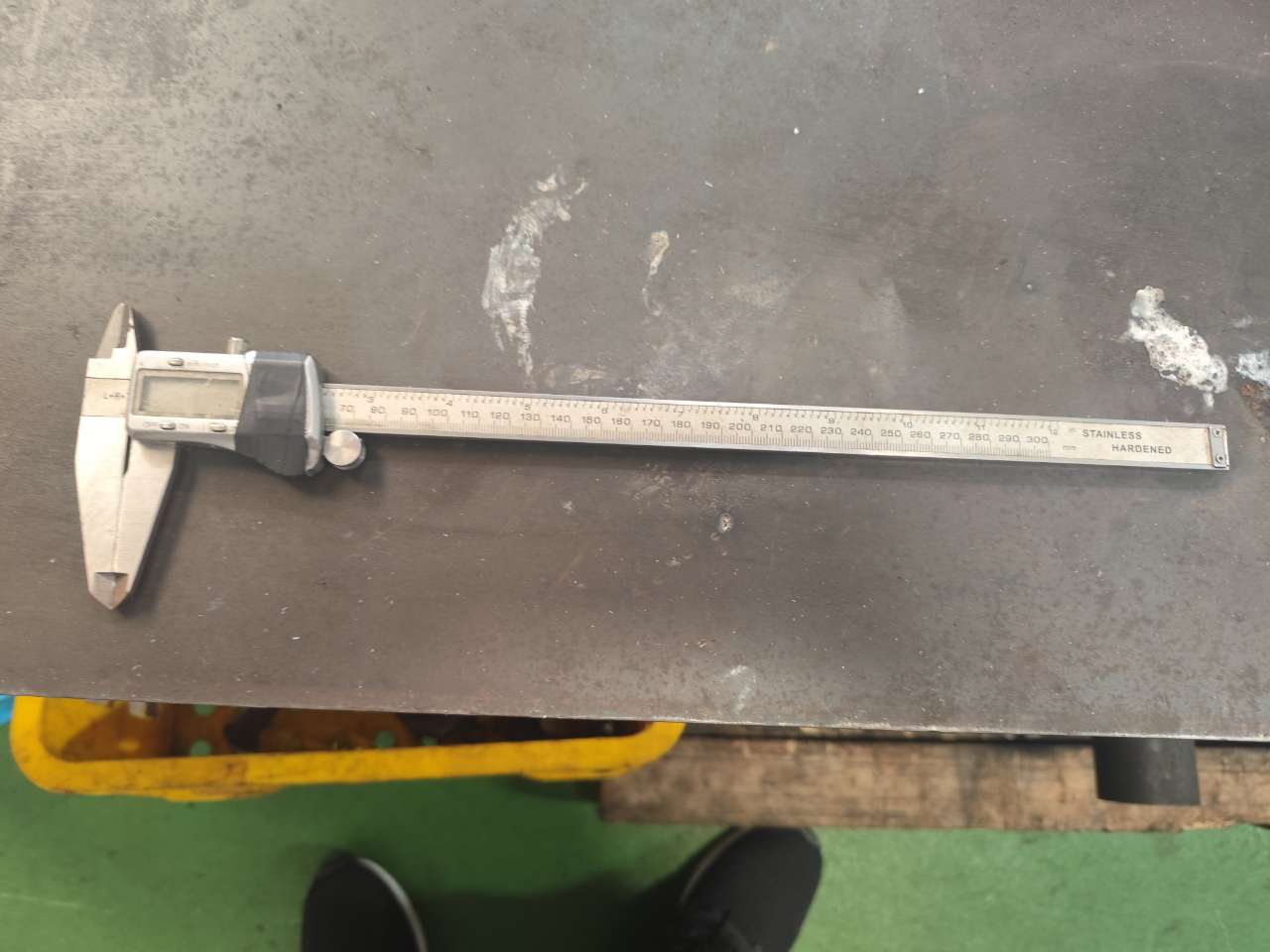
Our team in Vietnam uses a structured 50-point framework when we audit stamping suppliers for clients. Certificate verification is one pillar. The rest is physical evidence. Here is why that matters: a stamping plant's environmental footprint is concrete and visible. Scrap steel bins, oil separators, coolant storage, and wastewater lines are either managed properly or they are not. You can see the truth in twenty minutes on the floor. You cannot see it in a PDF.
What a good on-site verification covers
- Physical certificate inspection. Check the original document, not a copy. Verify the issuing body, the IAF mark, the scope wording, and the expiry date.
- Scope matching against the actual line. Walk the stamping line named in your RFQ. Confirm the certificate scope explicitly covers it. Flag any mismatch as a non-conformance.
- Environmental register review. The register should list stamping-specific aspects: scrap metal, punching noise, lubricant mist, energy use, and hydraulic oil.
- Waste handling walk-through. Follow the scrap from press to bin to licensed hauler. Ask to see transfer manifests for the last three months.
- Records check. Review NCR logs, corrective actions, and internal audit reports tied to environmental issues. A living system generates findings and closes them.
- Cross-checks. Confirm business licenses and labor compliance basics. In our experience, plants that cut corners on labor usually cut corners on environment too.
If you cannot travel
Hiring a third-party auditor with local staff is the practical alternative. Our Vietnam office handles this for US buyers regularly, often paired with PPAP support 7 and final inspection so the supplier sees one consistent set of expectations from day one. A remote video audit is a weak substitute; suppliers control the camera. Local boots on the ground do not have that problem, and the cost is small compared to one rejected shipment or one environmental compliance scandal reaching your end customer.
Conclusion
Fake and lapsed certificates are common enough in Vietnam to burn unprepared buyers. Verify digitally on IAF CertSearch, demand real documents, watch for red flags, and audit on-site before signing.
Frequently Asked Questions
How can I check if my Vietnam stamping supplier's ISO 14001 certificate is genuine and current?
A supplier near Hai Phong once sent our team a certificate that looked flawless. Ten minutes on a database showed the issuing body had no IAF accreditation at all. That check cost nothing and saved a contract.
What documents should I request to confirm a supplier's environmental management system compliance?
Document requests are where most buyers stop too early. When our Vietnam team screens a stamping plant , the certificate itself is only the first of six or seven files we ask for before any site visit.
Which red flags suggest a Vietnamese stamping parts supplier's ISO 14001 certification might be fake or expired?
There is a pattern we have learned to spot after years of running supplier audits across northern and southern Vietnam. The fakes and the lapsed certificates almost always share the same handful of tells.
Footnotes
1. Official ISO page describing the environmental management standard referenced throughout the article. ↩︎
2. Official body that recognizes national accreditation bodies referenced for certification validity. ↩︎
3. Official global database buyers use to verify accredited certification bodies and certificates. ↩︎
4. Background reference on scrap metal, a key environmental byproduct of stamping operations discussed. ↩︎
<span