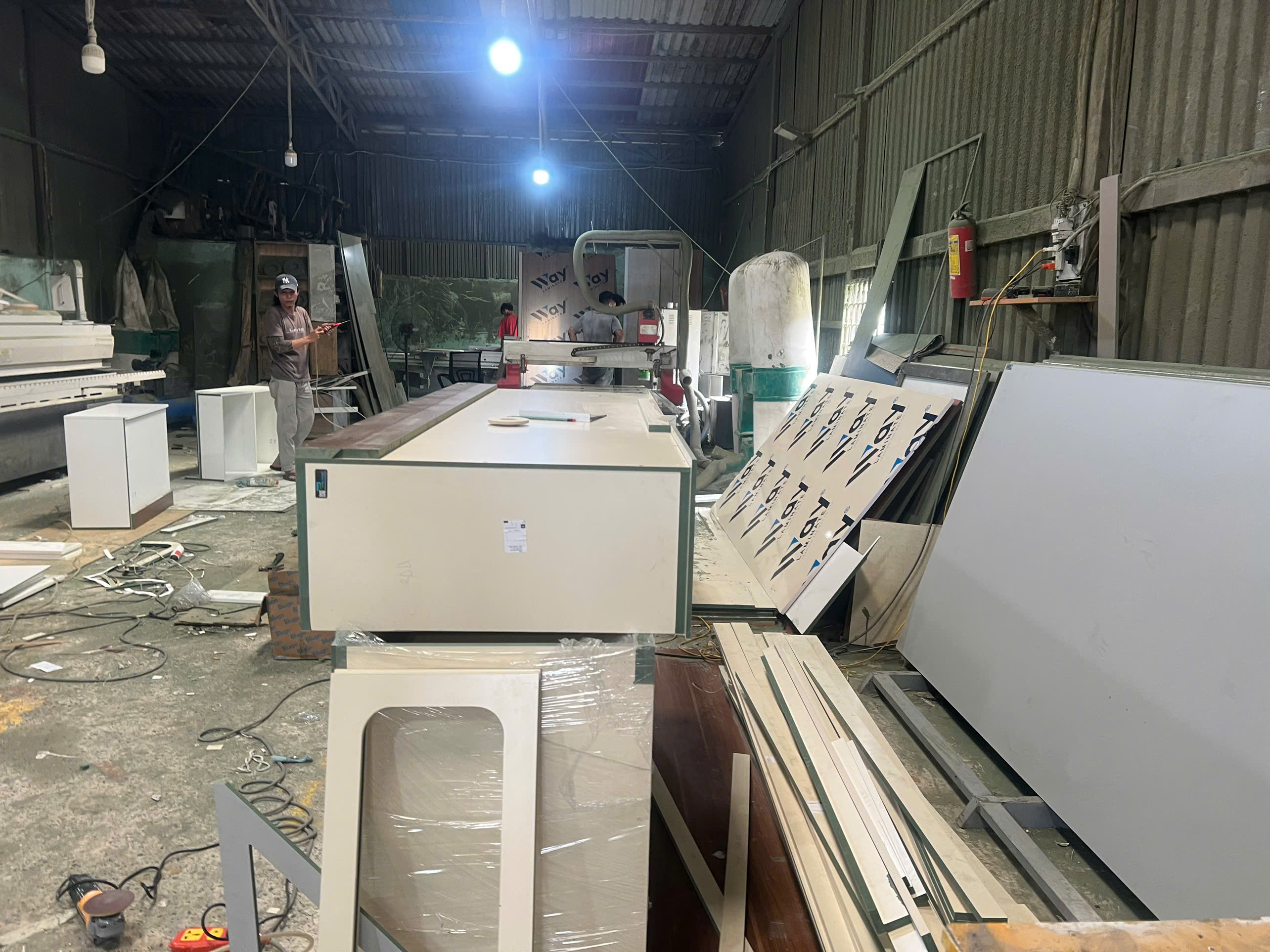

Learning how to verify ISO 14001 certification for a Vietnamese stamping parts supplier saved one of our clients from a costly mistake. A supplier sent a beautiful PDF certificate. It looked perfect. But when our Vietnam team walked the factory floor, the certificate covered “office administration” — not stamping. If our team had trusted that PDF, our client would have failed their own EU environmental compliance review. Paper is cheap. Verification is not optional.
To verify ISO 14001 certification for a Vietnamese stamping parts supplier, request the certificate, confirm the certification body via IAF CertSearch, check the certificate number in the CB’s online database, scan the QR code, then conduct an on-site audit to match scope, address, and expiry date.
That is the short answer. The details matter, though. Below, I walk through each verification layer step by step, based on the audits our team runs in Vietnam every month.
How can I confirm a Vietnamese stamping supplier's ISO 14001 certificate is genuine and not expired?
During a supplier audit near Hanoi last year, our engineer noticed the certificate on the wall cited ISO 14001:2004. That version has been obsolete for years. Small details like that expose big problems.
Confirm authenticity by checking the certificate number on the certification body's official online register, verifying the issuer through IAF CertSearch, scanning the embedded QR code, and confirming the certificate cites ISO 14001:2015 with a valid date inside its three-year cycle.

The digital check is your first filter. It takes less than an hour, and it catches the laziest fakes. Here is the workflow our team follows before we ever book a flight or drive to a factory.
Step 1: Read the certificate carefully
Ask the supplier for a full-color scan, not a cropped photo. Then check four things. First, the standard version. Only ISO 14001:2015 1 is valid today. Second, the certification body (CB) name — for example, TÜV SÜD, BSI, DQS, or a local body like KNA Cert. Third, the factory address. It must match the actual production site, not a trading office. Fourth, the issue and expiry dates. ISO 14001 certificates run on a three-year cycle with annual surveillance audits.
Step 2: Verify the certification body itself
A genuine-looking certificate from a fake issuer is still worthless. Use IAF CertSearch, the global database run by the International Accreditation Forum 2. It confirms whether the CB is accredited by a recognized national accreditation body. In Vietnam, you can also cross-check with BoA (Bureau of Accreditation) records, because some local issuers sell "look-alike" certificates that mimic ISO branding without real accreditation.
Step 3: Verify the certificate number directly
Most reputable CBs run public registers. Enter the certificate number and confirm the status shows "active."
| Certification Body | Verification Tool | Vietnam Presence |
|---|---|---|
| TÜV SÜD / TÜV Rheinland | Certipedia online register, QR code | Offices in Hanoi and Ho Chi Minh City |
| BSI | BSI Client Directory | Ho Chi Minh City office |
| DQS GmbH | DQS certificate database | Accredits certificates issued in Vietnam |
| KNA Cert (local) | Direct phone/email confirmation | Hanoi |
If the online tool fails or the CB is small, call their local Vietnam office. A legitimate CB will confirm certificate status quickly. Silence or evasion is itself an answer.
What steps should I take to audit a supplier's environmental management system before signing a contract?
One trade-off we constantly weigh for clients: audit cost versus contract risk. A two-day on-site audit in Vietnam costs far less than one rejected shipment of stamped brackets or a compliance failure back in the US.
Before signing, conduct an on-site audit that photographs the physical certificate, matches the scope to the actual stamping lines, reviews the environmental aspects register, inspects waste and lubricant handling, and confirms annual surveillance audit records with the certification body.

Digital checks catch fake paper. Only a physical audit catches fake implementation. Stamping is an environmentally heavy process. Presses leak hydraulic oil. Blanking creates metal scrap and dust. Lubricants and coolants need controlled disposal. A real environmental management system 3 (EMS) leaves visible traces all over the shop floor. Our Vietnam team runs a structured audit that covers roughly fifty checkpoints. The environmental portion follows this sequence:
- Photograph the original certificate on-site. Compare it against the PDF the supplier emailed. Mismatches happen more often than you would expect.
- Match the scope statement to the production floor. The certificate must explicitly cover metal stamping 4 at that address. "Consulting services" or "assembly" does not cover a press shop.
- Request the environmental aspects register. For a stamping plant, it should list metal scrap, lubricant and coolant disposal, oil mist emissions, noise, and energy use. A generic template with no stamping-specific items signals a purchased paper system.
- Walk the waste handling route. Check segregated scrap bins, licensed waste contractor agreements, oil spill kits near presses, and secondary containment for lubricant drums.
- Review surveillance audit reports. Ask for the last two annual audit summaries. Check the auditor names, visit dates, and findings.
- Interview operators. Ask a press operator what they do if hydraulic oil leaks. If the EMS is real, they will know. If it is paper, they will look at their supervisor.
What good evidence looks like
| Audit Item | Strong Evidence | Weak Evidence |
|---|---|---|
| Environmental aspects register | Lists oil mist, scrap, coolant disposal specific to press lines | Generic office-focused template |
| Waste handling | Licensed contractor manifests, labeled bins | Mixed scrap piles, no records |
| Surveillance audits | Two annual reports with findings closed out | "Reports are confidential" |
| Operator awareness | Staff can describe spill response | Blank stares, supervisor answers for them |
We schedule these audits before contract signature, not after. Fixing a supplier problem post-contract is ten times harder.
Which red flags suggest a Vietnamese factory is only claiming ISO 14001 compliance without real implementation?
A buyer once forwarded me a supplier's certificate that predated the company's own business registration by two years. The supplier had simply borrowed the document from a partner factory. Patterns like this repeat, and they are learnable.
Key red flags include certificates from non-IAF-accredited issuers, expired or outdated ISO 14001:2004 documents, scope statements that omit stamping, certificates predating the company's registration, generic environmental registers, and inconsistent auditor details across the supplier's ISO 9001 and 14001 records.

Most fake or hollow certifications reveal themselves through a small set of recurring signals. In my experience auditing suppliers across northern and southern Vietnam, the same six patterns come up again and again.
The six red flags we act on immediately
| Red Flag | What It Usually Means | Our Response |
|---|---|---|
| Non-IAF-accredited issuer | "Look-alike" certificate bought cheaply | Treat as uncertified; require re-certification |
| Expired date or ISO 14001:2004 version | System lapsed or never maintained | Suspend sourcing until renewal is confirmed |
| Scope excludes stamping or lists wrong address | Certificate borrowed or covers a different entity | Reject; verify legal entity relationships |
| Certificate predates business registration | Document borrowed from another company | Walk away; this is deliberate fraud |
| Generic environmental register | Consultant-written paper system | Deep-dive audit before any commitment |
| Mismatched ISO 9001 5/14001 audit trails | Purchased certificates from different mills | Cross-check both with issuing bodies |
Why cross-checking certificates against each other works
Legitimate suppliers usually run integrated audits. The same CB audits ISO 9001 and ISO 14001 together, often on the same dates, with overlapping auditor teams. When a supplier shows an ISO 9001 certificate from one obscure body and an ISO 14001 certificate from another, with audit dates that make no operational sense, the odds are high that both were purchased. Compare auditor names, visit dates, and certificate numbering formats. Fraudulent documents rarely maintain internal consistency.
One nuance is fair to note. ISO itself does not make accreditation legally compulsory. A non-accredited CB can, in theory, be reputable. But for export-focused stamping suppliers serving US and EU customers, an unaccredited certificate shifts the entire burden of proof onto you. We treat it as a flag that demands much deeper vetting, and most of our clients simply will not accept it.
How do I verify ISO 14001 certification alongside quality standards like IATF 16949 for my custom parts supplier?
When we run PPAP submissions 6 for US clients, environmental and quality documentation gets reviewed side by side. That habit taught our team something useful: verifying certifications together exposes fraud that verifying them separately misses.
Verify both certificates through the same workflow: confirm each issuing body on IAF CertSearch, check both certificate numbers in the CBs' registers, ensure both scopes cover stamping at the same address, and cross-compare audit dates, auditor names, and surveillance records for consistency.

For custom stamped parts — brackets, base plates, channel mounts, Z-profile connectors — buyers increasingly require an integrated certification stack. Environmental compliance alone does not guarantee your parts meet drawing tolerances. Quality certification alone does not satisfy EU or US environmental expectations. You need both, and you need both to be real.
The integrated verification approach
Treat the supplier's certification portfolio as one system, not separate documents. Here is the process we use:
- Map the full certificate stack. For automotive-linked stamping work, expect ISO 9001 as the base, IATF 16949 7 for automotive quality, and ISO 14001 for environmental management.
- Verify each issuer independently. IATF 16949 has its own oversight structure through the IATF database, separate from IAF CertSearch. Check the correct database for each standard.
- Compare scopes line by line. All certificates should name the same legal entity, the same factory address, and processes that actually include metal stamping. A supplier certified for "machining" under IATF but "trading" under ISO 14001 is telling you something.
- Cross-examine the audit history. Integrated management systems get audited in combined visits. Look for aligned surveillance dates and consistent CB relationships over multiple years.
- Test implementation during one visit. On the same factory walk, check press process control records for quality and waste handling records for environment. Real systems coexist on the same floor.
Where each standard applies on a stamping line
Think of a stamped mounting bracket moving through production. IATF 16949 governs the process controls: die maintenance, dimensional checks, traceability. ISO 14001 governs what happens around the process: scrap segregation, lubricant disposal, oil mist extraction. A supplier who genuinely runs both will show you records from the same week, signed by real people, describing the same machines. That coherence is very hard to fake — and very easy to check if you look for it.
Conclusion
Fake certificates cost real money. Verify digitally through IAF CertSearch and CB registers, then confirm on-site with scope matching and waste audits. Our Vietnam team does exactly this before any contract gets signed.
Frequently Asked Questions
How can I confirm a Vietnamese stamping supplier's ISO 14001 certificate is genuine and not expired?
During a supplier audit near Hanoi last year, our engineer noticed the certificate on the wall cited ISO 14001:2004. That version has been obsolete for years. Small details like that expose big problems.
What steps should I take to audit a supplier's environmental management system before signing a contract?
One trade-off we constantly weigh for clients: audit cost versus contract risk. A two-day on-site audit in Vietnam costs far less than one rejected shipment of stamped brackets or a compliance failure back in the US.
Which red flags suggest a Vietnamese factory is only claiming ISO 14001 compliance without real implementation?
A buyer once forwarded me a supplier's certificate that predated the company's own business registration by two years. The supplier had simply borrowed the document from a partner factory. Patterns like this repeat, and they are learnable.
Footnotes
1. Official ISO standard page confirms current environmental management system requirements referenced throughout article. ↩︎
2. Background on the global body confirming certification body accreditation legitimacy. ↩︎
3. Defines the EMS concept central to ISO 14001 compliance verification discussed in article. ↩︎
4. Background on the metal forming process central to the supplier certification scope checks. ↩︎
5. Official ISO page explaining the quality management standard referenced alongside ISO 14001. ↩︎
6. Explains the production part approval process referenced in quality documentation workflow. ↩︎
7. Official oversight body site for automotive quality standard verification database mentioned. ↩︎