
Last year, a U.S. buyer sent us a certificate from a Vietnamese stamping supplier — it looked perfect, but the certification body didn’t exist.
To verify ISO 14001 certification for Vietnamese stamping parts suppliers, check the IAF CertSearch database for certificate validity, confirm the certification body’s accreditation status, match the scope of certification to metal stamping processes, and conduct an on-site audit to verify the Environmental Management System is active.
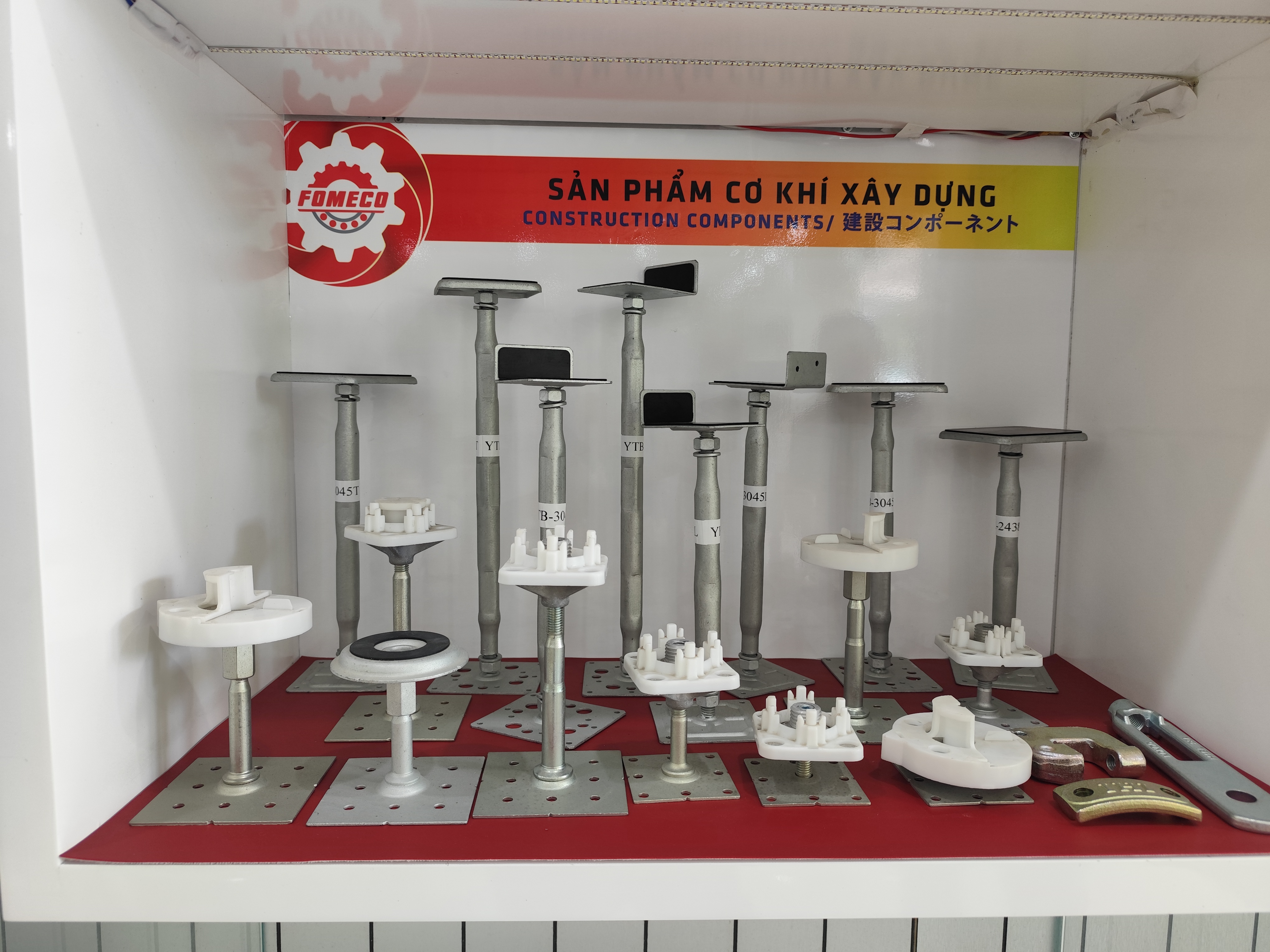
Fake certificates are more common than most buyers realize, especially on B2B platforms. This guide walks through every step our team uses when we audit stamping suppliers in Vietnam — from digital checks to factory-floor verification. Whether you source brackets, post bases, or precision metal stamping 1 components, these steps protect your supply chain.
How can I check if a Vietnamese stamping supplier's ISO 14001 certificate is genuine and not expired?
A buyer in Ohio once forwarded us a supplier's ISO 14001 certificate with a TÜV logo. It took our Vietnam office less than ten minutes to confirm the certificate number returned zero results in any official database.
To check if a Vietnamese stamping supplier's ISO 14001 certificate is genuine and current, enter the certificate number into the IAF CertSearch database, verify the "Valid Until" date and last surveillance audit date, and cross-reference the factory address against Vietnam's National Business Registration Portal.

Start with the IAF CertSearch Database
The IAF CertSearch database is the single most reliable digital tool for a certificate validity check. It is maintained by the International Accreditation Forum 2 and covers certificates issued by accredited certification bodies worldwide. Here is what you do:
- Go to the IAF CertSearch website.
- Enter the supplier's certificate number or legal company name.
- Look for a match that shows the certification standard (ISO 14001:2015 3), the issuing body, and the current status.
If no result appears, the certificate may be from a non-accredited body — or it may be fabricated entirely.
Read the Certificate Itself
Request a high-resolution scan of the certificate. Do not accept a blurry photo. A legitimate ISO 14001 certificate includes several critical data points. Here is what to look for:
| Certificate Element | What to Check | Red Flag |
|---|---|---|
| Certificate Number | Must match IAF CertSearch | Number not found in any database |
| Issuing Body & Logo | Must be an IAF-accredited registrar | Unknown or unverifiable logo |
| Valid Until Date | Must be a future date | Expired date or no date listed |
| Scope of Certification | Must mention metal stamping or fabrication | Scope covers only "office administration" |
| Factory Address | Must match the actual production site | Address differs from the real factory location |
| Accreditation Mark | Should show BoA, UKAS 4, ANAB, or similar | No accreditation mark present |
Check Surveillance Audit Records
ISO 14001 certificates are valid for three years, but the certification body must conduct annual surveillance audits. If a supplier cannot show evidence of a recent surveillance audit — typically within the last 12 months — the certificate may be dormant or suspended. Our team always asks for the latest surveillance audit report as part of supplier due diligence.
Cross-Reference the Factory Address
One trick we learned early: cross-reference the address on the ISO certificate with the supplier's official Tax Code (MST) on Vietnam's National Business Registration Portal. This confirms the certification applies to the actual production site, not a separate office or a different legal entity.
Scan the QR Code
Many modern Vietnamese ISO certificates include encrypted QR codes. Scanning these codes links directly to the registrar's secure digital database. If the certificate has no QR code and was issued recently, treat it with extra caution.
What steps should I take to verify a supplier's certification body is properly accredited?
During a recent supplier qualification project, we encountered a stamping factory near Binh Duong that held a certificate from an agency none of us had heard of. The certificate looked official. The problem was the certification body itself had no accreditation from any recognized national authority.
To verify a supplier's certification body is properly accredited, confirm that the body is listed as an IAF Multilateral Recognition Arrangement signatory, check its status through the Bureau of Accreditation (BoA) Vietnam or the relevant national accreditation body, and contact the registrar directly using their official website.

Why Accreditation Matters
A certification body issues the ISO 14001 certificate. An accreditation body oversees the certification body. Without accreditation, the certification body's audit may not meet international standards. For precision metal stamping parts entering the U.S. or European markets, buyers and OEMs almost universally require certificates from IAF-accredited registrars.
How to Verify Accreditation
Here is the process our Vietnam office follows:
| Step | Action | Tool / Resource |
|---|---|---|
| 1 | Identify the certification body name on the certificate | Read the certificate directly |
| 2 | Check if the body is listed in the IAF CertSearch database | IAF CertSearch website |
| 3 | Verify accreditation through the national authority | BoA Vietnam (for Vietnamese bodies) or UKAS, ANAB, etc. |
| 4 | Visit the certification body's official website | Look for a client directory or validation tool |
| 5 | Call or email the certification body directly | Use only contact details from their official site |
Common Certification Bodies in Vietnam
Not all certification bodies operating in Vietnam are equal. Here are some of the bodies we frequently encounter when auditing stamping suppliers:
| Certification Body | Accreditation | Headquarters | Online Validation Tool |
|---|---|---|---|
| BSI | UKAS (UK) | London | bsigroup.com Client Directory |
| TÜV NORD | DAkkS (Germany) | Hanover | Online certificate check portal |
| SGS Vietnam | Various national bodies | Geneva | SGS certificate validation |
| QUACERT | BoA Vietnam | Hanoi | QUACERT website portal |
| Bureau Veritas | COFRAC (France) | Paris | Certification verification page |
The BoA Vietnam Check
For locally accredited bodies, the Bureau of Accreditation (BoA) Vietnam operates under the Ministry of Science and Technology. It is the national accreditation authority. If a Vietnamese certification body claims accreditation, BoA's records should confirm it. This step is essential for certification body authenticity — especially when dealing with smaller, less internationally recognized registrars.
When Accreditation Is Missing
Some certification bodies operate without IAF accreditation. This does not automatically mean they are fraudulent. However, for international supply chain compliance — especially for automotive stamping parts destined for European or American OEMs — non-IAF certificates carry significant risk. Most purchasing managers we work with reject them outright.
Why does ISO 14001 certification matter when I'm sourcing stamping parts from Vietnam?
We once lost a deal because a competing supplier offered a lower price but had no environmental certification. Six months later, that buyer came back — the EU importer had rejected the parts over missing Environmental Management System 5 documentation.
ISO 14001 certification matters when sourcing stamping parts from Vietnam because it proves the supplier manages environmental risks like metal waste, chemical runoff, and oil disposal systematically. With the EU's CBAM regulations tightening, it has shifted from a voluntary standard to a compliance necessity for exporters.

Metal Stamping Has Real Environmental Impact
Metal stamping is not a clean process. Stamping operations generate significant waste streams: cutting oils, metal scrap, chemical cleaners, and hydraulic fluid leaks. Without a structured Environmental Management System, these byproducts can contaminate local water and soil. ISO 14001 requires the factory to identify these environmental aspects, set reduction targets, and track performance. This is not paperwork — it is operational discipline.
CBAM and the European Market
The EU's Carbon Border Adjustment Mechanism 6 is changing the game for Vietnamese exporters. CBAM requires importers to report the carbon footprint of goods entering the EU. While CBAM currently targets specific sectors, the broader regulatory direction is clear: environmental accountability is becoming mandatory. ISO 14001 is the closest existing framework that demonstrates a supplier's environmental commitment. European buyers increasingly list it as a non-negotiable requirement for stamping parts suppliers.
ISO 14001 vs. ISO 9001: Different Standards, Different Purposes
Many Vietnamese stamping factories hold ISO 9001 7 (Quality Management). Fewer hold ISO 14001. Buyers sometimes confuse the two or assume one covers the other. They do not.
| Feature | ISO 9001 | ISO 14001 |
|---|---|---|
| Focus | Product quality | Environmental impact |
| Scope | Manufacturing process consistency | Waste, emissions, resource use |
| Prevalence in Vietnam | Very common | Less common |
| Required for EU CBAM? | Not directly | Strongly recommended |
| Covers chemical/waste management? | No | Yes |
| Audit frequency | Annual surveillance | Annual surveillance |
Beyond Compliance: The Business Case
Factories with ISO 14001 tend to run tighter operations. They track waste. They manage chemicals properly. They train workers on spill response. In our experience managing supply chains across Vietnam, these factories also tend to have fewer production disruptions — because environmental incidents (fines, shutdowns, community complaints) are a real risk in industrial zones like Binh Duong and Dong Nai. For buyers, this translates to supply chain stability. supply chain management 8
The "Green Book" Signal
Some Vietnamese provinces publish "Green Book" (Sách Xanh) rankings of manufacturers who demonstrate strong environmental performance. Inclusion in these rankings validates real-world compliance beyond paper certification. When our team evaluates a stamping supplier, we check for this alongside the ISO certificate.
Should I request a third-party audit even if my supplier already holds ISO 14001 certification?
The trade-off between trusting a certificate and spending money on an additional audit is one we discuss with buyers every month. Our answer is almost always the same: yes, audit anyway — especially for high-volume or critical stamping parts.
Yes, you should request a third-party audit even if your supplier holds ISO 14001 certification. Certificates confirm a system exists on paper, but only an on-site audit verifies the Environmental Management System operates in practice — checking waste logs, corrective action records, scope matching, and whether the certificate covers the actual stamping processes.

Why Certificates Alone Are Not Enough
A certificate tells you a factory passed an audit at a specific point in time. It does not tell you what happened since. Factories can let systems degrade between surveillance audits. Employees change. Management priorities shift. Production lines expand into new processes that fall outside the original scope of certification. An on-site third-party audit catches these gaps.
What a Third-Party Audit Should Cover
When our team conducts supplier audits in Vietnam, we use a structured checklist that goes beyond simple certificate inspection. Here are the key areas:
Environmental Records Check:
- Waste disposal logs (hazardous and non-hazardous)
- Chemical inventory and MSDS files
- Water discharge monitoring reports
- Environmental incident records and corrective actions
Scope Verification:
- Does the certificate scope explicitly mention metal stamping, fabrication, or the specific processes used for your parts?
- If the factory recently added new stamping presses, welding stations, or powder coating lines, are these covered?
Regulatory Compliance:
- Has the factory obtained its Environmental Impact Assessment (EIA) or Environmental Protection Plan from the local Department of Natural Resources and Environment (DONRE)?
- Are permits current?
Surveillance Audit Evidence:
- Can the factory produce the last surveillance audit report?
- Were any non-conformances raised, and have they been closed?
The 5-Point Verification Checklist
For buyers who want a quick reference, here is the checklist we recommend:
- IAF CertSearch confirmation — Certificate number returns a valid, active result.
- Scope match — The scope explicitly covers your stamping processes.
- Expiry date — The certificate is current, not expired.
- Surveillance audit evidence — The supplier can produce the most recent annual audit report.
- On-site verification — Environmental records exist physically at the factory, and the system is clearly in use.
When to Use a Third-Party Auditor
Not every order justifies a full audit. But for high-volume contracts, automotive-grade stamping parts, or first-time suppliers, the investment pays for itself. A single shipment of non-compliant parts — or a supply chain disruption caused by a factory shutdown for environmental violations — costs far more than an audit.
Our Vietnam team conducts these audits as part of our standard supplier qualification process. We check physical certificates, walk the production floor, review environmental registers, and verify that the factory’s stated capabilities match reality. For stamping components like mounting brackets, post bases, and structural hardware, this level of supplier due diligence is not optional — it is how you protect your program.
The Alibaba Warning
B2B platforms like Alibaba host thousands of stamping suppliers. Many list ISO 14001 and IATF 16949 9 certifications in their profiles. A significant number of these claims are unverified. We have seen PDF certificates with mismatched fonts, fabricated certificate numbers, and certification bodies that do not exist. If you find a supplier online, start with the digital verification steps above before engaging. Better yet, work with a sourcing partner who has local presence and can verify authenticity and validity of supplier certifications in person.
Conclusion
Verifying ISO 14001 certification for Vietnamese stamping parts suppliers requires digital checks, direct contact with certification bodies, scope verification, and on-site audits — do not rely on paper alone.
Frequently Asked Questions
How can I check if a Vietnamese stamping supplier's ISO 14001 certificate is genuine and not expired?
A buyer in Ohio once forwarded us a supplier's ISO 14001 certificate with a TÜV logo. It took our Vietnam office less than ten minutes to confirm the certificate number returned zero results in any official database.
What steps should I take to verify a supplier's certification body is properly accredited?
During a recent supplier qualification project, we encountered a stamping factory near Binh Duong that held a certificate from an agency none of us had heard of. The certificate looked official. The problem was the certification body itself had no accreditation from any recognized national authority.
Why does ISO 14001 certification matter when I'm sourcing stamping parts from Vietnam?
We once lost a deal because a competing supplier offered a lower price but had no environmental certification. Six months later, that buyer came back — the EU importer had rejected the parts over missing Environmental Management System 5 documentation.
Footnotes
1. Background reference on the manufacturing process central to the article’s supplier verification topic. ↩︎
2. Explains the global body overseeing accredited certification bodies referenced throughout the article. ↩︎
3. Official ISO standard page for the environmental management certification discussed extensively. ↩︎
4. Official site of the UK national accreditation body referenced as an accreditation authority example. ↩︎
5. Background concept explaining the core system ISO 14001 certifies and audits verify. ↩︎
6. Official EU source explaining CBAM regulations cited as tightening compliance requirements. ↩︎
7. Official ISO page for the quality management standard compared against ISO 14001. ↩︎
8. Background concept relevant to supplier due diligence and sourcing risk discussed in the article. ↩︎
9. Official source for the automotive quality standard mentioned alongside ISO 14001 claims on B2B platforms. ↩︎