
A single mistranslated term on a Mill Test Report once cost one of our clients three weeks at customs Mill Test Reports 1. That experience taught our team that multilingual labeling and documentation in sheet metal fabrication 2 is never just a language problem — it is a quality, compliance, and cash-flow problem rolled into one.
To verify multilingual labeling and documentation when sourcing sheet metal fabrication, request original-language Mill Test Reports alongside certified translations, embed ISO 2768 tolerance designations in every RFQ, cross-check material grades with XRF testing, and audit supplier labeling for complete traceability data before shipment.
Below, I break down the exact process our Singapore and Vietnam offices use to close the language gap, validate supplier QC records, audit documentation workflows, and prevent costly customs delays for our U.S. and European clients.
How can I ensure my sheet metal fabrication drawings and labels are accurately translated by an overseas supplier?
A lesson we learned early in our Vietnam office: a supplier translated "yield strength" as "tensile strength" on a batch of custom mounting brackets, and the entire lot failed incoming inspection at the buyer's facility in Ohio. That single terminology error triggered a return shipment and weeks of delay.
Ensure accuracy by requiring dual-language documentation — original plus certified technical translation — using standardized ISO designations, maintaining a shared glossary of critical engineering terms, and performing line-by-line verification of drawings before production begins.
Why the "Language Gap" Is a Quality Risk
When our engineering team reviews a supplier's translated drawings, we look beyond grammar. We focus on whether critical technical terms survived the translation intact. Terms like "heat number," "grain structure," "hardness (HRC)," and "bend radius" carry precise meanings. A generic translator without metallurgy expertise can easily confuse them.
The problem is not limited to Asian suppliers. We have seen documentation from factories in Vietnam, India, and Taiwan where the English version of an MTR listed the wrong material grade simply because the translator did not understand the difference between ASTM A36 and SS304. This is why terminology management matters as much as the translation itself.
A Practical Glossary Approach
We maintain a shared termbase — a controlled list of engineering terms in English, Vietnamese, and Chinese — that every supplier on our approved list must use. This is a core part of our linguistic quality assurance process. Here is a sample of the terms we lock down:
| English Term | Common Mistranslation | Why It Matters |
|---|---|---|
| Yield Strength | Tensile Strength | Determines load-bearing design limits |
| Heat Number | Batch Number | Links material to specific melt for traceability |
| Surface Roughness (Ra) | Surface Finish | Ra is a measurable value; "finish" is vague |
| Bend Radius | Bend Angle | Radius defines tooling; angle defines geometry |
| Tolerance (ISO 2768-mK) | Precision Level | ISO designation removes ambiguity across languages |
We send this glossary to suppliers at the RFQ stage. If they cannot confirm they understand and will use these terms correctly, that is a red flag.
Embedding ISO Standards to Eliminate Ambiguity
ISO 2768 tolerance designations 3 act as a universal translator. Instead of writing "medium precision" — which can be interpreted differently in every language — we specify "ISO 2768-mK" on every drawing and in every RFQ. This tells any competent sheet metal shop in any country exactly what tolerance class we expect. It removes the need for subjective interpretation.
Our team also requires that all translated drawings preserve the original-language annotations alongside the English version. This way, the shop floor operator reads in their native language, while our QC inspector and the end client both see the English text. It is a simple step, but it prevents a surprising number of errors.
Leveraging Professional Localization Services
For high-value projects, we engage professional technical translation agencies 4 — not general freelancers. These agencies employ linguists with subject matter expertise in manufacturing and engineering. They also use translation memory tools 5, which store previously approved translations and apply them automatically to new documents. This keeps terminology consistent across hundreds of pages of documentation and reduces turnaround times.
What process should I use to verify that my supplier's QC documentation matches my specific engineering requirements?
One interaction changed how we handle QC documentation forever. A U.S. purchasing manager sent us an MTR from his existing supplier. The report listed SS304 as the material grade, but when our China office arranged an XRF scan on a sample part, the elemental composition pointed to SS201 — a far cheaper, less corrosion-resistant alloy. The translated MTR looked perfect. The metal did not match.
Verify QC documentation by cross-referencing Mill Test Reports against your engineering specs line by line, confirming heat numbers match physical markings on material, using XRF testing for secondary validation of chemical composition, and requiring your supplier's quality management system to produce inspection records at every critical process step.
Anatomy of a Reliable Mill Test Report
An MTR is your primary traceability document. Whether it arrives in English, Chinese, or Vietnamese, it must contain specific data points. Here is what we check on every MTR before approving a shipment:
| MTR Data Point | What to Verify | Red Flag |
|---|---|---|
| Material Grade | Matches drawing spec (e.g., ASTM A36, SS304) | Grade listed generically as "stainless steel" |
| Chemical Composition | % Carbon, % Chromium, % Nickel within spec range | Missing elements or values outside ASTM range |
| Mechanical Properties | Yield strength, tensile strength, elongation | Values suspiciously identical across multiple heats |
| Heat Number | Unique identifier traceable to specific melt | No heat number, or same number on unrelated batches |
| Mill Name & Certification | Accredited mill, not a trading company | No mill address or missing ISO 9001 certification 6 |
The XRF Verification Step
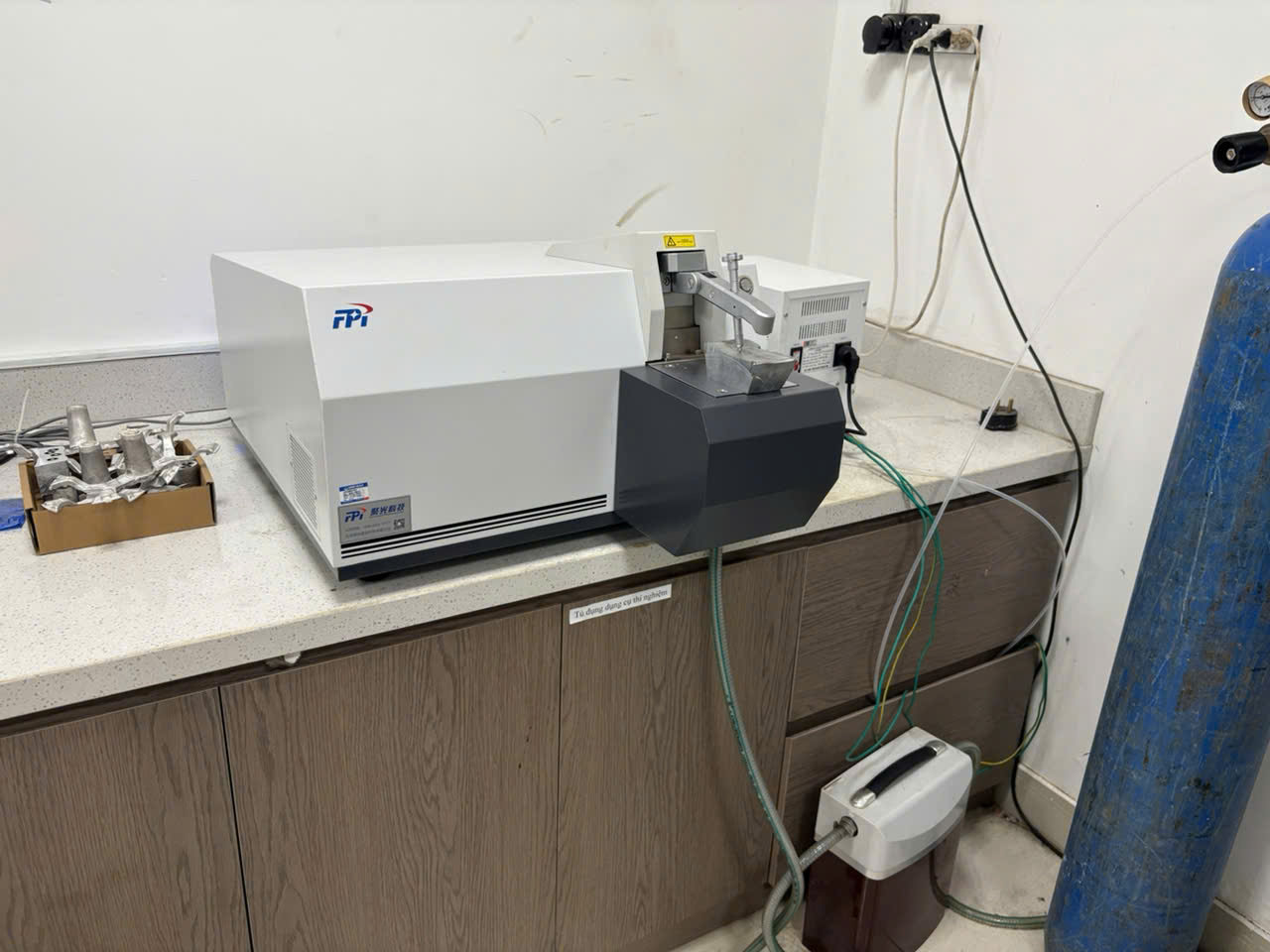
When an MTR raises doubts — or when the project's value justifies extra caution — we deploy XRF (X-ray fluorescence) analysis. This is a non-destructive test. A handheld XRF gun fires X-rays at the metal surface and reads back the elemental composition in seconds. Our Vietnam office has an XRF device on-site for exactly this purpose.
The workflow is straightforward:
- Receive the supplier's MTR (original language plus English translation).
- Match the heat number on the MTR to the physical marking stamped or etched on the raw material.
- Perform XRF analysis on the same material.
- Compare XRF results to the MTR's chemical composition data.
- Flag any discrepancy — even a small one — and halt the batch until resolved.
This secondary verification has caught material substitutions more than once. It is especially important when sourcing from suppliers who subcontract their raw material purchasing, because the supply chain gets longer and harder to trace.
Digital MTRs and QR Code Traceability
A growing number of suppliers now issue digital, multilingual MTRs with embedded QR codes. You scan the code with a smartphone, and the system pulls up the MTR in your preferred language, along with the original mill data. This is a significant improvement over paper-based systems, because it eliminates the risk of someone manually altering a scanned PDF.
We encourage all our approved suppliers to adopt digital MTR platforms. When a supplier's quality management system 7 integrates digital traceability, it tells us they take supply chain compliance seriously. It also makes our final inspection process faster, because our inspectors can verify material data on the shop floor in real time rather than chasing paperwork.
When to Demand Third-Party Certification
For high-stakes orders — parts going into safety-critical assemblies, or projects that require CE marking or specific regulatory compliance — we insist on third-party material certification. An independent lab tests the material and issues its own report. This adds cost and lead time, but it provides an independent verification layer that no amount of supplier self-reporting can replace.
How do I audit a supplier's ability to manage complex multilingual documentation for my custom parts?
The trade-off we weigh on every new supplier evaluation is this: a factory might have excellent CNC machines and skilled welders, but if their documentation system is disorganized, every shipment becomes a guessing game. We have walked away from technically capable shops because their filing system was a cardboard box of mixed-language papers with no version control.
Audit a supplier's multilingual documentation capability by reviewing their document control procedures, checking for dedicated translation resources or localization services partnerships, verifying their ISO 9001 certification scope covers documentation management, and testing their system with a trial order that requires full traceability records in multiple languages.
What to Look for During a Supplier Audit
A supplier audit focused on documentation goes beyond checking whether they have an ISO 9001 certificate on the wall. We look at how they actually use their quality management system day to day. Here is the audit framework our team in Vietnam follows:
Document Control and Version Management. We ask the supplier to show us how they handle drawing revisions. Can they pull up the current revision of a part drawing within two minutes? Do they have a system that prevents an operator from using an outdated drawing? If the answer is "we email the latest PDF," that is a weak system.
Translation Workflow. We ask who translates their documents. Is it a trained in-house engineer, a contracted localization services provider, or the sales manager using Google Translate? We have seen all three. Only the first two are acceptable for technical files.
Traceability Records. We pull a random part from their warehouse and ask them to trace it back to the raw material MTR, the inspection records, and the production work order. If the documentation chain breaks at any point, they fail the audit.
Audit Scoring Framework
| Audit Category | Score 1 (Fail) | Score 3 (Acceptable) | Score 5 (Excellent) |
|---|---|---|---|
| Document Control | No formal system; paper-based, uncontrolled | Basic digital system with revision tracking | ERP-integrated with automatic revision alerts |
| Translation Quality | Machine translation, no review | In-house bilingual engineer reviews | Professional technical translation with termbase |
| MTR Management | Paper copies only, no heat number cross-check | Digital scans, manual cross-check | QR-coded digital MTRs linked to material database |
| Label Accuracy | Handwritten labels, incomplete data | Printed labels with basic traceability | Automated labeling system with full traceability fields |
| ISO 9001 Scope | Certificate exists but documentation not in scope | Documentation control included in scope | Active internal audits on documentation processes |
We score every supplier on this matrix before adding them to our approved supplier list. A score below 3 in any category triggers a corrective action requirement. A score of 1 in document control or translation quality is an automatic disqualification.
Testing with a Trial Order
Numbers on an audit checklist tell part of the story. The rest comes from a real trial order. We send a small batch order that requires multilingual documentation — English labels, Vietnamese or Chinese inspection reports translated to English, and a full PPAP (Production Part Approval Process) package. This trial reveals whether the supplier's system works under real production pressure or only during a staged audit visit.
During the trial, we pay attention to how the supplier handles our feedback. If we flag a translation error or a missing label field, do they fix it immediately and update their system? Or do they fix the one part and ignore the root cause? Their response tells us whether they have a genuine continuous improvement culture or just a certificate on the wall.
What steps can I take to prevent customs delays caused by incorrect labeling on my imported sheet metal parts?
Last year, a container of custom sheet metal brackets — precision-engineered components with powder-coated finishes and multiple mounting holes — sat at a U.S. port for eleven days because the packing list listed the wrong Harmonized System code 9 and the labels were missing the country of origin. Eleven days of warehousing fees, a frustrated buyer, and a production line waiting for parts.
Prevent customs delays by ensuring every label includes the subcontractor name and address, part number, purchase order number, fabrication date, country of origin, correct HS code, and material grade — and by verifying all label content against the commercial invoice and packing list before the shipment leaves the factory.
Labeling Requirements for Smooth Customs Clearance
Customs authorities in the U.S. and Europe care about specific data points on your labels. Missing or incorrect information triggers inspections, holds, and sometimes penalties. Our logistics team uses the following checklist on every outbound shipment:
- Country of origin — Must match the certificate of origin and commercial invoice.
- Part number — Must match the purchase order and drawing revision.
- Material grade — For metal parts, customs may verify this against the MTR.
- HS code — Must be accurate for the specific type of fabricated metal component.
- Subcontractor name and address — Required for traceability and import compliance.
- Fabrication date — Some regulatory frameworks require this for warranty and liability tracking.
- Net and gross weight — Must be consistent across labels, packing list, and bill of lading.
Union vs. Commercial Labeling Standards
In the U.S. market, there is an important distinction between union-mandated labeling standards and commercial traceability labels. Union standards — such as those from SMART Union — often require that "every piece, every time" carries specific identification marks. Commercial standards focus on traceability data for supply chain compliance.
For our clients who distribute to union shops, we ensure that labels carry all union-required identifiers in addition to commercial traceability data. This dual-standard approach adds complexity, but it prevents rejection at the end-user's facility.
Cultural Nuances in Visual Labels
An overlooked detail: color coding and iconography on labels can carry different meanings in different regions. A red label might signal "rejected" in one country and "priority" in another. We standardize our label colors and symbols according to the destination market's conventions. For U.S.-bound shipments, we follow OSHA-aligned color coding for any safety-related labels.
The Pre-Shipment Label Audit
Before any container leaves the factory, our final inspection team performs a label audit. They physically check every label on every pallet against the commercial invoice, packing list, and customer purchase order. This is not a sampling exercise — it is a 100% check. The cost of this inspection is a fraction of the cost of an eleven-day customs hold.
We also photograph every label and include the images in the shipment documentation package. This gives the buyer's receiving team a reference to compare against what arrives. If anything was damaged or altered in transit, there is a photographic record from the point of origin.
Conclusion
Multilingual labeling and documentation verification is not a translation exercise — it is a quality control discipline. By demanding dual-language MTRs, embedding ISO standards, deploying XRF testing, auditing supplier documentation systems, and performing pre-shipment label checks, you protect your supply chain from costly errors at every stage.
Frequently Asked Questions
How can I ensure my sheet metal fabrication drawings and labels are accurately translated by an overseas supplier?
A lesson we learned early in our Vietnam office: a supplier translated "yield strength" as "tensile strength" on a batch of custom mounting brackets, and the entire lot failed incoming inspection at the buyer's facility in Ohio. That single terminology error triggered a return shipment and weeks of delay.
What process should I use to verify that my supplier's QC documentation matches my specific engineering requirements?
One interaction changed how we handle QC documentation forever. A U.S. purchasing manager sent us an MTR from his existing supplier. The report listed SS304 as the material grade, but when our China office arranged an XRF scan on a sample part, the elemental composition pointed to SS201 — a far cheaper, less corrosion-resistant alloy. The translated MTR looked perfect. The metal did not match.
How do I audit a supplier's ability to manage complex multilingual documentation for my custom parts?
The trade-off we weigh on every new supplier evaluation is this: a factory might have excellent CNC machines and skilled welders, but if their documentation system is disorganized, every shipment becomes a guessing game. We have walked away from technically capable shops because their filing system was a cardboard box of mixed-language papers with no version control.
Footnotes
1. Defines Mill Test Report (MTR) and lists its key information for material certification. ↩︎
2. Explains the process of transforming flat metal sheets into specific shapes. ↩︎
3. Explains ISO 2768 standard, its parts, and application in manufacturing. ↩︎
4. Explains what technical translation services entail and their importance for specialized content. ↩︎
5. Describes translation memory, how it works, and its benefits for consistency and speed. ↩︎
6. Discusses the main benefits and importance of obtaining ISO 9001 certification. ↩︎
7. Provides an introduction to quality management systems and their importance. ↩︎
8. Provides an overview of X-ray fluorescence (XRF) principles and applications. ↩︎
9. Found an authoritative and relevant page on the World Customs Organization’s official website. ↩︎
10. Outlines the requirements for marking country of origin on U.S. imports for compliance. ↩︎