
Last year, one of our US-based clients lost three months and over $40,000 because the “experienced OEM supplier” they found in Vietnam couldn’t even read their GD&T callouts 1 correctly — a problem we only uncovered after stepping in to run a proper factory audit Vietnam-side with our local team.
To verify OEM experience when sourcing stamping parts from Vietnam, you must confirm facility-specific IATF 16949 or ISO 9001 certification, request complete PPAP Level 3 documentation with material traceability, and physically verify in-house tool and die design capabilities through on-site or virtual audits.
Vietnam’s stamping sector is growing fast. More factories are chasing export orders. But not every supplier claiming “OEM experience” can actually deliver precision metal forming to the standards US buyers expect ISO 9001 certification 2. Below, I’ll walk you through the exact steps our team uses to separate proven manufacturers from paper-only pretenders.
How do I conduct a thorough on-site audit of a Vietnamese stamping factory to verify their OEM claims?
A trade-off we weigh on every new project is whether to trust a supplier's self-reported capabilities or invest the time and cost to send our Vietnam-based team for a hands-on factory audit Design for Manufacturability 3. Nine times out of ten, the audit reveals gaps that would have caused serious problems downstream.
Conduct a thorough on-site audit by inspecting the production floor for equipment condition, reviewing calibration records and material trace logs, verifying safety protocols like lock-out/tag-out, and confirming that certifications displayed on-site match the exact facility where your parts will be produced.

Why On-Site Audits Matter More Than Paper
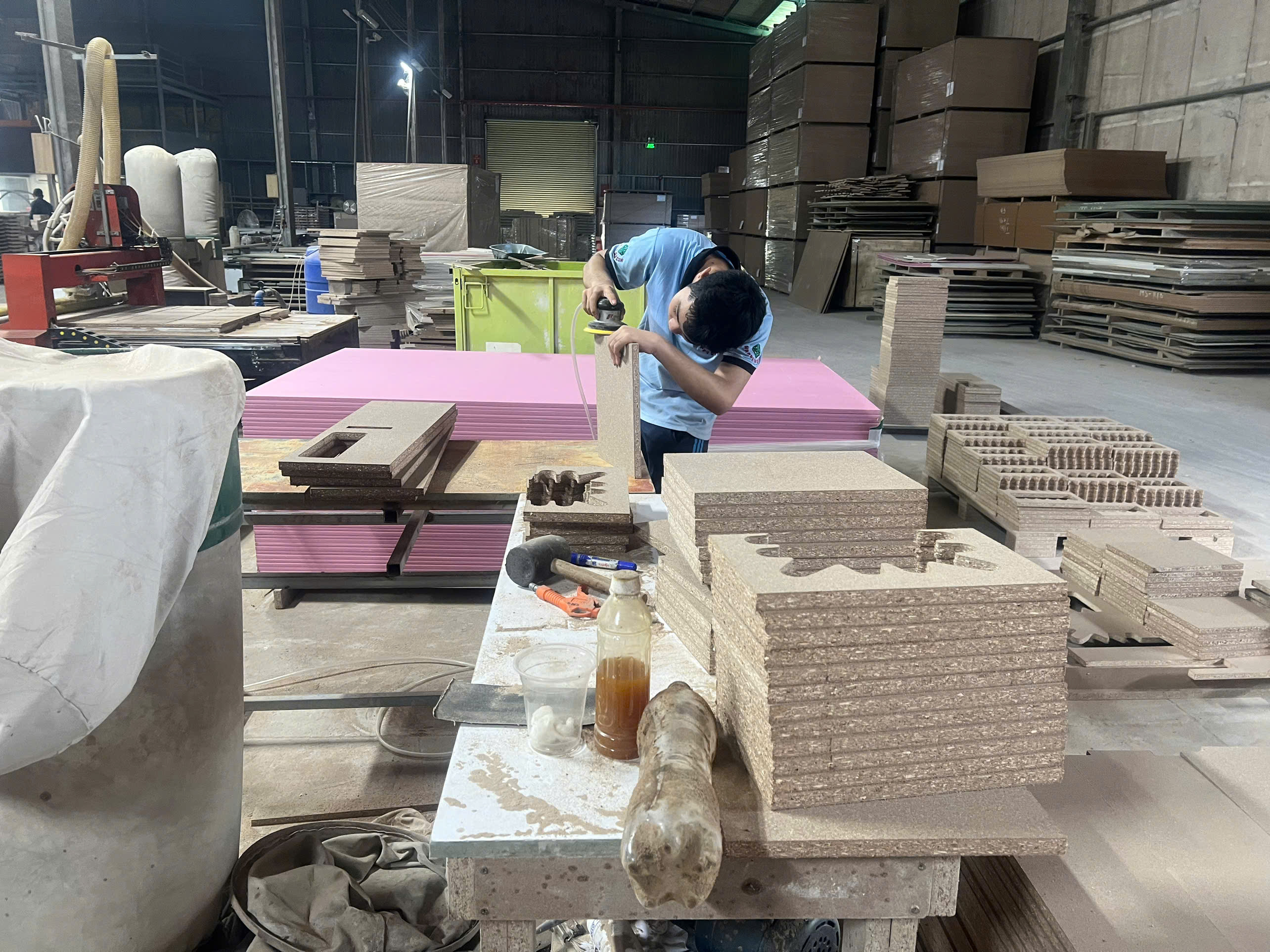
Many Vietnamese stamping suppliers present impressive brochures. They list certifications, show photos of clean facilities, and reference big-name clients. But when our team walks through the actual shop floor, the reality often looks different. Machines may be older than claimed. Quality labs may lack calibrated equipment. Safety protocols may be absent.
A factory audit in Vietnam is not just a formality. It is your single best tool for supplier qualification. Here is what we focus on during every audit we conduct.
The Audit Checklist We Use
| Audit Area | What to Inspect | Red Flags |
|---|---|---|
| Certifications | Verify ISO 9001 or IATF 16949 4 certificates are posted, current, and facility-specific | Certificate covers a different address or is expired |
| Production Floor | Check stamping press condition, tonnage range, feed systems, and automation level | Outdated or poorly maintained presses, manual-only operations |
| Tooling Area | Confirm in-house CNC machining centers 5, wire EDM, and tool storage systems | All tooling outsourced, no dedicated tool room |
| Quality Lab | Look for CMM machines 6, optical comparators, hardness testers, and calibration stickers | No CMM, missing calibration records |
| Material Storage | Inspect raw material storage for organization, labeling, and heat-lot traceability | Unlabeled coils, no incoming material inspection records |
| Safety Protocols | Observe lock-out/tag-out 7 procedures, PPE usage, and emergency exits | No safety signage, workers without PPE |
| ERP / Digital Systems | Ask for a live demo of production tracking, order management, and delivery scheduling | Paper-only systems with no digital traceability |
Virtual Audits as a First Step
If travel is not possible, we arrange video-call audits where our local team in Vietnam walks through the facility with a camera. This is not as thorough as being there in person, but it catches the most obvious issues. We ask the supplier to show us specific machines, open random material trace logs on screen, and demonstrate their inspection process live. Third-party inspection services can also fill the gap if you lack local staff.
Reading Between the Lines
Pay attention to how the supplier responds to your audit request. A confident, qualified partner will welcome the visit. They will prepare documentation in advance. They will let you speak directly to machine operators and quality inspectors. Suppliers who delay, restrict access, or only show a "demo area" are hiding something. In our experience exporting to the US market, supply chain transparency starts at this very first step.
What specific quality control processes should I look for to ensure my custom parts are right the first time?
One buyer interaction that stuck with me involved a client who received 10,000 stamped brackets — every single one had a burr on the slot edge that made assembly impossible. The root cause was simple: the supplier had no in-process quality control inspections. They only checked parts at the end, and by then, the die had already worn past tolerance.
Look for a structured quality control system that includes incoming material inspection, first-article verification, in-process SPC checks, final dimensional inspection using calibrated CMMs, and a complete PPAP Level 3 package with design records, material test certifications, and initial process capability studies.

The PPAP Level 3 Standard
PPAP — Production Part Approval Process — is the gold standard for proving that a supplier truly understands your engineering drawings and can produce parts consistently. A PPAP Level 3 submission includes:
- Design records (your drawings, annotated by the supplier)
- Material test certifications with heat-lot traceability
- Dimensional results for every critical feature
- Initial process capability studies (Cpk values)
- Control plans and process flow diagrams
- FMEA (Failure Mode and Effects Analysis 8)
When we manage a stamping project from our Singapore office, we require every Vietnamese supplier to complete a full PPAP Level 3 before we approve mass production. This is non-negotiable. It is the proof that the manufacturing process is stable and repeatable.
Quality Gates from Coil to Shipment
A mature stamping operation runs quality checks at every stage. Here is the flow we expect:
| Stage | Quality Activity | Tools Used |
|---|---|---|
| Incoming Material | Verify material grade, thickness, and heat-lot number against purchase order | Calipers, material cert review |
| Die Setup / First Article | Run first pieces, measure all critical dimensions, compare to drawing | CMM, optical comparator |
| In-Process | Monitor dimensions at set intervals (e.g., every 500 hits), track SPC data in-process SPC checks 9 | Go/no-go gauges, SPC software |
| Post-Stamping | Check for burrs, cracks, surface defects, and flatness | Visual inspection, surface profilometer |
| Final Inspection | 100% or AQL sampling inspection of finished parts before packing | CMM, automated vision inspection arrays |
| Pre-Shipment | Verify packing, labeling, quantity, and documentation completeness | Checklist, photographic records |
Why "Right First Time" Depends on the Control Plan
A control plan ties every process step to a specific inspection method and acceptance criterion. Without it, quality control inspections become random and subjective. We review the control plan during the PPAP phase and confirm that the supplier's operators actually follow it on the floor. This is where many suppliers fall short: they have documents for auditors, but operators on the line don't know they exist.
For precision metal forming operations — especially parts with tight tolerances like the angular mounting brackets and slotted clips common in automotive and industrial applications — dimensional verification at every stage is critical. Skipping even one check can cascade into thousands of defective parts.
How can I confirm that a supplier in Vietnam has the technical expertise to handle my complex engineering drawings?
A lesson we learned early in our Vietnam operations is that many stamping suppliers will accept any drawing — even ones they don't fully understand. They say "yes" to win the order, then struggle during tooling and produce parts that miss critical tolerances. The cost of that gap falls on the buyer.
Confirm technical expertise by requesting a detailed Design for Manufacturability (DFM) review of your drawings, verifying in-house tool and die design capabilities with CNC and wire EDM equipment, and evaluating the supplier's ability to interpret GD&T, material specifications, and surface finish requirements accurately.

The DFM Review as a Litmus Test
Before committing to any supplier, we send them a complex drawing and ask for a written DFM feedback report. A competent supplier will come back with questions, suggestions, and potential concerns. They might flag a radius that's too tight for the material thickness. They might suggest a different die approach to reduce springback. They might ask about surface finish requirements that affect tooling design.
A supplier who simply says "no problem, we can do it" without any technical feedback is a risk. That silence often means they didn't study the drawing carefully, or they lack the metal stamping capabilities to identify potential issues.
In-House Tooling: The Non-Negotiable
OEM-grade stamping requires in-house tool and die design capabilities. Here is why:
- Speed of modification. When a die needs adjustment during tryout, in-house CNC centers and wire EDM machines allow same-day corrections. Outsourced tooling can add weeks.
- Quality control over the tool. The die is the heart of the stamping process. If the supplier doesn't make it themselves, they can't fully control dimensional accuracy.
- Lifecycle maintenance. Dies wear over time. A supplier with in-house tooling can perform preventive maintenance, regrind cutting edges, and extend tool life without delays.
Equipment to Verify On-Site
| Equipment Type | Purpose | Why It Matters |
|---|---|---|
| CNC Machining Center | Precision milling of die components | Ensures tight tolerances on die cavities and punches |
| Wire EDM | Cutting complex die profiles with high accuracy | Essential for intricate shapes and hardened tool steels |
| Surface Grinder | Finishing die surfaces to required flatness | Directly affects part surface quality |
| CAD/CAM Software | 3D modeling and tool path generation | Shows modern design capability and drawing interpretation |
| Tool Room | Dedicated space for die assembly, tryout, and storage | Indicates organized tooling management |
Reading Complex Drawings
Technical expertise also means the supplier's engineering team can read and interpret your drawings correctly. This includes understanding GD&T symbols, material callouts (e.g., SPCC, SPHC, SUS304), heat treatment requirements, and plating or coating specifications. We test this by asking the supplier to explain, in their own words, what specific tolerances and features on the drawing mean. Communication challenges are common with Vietnamese suppliers, so we use bilingual engineers in our local office to bridge any language gaps and confirm mutual understanding before tooling begins.
For parts like geometrically complex brackets with multiple bends, circular holes, and elongated slots — exactly the types of precision stamping components we source regularly — the supplier must demonstrate they can simulate the forming process, predict springback, and design a progressive die that holds tolerance across hundreds of thousands of hits.
What references or past project data should I request to prove a manufacturer's experience with US-based clients?
When we onboard a new stamping supplier in Vietnam for a US-bound project, one of the first questions our team asks is: "Show us what you've shipped to America before." The answer — or the lack of one — tells us more than any certification ever could.
Request at least three verifiable references from US-based clients, along with past PPAP packages, export shipping records, examples of English-language inspection reports, and evidence of familiarity with US packaging, labeling, and rules of origin requirements for Vietnam.

What Real Export Experience Looks Like
A supplier with genuine US export experience will have documentation that proves it. This goes beyond a list of company names. We look for tangible evidence across several categories.
Shipping records. Bills of lading, commercial invoices, and packing lists for past US shipments show the supplier knows how to handle export logistics, customs documentation, and the rules of origin Vietnam regulations that affect duty rates.
English-language reports. Inspection reports, PPAP submissions, and 8D corrective action reports written in clear English indicate that the supplier can communicate directly with US buyers. This is critical. Communication challenges are one of the top pain points for American procurement managers working with Asian suppliers.
Client testimonials or case studies. We ask suppliers to provide contact details for past US clients who can confirm delivery performance, quality consistency, and responsiveness. Any reputable supplier will have at least a few willing references.
What to Verify in References
Don't just collect names. Call the references. Ask specific questions:
- Did the supplier deliver on time consistently?
- Were there quality escapes? How did the supplier respond?
- How was the supplier's communication — proactive or reactive?
- Did they complete PPAP successfully on the first or second submission?
- Would you reorder from them?
Foreign Ownership as a Signal
Many of the most capable stamping factories in Vietnam are 100% foreign-owned. These facilities — often established by European, American, or Australian companies — bring international management systems, advanced equipment like Amada stamping presses, and a production capacity assessment mindset aligned with Western expectations. They integrate into global supply chains using ERP systems for real-time delivery tracking. When a factory has foreign ownership, it often means they already understand what US buyers need, because their parent company operates by those same standards.
The Certification Hierarchy
Not all certifications carry the same weight. Here is how we rank them for supplier qualification criteria for Vietnam sheet metal fabrication:
| Certification | What It Proves | Relevance for US OEM Buyers |
|---|---|---|
| IATF 16949 | Automotive-grade quality management system | Highest relevance — required for Tier 1/2 automotive suppliers |
| ISO 9001 | General quality management system | Baseline requirement — necessary but not sufficient alone |
| AS9100 | Aerospace quality management system | Required for aerospace stamping applications |
| Customer-Specific SQE Approval | Passed a specific OEM's supplier quality evaluation | Strong proof of real-world OEM experience |
| ISO 14001 | Environmental management system | Increasingly important for ESG-conscious buyers |
A supplier holding IATF 16949 at the specific facility where your parts will be made has demonstrated a level of process discipline that general ISO 9001 holders simply have not. The gap between these two certifications is enormous. IATF 16949 requires advanced quality planning tools like APQP, FMEA, and MSA — all of which are essential for getting precision stamping parts right the first time.
Vietnam's Growing Ecosystem
There is a common concern that Vietnam lacks the deep supplier ecosystem of China or Thailand. The reality is more nuanced. Raw materials like steel and aluminum are increasingly available locally or regionally. Tooling and die-making capabilities are growing rapidly. Surface finishing and heat treatment services are present in the major industrial zones around Ho Chi Minh City, Hanoi, and Hai Phong.
Workers in Vietnam have strong foundations in math and technical subjects. With proper training — typically a comprehensive program of three to six months — they develop proficiency in precision metal forming operations quickly. Our local team has seen this firsthand. The key is investing in that training period and providing expatriate technical support during startup.
Conclusion
Verifying OEM experience when sourcing stamping parts from Vietnam requires audits, certifications, PPAP documentation, and in-house tooling confirmation — not just marketing claims. Request proof, visit the floor, and check references before signing any contract.
Frequently Asked Questions
How do I conduct a thorough on-site audit of a Vietnamese stamping factory to verify their OEM claims?
A trade-off we weigh on every new project is whether to trust a supplier's self-reported capabilities or invest the time and cost to send our Vietnam-based team for a hands-on factory audit Design for Manufacturability 3 . Nine times out of ten, the audit reveals gaps that would have caused serious problems downstream.
What specific quality control processes should I look for to ensure my custom parts are right the first time?
One buyer interaction that stuck with me involved a client who received 10,000 stamped brackets — every single one had a burr on the slot edge that made assembly impossible. The root cause was simple: the supplier had no in-process quality control inspections. They only checked parts at the end, and by then, the die had already worn past tolerance.
How can I confirm that a supplier in Vietnam has the technical expertise to handle my complex engineering drawings?
A lesson we learned early in our Vietnam operations is that many stamping suppliers will accept any drawing — even ones they don't fully understand. They say "yes" to win the order, then struggle during tooling and produce parts that miss critical tolerances. The cost of that gap falls on the buyer.
Footnotes
1. Explains the standard for geometric dimensioning and tolerancing. ↩︎
2. Explains the globally recognized standard for quality management systems. ↩︎
3. Replaced HTTP 405 with a Wikipedia article on Design for Manufacturability. ↩︎
4. Defines the international standard for automotive quality management systems. ↩︎
5. Replaced HTTP 403 with an academic explanation of CNC machining. ↩︎
6. Defines Coordinate Measuring Machines and their use in quality control. ↩︎
7. Details OSHA standards for controlling hazardous energy during maintenance. ↩︎
8. Replaced HTTP 403 with a Wikipedia article on Failure Mode and Effects Analysis. ↩︎
9. Explains Statistical Process Control for monitoring and controlling quality. ↩︎
10. Describes the Production Part Approval Process, especially Level 3 requirements. ↩︎