
When our Vietnam office first started vetting welding part suppliers for U.S. clients, we quickly learned that brochures and websites rarely tell the full story — and the gap between claimed capacity and actual output can cost you months of delays and thousands in scrapped parts.
To verify production capacity and equipment of Vietnamese welding part suppliers, conduct a structured factory audit in Vietnam that covers machinery lists, live production output, welder qualifications, quality management system documentation, ISO 3834 certification, and maintenance logs — then validate findings with trial orders and third-party inspections.
This guide walks through the exact steps we use to evaluate suppliers across Vietnam ISO 3834 certification 1. Each section tackles a specific concern that purchasing managers raise most often — from matching equipment to technical specs, to auditing real throughput, to confirming operator certifications and machine upkeep.
How can I verify if a Vietnamese supplier's welding equipment meets my specific technical requirements?
A lesson we learned early on: a supplier may own dozens of welding machines, yet none may be suited to the process your drawing calls for. We once visited a facility that proudly showcased twenty MIG stations but had zero TIG capability — which was the only process acceptable for our client's stainless steel enclosures.
To verify equipment compatibility, request a detailed machinery list with brand, model, year, and welding process type (MIG, TIG, SMAW, FCAW, laser, or robotic), then cross-check each item against your welding procedure specification (WPS) and confirm through an on-site factory audit in Vietnam.

Start with a Formal Equipment List Request
Before you book any flight or hire a third-party auditor, ask the supplier to send a complete equipment list. This list should include every machine used in welding, cutting, forming, and finishing. Do not accept a generic summary. You need the brand name, the model number, the year of purchase, the rated capacity, and the welding process each machine supports.
Here is what a useful equipment list looks like when organized properly:
| Equipment Type | Brand / Model | Year | Welding Process | Rated Capacity | Automation Level |
|---|---|---|---|---|---|
| Robotic Welder | Fanuc ARC Mate 100iD | 2021 | GMAW (MIG) | 350A | Fully Automatic |
| TIG Welder | Lincoln Electric Precision TIG 375 | 2019 | GTAW (TIG) | 375A | Manual |
| Spot Welder | Panasonic YR-350GS | 2020 | Resistance Spot | 35 kVA | Semi-Auto |
| Laser Cutter | Trumpf TruLaser 3030 | 2022 | N/A (Cutting) | 6 kW | CNC Controlled |
| CNC Press Brake | Amada HG-1303 | 2018 | N/A (Forming) | 130 ton | CNC Controlled |
Match Equipment to Your WPS
Your welding procedure specification 2 defines the exact process, filler metal, shielding gas, joint design, and parameters needed. Compare the supplier's equipment against every requirement in your WPS. If your project needs GTAW welding on 304 stainless steel with argon shielding, the supplier must own TIG machines with proper gas flow regulators and back-purge setups.
If there is a mismatch, you have two choices. You can ask whether the supplier plans to invest in new equipment, or you can move to another candidate. Do not compromise on process compatibility.
Verify Through On-Site or Remote Inspection
A paper list can be fabricated. So you must verify it. The best method is an in-person visit. Our Vietnam team conducts these regularly. We walk the production floor, check serial numbers on machines, and photograph equipment nameplates. If you cannot visit, hire a reputable third-party inspection firm 3 in Vietnam. Companies like SGS, Bureau Veritas, and TÜV all operate there.
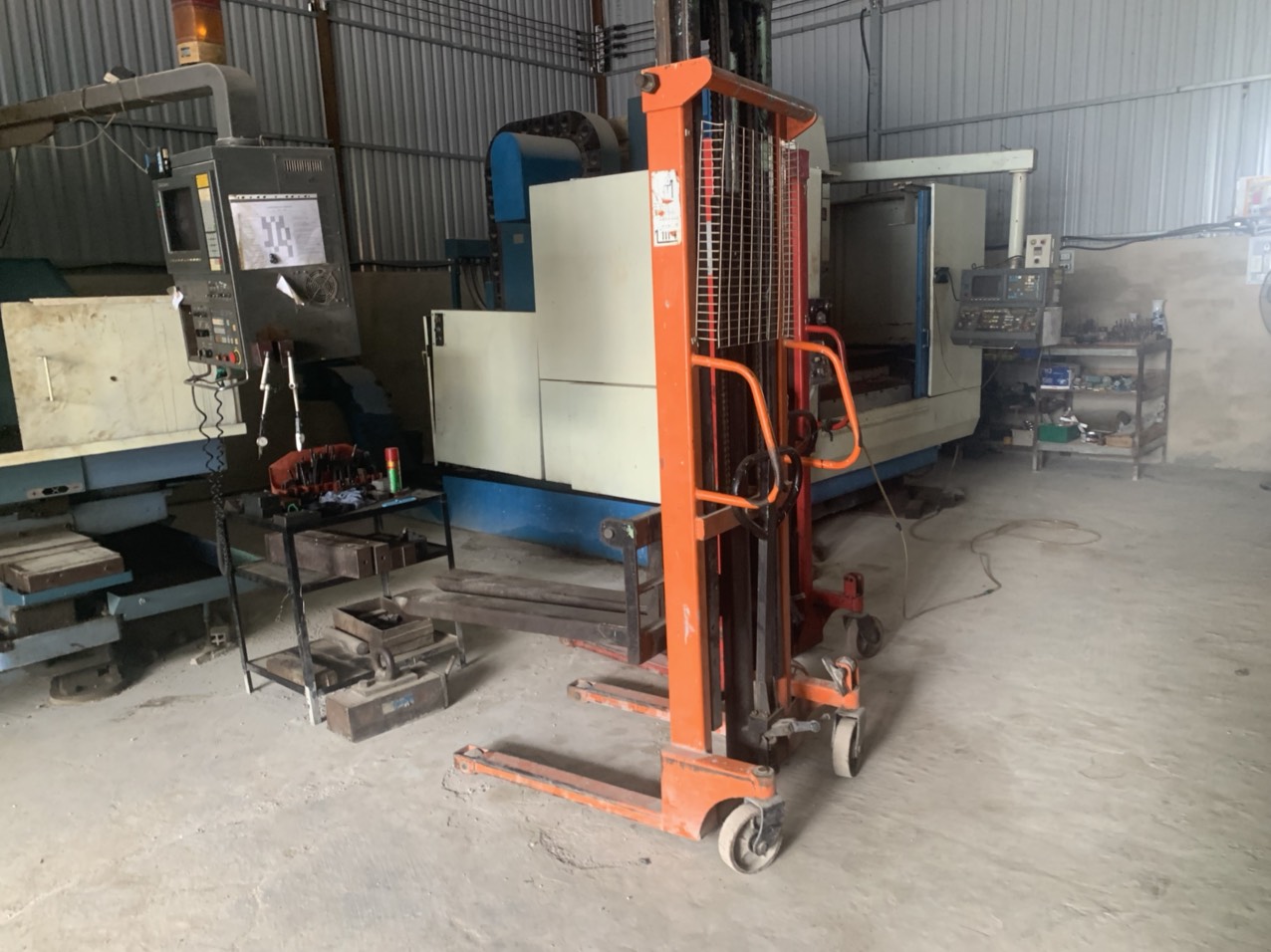
During the visit, check if the machines are actually running — not just parked in a corner for display. Look for signs of daily use: worn contact tips, active welding programs loaded on robotic controllers, and consumable stock on shelves. Also confirm the supplier's level of digitalization and CAD/CAM integration. Modern suppliers often link CNC cutting files directly to their nesting software. This improves material yield and dimensional accuracy on brackets, base plates, and structural frames like the ones we frequently source.
Evaluate Automation and Scalability
Vietnam's welding sector is rapidly adopting robotic welding 4 and automated lines. Leading fabricators run over a hundred welding robots. For high-volume orders — say 10,000 mounting brackets per month — manual welding stations simply cannot keep pace with consistent quality. Ask the supplier what percentage of their welding output is automated versus manual. This directly affects your lead times and part-to-part consistency.
What steps should I take to audit the actual monthly production capacity of a welding facility in Vietnam?
One trade-off we constantly weigh when recommending a Vietnamese supplier to a U.S. purchasing manager is this: a factory might quote an impressive monthly tonnage, but its real sustained output — after accounting for maintenance downtime, reject rates, and existing order loads — could be half that number.
To audit actual monthly production capacity, review the supplier's factory floor area, active production lines, workforce headcount, shift schedules, historical shipment records, and current order backlog — then validate with a trial order to measure real throughput against your required lead times.
Step 1: Gather Baseline Data Before the Visit
Ask the supplier to fill out a production capacity questionnaire. This should cover total floor area, number of welding stations, daily shift structure, number of production workers versus engineers and QC staff, and average monthly output in units or tonnage. Get this in writing before any visit so you can prepare targeted questions.
Step 2: Walk the Floor and Count Active Lines
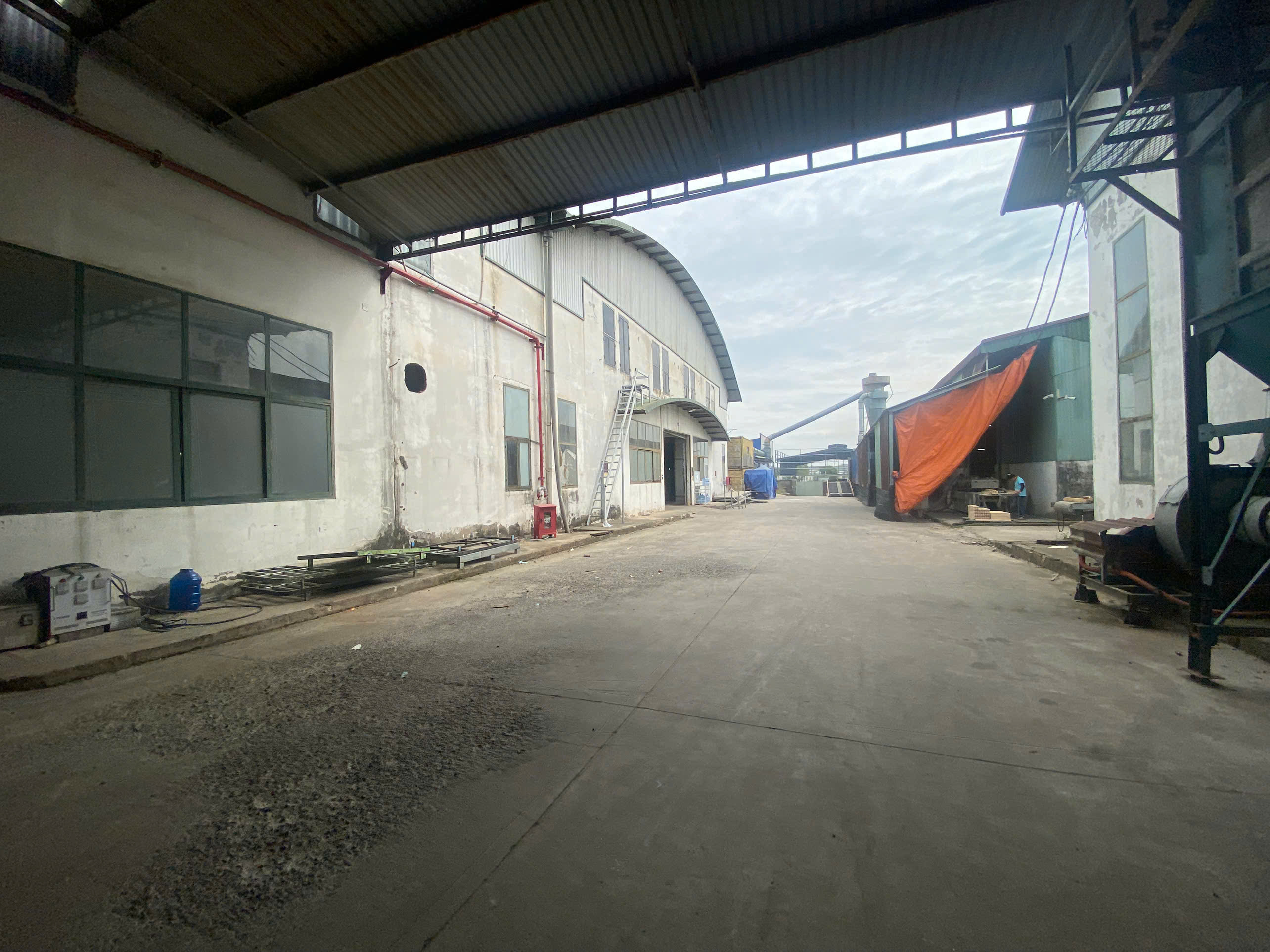
During the factory audit in Vietnam, physically count the active welding bays, CNC machines, cutting stations, and assembly areas. Compare what you see to what was reported. Our experience is that discrepancies are common. A supplier may list forty welding stations, but only twenty-five are staffed and operational on any given day.
Pay attention to workflow layout. A well-organized facility will have a logical flow: raw material storage → cutting → forming → welding → grinding/finishing → QC inspection → packing. Bottlenecks at any stage reduce real capacity regardless of how many welding machines exist.
Step 3: Review Shipment Records and Order Backlog
Ask for shipping records from the past six to twelve months. These documents — commercial invoices, packing lists, bills of lading — reveal the actual volume shipped. If a supplier claims 200 tons per month but shipped an average of 120 tons, you know the true capacity ceiling. Also ask about current backlog. A factory running at 90% capacity will struggle to absorb your order without extending lead times.
| Capacity Metric | What to Ask | Red Flag |
|---|---|---|
| Monthly Output (tons or units) | Average over last 6 months | Claimed output exceeds shipment records by >30% |
| Workforce | Total workers, welders, QC staff | High worker-to-QC ratio (e.g., 50:1) |
| Shift Structure | Single, double, or triple shift | Only single shift but quoting high volume |
| Floor Area | Total m² and welding area m² | Cramped layout, poor material flow |
| Current Backlog | % of capacity already committed | Over 80% committed with no plan to scale |
| Equipment Utilization | Hours per day machines run | Machines idle during working hours |
Step 4: Evaluate Scalability
Your order may grow over time. Can this supplier scale with you? Look for available unused floor space, plans for new equipment purchases, and willingness to add shifts. A supplier that is already maxed out at two shifts with no room for a third production line is a risk for future demand.
Step 5: Validate with a Trial Order
Numbers on paper are never as reliable as real performance. We always recommend starting with a pilot batch. Choose a representative part — perhaps a welded bracket or a sub-assembly frame — and place a small order of 50 to 200 pieces. Track the actual lead time from PO to delivery. Measure the defect rate. Note communication responsiveness. This single trial will tell you more about real manufacturing capabilities than any spreadsheet.
How do I ensure the welding certifications and operator skills match my custom project standards?
A buyer interaction I recall vividly: a U.S. client sent us drawings for a structural frame requiring full-penetration groove welds with radiographic inspection. The Vietnamese supplier's sales team said "no problem." But when we asked for welder qualification records and procedure qualifications, the response was silence for two weeks. That silence told us everything.
Ensure welding certifications and operator skills match your project by requesting documented welder qualification test records per AWS D1.1 or ISO 9606, verifying the supplier holds ISO 3834 certification for welding quality, and confirming each welder is qualified for the specific positions and processes your drawings require.

Understanding What Welder Qualification Really Means
A welder qualification is not just a diploma hanging on a wall. It is a tested, documented proof that a specific welder can produce sound welds in a specific position (flat, horizontal, vertical, overhead) using a specific process (MIG, TIG, stick) on a specific material and thickness range. International standards like AWS D1.1 5, ASME Section IX, and ISO 9606 each define how these tests are performed and recorded.
If your project calls for 6G pipe welding (all positions on a fixed pipe), a welder qualified only for 1G flat plate work is not acceptable. Period.
Key Certifications to Request
Here is a checklist of the most critical certifications and documents you should verify for quality certifications:
| Certification / Document | What It Proves | Standard |
|---|---|---|
| ISO 3834-2 or 3834-3 | Company-level welding quality management system | ISO 3834 |
| ISO 9001:2015 6 | General quality management system (QMS) | ISO 9001 |
| Welder Qualification Records (WQR) | Individual welder tested and approved | AWS D1.1 / ISO 9606 / ASME IX |
| Welding Procedure Specification (WPS) | Documented procedure for each weld type | AWS / ISO / ASME |
| Procedure Qualification Record (PQR) | Tested proof that the WPS produces acceptable welds | AWS / ISO / ASME |
| NDT Operator Certifications | Qualification for non-destructive testing 7 personnel | ASNT SNT-TC-1A / ISO 9712 |
Verify — Do Not Just Collect
Collecting certificates is the easy part. Verifying them requires more effort. Cross-check certificate numbers with issuing bodies when possible. During a supplier qualification audit, ask to see the actual test coupons or at least the test reports that accompany each welder's qualification record. Ask the welding supervisor which welders are qualified for which positions and processes. Then compare that to your project needs.
Non-Destructive Testing Capability
For critical welding applications — structural frames, pressure-bearing assemblies, or safety components — you will need non-destructive testing. This includes methods like ultrasonic testing, radiographic testing, magnetic particle testing, and dye penetrant testing. Ask the supplier whether they perform NDT in-house or outsource it. If outsourced, who is the subcontractor, and are their operators certified to ASNT SNT-TC-1A or ISO 9712?
Our approach is to include NDT requirements directly in the purchase order and the inspection plan. This eliminates ambiguity. It also forces the supplier to budget for testing time and cost upfront, which reduces surprises later.
What are the key indicators I should look for when evaluating the maintenance and QC of their welding machines?
When we calibrate our inspection gauges and review a supplier's maintenance logs during an audit, a clear pattern emerges: suppliers with disciplined equipment upkeep almost always deliver better first-pass yield. Conversely, neglected machines produce inconsistent welds, higher reject rates, and ultimately missed delivery dates — a pain point our U.S. clients raise again and again.
Key indicators include documented preventive maintenance schedules with completion records, equipment calibration certificates traceable to national standards, daily machine checklists signed by operators, weld parameter monitoring logs, and a structured quality management system with clear QC checkpoints at incoming, in-process, and final inspection stages.
Preventive Maintenance: Look for the System, Not Just the Schedule
Any supplier can print a maintenance schedule. What matters is whether they follow it. During your factory audit in Vietnam, ask to see the last three months of completed maintenance work orders. Each work order should identify the machine, the maintenance task performed, the date, and the technician's signature.
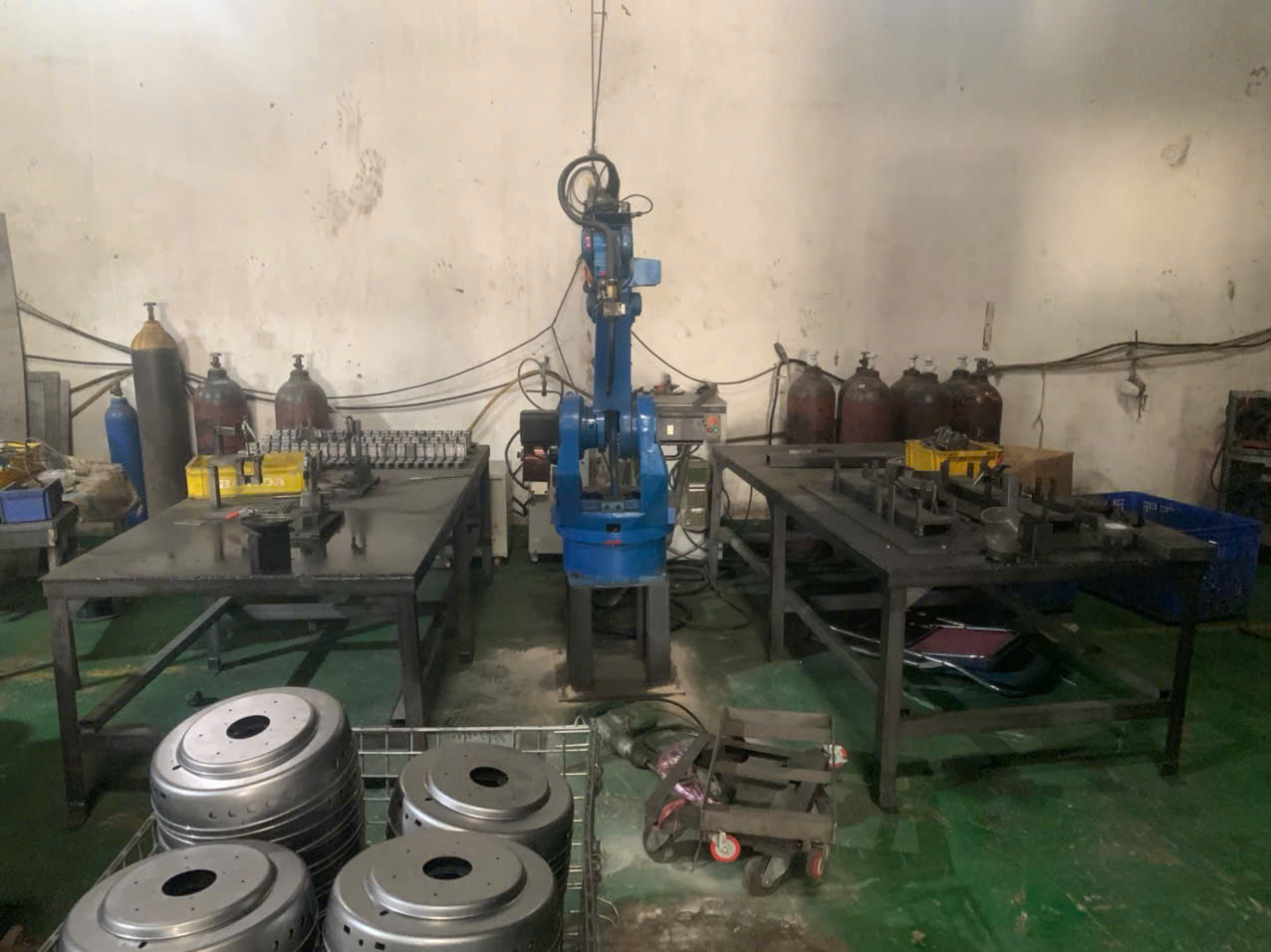
Look at the machines themselves. A well-maintained welding robot has clean wire feed mechanisms, properly aligned torch nozzles, and current software versions. A neglected one has spatter buildup, frayed cables, and error codes taped over with labels that say "ignore."
Equipment Calibration
Welding machines must be calibrated regularly to ensure that the voltage, amperage, and wire feed speed displayed on the control panel match the actual output. Equipment calibration is especially critical for automated and robotic welding cells where parameter accuracy directly controls weld quality.
Ask for calibration certificates. These should be traceable to national or international measurement standards. In Vietnam, calibration is typically performed by accredited labs or the equipment manufacturer's local service center. If a supplier cannot produce current calibration records, that is a serious red flag.
In-Process QC and Parameter Monitoring
Modern welding quality control goes beyond just inspecting the finished part. In-process monitoring captures real-time data — arc voltage, current, travel speed, gas flow rate — during welding. This data helps catch deviations before they become defects. Ask whether the supplier logs welding parameters for each batch or each part. On robotic welding cells, this data is often captured automatically.
For manual welding, in-process QC relies on the welder following the WPS and on roving inspectors checking weld appearance, dimensions, and bead profiles during production. Look for evidence of these checks: inspection stamps on parts, in-process inspection forms, and clear traveler documents that follow each part through the shop.
Final Inspection and Traceability
At the end of production, every welded part should undergo final inspection. This may include dimensional checks with calipers, micrometers, or coordinate measuring machines (CMM), visual weld inspection per AWS D1.1 or equivalent, and any required NDT. The inspection results must be recorded and traceable to specific parts or batches.
Here is what a strong QC system looks like at each stage:
| QC Stage | What to Check | Tools / Methods |
|---|---|---|
| Incoming Material | Mill certs, material grade, dimensions | Spectrometer, calipers, material traceability system |
| Pre-Weld | Fit-up, joint preparation, cleanliness | Visual, go/no-go gauges |
| In-Process Welding | Arc parameters, weld appearance, interpass temp | Parameter monitors, visual, temp sticks |
| Post-Weld | Dimensions, weld profile, surface quality | CMM, weld gauges, visual per AWS/ISO |
| Final / NDT | Internal weld soundness, leak testing | Ultrasonic, radiographic, dye penetrant, pressure test |
| Packing / Shipping | Labeling, protection, count verification | Checklist, photographic records |
Sampling Rates and Rejection Protocols
Ask the supplier what sampling rate they use. Some test 5 out of every 100 parts. Others inspect 100% of critical dimensions. Your project requirements and risk tolerance should dictate the rate. Also ask what happens when a defect is found. A mature supplier will have a documented corrective action process: root cause analysis 8, containment, corrective action, and verification of effectiveness.
ESG and Workplace Practices
While not directly a QC metric, the overall condition of the workplace tells you a lot. Clean, well-lit facilities with proper ventilation, organized tool storage, and visible safety signage correlate strongly with disciplined quality practices. Suppliers committed to environmental, social, and governance standards tend to invest more in equipment upkeep and worker training. ESG and Workplace Practices 9 Look for waste management practices, fume extraction systems, and evidence of ongoing welder training programs.
Conclusion
Verifying Vietnamese welding part suppliers requires a structured approach covering equipment, capacity, certifications, and QC systems — then validating everything with trial orders and on-the-ground audits before committing to full production volumes.
Frequently Asked Questions
How can I verify if a Vietnamese supplier's welding equipment meets my specific technical requirements?
A lesson we learned early on: a supplier may own dozens of welding machines, yet none may be suited to the process your drawing calls for. We once visited a facility that proudly showcased twenty MIG stations but had zero TIG capability — which was the only process acceptable for our client's stainless steel enclosures.
What steps should I take to audit the actual monthly production capacity of a welding facility in Vietnam?
One trade-off we constantly weigh when recommending a Vietnamese supplier to a U.S. purchasing manager is this: a factory might quote an impressive monthly tonnage, but its real sustained output — after accounting for maintenance downtime, reject rates, and existing order loads — could be half that number.
How do I ensure the welding certifications and operator skills match my custom project standards?
A buyer interaction I recall vividly: a U.S. client sent us drawings for a structural frame requiring full-penetration groove welds with radiographic inspection. The Vietnamese supplier's sales team said "no problem." But when we asked for welder qualification records and procedure qualifications, the response was silence for two weeks. That silence told us everything.
Footnotes
1. Explains the international standard for welding quality management systems. ↩︎
2. Defines the formal document for welding procedures and quality control. ↩︎
3. Explains the role and benefits of independent inspection services for quality assurance. ↩︎
4. Describes the automation of welding processes and its advantages in manufacturing. ↩︎
5. Details the widely used standard for structural steel welding requirements. ↩︎
6. Explains the international standard for quality management systems. ↩︎
7. Describes methods for evaluating materials and components without causing damage. ↩︎
8. Explains the systematic approach to identifying underlying problems in quality management. ↩︎
9. Covers environmental, social, and governance factors in modern manufacturing. ↩︎
10. Verifies the accuracy and reliability of measuring instruments for quality control. ↩︎