Verifying a sheet metal supplier’s HSLA experience became a priority for us after a client received brackets with inconsistent yield strength 1 — parts that cracked during assembly, delayed the entire production run, and cost thousands in rework.
To verify a sheet metal supplier’s high-strength steel (HSLA) experience, request mill test certificates, audit their fabrication capabilities for HSLA-specific challenges like springback, confirm material traceability from raw stock to finished part, and validate mechanical properties through independent third-party testing.
This article walks you through the exact steps we use at DEWIN when qualifying HSLA suppliers across Vietnam, China, and other Asian markets for our U.S. and European clients. Each section covers a specific verification angle you can apply immediately.
How do I evaluate if a sheet metal supplier has the right machinery for my HSLA project?
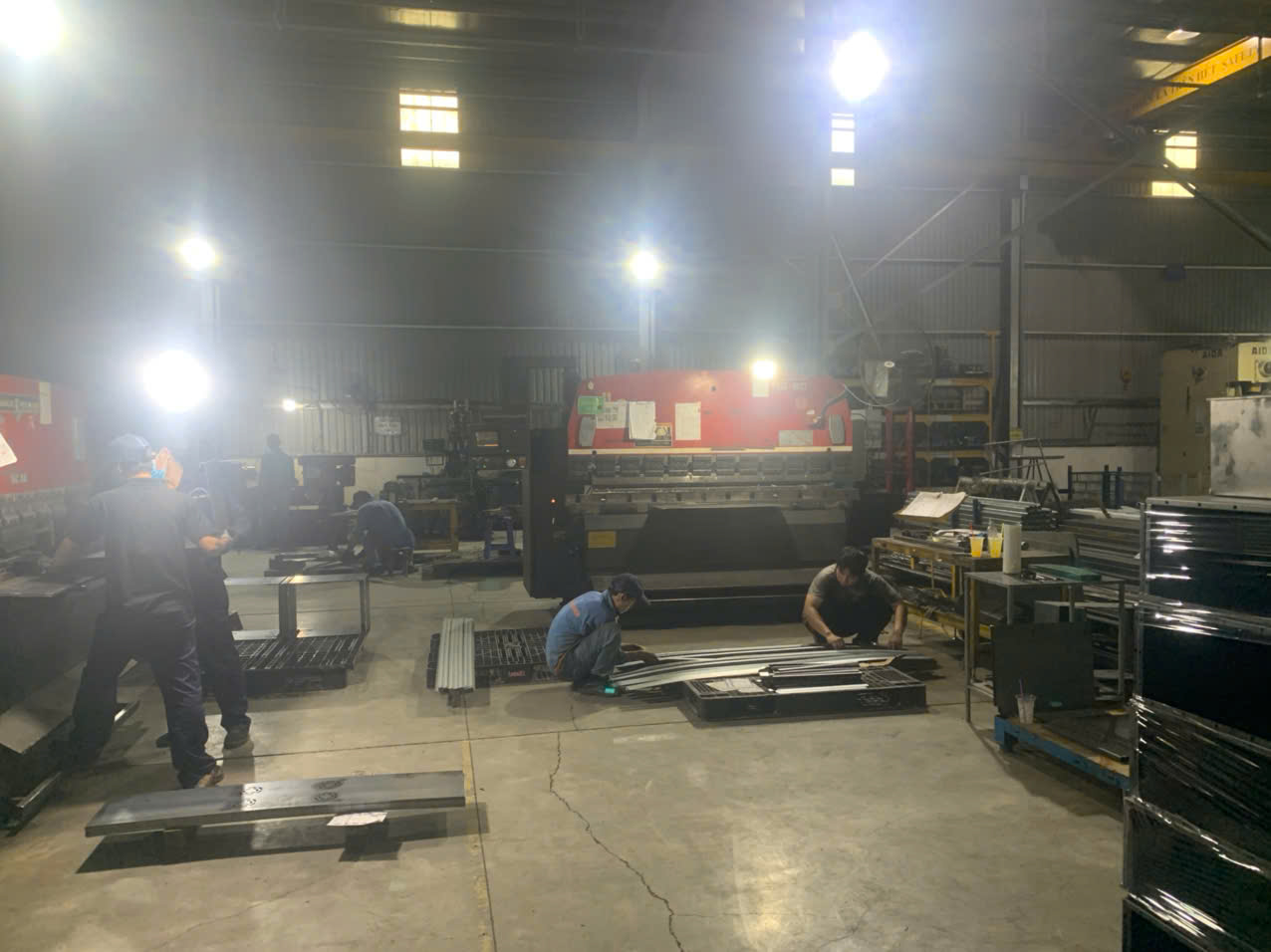
A few months ago, a purchasing manager in Ohio asked us to source mirrored mounting brackets in HSLA steel — parts with tight-radius bends, multiple cutouts, and weld joints finite element analysis 2. The first supplier we visited had a press brake that simply could not handle the tonnage required for the material thickness.
Evaluate a supplier's machinery by checking their press brake tonnage ratings, CNC equipment age and accuracy, tooling inventory for high-strength materials, and whether they use simulation software like finite element analysis to predict HSLA forming behavior before cutting metal.
Why Standard Equipment Falls Short for HSLA
HSLA steel grades 3 like ASTM A572 Grade 50 or HSLA-100 demand significantly more forming force than mild carbon steel. The higher yield strength — typically ranging from 50 to 100 ksi depending on the alloy — means a press brake rated for standard steel may lack the tonnage. If the supplier's equipment is borderline, you will see inconsistent bends, micro-cracking at bend radii, and dimensional drift across a production run.
When our team in Vietnam audits a potential supplier, we always ask for the machine spec sheets. We compare the rated capacity against the actual forming loads required by the part geometry. A supplier who cannot show you this calculation has likely not thought through HSLA fabrication capabilities in any serious way.
Key Machinery Checklist
| Equipment / Capability | What to Verify | Why It Matters for HSLA |
|---|---|---|
| CNC Press Brake | Tonnage rating, stroke accuracy, backgauge precision | HSLA needs higher tonnage; inaccurate backgauges amplify springback 4 errors |
| Laser / Plasma Cutter | Wattage, edge quality on high-strength plate | Poor cutting causes heat-affected zone issues 5, edge cracking |
| Welding Stations | MIG/TIG capability, preheat controls | Weldability of HSLA depends on controlled heat input and correct filler metals |
| CNC Punch Press | Max material thickness and tensile rating | Underpowered punch presses damage tooling on HSLA and produce burrs |
| Simulation Software (FEA) | Forming simulation, springback prediction | Reduces prototyping cycles and confirms design for manufacturability |
Beyond the Machine List
Equipment alone does not tell the full story. Ask the supplier how they set up tooling for HSLA versus mild steel. A competent shop will explain that they use different die openings, adjusted punch radii, and slower stroke speeds. They should also describe how they compensate for springback during programming. If they treat HSLA the same as standard carbon steel, that is a red flag.
During one of our supplier development visits in southern China, we found a shop with excellent CNC equipment but no dedicated tooling sets for high-strength materials. They were swapping the same tooling between mild steel and HSLA jobs. The result was premature tool wear and inconsistent part geometry. We moved on.
Also look at whether the supplier invests in equipment upgrades. A shop that purchased a newer servo-electric press brake in the last few years signals financial stability and a commitment to handling advanced materials. Outdated hydraulic presses with poor repeatability are a liability for HSLA work.
What specific quality control documents should I ask for to verify their high-strength steel experience?
One lesson we learned early in our supply chain work is that a supplier who cannot produce the right paperwork on demand almost certainly does not have the quality control processes to back up their claims. Documents are not bureaucracy — they are proof.
Ask for mill test certificates with heat numbers, chemical composition, and mechanical properties; material traceability records linking raw stock to finished parts; First Article Inspection reports; ASTM or ISO compliance certificates; and version-controlled drawings signed by both parties to prevent specification drift.
The Non-Negotiable Document Stack
Here is the core set of documents we request from every HSLA supplier we evaluate. Missing even one should trigger follow-up questions.
| Document | What It Must Include | Red Flag If Missing |
|---|---|---|
| Mill Test Certificate (MTC) | Heat number, chemical composition 6 (C, Mn, Si, Nb, V, Ti), yield/tensile strength, elongation | Cannot verify the HSLA grade is genuine; risk of grade substitution |
| Material Traceability Record | Batch number linked from raw coil/plate through cutting, forming, welding, to final part | No way to isolate defective material if a problem surfaces in the field |
| First Article Inspection (FAI) | Dimensional measurements vs. drawing, material verification, surface finish check | Supplier may be skipping incoming inspection entirely |
| ISO 9001 or IATF 16949 Certificate 7 | Valid accreditation, scope covering sheet metal fabrication | Quality management system may be informal or inconsistent |
| Signed Specification Sheet | Material grade, tolerances, finish, packaging — version-controlled with revision history | Miscommunication risk; supplier may fabricate to an outdated revision |
Why Mill Test Certificates Alone Are Not Enough
MTCs confirm what the steel mill says about the material. But they do not confirm what actually arrived at the supplier's loading dock. Grade substitution — intentional or accidental — is a real risk in Asian sourcing. We have seen cases where the MTC matched the purchase order, but the actual coil was a lower-grade material with different alloying elements.
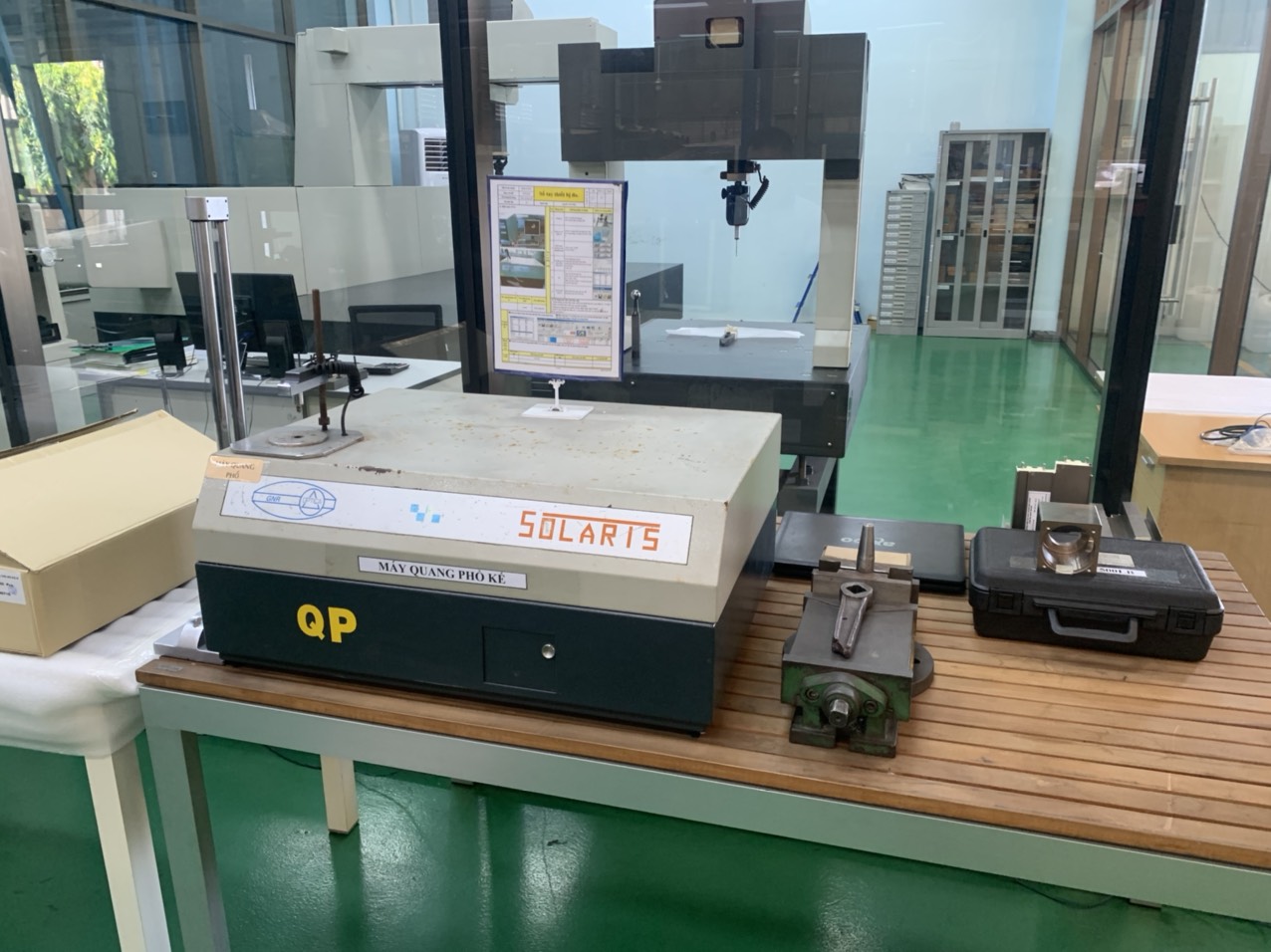
This is why we recommend pairing MTCs with independent verification. XRF (X-ray fluorescence) analysis 8 can detect chemical composition deviations as small as 0.1%. A supplier who owns or regularly uses a handheld XRF gun demonstrates a genuine commitment to incoming material inspection. If they do not have one, ask whether they use a third-party lab for spot checks.
Mechanical Testing Beyond Chemistry
Chemical composition tells you what the steel is made of. Mechanical testing tells you how it will perform. For HSLA, the critical tests are tensile strength 9, yield strength, and hardness. Some applications also require Charpy impact testing 10, especially for parts exposed to low temperatures.
We advise our clients to request three samples from different production batches. Compare the test results side by side. Consistent numbers across batches indicate a stable material source and reliable quality control processes. Wide variation is a warning sign — it may point to the supplier pulling from multiple mills with different heat treatment practices.
Material certifications are only meaningful when they form a chain. The MTC should connect to a traceable heat number. That heat number should appear on the raw stock stored in the supplier's warehouse. And that stock should link to the specific parts in your order. If any link in this chain is broken, you cannot trust the rest.
How can I confirm my supplier has successfully managed HSLA springback and cracking issues in past projects?
During a recent project involving angular mounting brackets — parts with sharp bends, irregular cutouts, and multiple fold axes — our engineering team spent considerable time working with the supplier on springback compensation. The brackets were mirrored pairs, and even a 1-degree angular deviation made them non-interchangeable. This is the kind of real-world challenge that separates experienced HSLA fabricators from those who just claim the capability.
Confirm HSLA springback and cracking management by requesting case studies or photos of similar past projects, asking how they calculate overbend angles, reviewing their scrap and rework rates for high-strength steel jobs, and checking whether they perform bend tests and edge-quality inspections as part of their standard process.
Understanding Springback in HSLA
Springback occurs when a bent part partially returns toward its original flat shape after the forming force is released. All metals exhibit springback, but HSLA steel springs back significantly more than mild steel because of its higher yield strength. A bend programmed for 90 degrees might result in an actual angle of 87 or 88 degrees if the supplier does not compensate.
Experienced fabricators address this by overbending — programming the press brake to bend slightly past the target angle so the part relaxes to the correct dimension. The overbend amount depends on the specific HSLA grade, material thickness, bend radius, and grain direction. There is no universal formula. It comes from testing, experience, and often from simulation software.
Questions That Reveal Real Experience
Rather than asking a supplier "Can you handle HSLA?" — which always gets a yes — ask specific technical questions.
- What overbend angle do you typically use for ASTM A572 Grade 50 at 3mm thickness with a 90-degree target bend?
- How do you determine minimum bend radius for a given HSLA grade to avoid cracking?
- Do you orient bends relative to the grain direction of the sheet? How do you mark grain direction on incoming stock?
- Can you show me photos or samples from a previous HSLA job with similar complexity?
A supplier who answers these questions with specifics — actual numbers, process descriptions, sample parts — has done this work before. Vague responses or generic assurances are a clear warning.
Edge Cracking: The Silent Failure Mode
Edge cracking is another HSLA-specific risk. It typically occurs at sheared or punched edges where the material has been work-hardened. When you bend along or near these edges, micro-cracks can form and propagate under load.
Competent suppliers mitigate this by:
- Using laser cutting instead of shearing for edges that will be bent.
- Deburring or chamfering cut edges before forming.
- Orienting the part layout so that bends do not run parallel to sheared edges.
- Performing bend tests on sample pieces from each material batch.
Ask the supplier what percentage of their HSLA parts require rework due to cracking. A well-run shop will track this data. If they cannot give you a number, they are not tracking it — and that means they are not managing it.
Springback vs. Cracking: A Quick Comparison
| Issue | Root Cause | How an Experienced Supplier Manages It | What to Ask For |
|---|---|---|---|
| Springback | High yield strength causes elastic recovery after bending | Overbend compensation, FEA simulation, trial bends on scrap | Overbend angle data for your specific HSLA grade |
| Edge Cracking | Work-hardened edges from shearing or punching | Laser cutting, deburring, grain-direction awareness | Scrap/rework rate, edge preparation procedures |
| Weld Cracking | Excessive heat input or wrong filler metal | Controlled heat input, preheat where needed, matching filler wire | Weld procedure specifications (WPS) and welder qualifications |
Design for manufacturability feedback from the supplier is also telling. A supplier who reviews your CAD file and proactively suggests a larger bend radius or a different edge preparation method understands HSLA's unique behavior. One who simply quotes and fabricates without DFM input is likely applying mild steel assumptions to your high-strength parts.
What steps should I take to audit an offshore supplier's HSLA material sourcing and traceability?
A client we work with in the Midwest once discovered — three months into production — that their Vietnamese supplier had quietly switched HSLA sources from a reputable Japanese mill to a lower-cost domestic alternative. The mechanical properties drifted. Parts began failing functional tests at the client's assembly line. The root cause was a broken traceability chain that nobody caught until it was too late.
To audit offshore HSLA material sourcing and traceability, verify the supplier's primary mill relationships, cross-check mill test certificates against physical stock, conduct on-site or structured remote audits of their warehouse and labeling systems, and require batch-level documentation linking every finished part back to a specific heat number.

On-Site Audit: What to Look For
When our team in Vietnam or China conducts an on-site audit, we follow a structured supplier audit checklist tailored to HSLA projects. Here are the critical checkpoints:
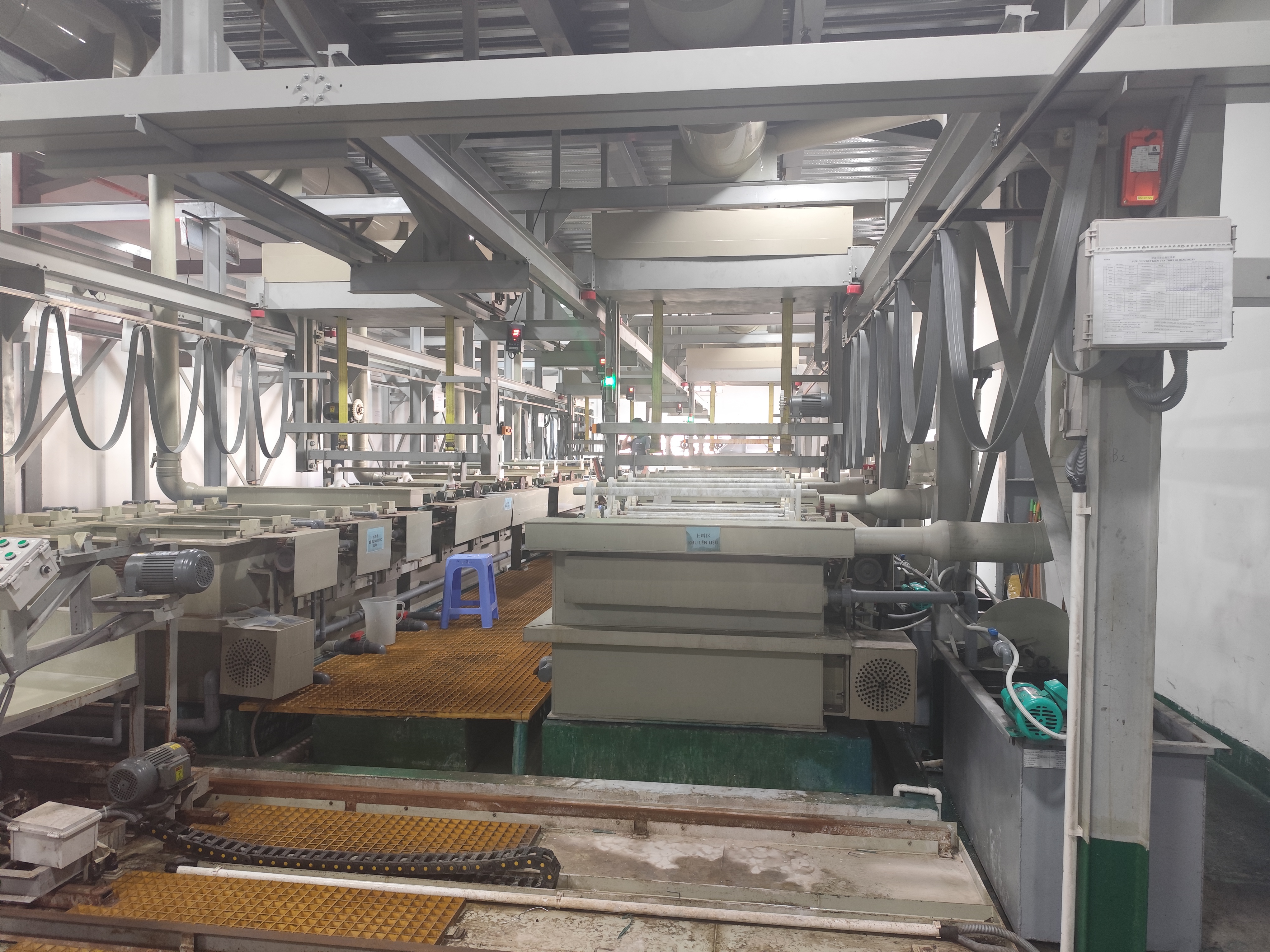
Material storage: HSLA coils and plates should be stored off the ground, protected from moisture, and clearly labeled with grade, heat number, and thickness. Mixed storage — where different grades sit together without labeling — is an immediate concern.
Incoming inspection records: The supplier should log every incoming shipment with the MTC, weight, and a visual or XRF check. We look for the inspection log book or digital records and cross-reference a random entry against the corresponding MTC on file.
In-process traceability: During fabrication, the heat number or batch ID should follow the material through every operation — cutting, forming, welding, finishing. Some suppliers stamp or etch identifiers on parts. Others use job traveler cards. The method matters less than the discipline.
Change control: Ask what happens when their primary mill cannot supply a batch. Do they have an approved secondary source? Is there a formal change notification process that alerts you before a material source changes? Lack of change control is how grade substitution happens — sometimes without the supplier even realizing it.
Structured Remote Audit: When You Cannot Travel
Not every buyer can visit an offshore factory. We have helped clients run effective remote audits using a structured protocol:
- Pre-audit document package: Request all MTCs, traceability logs, and QC records for the last three HSLA orders. Review them before the video call.
- Live video walkthrough: Ask the supplier to walk through their warehouse on camera. Have them show material labels, storage conditions, and the QC lab. Request close-up shots of specific items you identified in the document review.
- Sample cross-check: Order three samples from different batches. Send them to an independent testing lab for chemical and mechanical analysis. Compare results against the MTCs the supplier provided.
- Follow-up questions: After the remote audit, send a written list of clarifications. A responsive supplier who answers in detail — with supporting photos or documents — is a strong candidate. Delays or vague replies are not.
Evaluating Supply Chain Reliability
Beyond the immediate audit, assess the supplier's long-term supply chain reliability for HSLA materials.
| Stability Indicator | What to Check | Benchmark |
|---|---|---|
| On-Time Delivery Rate | Request delivery data for the last 3–6 months | Above 95% is considered stable |
| Mill Relationships | Ask for their top two HSLA material sources and backup plan | Should have at least one approved alternate source |
| Market Longevity | How many years have they been fabricating HSLA specifically? | 5+ years with traceable project history is ideal |
| Customer Diversity | Do they serve multiple industries (automotive, construction, heavy machinery)? | Diverse customer base reduces dependency risk |
| Technology Investment | Recent equipment purchases, software upgrades, lab equipment | Signals financial health and quality commitment |
Digital traceability is gaining traction. Some forward-thinking suppliers now use cloud-based systems or even blockchain to track material from the mill to the finished part. While this is not yet universal, a supplier who has invested in digital traceability is signaling a serious approach to quality and transparency.
ASTM standards compliance is another anchor point. Ask whether their HSLA stock consistently meets ASTM A572, A656, or whichever specification your project requires. Request proof — not just a statement. The proof should be in the form of test data, not marketing materials.
One final point on auditing: do not rely on a single audit. Supply chain conditions change. Mills raise prices. Suppliers cut corners under margin pressure. We recommend re-auditing HSLA suppliers at least annually, with spot checks on MTCs and material samples in between. Continuous verification is the only way to maintain confidence in your offshore supply chain.
Conclusion
Verifying a sheet metal supplier's HSLA experience requires checking machinery, documents, technical know-how, and traceability in a structured way. To formalize this process across all your suppliers, consider learning how to build a supplier evaluation system for sourcing sheet metal fabrication. At DEWIN, we apply these steps daily to help U.S. buyers source with confidence.
Frequently Asked Questions
How do I evaluate if a sheet metal supplier has the right machinery for my HSLA project?
A few months ago, a purchasing manager in Ohio asked us to source mirrored mounting brackets in HSLA steel — parts with tight-radius bends, multiple cutouts, and weld joints finite element analysis 2 . The first supplier we visited had a press brake that simply could not handle the tonnage required for the material thickness.
What specific quality control documents should I ask for to verify their high-strength steel experience?
One lesson we learned early in our supply chain work is that a supplier who cannot produce the right paperwork on demand almost certainly does not have the quality control processes to back up their claims. Documents are not bureaucracy — they are proof.
How can I confirm my supplier has successfully managed HSLA springback and cracking issues in past projects?
During a recent project involving angular mounting brackets — parts with sharp bends, irregular cutouts, and multiple fold axes — our engineering team spent considerable time working with the supplier on springback compensation. The brackets were mirrored pairs, and even a 1-degree angular deviation made them non-interchangeable. This is the kind of real-world challenge that separates experienced HSLA fabricators from those who just claim the capability.
Footnotes
1. Defines yield strength as the maximum stress a material can withstand before permanent deformation. ↩︎
2. Describes FEA as a computational tool for predicting product behavior under various forces. ↩︎
3. Wikipedia provides a comprehensive overview of steel types, including HSLA steel grades. ↩︎
4. Explains the elastic recovery phenomenon in metal forming after bending forces are released. ↩︎
5. Explains common problems like cracking and reduced toughness in the heat-affected zone. ↩︎
6. Details the elements and their roles in determining steel properties. ↩︎
7. Provides information on ISO 9001, a globally recognized quality management system standard. ↩︎
8. Thermo Fisher Scientific, a major manufacturer of analytical instruments, offers a detailed explanation of XRF analysis. ↩︎
9. Defines tensile strength as a material’s resistance to pulling or stretching forces. ↩︎
10. Describes the test method used to evaluate material toughness under sudden impact. ↩︎