
Learning how to verify a stamping parts supplier’s certifications saved our sourcing team from a costly mistake last year Production Part Approval Process 1. A convincing certificate can hide an expired, fake, or irrelevant scope.
To verify a stamping parts supplier’s certifications, request the full certificate copy, then search the certificate number in the issuing body’s official online registry. Confirm the legal name, address, dates, and scope match exactly, and check the certifier’s accreditation with IAF, ANAB, or UKAS.
That is the short answer. Below, I will walk you through each step in detail, from ISO 9001 2 checks to on-site audits, so you never approve a supplier on paperwork alone.
How can I confirm a stamping supplier's ISO 9001 certificate hasn't expired or been faked?
During a supplier audit in Vietnam two years ago, our team pulled up a certificate registry on a phone and found the stamping plant's ISO 9001 record had been withdrawn six months earlier.
Confirm an ISO 9001 certificate by entering the certificate number or company name into the certification body's official public database. Verify the expiry date, check for suspension or withdrawal status, and match the legal entity name and site address against the document the supplier sent you.

The first thing I tell buyers is simple: never trust the PDF alone. A scanned certificate proves nothing by itself. Modern editing tools make it easy to change a date, a company name, or even a certificate number. So your job is to check the source, not the copy.
Start with the certificate itself
Ask the supplier for a clean, complete copy of the certificate. Not a screenshot. Not a cropped image. The full document. Then locate these fields:
| Field on the Certificate | What to Check |
|---|---|
| Certificate number | This is your key for registry lookup |
| Issuing body | Must be a real, named certification body |
| Legal entity name | Must match the company you are buying from |
| Site address | Must match the actual stamping plant |
| Issue and expiry dates | ISO 9001 certificates run on a three-year cycle |
| Scope statement | Must mention stamping or relevant metal forming |
Go to the registry yourself
Next, find the certification body's official website through your own search. Do not click a verification link the supplier sends you. Fake validation pages exist, and they look convincing. Type the certificate number into the certifier's public database and compare every field.
Also remember that ISO 9001 requires annual surveillance audits. A certificate can be technically unexpired but suspended because the supplier skipped a surveillance audit. Most registries show suspension or withdrawal status. If the registry shows anything other than "valid" or "active," stop and ask questions. In our experience running supplier audits across Vietnam and other Asian countries, a supplier with a clean quality system will never hesitate to help you verify their credentials.
What documents should I request to verify a supplier's IATF 16949 compliance for automotive stamping parts?
One of our U.S. clients once asked us to qualify a stamping supplier for an automotive bracket program. The supplier had a valid IATF certificate but could not produce a single complete PPAP package.
Request the IATF 16949 certificate with its IATF number, the latest surveillance audit report, PPAP submissions with PSW sign-off, control plans, PFMEA documents, MSA and SPC records, and material traceability certificates. Certification alone does not prove automotive-grade process discipline.

IATF 16949 3 is stricter than ISO 9001, and the verification process reflects that. Every legitimate IATF certificate carries a unique IATF number issued through the IATF database, and the certification body must be recognized by the IATF Oversight offices. That gives you a stronger paper trail than generic ISO certificates. But paper is still only the starting point.
The document package that proves real compliance
When we qualify automotive stamping suppliers for our clients, we request this set:
| Document | Why It Matters |
|---|---|
| IATF 16949 certificate with IATF number | Confirms registration in the IATF system |
| Latest surveillance audit report | Shows current findings and open nonconformities |
| PPAP package (Level 3 typical) | Proves the part approval process is real, not theoretical |
| Control plan and PFMEA | Shows the supplier planned for stamping failure modes |
| SPC/CpK data on key dimensions | Demonstrates stable, capable stamping processes statistical process control 4 |
| MSA studies | Confirms measurement systems are trustworthy |
| Mill test certificates | Verifies raw material grade and traceability |
Watch how the supplier responds
The response itself is a signal. A capable supplier hands over PPAP history and control plans within days. A weak supplier stalls, sends partial files, or claims confidentiality on everything. When we co-develop stamped parts with plants in Vietnam, we expect a complete document response within one week. Anything slower suggests the quality system exists on paper only. Also confirm the certificate covers the specific manufacturing site making your parts. Multi-site companies sometimes hold IATF certification at one plant and quietly produce at another that has no certification at all.
Can I cross-check a certification body's accreditation before trusting a supplier's paperwork?
A lesson we learned the hard way: a certificate is only as credible as the body that issued it. Early in our sourcing work, we encountered "certification mills" selling certificates with no real audits behind them.
Yes. Check whether the certification body is accredited by a recognized authority such as ANAB, UKAS, or another IAF member. Search the accreditation body's public directory for the certifier's name. If the certifier has no recognized accreditation, treat its certificates as unverified.

Think of this as verification in two layers. The first layer asks: is the certificate real? The second layer asks: does the certificate mean anything? A certificate from an unaccredited body can be one hundred percent genuine and still worthless, because nobody credible ever checked the supplier's quality system.
How the accreditation chain works
The system runs top-down. The International Accreditation Forum 5 (IAF) recognizes national accreditation bodies. Those bodies then accredit certification bodies. Those certifiers then audit and certify suppliers. Break any link, and the whole chain collapses.
| Level | Who | Example |
|---|---|---|
| Global recognition | IAF and its MLA signatories | IAF CertSearch database 6 |
| National accreditation body | Accredits certifiers | ANAB (USA), UKAS 7 (UK), JAS-ANZ |
| Certification body | Audits suppliers | SGS, TÜV, BSI, Intertek |
| Supplier | Holds the certificate | Your stamping plant |
A quick three-step cross-check
First, find the accreditation mark on the certificate. Legitimate certificates usually show both the certifier's logo and the accreditation body's mark. Second, go to the accreditation body's website and search its directory for the certifier. Third, for a shortcut, use the IAF CertSearch database, which lets you validate accredited certifications globally in one place. Some certifiers now also print QR codes on certificates that link straight to a live validation page, which speeds this up considerably. When our audit team screens new stamping suppliers, this accreditation check takes under ten minutes. It filters out certificate mills before we spend a single dollar on travel.
Should I conduct an on-site audit even after a supplier provides valid certification documents?
Here is a trade-off we weigh on every project: an on-site audit costs time and money, but a failed shipment costs far more. Our Vietnam office exists partly because remote verification has limits.
Yes, conduct an on-site audit for any critical or high-volume stamping program. Valid certificates confirm a quality system exists on paper, but only a factory visit verifies tooling condition, in-process inspection, calibration practice, material traceability, and whether daily operations match documented procedures.

Certificates answer the question "did an auditor approve this system at some point?" An on-site audit answers a better question: "will this plant make my parts right, on time, every time?" Those are not the same question. I have walked through certified stamping plants with rusting dies, uncalibrated calipers, and no first-article inspection records. The certificate was real. The capability was not.
What we look at on the shop floor
When our team audits a stamping supplier, we focus on evidence a desk review cannot capture:
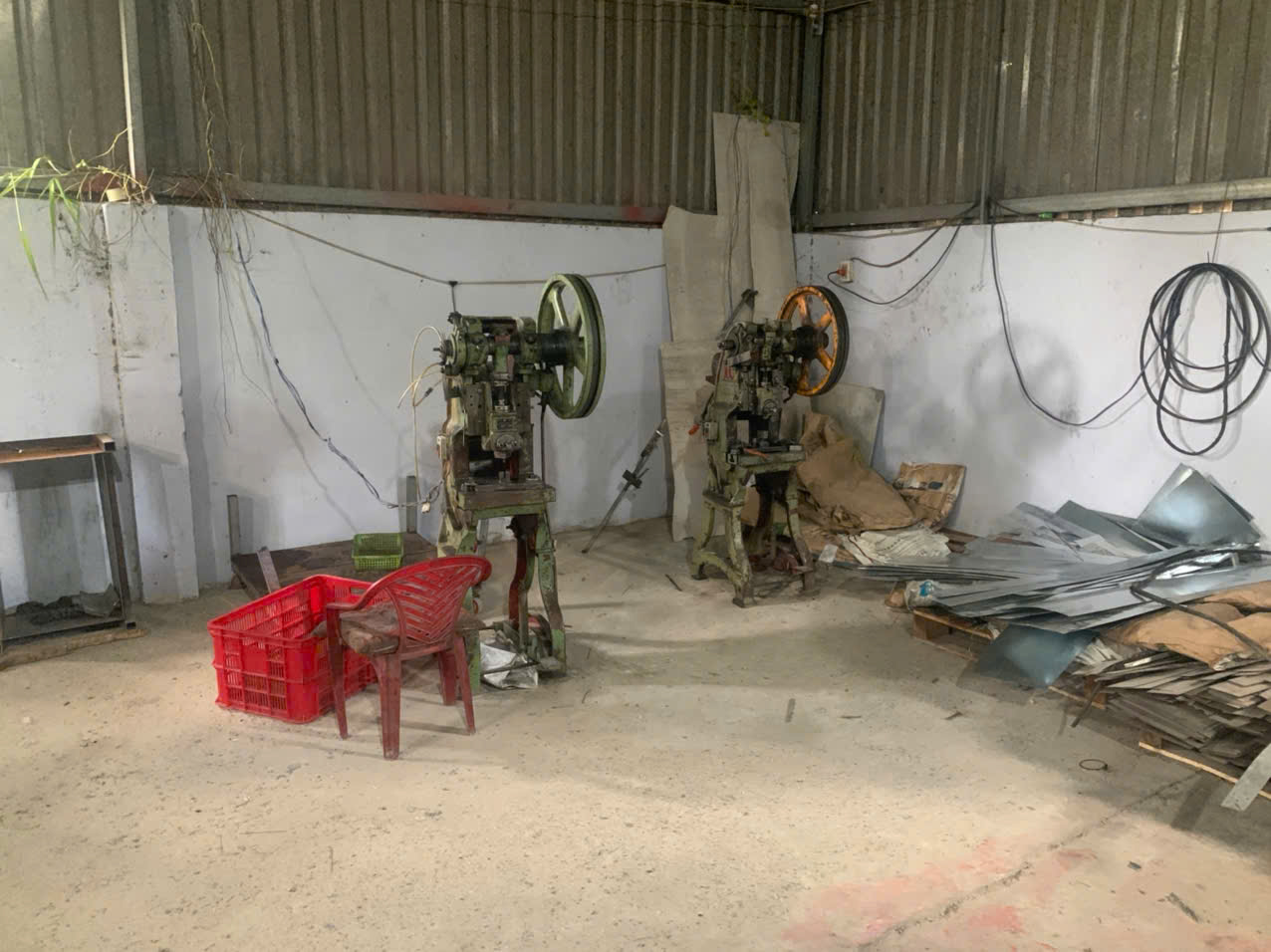
- Tooling condition and maintenance logs. Worn progressive dies produce burrs, dimensional drift, and inconsistent bends on brackets and clips.
- First Article Inspection practice. We ask to see FAI reports for a recent new part, then check them against the drawing.
- In-process inspection. We watch operators. Do they actually measure parts at set intervals, or only when someone visits?
- Calibration records. Every gauge on the floor should have a current calibration sticker traceable to a log.
- Material traceability. We trace a coil of steel from mill certificate to finished stamped part. Gaps here mean substitution risk.
- Nonconformance handling. We look at how rejected parts are quarantined and how corrective actions close out.
Match audit depth to risk
Not every purchase justifies a full audit. For a low-risk commodity bracket, a verified certificate plus samples and a remote video audit may be enough. For automotive parts, safety-critical mounts, or long-term contracts, a physical audit is non-negotiable. Many of our U.S. clients cannot fly to Asia for every qualification, so having local auditors near the supplier is what keeps their programs "right first time." Treat the certificate as your entry filter and the audit as your final gate.
Conclusion
Fake, expired, or scope-mismatched certificates are a real sourcing risk. Verify a stamping parts supplier
Frequently Asked Questions
How can I confirm a stamping supplier's ISO 9001 certificate hasn't expired or been faked?
During a supplier audit in Vietnam two years ago, our team pulled up a certificate registry on a phone and found the stamping plant's ISO 9001 record had been withdrawn six months earlier.
What documents should I request to verify a supplier's IATF 16949 compliance for automotive stamping parts?
One of our U.S. clients once asked us to qualify a stamping supplier for an automotive bracket program. The supplier had a valid IATF certificate but could not produce a single complete PPAP package.
Can I cross-check a certification body's accreditation before trusting a supplier's paperwork?
A lesson we learned the hard way: a certificate is only as credible as the body that issued it. Early in our sourcing work, we encountered "certification mills" selling certificates with no real audits behind them.