

Last year, one of our U.S. clients shipped 20,000 stamping brackets only to discover the supplier’s ISO 9001 1 certificate was expired — and the quality showed it.
To verify a supplier’s ISO 9001 certification for stamping parts, request the full certificate, confirm the certificate number through the issuing body’s official database, validate the registrar’s accreditation via IAF CertSearch or the GAC directory, and ensure the scope explicitly covers metal stamping processes at the correct facility address.
This guide walks through every step of that verification process. We will cover how to spot fake certificates, which certification bodies to trust, what scope language to look for, and how onsite audits add a critical layer of confidence. Let us get into it.
How can I confirm an ISO 9001 certificate is genuine and not expired?
A buyer we work with in Ohio once emailed us a supplier's ISO certificate that looked perfect — until we checked the registrar's database and found it had been suspended six months prior.
Confirm an ISO 9001 certificate is genuine by checking the certificate number directly on the issuing certification body’s official online database. Verify the status reads “Active,” the issue and expiry dates are current, and the legal entity name and address match the supplier’s actual business registration exactly.

Step 1: Request the Full Certificate Document
Never accept a logo, a cropped screenshot, or a partial scan. Ask for the complete certificate in PDF or scanned form. A legitimate ISO 9001 certificate always shows these elements:
- Certificate number
- Name of the issuing certification body (registrar)
- Accreditation body mark (e.g., UKAS 2, ANAB)
- Legal entity name of the certified company
- Certified site address
- Scope of certification
- Issue date and expiry date
- Signature of the registrar's authorized person
If any of these fields are missing, that is an immediate red flag. In our sourcing work across Vietnam and China, we have seen suppliers present certificates missing the accreditation mark entirely. That is never acceptable.
Step 2: Check the Certificate Number Online
Every reputable registrar maintains a public certificate directory. Go to the registrar's official website — not a link the supplier provides — and search for the certificate number. Here is a quick reference:
| Registrar | Verification URL | Search Method |
|---|---|---|
| SGS 3 | www.sgs.com/en/certified-clients-and-products | Certificate number or company name |
| TÜV Rheinland | www.certipedia.com | Certificate number |
| BSI | www.bsigroup.com/en-GB/validate-bsi-issued-certificates | Certificate number |
| DNV | certificatechecker.dnv.com | Certificate number or company name |
| Bureau Veritas 4 | certification.bureauveritas.com/certified-client-directory | Certificate number |
Always type these URLs manually into your browser. One common fraud tactic is for a supplier to send you a hyperlink that leads to a fake verification portal designed to look like the real registrar's site.
Step 3: Verify the Dates and Status
ISO 9001 certificates are valid for three years from the date of issue. But validity alone is not enough. The registrar must conduct annual surveillance audits — typically in year one and year two after initial certification. If those surveillance audits do not happen, the certificate can be suspended or withdrawn even before it expires.
When you check the registrar's database, look for the status field. It should say "Active" or "Valid." Any status like "Suspended," "Withdrawn," or "Expired" means the certificate cannot be relied upon.
Step 4: Match the Legal Entity Name and Address
This is a step many buyers skip. The company name on the certificate must match the legal business name of the supplier you are dealing with. Variations matter. If the certificate says "Dongguan Precision Metal Co., Ltd." but your supplier's business license says "Dongguan PM Trading Co., Ltd.," those are two different legal entities. The certificate does not cover the second company.
The same logic applies to addresses. A company certified at its headquarters office is not automatically certified at a separate manufacturing plant. For stamping parts, the certified address must be the physical factory where stamping takes place.
Quick Red Flags Checklist
| Red Flag | What It Means |
|---|---|
| No accreditation mark on the certificate | The registrar may not be accredited — certificate may be worthless |
| Supplier sends a verification link instead of a certificate number | Possible redirect to a fake portal |
| Legal name on certificate differs from business license | Certificate may belong to a different entity |
| Certificate address is an office, not a factory | Manufacturing site may not be covered |
| No record found in registrar's public database | Certificate may be fabricated |
We run these checks on every new supplier we evaluate. It takes about 15 minutes and has saved our clients from costly quality failures more than once.
What details should I check on a stamping supplier's ISO 9001 scope of certification?
During a recent supplier audit in Vietnam, we reviewed a factory's ISO 9001 certificate and found it was scoped for "assembly of electronic components." They were pitching us on stamped metal brackets. The certificate was real, current, and accredited — but completely irrelevant.
Check that the scope of certification explicitly mentions metal stamping, precision forming, sheet-metal fabrication, or pressing operations. The scope must describe the specific manufacturing processes used to produce your stamping parts at the exact facility listed on the certificate — a generic or mismatched scope provides no quality assurance for stamped components.

Why Scope Is the Most Important Detail
The scope of certification tells you exactly what activities the quality management system covers. A company can hold a valid ISO 9001 certificate and still have zero quality controls around its stamping operations — if stamping is not in the scope.
This is what we call the "scope trap." It is the single most common failure point we see when helping U.S. buyers verify their Asian suppliers. The certificate checks out on every other dimension, but the scope does not match the product.
Keywords to Look For
When you read the scope statement, look for language that specifically references your manufacturing process. Here are examples of scope language that would and would not cover stamping parts:
| Scope Language | Covers Stamping? | Notes |
|---|---|---|
| "Design and manufacture of stamped metal components" | Yes | Ideal — directly relevant |
| "Precision metal forming and sheet-metal fabrication" | Yes | Covers the core process |
| "Manufacture of pressed and drawn metal parts" | Yes | "Pressed" is a common synonym for stamping |
| "Assembly of mechanical components" | No | Assembly ≠ manufacturing |
| "Trading and distribution of hardware products" | No | Trading company, not a manufacturer |
| "Design of tooling and molds" | Partial | Covers tooling, not parts production |
| "General metal manufacturing" | Maybe | Vague — ask the registrar for clarification |
If the scope language is vague, contact the registrar directly. Ask them to confirm whether the certified quality system 6 encompasses stamping operations at that specific facility.
IATF 16949: The Automotive Standard
If your stamping parts are destined for automotive applications, ISO 9001 alone may not be sufficient. IATF 16949 is the automotive-specific quality management standard. It builds on ISO 9001 and adds requirements for defect prevention, reduction of variation, and supply chain management.
In our experience working with automotive-tier suppliers, buyers should ask for IATF 16949 whenever stamping parts go into vehicles. You can learn more about how to verify IATF 16949 certification when sourcing stamping parts suppliers. We also recommend requesting PPAP (Production Part Approval Process 7) documentation and control plans. These documents validate stamping-specific process capability that ISO 9001 alone does not guarantee.
Scope and Facility Address Must Align
One more critical point: the scope applies only to the facility listed on the certificate. If a supplier has three factories and only one is certified, the other two are not covered. We always cross-reference the certified address against shipping documents, purchase orders, and even Google Maps imagery to confirm the factory exists and matches the scale claimed.
Which certification bodies should I trust when verifying a supplier's ISO 9001 status?
One question we hear constantly from purchasing managers is: "How do I know if the certification body itself is legitimate?" It is a fair question — not all registrars are equal, and some are outright fraudulent.
Trust certification bodies that are accredited by recognized national accreditation authorities — members of the International Accreditation Forum (IAF) or the Global Accreditation Cooperation (GAC). Reputable registrars include SGS, TÜV, BSI, DNV, and Bureau Veritas. Always verify the accreditation mark on the certificate against the accreditation body’s own public directory.

Understanding the Accreditation Layer
There are two layers of trust in ISO certification. The first layer is the certification body (registrar) — the organization that audits the supplier and issues the certificate. The second layer is the accreditation body — the national authority that audits and accredits the registrar.
Think of it this way: the registrar checks the supplier, and the accreditation body checks the registrar. If the registrar is not accredited, there is no independent oversight of its auditing practices. Its certificates carry little weight.
Here are the major accreditation bodies and the countries they serve:
| Accreditation Body | Country/Region | Website |
|---|---|---|
| UKAS | United Kingdom | www.ukas.com |
| ANAB 8 | United States | www.anab.org |
| DAkkS | Germany | www.dakks.de |
| JAS-ANZ | Australia / New Zealand | www.jas-anz.org |
| CNAS | China | www.cnas.org.cn |
| KAN | Indonesia | kan.or.id |
| BoA (Vietnam) | Vietnam | www.boa.gov.vn |
All of these are members of the IAF Multilateral Recognition Arrangement (MLA), which means they recognize each other's accreditation decisions. A certificate issued under UKAS accreditation is recognized in the same way as one issued under ANAB accreditation.
The IAF CertSearch Global Database
The easiest way to verify both the certificate and the registrar is the IAF CertSearch 9 tool. This global database aggregates certificates from accredited registrars around the world. You can search by company name, certificate number, or country.
However, there is an important development to be aware of. The IAF's organizational structure is undergoing changes around 2026, with discussions about transitioning some verification functions to the Global Accreditation Cooperation Incorporated (GAC). If IAF CertSearch becomes unavailable or changes in scope, the GAC directory may serve as the primary verification resource. We recommend bookmarking both platforms and checking for updates periodically.
Digital Verification Tools
Major registrars like SGS, TÜV, and Bureau Veritas now offer QR-code and blockchain-enabled digital verification. Some certificates include a QR code that links directly to the registrar's verification page. Scanning the code on a physical certificate can confirm its authenticity instantly. This is a useful tool but should complement — not replace — a manual database check.
When to Be Suspicious of a Registrar
If the registrar's name is one you have never heard of, and it does not appear in any IAF or national accreditation body directory, treat the certificate with extreme caution. In some cases, suppliers create their own "certification bodies" and issue self-granted certificates. No organization can self-certify to ISO 9001. The standard requires an independent, accredited third party.
How do I use an audit or site visit to validate my supplier's ISO 9001 compliance?
When we send our team to a factory in Vietnam or work with third-party auditors in the region, the gap between what a certificate promises and what the shop floor shows can be striking.
Use an onsite or remote audit to validate ISO 9001 compliance by reviewing internal audit records, corrective action logs, calibration records, and process documentation on the shop floor. Observe whether quality procedures are actually followed during stamping operations — a valid certificate means nothing if the quality system exists only on paper.
Why a Database Check Is Not Enough
A database check confirms the certificate is real and current. It does not confirm the supplier is actually following its quality management system. Certificates represent a snapshot from the last audit. Between audits, practices can slip. Equipment can change. Key personnel can leave. For high-value or high-volume stamping projects, a physical audit closes that gap.
What to Look for During an Audit
Our audit teams focus on these areas when evaluating a stamping supplier's ISO 9001 compliance:
Document control. Are work instructions, drawing revisions, and process specifications current and accessible on the shop floor? Or are operators working from memory?
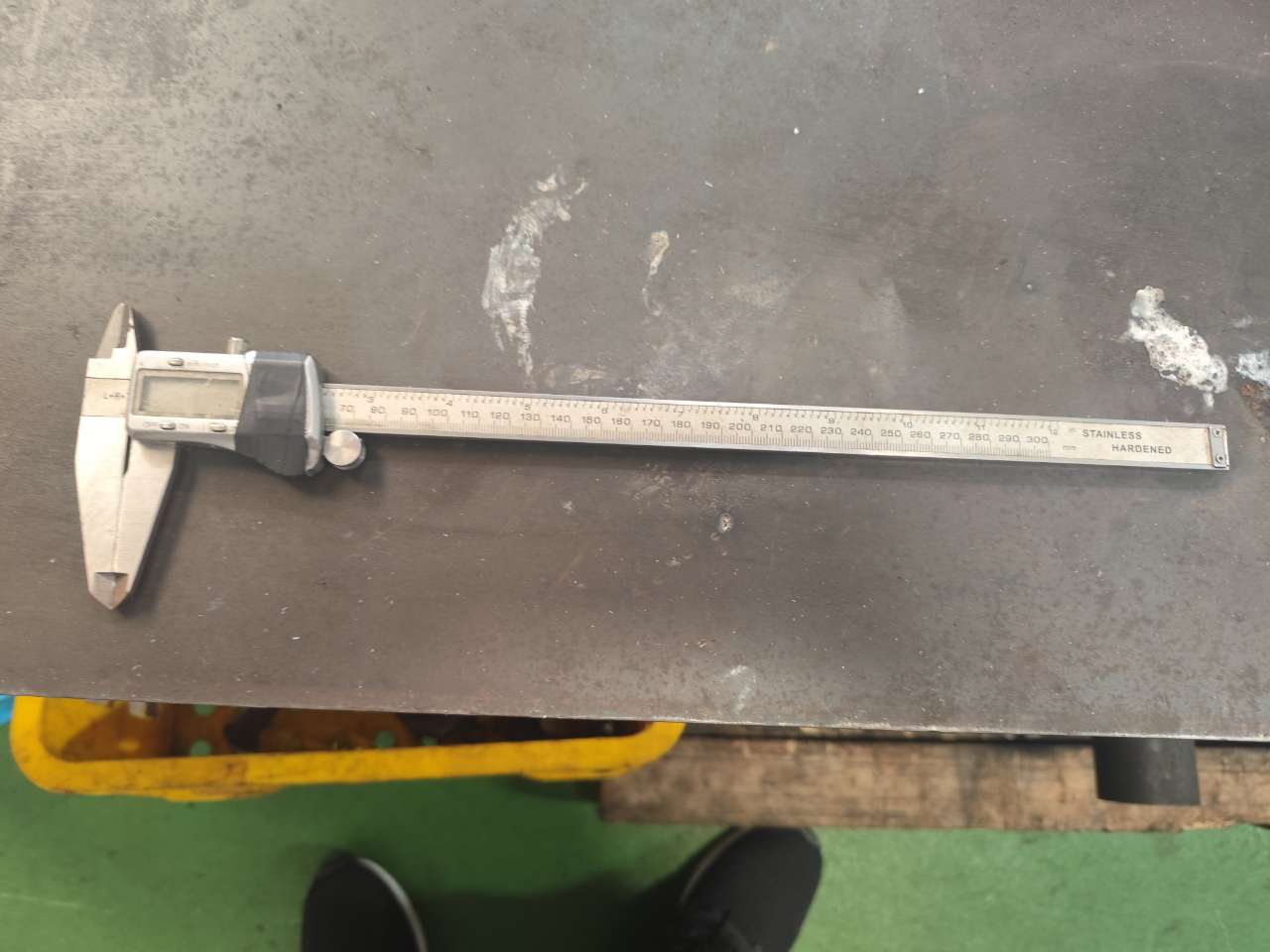
Calibration records. Are measuring instruments — calipers, micrometers, CMMs — calibrated within schedule? We check calibration stickers and cross-reference them against the calibration log.
Internal audit reports. Ask for the last two internal audit reports. Read them carefully. If the reports show only "no findings" or "all conforming," that is a sign the internal audits are superficial. A mature quality system always finds opportunities for improvement.
Corrective and preventive action (CAPA) records. How does the supplier handle nonconformities? Look for documented root cause analysis 10, corrective actions, and follow-up verification. If CAPA records are thin or missing, the quality system is not functioning as intended.
Management review minutes. ISO 9001 requires top management to review the quality system at planned intervals. Ask for the last management review meeting minutes. If the factory owner or general manager does not participate, commitment to quality may be low.
Remote Audits as an Alternative
For smaller orders or initial screening, a remote audit via video call can be effective. Walk through the factory virtually. Ask operators to show their work instructions. Request screen shares of their ERP or quality tracking system. It is not as thorough as being there in person, but it costs far less and can filter out suppliers that clearly lack a functioning quality system.
Commissioning a Third-Party Audit
For critical stamping projects, we often commission third-party audits through firms like SGS or Bureau Veritas. These firms have local auditors in most manufacturing regions and can deliver a structured audit report within a few weeks. The cost typically ranges from a few hundred to a few thousand dollars depending on the scope. For a $100,000+ annual stamping order, that is a small investment in risk mitigation.
Integrating Verification Into Your Sourcing Process
The smartest approach is to build verification into your standard procurement workflow. When evaluating potential partners on online marketplaces, knowing what supplier qualifications to check for stamping parts on B2B platforms can help you pre-screen before diving into certificate verification. Here is how we structure it for our clients:
- Include ISO 9001 documentation as a mandatory requirement in every RFQ.
- Specify certification requirements in purchase order terms and require a signed declaration before first shipment.
- Perform a full certificate verification at the start of the relationship and re-verify annually.
- For any supplier change — ownership transfer, facility relocation, major equipment upgrade — request an updated certificate and re-verify scope.
Treating verification as a one-time task is risky. Factories change. Certifications lapse. A recurring annual check keeps you protected.
Conclusion
Verifying a supplier's ISO 9001 certification for stamping parts demands more than a glance at a PDF. Check the certificate, verify the registrar, confirm the scope covers stamping, and audit the shop floor.
Frequently Asked Questions
How can I confirm an ISO 9001 certificate is genuine and not expired?
A buyer we work with in Ohio once emailed us a supplier's ISO certificate that looked perfect — until we checked the registrar's database and found it had been suspended six months prior.
What details should I check on a stamping supplier's ISO 9001 scope of certification?
During a recent supplier audit in Vietnam, we reviewed a factory's ISO 9001 certificate and found it was scoped for "assembly of electronic components." They were pitching us on stamped metal brackets. The certificate was real, current, and accredited — but completely irrelevant.
Which certification bodies should I trust when verifying a supplier's ISO 9001 status?
One question we hear constantly from purchasing managers is: "How do I know if the certification body itself is legitimate?" It is a fair question — not all registrars are equal, and some are outright fraudulent.
Footnotes
1. Official ISO standard page defining the quality management certification discussed throughout. ↩︎
2. Official UK accreditation authority mentioned for validating certification body legitimacy. ↩︎
3. Major accredited certification body offering third-party audits for suppliers. ↩︎
4. Reputable registrar providing structured supplier audit reports for stamping projects. ↩︎
5. Official ISO page explaining ISO 9001 quality management system standard for context. ↩︎
6. Background concept explaining the quality management system underlying ISO 9001 audits. ↩︎
7. Background explanation of the PPAP documentation mentioned for automotive stamping validation. ↩︎
8. Official US accreditation body referenced for cross-recognition of certification credentials. ↩︎
9. Official global database used to verify accredited registrars and certificates. ↩︎
10. Background on the structured method referenced for CAPA nonconformity investigations. ↩︎