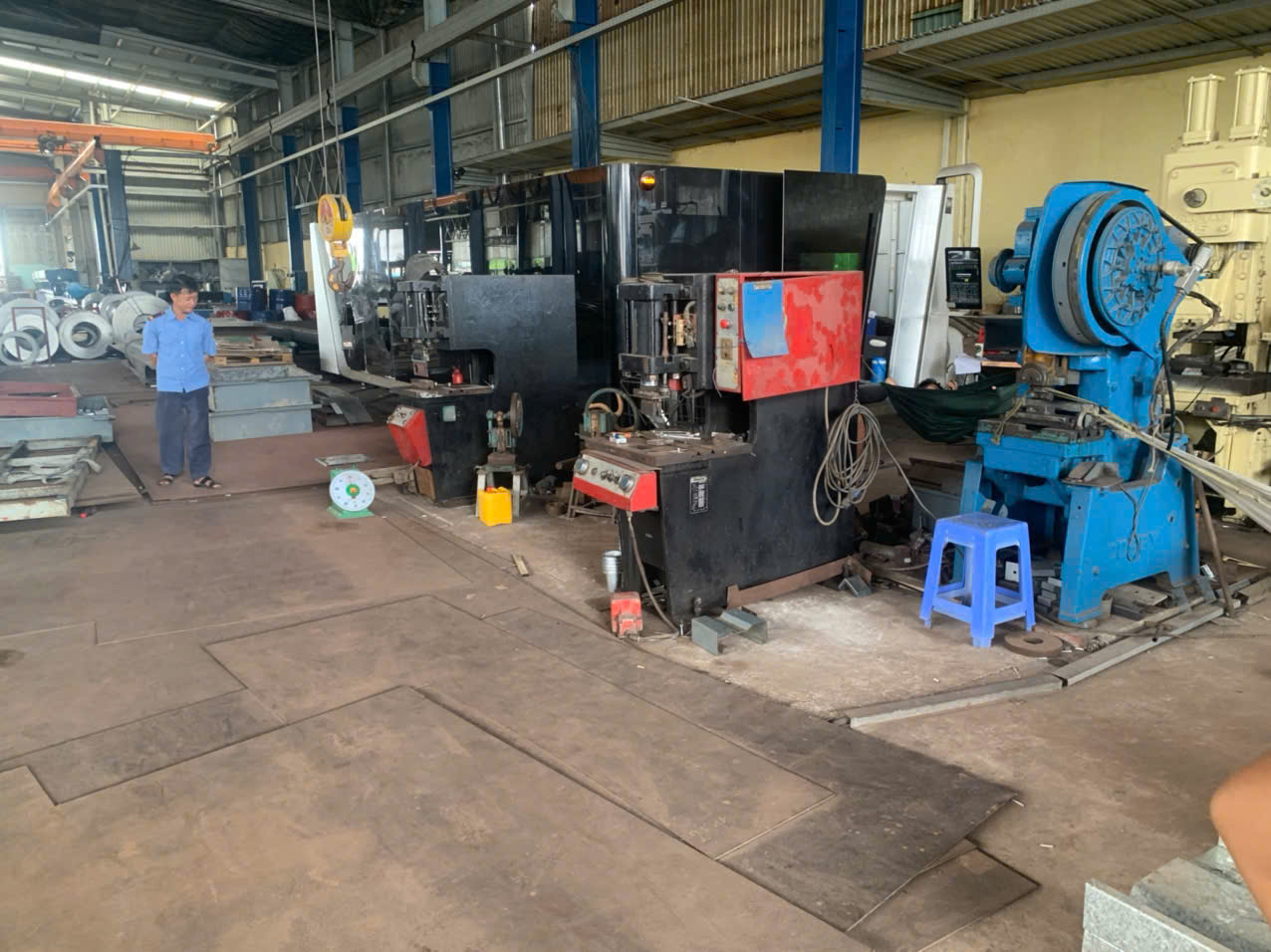

Last quarter, our Vietnam office flagged a stamping supplier whose ISO 9001 certificate listed “general assembly” — not metal stamping — in its scope, nearly derailing a client’s bracket order.
To verify a supplier’s ISO 9001 certification for stamping parts, request the physical certificate, confirm it says ISO 9001:2015, check that the certification body is accredited by an IAF MLA signatory, search the IAF CertSearch database for active status, and confirm the scope explicitly names metal stamping operations at the correct factory address.
This guide walks through every verification step in detail Production Part Approval Process 1. I will share the exact process our team uses when onboarding stamping suppliers across Vietnam and China, including the red flags we have learned to catch before they become costly mistakes.
How can I confirm my stamping supplier's ISO 9001 certificate is genuine and not expired?
A purchasing manager we work with in the U.S. once forwarded us a certificate that looked perfect at first glance — correct logos, clean layout, professional fonts. But the certificate number returned zero results in every database we checked.
To confirm a stamping supplier's ISO 9001 certificate is genuine and current, verify the certificate number through IAF CertSearch (iafcertsearch.org), check that the version is ISO 9001:2015, confirm issue and expiry dates, and validate the accreditation body logo matches a recognized IAF MLA signatory.

What the Physical Certificate Must Show
Every legitimate ISO 9001 certificate contains specific data points. When our team reviews a supplier's certificate, we check each one before moving forward. Here is what to look for:
| Data Point | What It Should Say | Red Flag If Missing |
|---|---|---|
| Standard version | ISO 9001:2015 | Any version before 2015 is expired and invalid |
| Certificate number | Unique alphanumeric code | No number or a generic placeholder |
| Certification Body (CB) | Named CB (e.g., SGS, TÜV, Bureau Veritas 2) | Unknown or unverifiable CB name |
| Accreditation Body (AB) logo | Recognized AB (e.g., UKAS, DAkkS, ANAB) | Only an ISO logo with no AB logo |
| IAF logo | Present on internationally recognized certificates | Absence suggests no international equivalence |
| Issue and expiry dates | Current and within the 3-year cycle | Expired date or no date shown |
| Scope of Certification | Specific activity description | Vague or missing scope statement |
The 2015 Rule
ISO 9001:2008 certificates expired years ago. If a supplier sends you a certificate referencing the 2008 version, it is not valid. Full stop. We have seen this happen with smaller stamping shops in Southeast Asia who obtained certification years ago and never renewed. They still display the old certificate on their website or in their sales packets.
How to Use IAF CertSearch
The IAF CertSearch 3 database at iafcertsearch.org is the single most reliable tool for real-time verification. Here is the process our team follows:
- Go to iafcertsearch.org.
- Enter the supplier's company name or certificate number.
- Check that the status reads "Active" — not "Suspended," "Withdrawn," or "Expired."
- Confirm the certified location matches the factory address.
- Read the scope statement to verify it covers stamping.
For buyers managing large supplier lists, IAF CertSearch also supports API and bulk queries. This is useful if you are qualifying multiple stamping vendors at once.
Direct Verification with the Certification Body
If IAF CertSearch returns no results, go directly to the CB's official website. SGS, TÜV, Bureau Veritas, and Intertek 4 all maintain online client directories. Enter the certificate number and confirm the record exists. One critical warning: fake verification websites exist. Always type the URL yourself (e.g., sgs.com) instead of clicking links from the supplier. We have encountered phishing-style sites that mimic real CB portals.
If the online directory does not resolve your question, contact the CB by email or phone. A legitimate CB will confirm or deny a certificate's authenticity within a few business days.
What steps should I follow to check a certification body's accreditation for my stamping supplier?
When we helped a U.S. client qualify a new stamping supplier in Vietnam last year, the certificate looked fine — but the certification body turned out to be a local consultancy with no accreditation whatsoever.
To check a certification body's accreditation, identify the Accreditation Body (AB) named on the certificate, verify the AB is an IAF MLA signatory at iaf.nu, then confirm the certification body is listed in that AB's official directory. If the CB is not listed, the certificate is fraudulent.

Understanding the Chain of Trust
The certification ecosystem has a clear hierarchy. Each level validates the one below it. If any link in the chain is broken, the certificate has no value.
| Level | Entity | Role | Example |
|---|---|---|---|
| 1 | ISO | Publishes the standard | ISO 9001:2015 |
| 2 | Accreditation Body (AB) | Accredits certification bodies | UKAS (UK), DAkkS (Germany), ANAB (US), JAS-ANZ (Australia/NZ) |
| 3 | Certification Body (CB) | Audits and certifies suppliers | SGS, TÜV, Bureau Veritas, Intertek |
| 4 | Supplier | Holds the certificate | Your stamping vendor |
How to Verify the AB Is an IAF MLA Signatory
The IAF Multilateral Recognition Arrangement 5 (MLA) is the mechanism that makes ISO certificates globally equivalent. An AB that is an MLA signatory has been peer-evaluated by other ABs and meets international standards.
To verify:
- Go to iaf.nu and navigate to the MLA signatory list.
- Search for the AB name printed on the supplier's certificate.
- Confirm the AB is listed as a signatory for QMS (Quality Management System 6s) scope.
If the AB is not listed, the certificate may still be technically "legal" in a local sense, but it has no international recognition. For cross-border stamping orders — especially when importing to the U.S. or Europe — an unaccredited certificate is effectively useless.
The New GAC MRA Mark (2026 Update)
In April 2026, the new GAC MRA mark was introduced as a modern accreditation indicator. This mark supplements or replaces older IAF MLA marks in certain regions. If you see a GAC MRA mark on a certificate, it is a positive signal. However, always cross-reference it against the IAF database. Marks can be copied; database entries cannot.
Sector Code Authorization
Not all CBs are authorized to certify every industry. Certification bodies receive authorization for specific sector codes. For metal stamping, the relevant codes typically fall under manufacturing sectors. Our team checks whether the CB holds authorization for the manufacturing sector code that matches stamping operations. If a CB primarily certifies service companies and suddenly issues a manufacturing certificate, that is a concern worth investigating.
Which red flags should I watch for when a Vietnam or China supplier claims ISO 9001 compliance?
One lesson we learned early in our sourcing operations is that a polished PDF does not equal a legitimate certificate. Our China office — with 21 team members conducting supplier audits — has developed a keen eye for the subtle signs that something is off.
Watch for these red flags: the certificate scope does not mention stamping or metal forming, the certified address differs from the production factory, the certification body cannot be found in any accredited directory, the certificate version is older than 2015, and the supplier refuses to share surveillance audit records.

The Scope Mismatch Problem
This is the single most common issue we encounter. A supplier holds a valid ISO 9001 certificate — the certificate is real, the CB is real, the AB is real — but the scope says something like "Assembly and Packaging" or "Trading of Metal Products." It does not say "Metal Stamping," "Precision Stamping," "Progressive Die Stamping," or any related term.
This is not fraud in the traditional sense. The certificate is genuine. But it does not cover the work the supplier claims to do under that certification. When we conduct supplier audits for our clients, we always read the scope line-by-line. If stamping is not explicitly mentioned, we treat the supplier as uncertified for stamping purposes.
The Multi-Location Trap
Many suppliers in China and Vietnam operate from multiple facilities. A certificate might be issued for the headquarters or a showroom location, while the actual stamping production happens at a different factory entirely. We always compare the certified address with the factory address where production will take place. If they do not match, the certification does not cover that facility.
Five Red Flags at a Glance
| Red Flag | What It Means | What to Do |
|---|---|---|
| Scope says "trading" or "assembly" but not "stamping" | Certificate does not cover stamping operations | Ask for scope amendment or reject |
| Certified address ≠ factory address | Production site is not certified | Request site-specific certificate |
| CB not found on any AB directory | Certificate may be fraudulent | Reject and report |
| No surveillance audit records available | Certification may have lapsed between cycles | Request most recent audit report |
| Supplier provides only a scan, refuses to share certificate number | They may be hiding suspension or expiry | Insist on the number and verify independently |
Beyond the Certificate: Ask for Proof of Practice
A certificate tells you a system existed on the day of the audit. It does not tell you how the system performs on a Tuesday afternoon during a rush order. When our team evaluates stamping suppliers, we also request corrective action reports 7 from past nonconformances, certificates of conformance (CoC) from recent shipments, and records of internal audits. These documents reveal whether the quality management system is actively maintained or just a wall decoration.
We also ask for PPAP (Production Part Approval Process 8) documentation when the project involves automotive or high-precision stamping. For clients sourcing structural brackets or mounting hardware — like the powder-coated brackets and channel-mount components we regularly handle — material traceability and dimensional inspection records matter far more than the certificate alone.
Why isn't ISO 9001 certification alone enough to guarantee my stamping parts meet quality requirements?
A buyer we support in the Midwest once asked us a blunt question: "If the supplier has ISO 9001, why did I still get 3,000 brackets with the wrong hole diameter?" The answer taught us both an important lesson about the limits of certification.
ISO 9001 certification confirms a supplier has a quality management system — it does not certify that specific stamping parts meet your dimensional tolerances, material specifications, or surface finish requirements. Product quality depends on process controls, tooling capability, inspection protocols, and ongoing supplier management beyond the certificate.

QMS vs. Product Certification
This distinction is fundamental. ISO 9001 is a Quality Management System standard. It evaluates whether a supplier has documented procedures, defined responsibilities, tracks nonconformances, and pursues continuous improvement. It does not test your specific part. It does not measure whether a stamped bracket holds a ±0.05 mm tolerance. It does not check whether the powder coat adhesion meets your salt spray test requirements.
Think of it this way: ISO 9001 tells you the kitchen is clean and the chef follows recipes. It does not tell you the steak is cooked to your preference.
ISO 9001 vs. IATF 16949 for Stamping
Many stamping parts serve automotive applications. In those cases, ISO 9001 is the baseline — not the finish line. IATF 16949 adds automotive-specific requirements such as APQP (Advanced Product Quality Planning), PPAP, FMEA (Failure Mode and Effects Analysis), MSA (Measurement System Analysis), and SPC (Statistical Process Control).
When our team manages projects for clients whose stamping parts end up in automotive assemblies, we always verify whether the supplier holds IATF 16949 in addition to ISO 9001. A supplier claiming ISO 9001 is sufficient for automotive stamping is either uninformed or misleading you.
What Actually Guarantees Part Quality
From our experience managing custom stamping projects — including structural brackets, mounting hardware, and fabricated channel components — the real quality assurance comes from layered controls:
- First Article Inspection (FAI): Measuring the first production parts against the drawing before full-run approval.
- In-Process Inspection: Statistical sampling during the stamping run to catch drift early.
- PPAP Documentation: A complete submission package proving the process can consistently produce conforming parts.
- Final Inspection: 100% or AQL-based inspection before shipment.
- Material Certifications: Mill certificates confirming the raw steel or aluminum meets the specified grade.
We build these controls into every project we manage. The ISO certificate is a starting point. The process controls are where quality actually lives.
Sector-Specific Verification Platforms
For certain industries, generic ISO 9001 verification is not enough. Aerospace buyers should use the IAQG OASIS database 9. Automotive buyers should check the IATF database directly. These sector-specific platforms enforce stricter audit criteria and provide more granular validation than a general ISO 9001 check.
Conclusion
Verifying a supplier's ISO 9001 certification for stamping parts requires checking the certificate, the certification body, the accreditation chain, and — most critically — confirming the scope explicitly covers stamping at the correct factory. Beyond the certificate itself, understanding what supplier qualifications to check on B2B platforms and evaluating a supplier’s workforce skills will give you a more complete picture of whether a stamping vendor can truly deliver quality parts.
Frequently Asked Questions
How can I confirm my stamping supplier's ISO 9001 certificate is genuine and not expired?
A purchasing manager we work with in the U.S. once forwarded us a certificate that looked perfect at first glance — correct logos, clean layout, professional fonts. But the certificate number returned zero results in every database we checked.
What steps should I follow to check a certification body's accreditation for my stamping supplier?
When we helped a U.S. client qualify a new stamping supplier in Vietnam last year, the certificate looked fine — but the certification body turned out to be a local consultancy with no accreditation whatsoever.
Which red flags should I watch for when a Vietnam or China supplier claims ISO 9001 compliance?
One lesson we learned early in our sourcing operations is that a polished PDF does not equal a legitimate certificate. Our China office — with 21 team members conducting supplier audits — has developed a keen eye for the subtle signs that something is off.
Footnotes
1. Background on PPAP documentation referenced for automotive and precision stamping. ↩︎
2. Official certification body site allowing direct verification of certificate records. ↩︎
3. Official global database used to verify real-time certificate status as described. ↩︎
4. Official certification body portal used for direct certificate confirmation as described. ↩︎
5. Official IAF site explains the MLA that makes accreditation bodies internationally recognized. ↩︎
6. Official ISO page explaining the QMS standard referenced throughout the article. ↩︎
7. Explains the corrective action concept referenced as proof of an active quality system. ↩︎
8. Background reference for PPAP, the automotive quality documentation standard mentioned in the text. ↩︎
9. Official aerospace industry database referenced for sector-specific certification verification. ↩︎