I once helped a U.S. buyer recover from a costly mistake — they had wired a deposit to a “factory” in Ho Chi Minh City that turned out to be a two-person trading office.
To verify a Vietnam sheet metal factory’s existence and production capacity, you must cross-check business registration documents, conduct live video or on-site factory audits, assess installed machinery and workforce, review ISO certifications, and ideally deploy a local team to walk the production floor before committing any purchase order.
That painful lesson taught me something critical: the gap between a polished website and a real production floor can be enormous Bystronic ByStar Fiber 3015 1. Below, I will walk you through the exact steps our team in Vietnam uses every week to separate genuine manufacturers from middlemen, and how you can do the same — whether you are sourcing precision mounting brackets, electrical enclosures, or complex multi-bend sheet metal assemblies.
How can I verify if a Vietnam sheet metal supplier is a legitimate factory or just a trading company?
A few months ago, a purchasing manager from Texas sent me a supplier's profile and asked, "Can your Vietnam office drive over and just check if this place is real?" That single visit saved him tens of thousands of dollars.
You can verify a Vietnam sheet metal supplier by requesting their Enterprise Registration Certificate and confirming it lists "Sản xuất" (manufacturing) as the business activity, demanding a live video tour of the production floor, and cross-referencing their address on satellite imagery and local mapping tools.
Check the Enterprise Registration Certificate
Every legally registered company in Vietnam holds an Enterprise Registration Certificate 2 (Giấy Chứng Nhận Đăng Ký Doanh Nghiệp). This document is the fastest way to distinguish a factory from a trading company. Look for the phrase "Sản xuất" under the registered business activities. If you only see "Thương mại" (trading) or "Xuất nhập khẩu" (import-export), the entity is not a manufacturer. Our China and Vietnam offices routinely pull these records from Vietnam's National Enterprise Registration Portal 3. The certificate also shows the legal representative, registered capital, and address — all of which you can cross-verify.
Use Online Research Channels Strategically
Do not rely on a single source. Combine multiple channels for a fuller picture.
| Research Channel | What It Reveals | Reliability |
|---|---|---|
| Vietnam Credit 4 (vietnamcredit.com.vn) | Financial standing, tax code, legal status | High |
| Google Maps / Satellite Imagery | Physical presence, factory footprint | Medium-High |
| Alibaba / Made-in-Vietnam platforms | Product range, trade activity, reviews | Medium |
| VietnamExport.gov.vn | Government-listed exporters | High |
| Company website + social media | Equipment photos, client logos, certifications | Low-Medium |
I recommend shortlisting three to five candidates through online research. Then move to deeper evaluation.
Red Flags vs. Green Flags
When I brief our Vietnam team before a supplier verification visit, I give them a clear checklist. Here is a simplified version.
| Signal | 🟢 Green Flag (Real Factory) | 🔴 Red Flag (Trading Company) |
|---|---|---|
| Business license | Lists "Sản xuất" (manufacturing) | Lists only "Thương mại" (trading) |
| Factory address | Located in industrial zone 5 (e.g., Binh Duong, Long An) | Commercial office building or residential area |
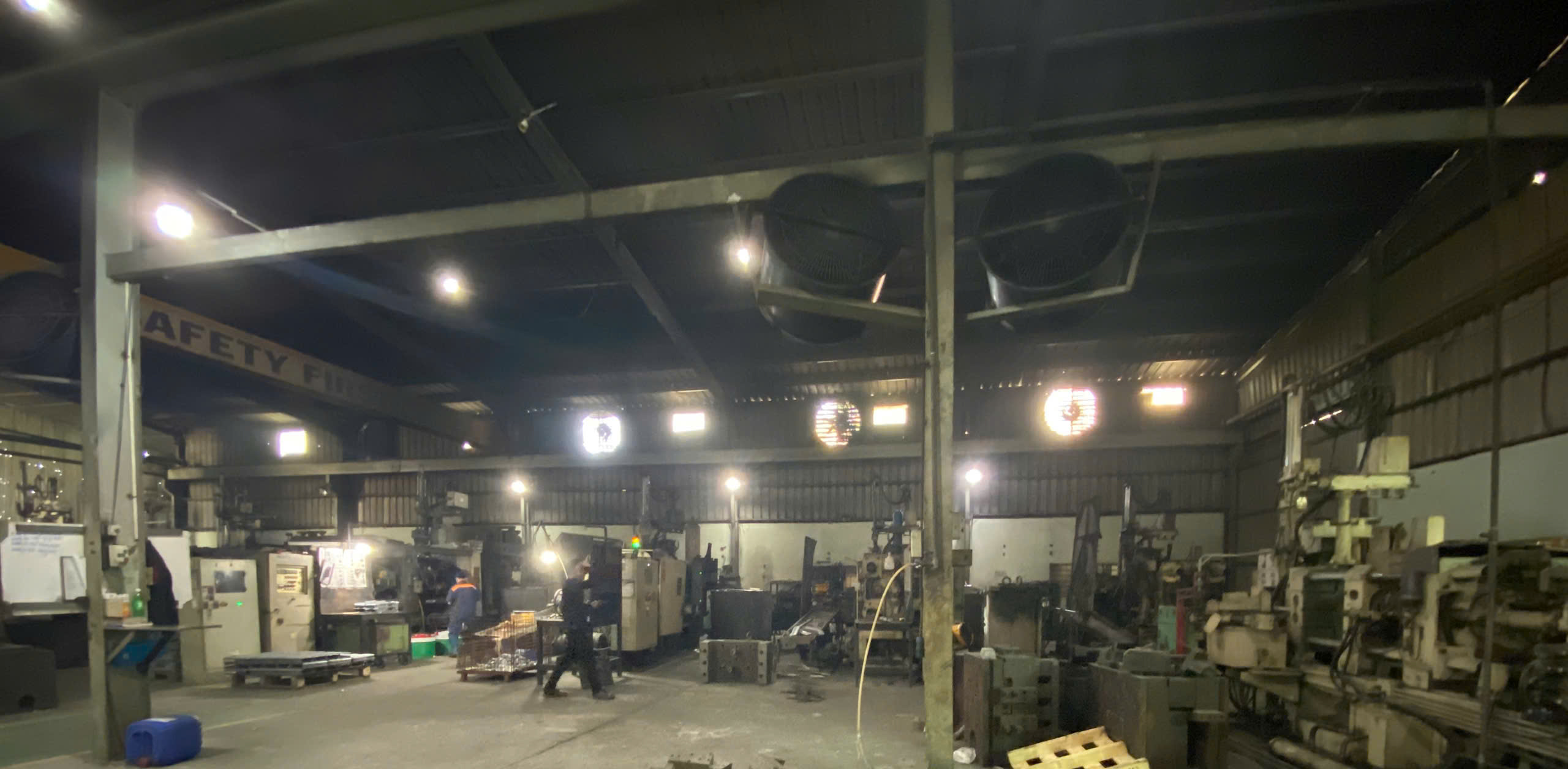
| Video tour | Shows workers, machines running, raw materials in stock | Refuses or shows only a showroom |
| Equipment list | Specific brands and models (TRUMPF, Bystronic, Amada) | Vague or generic descriptions |
| Staff uniforms | Workers wear branded uniforms with safety gear | No production workers visible |
| Raw material storage | Steel coils, aluminum sheets on racks | Empty or no warehouse area |
If a supplier hits three or more red flags, walk away. Our experience is that legitimate factories are proud to show their floor. Trading companies dodge the question.
Geospatial Intelligence as a First Filter
Before spending money on a flight or even a local audit, use satellite imagery. Google Earth and Cốc Cốc Maps (Vietnam's local search engine) let you verify whether the stated address matches a factory-sized building in an industrial zone. I have seen cases where a supplier listed an address in a Binh Duong industrial park, but the satellite image showed a rice paddy. That five-minute check saved weeks of wasted communication.
What steps should I take to evaluate the actual production capacity and machinery of a Vietnamese manufacturer?
One lesson I learned early in this business: a factory can look impressive on paper yet lack the capacity to fulfill even a mid-size order on time. Delivery delays remain the number-one pain point our U.S. clients report.
To evaluate actual production capacity, request a detailed equipment inventory with brand names and model numbers, ask for monthly output data in tons or units, verify the number of production workers and engineers, measure the factory floor area, and compare stated capacity against your order volume and lead-time requirements.
Start with a Capacity Questionnaire
Before any visit, I send the supplier a structured questionnaire. It covers factory area, equipment list, headcount, monthly throughput, and current order backlog. The answers form a baseline I can verify later on-site.
Equipment Inventory Matters
For sheet metal fabrication, the installed machinery tells the real story. A factory running a TRUMPF TruLaser 3030 6 or a Bystronic ByStar Fiber 3015 can hold tight tolerances and process thick gauge steel at speed. A factory running manual plasma cutters from the 1990s cannot. I always ask for the brand, model, year of purchase, and maintenance records.
Here is what a strong Vietnamese sheet metal factory's equipment profile looks like:
| Equipment Type | Example Brands/Models | What It Indicates |
|---|---|---|
| Fiber laser cutter | TRUMPF TruLaser, Bystronic ByStar, Amada ENSIS | Precision cutting, tight tolerances |
| CNC press brake | Amada HG Series, TRUMPF TruBend | Accurate bending, complex multi-bend parts |
| CNC turret punch | Murata Motorum, Amada EM | High-volume hole punching, fast cycle time |
| Robotic welding | Panasonic, Yaskawa Motoman | Consistent weld quality, scalable output |
| Powder coating line | Automated conveyorized system | Uniform finish, high throughput |
| CMM / 3D scanner | Zeiss, Hexagon, Faro | Dimensional inspection capability |
Workforce and Floor Area
A factory with 200 workers, 15 engineers, and 5,000 square meters of production floor can realistically process 80–150 tons of steel per month, depending on complexity. I compare these numbers against the buyer's order volume. If your project needs 50 tons of fabricated brackets per month and the factory's total capacity is 60 tons — with other clients already taking 40 — you have a supply chain risk.
Verify with Production Samples
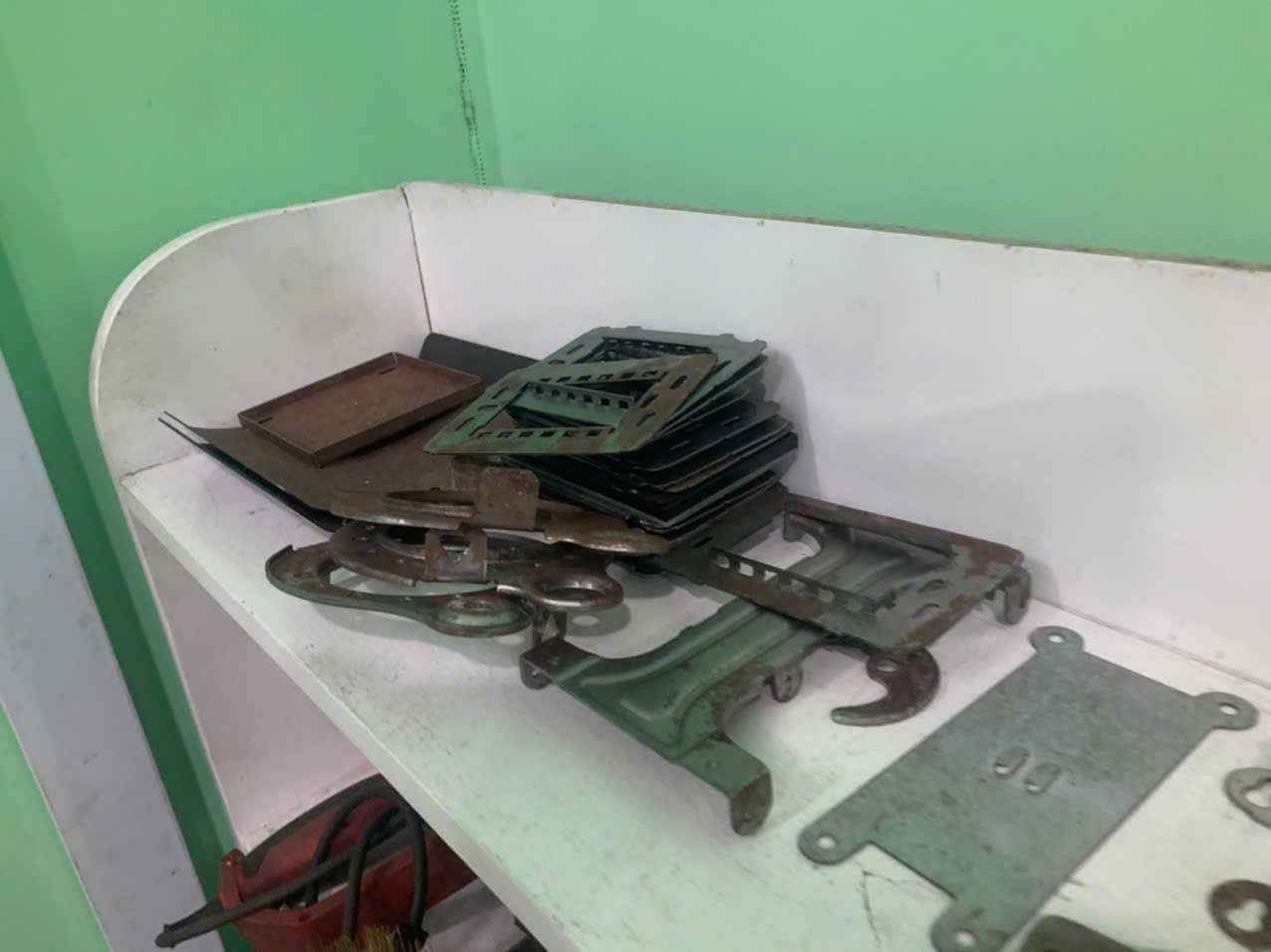
Numbers on a spreadsheet are one thing. I always request production samples of comparable complexity before placing a volume order. For the precision mounting brackets and multi-bend components we source, I look at dimensional accuracy, weld quality, hole alignment, and surface finish. These samples reveal the factory's true technical capability assessment better than any brochure.
Current Trends Boosting Vietnam's Capacity
Vietnam's sheet metal sector is evolving fast. Rising foreign direct investment in industrial zones like Binh Duong and Long An has brought advanced automation. Factories that once produced only basic flat parts now deliver integrated OEM assemblies — electrical control panels, switchboards, EV-charger stands, and weather-proof solar cabinets. Fully automated powder-coating lines and Swiss-origin fiber lasers are becoming standard in top-tier facilities. This shift from commodity parts to complex assemblies is real, and it means production capability assessment now includes evaluating whether a factory can handle multi-stage processes with embedded components.
How do I ensure their quality control systems are robust enough to meet my strict engineering requirements?
The hardest conversation I have with new clients usually starts with: "The parts looked fine in photos, but half the shipment failed incoming inspection." That scenario is exactly why we built a multi-checkpoint quality management system into every project we manage.
Ensure robust quality control by requiring ISO 9001 and ISO 3834 certifications, reviewing documented QC procedures and inspection records, mandating layered in-process checkpoints, specifying a formal Factory Acceptance Test before shipment, and confirming the factory's measuring instruments are calibrated to traceable standards.

Certifications Are the Starting Point, Not the Finish Line
ISO 9001 7 proves a factory has a quality management system. ISO 3834 8 proves their welding processes meet international standards. ISO 14001 covers environmental practices. For electrical enclosures, IEC and CE compliance is non-negotiable. But I have visited ISO-certified factories where the certificate hangs on the wall while the QC room collects dust. Certifications open the door. What you find behind the door is what matters.
Layered QC Checkpoints
A well-run sheet metal factory should have quality checks at every stage:
- Incoming material inspection — verify steel grade, thickness, and mill certificates.
- Post-cutting inspection — check dimensions against drawings after laser cutting or punching.
- Post-bending inspection — measure angles, radii, and hole-to-edge distances.
- Welding inspection — visual check plus penetrant or ultrasonic testing for critical welds.
- Surface treatment inspection — powder coating thickness, adhesion, and color match.
- Final dimensional inspection — CMM or 3D scanning against CAD model.
- Packing audit — correct labeling, protective packaging, quantity count.
Each checkpoint should have a documented record. If a factory cannot show you inspection reports from their last production run, that is a red flag. Our team in Vietnam reviews these records as part of every manufacturing due diligence process.
Factory Acceptance Testing
For complex parts — like the precision brackets with multiple mounting holes, weld joints, and powder-coated finishes shown in our product range — we insist on a Factory Acceptance Test 9 (FAT). During FAT, our quality engineer witnesses the final inspection, runs dimensional checks on a statistical sample, and verifies that every critical-to-quality dimension is within tolerance. Only after FAT approval do we release the shipment. This approach directly addresses the "right first time" requirement that our U.S. purchasing managers demand.
Raw Material Traceability
One overlooked risk is raw material quality. Many Vietnam factories import steel and aluminum from China. This is not inherently bad, but you need traceability. Ask for mill certificates that trace each batch of sheet metal to its origin. Confirm the factory inspects incoming material thickness and hardness. Without this, even the best CNC machines will produce parts that fail your specs because the input material was wrong.
Regulatory Compliance for Export Markets
If your parts ship to the U.S. or Europe, regulatory compliance Vietnam standards alone may not suffice. Confirm the factory understands your destination market's requirements — UL listings for electrical components, RoHS for hazardous substances, REACH for chemicals in coatings. We maintain a compliance checklist tailored to each client's export destination, and we review it with every new factory we onboard.
Why should I use a local team in Vietnam to perform an on-site audit before placing my order?
Last quarter, one of our Vietnamese team members walked into a factory that had sent us beautiful sample parts. On the floor, he found that the samples had been outsourced to a different facility entirely. The factory we were evaluating did not even own a laser cutter.
You should use a local team in Vietnam because they can conduct unannounced or scheduled on-site inspections, verify equipment and workforce firsthand, navigate language barriers, assess factory culture and management quality, and provide real-time reporting — all at a fraction of the cost of flying in from the U.S. or Europe.
The Limits of Remote Verification
Video tours and online research are useful, but they have limits. A factory can angle the camera to show its best machines. They can borrow workers from a neighboring facility for the day. They can show you someone else's production line. Remote verification cannot catch these deceptions. Only boots on the ground can.
Our Vietnam office, staffed with seven bilingual team members, conducts on-site inspections weekly. They know the industrial zones. They know which factories have grown and which have shrunk. That local knowledge is irreplaceable for supply chain risk mitigation.
What to Look for During an On-Site Audit
A proper Vietnam factory audit covers much more than walking through the front door. Here is what our team evaluates:
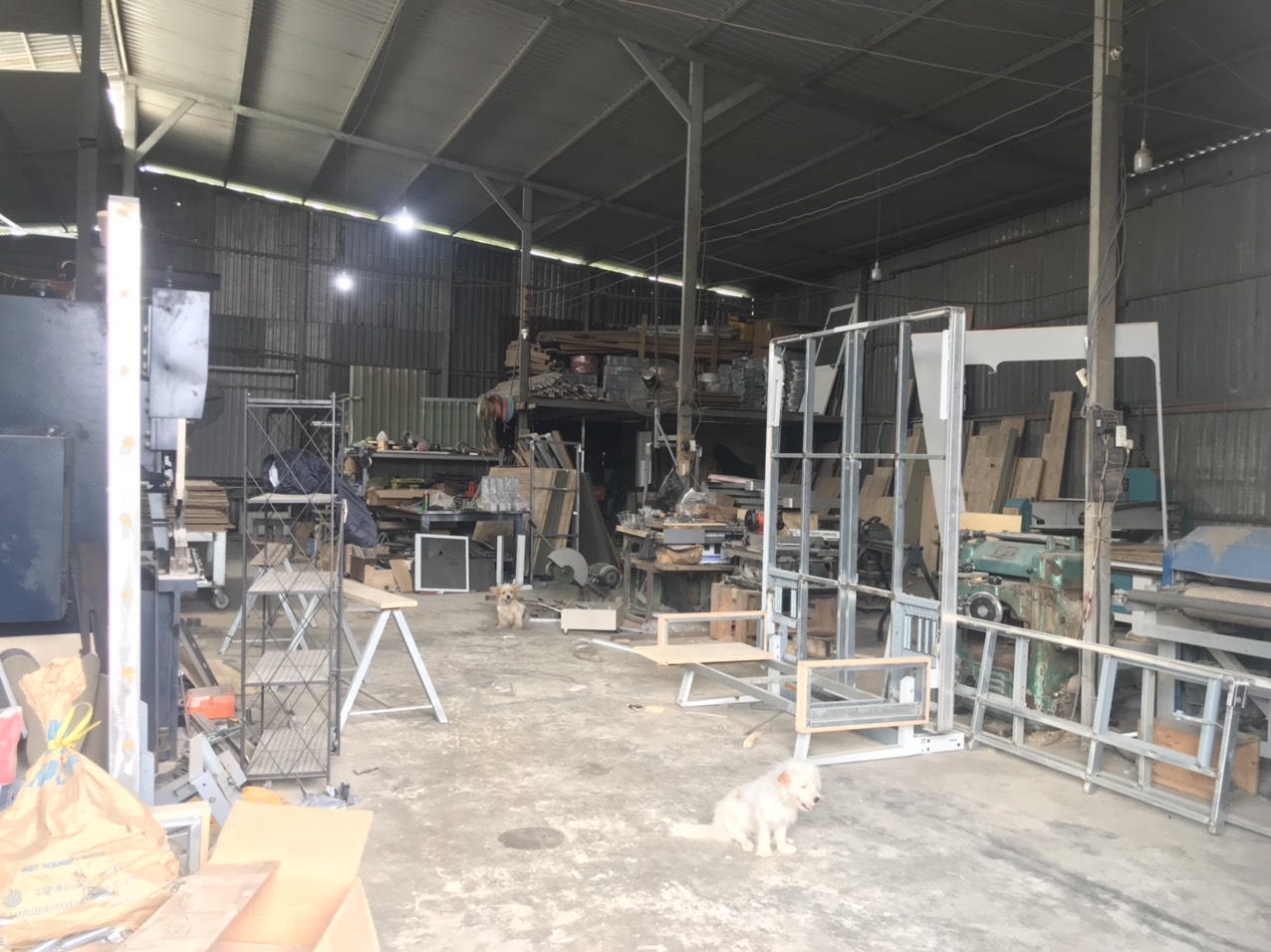
- Factory layout and flow — Is the production floor organized logically from raw material intake to finished goods packing?
- Machine utilization — Are the CNC machines and laser cutters actually running, or sitting idle?
- Worker skill level — Can welders demonstrate proper technique? Are press brake operators reading drawings correctly?
- Housekeeping and safety — A clean, safe factory typically indicates disciplined management.
- Sub-contractor relationships — Does the factory outsource any process steps? If so, to whom? Have those subcontractors been vetted?
- Current order board — What other projects are in production? This reveals real capacity utilization.
Third-Party Auditors vs. Your Own Local Team
Some buyers hire third-party auditing firms like SGS or Bureau Veritas. These firms are competent, but they follow standardized checklists. They may not understand the specific tolerances your bracket drawings require, or why a particular weld joint is critical. A dedicated local team — like the one we maintain in Vietnam — combines factory evaluation expertise with deep product knowledge. They know what questions to ask about your specific parts.
Cost and Tariff Advantages Worth Protecting
The financial case for Vietnam sourcing is strong. With 0% Section 301 tariffs 10 compared to 25% or more from China, and transit times of 14–18 days from Ho Chi Minh City to the U.S. West Coast, the savings are substantial. But those savings evaporate if you send money to a fake factory or receive non-conforming parts. A local audit costs a fraction of a single rejected shipment. It is the cheapest insurance you can buy.
Sourcing Support Options
You have several paths to on-site verification:
- Build your own local team — highest control, highest cost, best for large-volume ongoing programs.
- Use a Western-managed sourcing firm with a Vietnam presence — balances cost and quality of oversight; this is the model we operate.
- Hire bilingual sourcing agents — lower cost, but quality of agents varies widely.
- Attend trade shows — Vietnam Expo and Metalex Vietnam let you meet suppliers face-to-face and pre-qualify before deeper audits.
Each option has trade-offs. For buyers placing their first orders in Vietnam, I recommend starting with a managed sourcing partner who has an established local team. The learning curve is steep, and the cost of mistakes is high.
Conclusion
Verifying a Vietnam sheet metal factory requires more than browsing websites. Check legal documents, assess real equipment, audit quality systems, and put a local team on the ground. These steps protect your investment and ensure your parts arrive right the first time.
Frequently Asked Questions
How can I verify if a Vietnam sheet metal supplier is a legitimate factory or just a trading company?
A few months ago, a purchasing manager from Texas sent me a supplier's profile and asked, "Can your Vietnam office drive over and just check if this place is real?" That single visit saved him tens of thousands of dollars.
What steps should I take to evaluate the actual production capacity and machinery of a Vietnamese manufacturer?
One lesson I learned early in this business: a factory can look impressive on paper yet lack the capacity to fulfill even a mid-size order on time. Delivery delays remain the number-one pain point our U.S. clients report.
How do I ensure their quality control systems are robust enough to meet my strict engineering requirements?
The hardest conversation I have with new clients usually starts with: "The parts looked fine in photos, but half the shipment failed incoming inspection." That scenario is exactly why we built a multi-checkpoint quality management system into every project we manage.
Footnotes
1. Official specifications for a high-performance fiber laser cutting machine. ↩︎
2. Explains the official legal document for company establishment and operation in Vietnam. ↩︎
3. Official government portal for business registration information in Vietnam. ↩︎
4. Provides information on financial standing and legal status of Vietnamese companies. ↩︎
5. Defines and explains the role of industrial zones in Vietnam’s manufacturing sector. ↩︎
6. Provides technical specifications for a high-precision laser cutting machine. ↩︎
7. Official standard for quality management systems, crucial for manufacturing quality. ↩︎
8. Official standard for quality requirements for fusion welding of metallic materials. ↩︎
9. Defines the process of verifying equipment or product performance before delivery. ↩︎
10. Explains the U.S. trade law authorizing tariffs against unfair trade practices. ↩︎