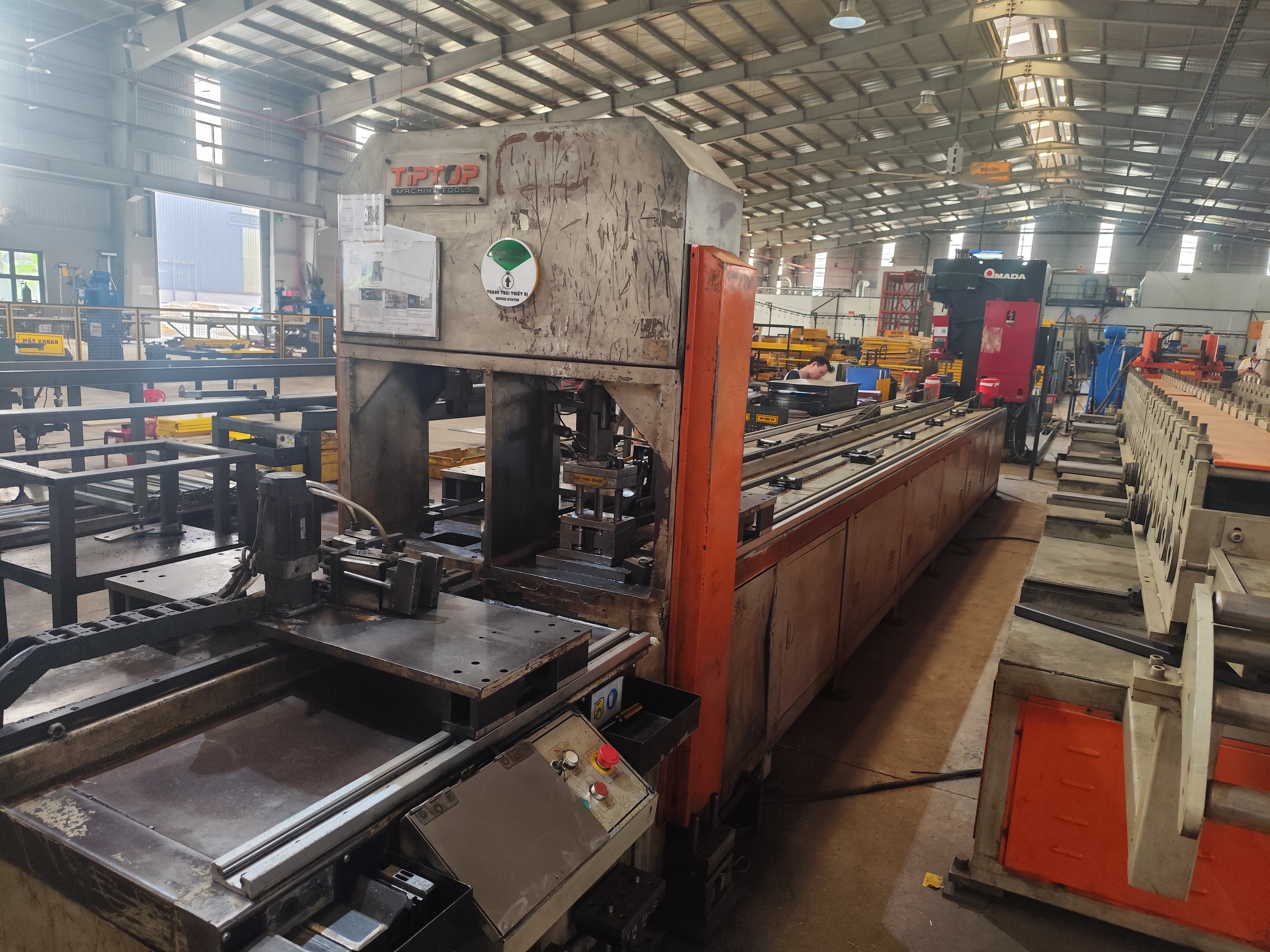

Verifying a Vietnamese supplier’s IATF 16949 1 certification saved one of my stamping projects last year. A supplier sent our Vietnam team a polished certificate PDF fine blanking 2. It looked perfect. But the certified site was a different address from the press shop quoting our brackets. If we had shipped tooling there, our client would have received parts from an uncertified plant. That near miss taught us to treat every certificate as a claim, not a fact.
To verify a Vietnamese supplier’s IATF 16949 certification for stamping parts, check the certificate number in the official IATF database, confirm the site address matches the actual press shop, read the scope for stamping operations, verify the expiry date, and contact the certification body directly for confirmation.
That is the short answer. The full process has more layers. Below, I walk through each verification step the way our sourcing team runs it before we award any stamping business in Vietnam.
How can I confirm my Vietnamese stamping supplier's IATF 16949 certificate is authentic and not expired?
Our Vietnam office audits press shops every month, and we never accept a certificate PDF at face value. Fake and expired certificates circulate more often than most buyers expect.
Confirm authenticity by searching the certificate number in the official IATF global database, checking that the status shows active, and matching the company name and address exactly. Then email the issuing certification body directly to confirm the certificate has not been suspended or withdrawn.

The verification workflow is simple once you know where to look. The problem is that most buyers stop at the PDF. A PDF proves nothing. Anyone can edit a date or a logo in ten minutes. So we always go to the source.
Step-by-step verification workflow
- Ask the supplier for the certificate number, the legal entity name, the exact factory address, and the name of the issuing certification body 3.
- Search the official IATF database using the certificate number or company details.
- Confirm the status is active, not suspended or withdrawn.
- Match the site address on the record to the factory that will actually run your parts.
- Check the issue and expiry dates. IATF 16949 runs on a three-year cycle with mandatory annual surveillance audits.
- If anything looks off, contact the certification body directly and ask them to confirm.
What each field tells you
| Certificate Field | What to Check | Why It Matters |
|---|---|---|
| Certificate number | Exists in the IATF registry | Fake numbers fail this search instantly |
| Status | Active, not suspended | Suspension often follows failed surveillance audits |
| Issue and expiry dates | Within the three-year cycle | Expired certificates mean no current oversight |
| Certification body | Holds valid IATF accreditation | Not every ISO registrar can issue IATF 16949 |
| Site address | Matches the real press shop | Certificates do not transfer between locations |
One more point from our experience. The number of IATF-recognized certification bodies is limited. If you cannot identify or verify the issuer, treat the certificate as unverified. We also cross-check the supplier's business registration through Vietnamese authorities to confirm the legal entity is real and matches the certificate.
What key certification scope details should I check to ensure my supplier's IATF 16949 covers stamping parts specifically?
A trade-off we weigh constantly is speed versus depth of due diligence. Reading a scope statement takes ten minutes. Skipping it once cost a client months of requalification work.
Read the scope statement on the certificate and confirm it explicitly lists stamping, metal forming, or press operations. A generic scope like automotive parts manufacturing may not cover your process. Also confirm the scope applies to the specific site producing your parts.

The scope statement is the most overlooked part of any certificate. It defines exactly what the audit covered. A certificate can be perfectly valid and still be irrelevant to your stamped brackets. Here is how we break it down for the parts we source, which are often stamped sheet-metal brackets, clips, and chassis components.
Scope language matters
When our engineers review a scope, we look for process-specific wording. Compare these two examples:
| Scope Wording | Coverage for Stamping Parts | Our Assessment |
|---|---|---|
| Design and manufacture of stamped metal components and progressive die stamping | Explicitly covers press operations | Strong fit |
| Manufacture of automotive components | Vague, may mean assembly or machining | Ask for clarification |
| Trading and distribution of automotive parts | No manufacturing coverage at all | Reject for direct sourcing |
| Metal forming and surface treatment for automotive parts | Covers forming, check plating scope too | Good fit if plating is needed |
Watch for multi-site schemes
Some Vietnamese subsidiaries of multinational groups hold certificates issued under a corporate multi-site scheme. In those cases, the specific plant quoting your parts may never have been independently audited. We always ask which sites were physically audited and when. If the press shop making your parts only appears as a remote support location, dig deeper.
Match scope to your part family
Stamping is not one process. Progressive die work, deep drawing 4, fine blanking, and simple press-brake forming carry different risks. The scope should align with the process your part actually needs. A shop certified for simple bracket stamping may struggle with a deep-drawn housing, even with a valid certificate on the wall.
Why should I request a copy of my supplier's audit report before finalizing my stamping parts order?
A purchasing manager we work with in the US once asked me why we push for audit reports when the certificate is already verified. My answer: the certificate tells you the system passed. The report tells you how close it came to failing.
Request the latest surveillance audit report because it reveals nonconformities, corrective actions, and process weaknesses that a certificate hides. For stamping parts, it shows whether die control, traceability, and SPC were actually audited and how the supplier performed.

An audit report is where paper compliance meets shop-floor reality. Two suppliers can hold identical certificates. One passed cleanly. The other passed with eight minor nonconformities and one major finding that was closed at the last minute. You want to know which one you are dealing with before your dies ship.
What the audit report reveals
When our team reviews a report, we focus on a few areas that matter most for stamped parts:
- Nonconformity count and severity. Repeated minors in the same clause suggest a systemic weakness, not a one-off slip.
- Which processes were sampled. Was the stamping line audited, or only the office processes? A report that never touched the press floor tells you little about your parts.
- Corrective action quality. Did the supplier find root causes 6, or did they just rewrite a procedure to close the finding?
- Customer complaint trends. Some reports reference customer scorecards and complaint history tied to surveillance audits.
Beyond the audit report
The report is one input. We pair it with process evidence before any award:
| Evidence to Request | What It Proves for Stamping |
|---|---|
| Level 3 PPAP from a similar program | The supplier has run full automotive qualification before |
| PFMEA and control plan | Stamping risks like die wear and misfeeds are identified and controlled |
| Capability studies (Cpk) on critical dimensions | The press and die combination holds tolerance over time |
| MSA records | Measurement systems for hole positions and flange angles are trustworthy |
| Material traceability 7 records | Finished parts trace back to the raw coil or sheet lot |
| Sample 8D corrective actions | Problems get solved at root cause, not just documented |
If a supplier refuses to share any audit summary or process evidence, that refusal is itself useful data. In our experience exporting stamped brackets and clips to US clients, transparent suppliers share these documents willingly because they are proud of them.
What red flags should I watch for when a Vietnamese stamping supplier claims IATF 16949 compliance without proper documentation?
Years of walking press shops across Vietnam have taught our team to spot the gap between certificate claims and reality fast. The warning signs repeat with remarkable consistency.
Major red flags include a certificate that cannot be found in the IATF database, a site address that does not match the quoting factory, vague claims of being IATF compliant without certification, refusal to share audit evidence, and no PPAP or SPC records on the shop floor.

Some red flags are obvious. Others hide in careful wording. The phrase we hear most often is "we work according to IATF 16949." That phrasing usually means the supplier is not certified. Compliance claims without certification carry no third-party oversight at all. Here is how we categorize the warning signs.
Documentation red flags
- The certificate number returns no result in the official IATF registry.
- The issuing body is not an IATF-recognized certification body.
- The certificate lists a trading office or holding company, not the factory.
- Dates look wrong, such as a validity period longer than three years.
- The supplier delays or deflects when you ask for the certificate number.
Operational red flags
These show up during audits or video walkthroughs, and they matter just as much:
- No control plans or work instructions at the press stations.
- Operators cannot explain what they do when a dimension drifts out of control.
- No traceability linking finished stamped parts back to coil or sheet lots.
- Dies stored without maintenance records or condition tags.
- Quarantine areas mixed with good stock.
Structural red flags
- Production is subcontracted to a second, uncertified plant. We have seen certified suppliers quote work and quietly outsource the actual stamping.
- The supplier relies on a multi-site corporate certificate but cannot show an audit record for the specific Vietnamese plant.
- Broker or agent claims of certification with no direct link to a certified legal entity.
Our standard practice is to combine the registry check with a physical audit or, at minimum, a live video walkthrough of the stamping line. Cross-border sourcing punishes false confidence. A certificate PDF viewed from a desk in the US is the weakest possible evidence. A verified registry entry plus a walked production floor is the strongest.
Conclusion
Verify the certificate in the official IATF registry, then verify the factory with process evidence. A valid certificate is your starting line for stamping parts sourcing, never the finish.
Frequently Asked Questions
How can I confirm my Vietnamese stamping supplier's IATF 16949 certificate is authentic and not expired?
Our Vietnam office audits press shops every month, and we never accept a certificate PDF at face value. Fake and expired certificates circulate more often than most buyers expect.
What key certification scope details should I check to ensure my supplier's IATF 16949 covers stamping parts specifically?
A trade-off we weigh constantly is speed versus depth of due diligence. Reading a scope statement takes ten minutes. Skipping it once cost a client months of requalification work.
Why should I request a copy of my supplier's audit report before finalizing my stamping parts order?
A purchasing manager we work with in the US once asked me why we push for audit reports when the certificate is already verified. My answer: the certificate tells you the system passed. The report tells you how close it came to failing.
Footnotes
1. Official global registry for verifying IATF 16949 certificate status and issuing bodies. ↩︎
2. Explains fine blanking technique mentioned as a distinct stamping process variant. ↩︎
3. ISO explains accreditation and role requirements for legitimate certification bodies. ↩︎
4. Background on deep drawing process referenced when assessing supplier stamping capability. ↩︎
5. ISO’s official overview of quality management system standards underlying IATF 16949. ↩︎
6. AIAG offers automotive core tools guidance on root cause corrective action methods. ↩︎
7. Defines traceability, a core requirement audited under IATF 16949 quality systems. ↩︎