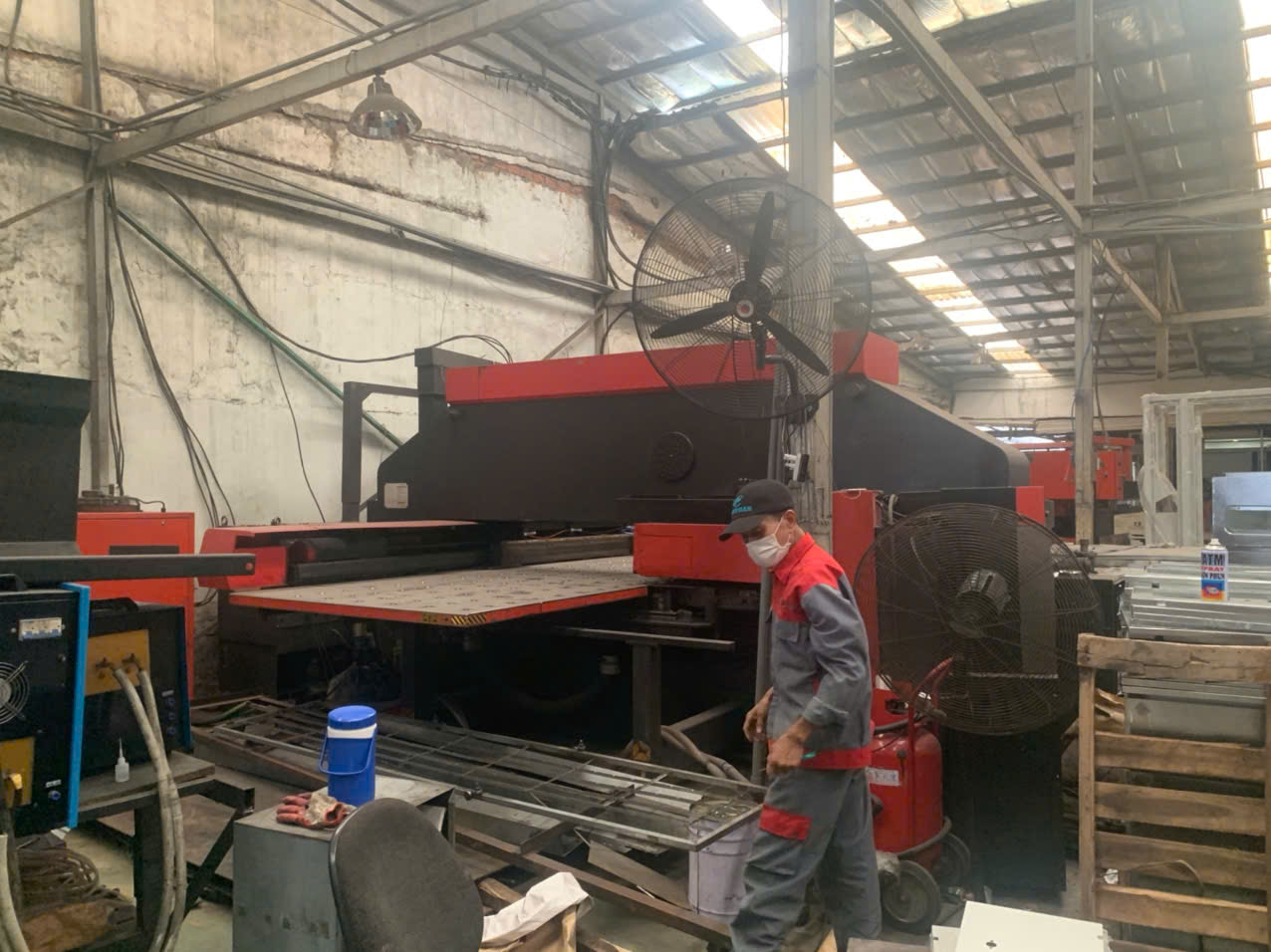

Vietnam’s infrastructure shapes every stamping parts shipment our Vietnam team manages container throughput 1. Low unit prices look great on paper—until port congestion and inland delays quietly erode that entire advantage.
Vietnam’s infrastructure creates a dual-nature logistics environment for stamping parts sourcing: modern deep-water ports like Cai Mep and Lach Huyen enable reliable weekly ocean freight to the US, while inland road congestion, low rail utilization, and inconsistent customs processes add cost, lead-time variability, and risk.
So the picture is mixed. The good news is that the risks are predictable and manageable. Let me walk you through what actually happens between a Vietnamese stamping factory and your US dock.
How Reliable Is Vietnam's Port and Shipping Network for Exporting Stamping Parts to the US?
A few years back, our Vietnam office booked a container of powder-coated brackets out of Cat Lai during peak season. The vessel left on time. Getting the container through the gate did not go as smoothly.
Vietnam's deep-water ports—Cai Mep–Thi Vai in the south and Lach Huyen in the north—offer direct, reliable weekly sailings to US ports. However, congestion at feeder gateways like Cat Lai and Hai Phong creates dwell-time volatility, so exporters must build safety buffers into shipping schedules.

The headline story is genuinely positive. Vietnam invested heavily in deep-water ports 2 over the past decade. Container throughput at major gateways is growing roughly 8–10% per year. Direct services from Cai Mep to the US West and East Coasts mean your stamping parts no longer need transshipment through Singapore or Hong Kong for many lanes. That cuts transit time and reduces handling risk for coated and precision-finished parts.
But the system is under strain. Demand is outpacing deep-water capacity, especially in the south. Cat Lai, the busiest container terminal near Ho Chi Minh City, suffers chronic congestion. Hai Phong in the north faces similar pressure during peak periods. Long dwell times mean higher handling fees and missed vessel cut-offs.
North vs. South: Which Gateway Fits Your Stamping Parts?
Here is how we compare the two main export corridors when we plan door-to-door logistics for clients:
| Factor | Northern Gateway (Hai Phong / Lach Huyen) | Southern Gateway (Cat Lai / Cai Mep) |
|---|---|---|
| Deep-water access | Lach Huyen, modern and expanding | Cai Mep, world-class but capacity-constrained |
| Congestion risk | Moderate, seasonal peaks | High, especially at Cat Lai |
| Raw material inbound | Strong—land border proximity to Chinese steel coil 3 suppliers | Longer inbound supply chain for steel |
| Direct US sailings | Growing selection | Established weekly services |
| Best fit | Stamping operations using imported coil | High-volume finished goods near HCMC industrial zones |
For stamping parts specifically, the northern corridor holds a quiet advantage. Most Vietnamese stamping shops still import steel coil, and northern industrial zones sit close to the Chinese land border. That shortens the inbound leg of your supply chain lead times, which matters as much as the outbound leg.
Our practical rule: choose your supplier’s location with the port map open. A factory thirty minutes from a deep-water gateway beats a cheaper factory three congested hours away.
What Road and Transport Challenges Should I Expect When Moving Stamping Parts Within Vietnam?
One trade-off we weigh constantly is trucking distance versus unit price. Our sourcing team has rejected otherwise capable stamping suppliers simply because the road between their plant and the port was a known chokepoint.
Expect heavy dependence on trucking—over 75% of Vietnam's domestic freight moves by road—plus urban congestion around Hanoi and Ho Chi Minh City, weight limits and bridge clearances that restrict container traffic, and rail carrying under 5% of freight, leaving no practical multimodal alternative.

Road is effectively the only game in town. Rail lines are outdated, slow, and low-capacity. Inland waterways mainly serve bulk cargo, not containerized precision metal fabrication 4. So your brackets, base plates, and flange components will ride a truck from the press shop to the port—no exceptions in practice.
That truck dependence creates three specific problems.
The Three Inland Bottlenecks We Plan Around
- Urban congestion. The corridors between industrial zones and ports pass through dense city traffic. A journey scheduled for two hours can take five. We never book a same-day port cut-off for a truck crossing Ho Chi Minh City.
- Route restrictions. Weight limits and bridge clearances on secondary roads are often incompatible with loaded containers. Heavy stamped steel is dense cargo; a container of base plates hits weight limits before it hits volume limits. Route planning is not optional.
- Last-mile fragmentation. Tier-1 industrial zones have decent access roads. But Tier-2 and Tier-3 sub-suppliers—plating shops, heat treaters—often sit on fragmented local roads. Hidden upstream delays appear before your parts ever reach the stamping line.
There is also a specialized gap worth knowing: Vietnam has a shortage of heavy-lift logistics providers capable of moving multi-ton stamping dies safely. If your project involves transferring tooling into Vietnam, plan that move months ahead.
One mitigation we use often is Inland Container Depots 5. ICDs act as forward staging areas near manufacturing clusters. We move loaded containers to the ICD early, decoupling factory output from unpredictable port gate windows. It costs a little more. It saves missed vessels.
How Does Vietnam's Infrastructure Impact Lead Times and Delivery Reliability for My Custom Parts?
A US purchasing manager once asked me a blunt question: "Why does my quote from Vietnam show a longer lead time than my old China supplier?" It was a fair question, and infrastructure was most of the answer.
Infrastructure friction typically makes Vietnam lead times 10–15% longer than comparable China routings. Port dwell, inland congestion, and customs variability add days of buffer. Reliable delivery is achievable, but only with safety time, ERP-level tracking, and contingency routing built into the plan.

Let me break the lead time into its real components. Buyers often assume ocean transit is the variable. It is not. Ocean transit from Cai Mep to Los Angeles is quite stable. The variability lives inland and at the gate.
Where the Days Actually Go
| Lead-Time Segment | Typical Range | Main Risk Driver |
|---|---|---|
| Factory to port trucking | 0.5–2 days | Urban congestion, route weight limits |
| Port dwell and gate-in | 1–4 days | Terminal congestion, cut-off misses |
| Customs clearance | 0.5–3 days | Manual intervention, document issues |
| Ocean transit to US West Coast | 16–22 days | Carrier schedule, seasonal demand |
| US-side clearance and delivery | 2–5 days | Port of arrival conditions |
Customs deserves its own comment. Vietnam runs an automated system, but with considerable human intervention. Clearance can be smooth one week and slow the next. The encouraging trend: FTAs like the CPTPP and EVFTA are pushing rapid digitalization, and customs clearance efficiency is improving year over year for high-volume, well-documented exporters. Clean paperwork is your best insurance.
There is also a structural reason for optimism. The government allocated over $6 billion in 2024 for transport infrastructure, targeting 3,000 km of expressway by 2025 and expanding the North-South Expressway and Cai Mep–Thi Vai. Vietnam's Logistics Performance Index 6 standing has been climbing as these projects land. The transition period is bumpy; the direction is clear.
Our operating answer for delivery reliability is process, not hope. We track every order milestone in our ERP, from press schedule to gate-in to vessel departure, and we hold pre-agreed contingency routings—an alternate port, an ICD buffer, or air freight for critical partial shipments.
Can Vietnam's Logistics Infrastructure Support Consistent Quality Control During Transit for Stamping Parts?
Early in our Vietnam operations, a batch of powder-coated brackets arrived at final inspection with edge scuffs. The stamping was perfect. The damage happened on a rough inland road with inadequate packing. That lesson reshaped how we specify transit protection.
Yes—with the right precautions. Vietnam's transit environment involves rough inland roads, humid tropical conditions, and multiple handling points, so consistent quality requires export-grade packaging, VCI rust protection, pre-shipment final inspection, and sealed-container loading supervised close to the factory.

Infrastructure does not just affect speed. It affects the condition your parts arrive in. Stamped steel components—especially coated brackets, welded base plates, and raw galvanized channel parts—face three transit threats in Vietnam: vibration and shock on uneven roads, humidity-driven corrosion 7 during port dwell, and handling damage at each transfer point. Every extra day sitting at a congested terminal is an extra day of tropical humidity working on exposed steel surfaces.
The fix is to control what you can control before the container door closes.
Our Transit Quality Protocol for Stamped Components
| Risk | Countermeasure | When It Happens |
|---|---|---|
| Surface corrosion | VCI paper or bags, desiccant, sealed liners | At packing, post-final-inspection |
| Coating damage | Layer separation, edge protectors, no metal-on-metal contact | At packing |
| Shock and vibration | Palletizing, strapping, dunnage rated for rough roads | At container loading |
| Handling errors | Loading supervised by our local QC staff | At factory or ICD |
| Undetected defects | PPAP-aligned final inspection before packing | Pre-shipment |
The infrastructure trend actually helps here. Emerging micro-logistics clusters co-locate stamping, plating, and heat treatment inside a single industrial zone. Fewer external truck moves between processes means fewer chances for damage, contamination, or lost traceability. When we audit suppliers, co-located secondary processing earns real points.
One more practical note: loading at or near the factory, rather than after multiple depot transfers, keeps the chain of custody short. Our seven-person Vietnam team physically witnesses container loading for critical shipments. Photos go into the shipment file. If a claim ever arises, we know exactly where the part condition changed.
Conclusion
Vietnam's infrastructure rewards prepared buyers and punishes optimistic ones. Deep-water ports deliver; inland friction takes back. Manage lead times, packaging, and partner location deliberately, and the China Plus One strategy pays off.
Frequently Asked Questions
North vs. South: Which Gateway Fits Your Stamping Parts?
Here is how we compare the two main export corridors when we plan door-to-door logistics for clients:
How Reliable Is Vietnam's Port and Shipping Network for Exporting Stamping Parts to the US?
A few years back, our Vietnam office booked a container of powder-coated brackets out of Cat Lai during peak season. The vessel left on time. Getting the container through the gate did not go as smoothly.
What Road and Transport Challenges Should I Expect When Moving Stamping Parts Within Vietnam?
One trade-off we weigh constantly is trucking distance versus unit price. Our sourcing team has rejected otherwise capable stamping suppliers simply because the road between their plant and the port was a known chokepoint.
Footnotes
1. Overview of Vietnam’s transport infrastructure, including data on container throughput and port development. ↩︎
2. Official Vietnam Seaports Association page detailing the Cai Mep-Thi Vai deep-water port complex and its capabilities. ↩︎
3. Authoritative source on global steel markets and the supply chain for steel coil products. ↩︎
4. Technical overview of metal fabrication processes used in manufacturing stamping parts. ↩︎
5. Definition and function of inland ports and container depots in global logistics networks. ↩︎
6. World Bank’s official scorecard for Vietnam’s logistics efficiency and infrastructure quality. ↩︎
7. Provides background on corrosion mechanisms relevant to tropical humidity risk for steel parts. ↩︎