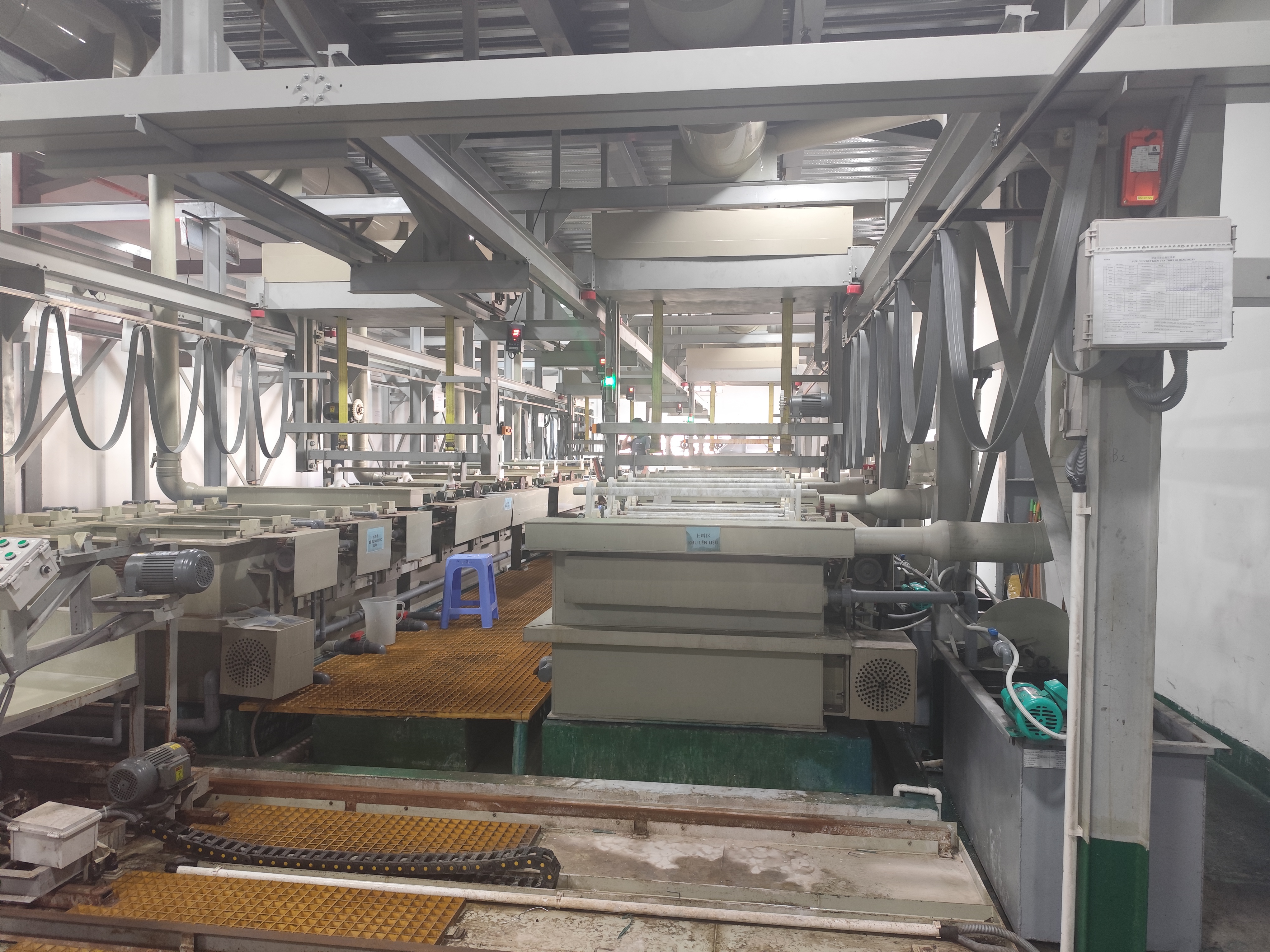

Last summer, a shipment of custom stamping brackets we sourced from a northern Vietnam factory arrived three weeks late — not because of tooling problems or raw material shortages, but because rolling power outages shut the supplier’s presses down for days at a time.
Vietnam’s power stability directly impacts stamping parts lead times. Frequent grid outages, seasonal hydropower shortages, and voltage fluctuations cause production halts, machinery damage, and restart delays that can stretch a standard 2–4 week stamping lead time to 6–10 weeks during peak summer crisis periods.
If you source custom stamped parts 1 from Vietnam, power reliability is no longer a background concern. It is a lead-time risk you must plan for. Below, I break down how this affects your orders and what you can do about it.
How Do Power Outages in Vietnam Disrupt My Stamping Production Schedule?
A buyer we work with in the Midwest placed a repeat order for powder-coated steel mounting brackets — the kind with welded gussets and multiple drilled holes for bolted assembly. The order was routine. The delay was not. A three-hour unannounced blackout at the supplier's facility in Bac Ninh cascaded into a two-week shipment miss.
Power outages disrupt stamping schedules by forcing immediate production halts, causing die crashes and tool misalignment on high-speed presses, wasting in-process material, and triggering lengthy restart sequences. A single 2–4 hour blackout can delay deliveries by weeks due to compounding recovery steps.

Why Stamping Is Uniquely Vulnerable
Stamping is a continuous, precision-driven process. Unlike assembly or packaging, you cannot simply pause a stamping press 2 and resume where you left off. When the EVN grid reliability falters and power drops suddenly, several things happen at once.
First, the press stops mid-stroke. This can cause a die crash — the upper and lower dies collide in an uncontrolled way. Die crashes damage tooling. Repairing or regrinding a progressive die 3 can take days. For custom parts with tight tolerances, even minor die damage means the next batch of parts will not meet spec.
Second, material in the press is ruined. The strip of steel feeding through the die is bent, torn, or jammed. That material becomes scrap.
Third, the restart is not instant. Operators must inspect every die station, re-align tooling, run test shots, and verify dimensional accuracy before resuming production. In our experience coordinating with Vietnamese stamping suppliers, this restart process alone takes 4–8 hours even after power returns.
The Compounding Effect on Lead Times
The real damage is not the outage itself. It is the chain reaction. Here is how a single blackout multiplies delays:
| Event | Duration | Cumulative Impact |
|---|---|---|
| Power outage | 2–4 hours | Production halted |
| Die inspection and repair | 4–24 hours | Tooling may need regrinding |
| Material waste and resupply | 1–3 days | New coil stock may be needed |
| Test shots and quality verification | 4–8 hours | First-article re-approval |
| Overtime scheduling | 1–5 days | Competing with other delayed orders |
| Secondary process delays (plating, heat treat) | 2–7 days | Energy-intensive stages also backlogged |
| Total lead time extension | 1–3 weeks | From a single 3-hour outage |
When rolling power outages hit multiple times in a week — which happens during peak summer — this multiplier stacks. Factories cannot make up lost time fast enough. Every order in the queue shifts backward.
Secondary Processes Are Hit Even Harder
Many stamped components require heat treatment 4 or plating after forming. These are energy-intensive manufacturing steps that cannot be interrupted mid-cycle. A plating bath that loses power mid-process may need to be drained, cleaned, and restarted. Heat-treat furnaces must reach target temperature again over hours. These downstream delays often exceed the stamping delay itself.
Our Vietnam office has seen cases where a bracket order — similar to the post base mounts and L-brackets in our product line — was stamped and ready to ship, but sat waiting an extra week because the plating subcontractor was still recovering from the same grid event.
What Backup Power Solutions Should I Look for in a Vietnamese Stamping Supplier?
One trade-off we weigh constantly when auditing Vietnamese stamping suppliers is backup power capacity 5 versus cost. A factory with no generator is cheap — until it misses your delivery window and you pay expedited air freight to keep your customer's assembly line running.
Look for suppliers with adequately sized diesel generators that can power their stamping presses (not just lighting), automatic transfer switches for fast switchover, documented fuel storage for at least 48–72 hours of runtime, and clear restart protocols. Battery Energy Storage Systems and voltage stabilization hardware are premium indicators of serious power resilience.

Not All Backup Power Is Equal
Many factories in Vietnam have a diesel generator 6 on site. But having a generator and having one that can actually run stamping presses are two very different things. A small factory might have a 50 kW generator that keeps the lights on and runs the office air conditioning. That generator cannot power a 200-ton stamping press. The backup generator costs go up sharply when you need enough capacity to run production equipment — and most small suppliers have not made that investment.
Here is what to look for when evaluating a supplier's backup power setup:
| Backup Power Feature | Why It Matters | Red Flag If Missing |
|---|---|---|
| Generator capacity matches press tonnage | Ensures production continues, not just lights | Generator only covers office/lighting |
| Automatic Transfer Switch (ATS) | Switches to backup in seconds, prevents die crashes | Manual switchover takes 10–30 minutes |
| Fuel storage for 48–72 hours | Sustains production through extended outages | Only a few hours of fuel on hand |
| Voltage stabilization equipment | Prevents brownout damage to CNC and servo-driven presses | No stabilizer on press lines |
| Battery Energy Storage System (BESS) | Bridges the gap between grid loss and generator start | Relies solely on diesel |
| Documented restart protocol | Reduces restart time, ensures quality on first run | No written procedure |
The Rise of Premium Power Zones
Some leading industrial parks are now deploying localized microgrids 7. These are essentially independent power networks within the park that provide a higher level of reliability than the national grid alone. Factories located in these premium power zones can offer more dependable delivery commitments.
We have also seen a growing trend of Energy-as-a-Service models, where third-party providers install dedicated voltage stabilization hardware specifically for stamping lines. This effectively decouples part quality and lead time from national grid volatility. When we evaluate new suppliers for our U.S. clients, this kind of infrastructure is a strong positive signal.
AI-Driven Load Shedding
A few advanced stamping facilities have begun implementing AI-driven load-shedding protocols. During periods of grid instability, the system automatically prioritizes power to high-tonnage presses while cutting non-critical loads like HVAC and warehouse lighting. This approach prevents costly tool damage and keeps the most important production running. It is still uncommon, but it is a sign of a supplier that takes manufacturing downtime seriously.
What to Ask Your Supplier
When we conduct supplier audits on behalf of clients, here are the specific questions our team in Vietnam asks about backup power:
- What is the total generator capacity in kW or kVA?
- Which production lines are covered by backup power?
- How long can you run on backup at full production load?
- Where do you source fuel, and what is your refueling lead time?
- Do you have an automatic transfer switch, or is switchover manual?
- What is your documented restart procedure after a power event?
- How many power-related production stoppages did you have in the past 12 months?
If a supplier cannot answer these questions clearly, that is a warning sign. Power resilience is not optional for time-sensitive custom parts.
How Can I Verify a Supplier's Grid Reliability Before Signing a Contract?
A lesson we learned early in our Vietnam sourcing operations is that promises about uptime mean nothing without documentation. One supplier told our team they had "no power problems." Three weeks into a production run for precision-stamped mounting flanges, they lost two full production days to grid events they later admitted were routine summer occurrences.
Verify grid reliability by requesting the supplier's outage logs for the past 12 months, confirming the industrial park's published uptime SLA, cross-referencing with regional EVN grid data, conducting an on-site audit of power infrastructure, and checking whether the supplier integrates energy load forecasts into production scheduling.

Step-by-Step Verification Process
Trusting a supplier's word is not enough. Here is the process our Vietnam office follows before recommending a stamping partner to any U.S. client.
Step 1: Request outage logs. Ask for a written record of every power interruption in the past 12 months — planned and unplanned. Include duration, affected lines, and whether backup power was activated. A supplier that keeps these records is already more disciplined than most.
Step 2: Review the industrial park's SLA. Many industrial parks publish uptime guarantees. The benchmark is 99.99% reliability — sometimes called "six nines" — which equals a maximum of about 52 minutes of outage per year. But this is a theoretical number. Ask the park management for actual performance data, not just the target.
Step 3: Check regional EVN grid reliability data. The national utility, EVN, publishes some grid performance information. Northern industrial zones like Bac Ninh and Bac Giang have historically experienced more supply chain disruption from power issues than southern zones near Ho Chi Minh City.
Step 4: Conduct an on-site audit. There is no substitute for walking the factory floor. Our auditors check the condition and capacity of generators, the presence of voltage stabilizers on press lines, and the physical fuel storage. We also look at whether the supplier has invested in industrial park infrastructure upgrades like dedicated transformer substations.
Step 5: Ask about grid-aware scheduling. An emerging best practice is "grid-aware scheduling," where manufacturers integrate national energy load forecasts directly into their ERP systems. This allows them to align high-volume stamping runs with periods of peak grid reliability and shift less critical work to off-peak hours. Suppliers who do this demonstrate a proactive approach to managing production cycle delays.
Verification Checklist Summary
| Verification Step | What You Get | Who Provides It |
|---|---|---|
| 12-month outage log | Actual downtime history | Supplier |
| Industrial park SLA and actuals | Promised vs. real uptime | Park management |
| Regional EVN data | Area-level grid performance | EVN / public records |
| On-site power audit | Physical infrastructure condition | Your audit team |
| Grid-aware scheduling evidence | Proactive risk management | Supplier ERP records |
| Backup power test run | Confirmed switchover capability | On-site demonstration |
Contractual Protections
Beyond verification, build power-related protections into your purchase order terms. For critical SKUs — the kind where a 48-hour delay stops your customer's assembly line — add recovery commitments. These might include guaranteed overtime to make up lost hours, penalty-free order adjustments if outages exceed a defined threshold, or pre-agreed expedited shipping at the supplier's cost.
When we draft sourcing agreements for our clients, we classify items by disruption impact. High-impact stamped parts get stricter delivery terms and supplier commitments around power resilience.
Which Vietnamese Regions Offer the Most Stable Power for Stamping Manufacturing?
When a client asks us to source stamped brackets or mounting hardware from Vietnam, the first question is not just "which factory" — it is "which region." We have seen firsthand that geography determines a huge portion of the power risk your supply chain will carry.
Southern Vietnam — particularly the areas around Ho Chi Minh City, Dong Nai, and Long An — generally offers more stable power for stamping manufacturing than northern hubs like Bac Ninh and Bac Giang, which have experienced the worst hydropower seasonal shortages, rotational shutdowns, and grid deficits reaching 30% during peak summer months.

The North-South Power Divide
Vietnam's power crisis is not uniform. The northern grid, which relies heavily on hydropower, is far more vulnerable to seasonal volatility. Drought conditions in 2024 reduced hydropower output 8 by 40% during May and June. This hammered the very regions where global manufacturers like Samsung, Foxconn, and Canon have concentrated their metal fabrication capacity.
Bac Ninh and Bac Giang, two of the most prominent northern industrial hubs 9, were hit hardest. Foxconn was forced to reduce electricity consumption, directly impacting production capacity and delaying orders. Some Samsung production lines resorted to rotational shutdowns, with estimated losses exceeding $10 million from delayed deliveries alone.
Southern Vietnam has a more diversified energy mix, with greater access to gas-fired thermal plants and, increasingly, solar. This does not make the south immune to outages, but the frequency and severity are lower.
Regional Risk Comparison
| Region | Key Industrial Zones | Primary Power Source | Summer Outage Risk | Notes |
|---|---|---|---|---|
| Northern Vietnam | Bac Ninh, Bac Giang, Hai Phong | Hydropower (drought-vulnerable) | High | Foxconn, Samsung, Canon affected by rotational shutdowns |
| Central Vietnam | Da Nang, Quang Nam | Mixed hydro/thermal | Medium | Less industrial density, fewer heavy stamping operations |
| Southern Vietnam | Dong Nai, Binh Duong, Long An, HCMC | Gas thermal, growing solar | Lower | More diversified grid, better industrial park infrastructure |
Implications for Sourcing Strategy
The China+1 manufacturing surge has brought enormous demand to Vietnam's northern provinces because of their proximity to China and established electronics supply chains. But this very concentration has outpaced grid infrastructure development, creating a persistent peak-hour risk where factories must voluntarily cut power to heavy machinery, disrupting continuous stamping runs.
For buyers sourcing custom stamped parts — things like structural brackets, post base mounts, and cross-shaped flanges — the region your supplier operates in will directly affect your lead time reliability. Our team in Vietnam increasingly recommends southern-region suppliers for clients whose production schedules cannot absorb multi-week delays.
The Bigger Picture
Vietnam's electricity demand grew 8.1% annually, reaching 241.8 billion kWh in 2023. But generation capacity 10 only increased 3.9%, to 79.3 GW. This structural supply-demand mismatch is not going away soon. The government is investing in new capacity, but the gap will likely persist through at least 2026, when hot summer spells are again expected to strain the grid.
For procurement professionals, this means power stability should be a core factor in supplier qualification — not an afterthought. It directly shapes your lead time commitments, your logistics expenses, and your ability to deliver parts right the first time without costly rework or emergency air shipments.
Nationwide, inventory turnover has declined as companies buffer against disruptions, and logistics expenses have risen by roughly 15%. These are hidden costs that erode the price advantage Vietnam offers versus other sourcing destinations. Understanding regional power dynamics helps you capture Vietnam's cost benefits without absorbing its reliability risks.
Conclusion
Vietnam's power stability is a critical and often underestimated factor in stamping parts lead times. By verifying regional grid reliability, auditing backup power infrastructure, and building contractual protections, you can source competitively from Vietnam without letting power disruptions derail your delivery commitments.
Frequently Asked Questions
How Do Power Outages in Vietnam Disrupt My Stamping Production Schedule?
A buyer we work with in the Midwest placed a repeat order for powder-coated steel mounting brackets — the kind with welded gussets and multiple drilled holes for bolted assembly. The order was routine. The delay was not. A three-hour unannounced blackout at the supplier's facility in Bac Ninh cascaded into a two-week shipment miss.
What Backup Power Solutions Should I Look for in a Vietnamese Stamping Supplier?
One trade-off we weigh constantly when auditing Vietnamese stamping suppliers is backup power capacity 5 versus cost. A factory with no generator is cheap — until it misses your delivery window and you pay expedited air freight to keep your customer's assembly line running.
How Can I Verify a Supplier's Grid Reliability Before Signing a Contract?
A lesson we learned early in our Vietnam sourcing operations is that promises about uptime mean nothing without documentation. One supplier told our team they had "no power problems." Three weeks into a production run for precision-stamped mounting flanges, they lost two full production days to grid events they later admitted were routine summer occurrences.
Footnotes
1. Technical definition of the metal forming process used for the components. ↩︎
2. Authoritative technical overview of stamping press machinery and components. ↩︎
3. Technical overview of the specific tooling technology mentioned in the article. ↩︎
4. Scientific explanation of the thermal processes used for metal part finishing. ↩︎
5. Comprehensive explanation of backup power systems and their industrial applications. ↩︎
6. Detailed technical description of diesel-powered electricity generation. ↩︎
7. Government explanation of microgrid technology used for industrial power resilience. ↩︎
8. International agency report on the hydropower energy source discussed. ↩︎
9. Policy analysis of the industrial development zones mentioned in the text. ↩︎
10. Official government explanation of electricity generation metrics and capacity. ↩︎