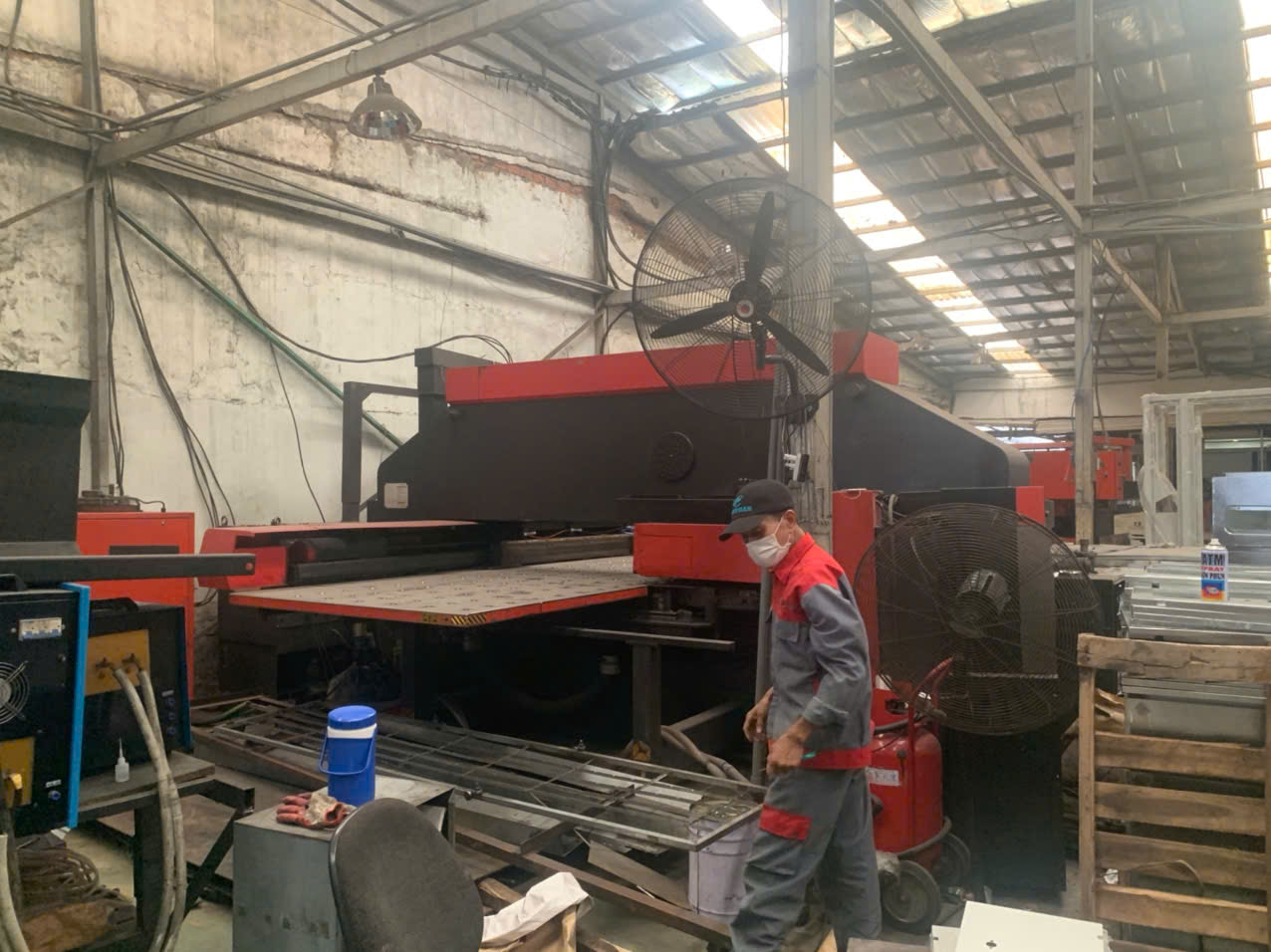

When our Vietnam office started coordinating precision metal stamping orders for U.S. buyers last year, one problem kept surfacing — power cuts mid-production run.
Vietnam’s power supply directly threatens stamping production stability through rolling blackouts, voltage fluctuations that damage CNC equipment, and seasonal shortages that cause delivery delays, scrap material, and contract breaches — risks that sourcing managers must actively mitigate when selecting Vietnamese suppliers.
This article breaks down the real risks, shares what our team has learned on the ground, and gives you practical tools to protect your supply chain Electricity of Vietnam 1. Let’s walk through each dimension of this challenge.
How reliable is Vietnam's power grid for maintaining consistent stamping production schedules?
A trade-off we weigh constantly with our clients is whether Vietnam's cost advantages outweigh the grid reliability risks — and the answer depends heavily on geography and season uninterruptible power supplies 2.
Vietnam's power grid delivers roughly 99.99% reliability in major industrial parks, meaning about 52 minutes of outage per year, but precision metal stamping for automotive or electronics demands 99.9999% reliability — just 31 seconds per year — creating a significant gap that threatens consistent production schedules.

The Structural Supply-Demand Problem
Vietnam's electricity demand has been growing far faster than its supply capacity cold-rolled steel 3. In 2022, electricity consumption in northern Vietnam rose 11–12% annually while supply capacity grew by only 5%. This mismatch is not a temporary blip. It reflects a structural shortage driven by the "China+1 4" manufacturing strategy that has flooded Northern Vietnam industrial zones with new factories.
The grid is managed by EVN 5 (Electricity of Vietnam), and EVN power outages have become a recurring concern for manufacturers. In 2023, power shortages cost the Vietnamese economy an estimated $1.4 billion — roughly 0.3% of GDP. The government even switched off street lighting in some areas to preserve grid stability.
How This Hits Stamping Schedules
Stamping production runs on tight cycles. A single progressive die 6 press might produce thousands of parts per hour. When the power drops, even for seconds, the press stops. The coil feeder loses synchronization. The in-progress part is often scrap. Restarting takes time — aligning the die, re-threading the coil, running test hits. Every minute of operational downtime translates into missed pieces.
Reliability Standards: The Numbers That Matter
| Reliability Level | Annual Downtime | Typical Use Case | Vietnam Reality |
|---|---|---|---|
| 99.9% ("three nines") | ~8.7 hours/year | General commercial | Below most industrial parks |
| 99.99% ("four nines") | ~52 minutes/year | Standard industrial parks | Common in Vietnam's top zones |
| 99.999% ("five nines") | ~5.2 minutes/year | Advanced manufacturing | Rare in Vietnam |
| 99.9999% ("six nines") | ~31 seconds/year | Precision/semiconductor | What global buyers demand |
For brackets, mounting plates, and structural hardware like the parts we coordinate — L-brackets, post bases, trailer-hitch mounts — even the "four nines" standard can be acceptable if the supplier has contingency plans. But for stamped parts feeding into automotive assemblies or electronic enclosures, the gap between 52 minutes and 31 seconds is enormous.
Geographic Risk Varies Widely
Our team in Vietnam has observed that Northern Vietnam industrial zones — Bac Ninh, Bac Giang, and surrounding areas — face the most acute pressure. These areas rely heavily on hydropower, which drops during the dry season. Southern Vietnam, particularly Ho Chi Minh City and its surrounding provinces, benefits from a more diverse energy mix and a historically more resilient grid.
This geographic difference is now driving a quiet shift. Some stamping suppliers are relocating or expanding southward to reduce their exposure to seasonal volatility.
What backup power solutions should I look for when auditing a Vietnamese stamping supplier?
During a recent supplier audit in Binh Duong province, one detail told us everything we needed to know — the factory had two brand-new 500kVA diesel generators sitting outside, still wrapped in plastic, never tested.
When auditing a Vietnamese stamping supplier, look for properly maintained and regularly tested backup generator capacity, uninterruptible power supplies (UPS) on CNC controllers, automatic transfer switches, and documented procedures for seamless power switchover — not just equipment on paper, but proven operational readiness.

What "Backup Power" Actually Means for Stamping
Backup power is not one thing. It is a layered system. Each layer protects against a different type of disruption. Here is how we break it down when we walk a factory floor:
| Backup Layer | What It Protects | Response Time | Typical Equipment |
|---|---|---|---|
| UPS (Battery) | CNC controllers, PLCs, sensors | Milliseconds | Rack-mounted UPS units |
| Automatic Transfer Switch (ATS) | Full facility switchover | 5–15 seconds | ATS panel + generator |
| Diesel Generator | Sustained production during outage | 10–30 seconds (with ATS) | 250kVA–1000kVA gensets |
| Battery Energy Storage (BESS) | Peak shaving, bridging gaps | Instant to seconds | Lithium-ion battery banks |
| Direct Power Purchase Agreement (DPPA) | Long-term energy security | N/A (contractual) | Solar/wind farm contracts |
The UPS Layer Is Non-Negotiable
For precision metal stamping, the most critical layer is the UPS protecting CNC controllers and robotic feeders. A voltage sag lasting just 100 milliseconds can desynchronize an automated coil feeder. When that happens, the strip advances out of position. The die closes on misaligned material. The result can be a catastrophic tool and die crash — thousands of dollars in damage and days of downtime for repair.
Our engineering team always checks whether UPS units are installed on individual press controllers, not just on the main facility panel. Facility-level UPS may not catch micro-interruptions that affect individual machines.
Generator Capacity: Do the Math
A common mistake we see is suppliers who own generators rated for only 40–50% of their total load. During an EVN power outage, they cannot run all presses simultaneously. They must choose which lines to keep running. If your order is not the priority, your parts wait.
Ask for the generator's rated capacity in kVA and compare it against the supplier's total connected load. A ratio below 70% is a red flag. Also ask for maintenance logs. A generator that has not been load-tested in six months may not start when needed.
The DPPA Advantage
A growing trend among top-tier suppliers in Vietnam is the adoption of Direct Power Purchase Agreements. These contracts allow factories to buy electricity directly from renewable energy producers — solar farms, wind installations — bypassing the state-run EVN grid entirely. This is becoming a genuine competitive advantage for supply chain resilience. If a supplier mentions a DPPA during your audit, it signals forward-thinking energy security planning.
What to Ask During the Audit
Here is a simple checklist we use:
- What is the total generator capacity versus total facility load?
- When was the last full-load generator test?
- Are UPS units installed on individual CNC and press controllers?
- Does the facility have an automatic transfer switch?
- Has the factory experienced unplanned downtime due to power in the last 12 months? How many hours?
- Does the supplier have a DPPA or any off-grid energy source?
These questions separate suppliers who have invested in real backup infrastructure from those who treat backup power as an afterthought.
Can power outages in Vietnam impact the quality and precision of my custom stamped parts?
One lesson we learned the hard way involved a batch of powder-coated steel brackets — similar to the black-finished L-brackets and mounting hardware we regularly source. A mid-run power interruption caused the press to halt with the die partially closed.
Yes, power outages directly degrade stamping quality: sudden stops cause incomplete forming and burrs, voltage fluctuations warp CNC positioning accuracy, interrupted cooling systems allow thermal expansion in precision dies, and restarted runs often produce dimensional inconsistencies until the process restabilizes — all creating hidden defects.

How a Power Cut Damages Parts in Progress
When a stamping press loses power mid-stroke, the ram may stop in a partially closed position. The workpiece is trapped in the die. Extracting it often damages both the part and the die. Even if the part is removed cleanly, it is incomplete — a partial form, an unfinished hole, a bent flange at the wrong angle. That piece becomes scrap.
But the more insidious damage happens to the parts produced after the restart. Here is why.
The Hidden Defect Chain
Precision stamping dies are engineered to operate within tight thermal tolerances. During normal operation, the die reaches a stable temperature through friction and the coolant system maintains it. When power fails:
- The coolant system stops.
- The die temperature shifts — it may cool unevenly or overheat in spots.
- Thermal expansion changes the die's dimensions by microns.
- The first 50–200 parts after restart may have "silent" dimensional defects.
These dimensional shifts might measure only 0.02–0.05mm. For a structural bracket or post base mount, that might be acceptable. For a part feeding into an automotive assembly with tight stack-up tolerances, it is a failure waiting to happen — one that may not be caught until the customer's final assembly stage.
Voltage Fluctuations: The Quiet Killer
Total blackouts get attention. Voltage sags do not. Yet micro-interruptions and "dirty power" cause more cumulative waste. When voltage drops briefly, servo motors in CNC-controlled presses lose position reference. The feeder advances the coil strip by slightly more or less than programmed. The next hit lands off-center. The result: a part with holes punched 0.1mm off-position, or an edge trim that is uneven.
Our quality control team has flagged this pattern repeatedly when reviewing parts from suppliers in areas with unstable grid connections. The defects look random — a slightly oversized hole here, a minor burr there — but they cluster around timestamps that correspond to grid instability events.
Quality Impact by Part Type
| Part Type | Tolerance Range | Vulnerability to Power Issues | Risk Level |
|---|---|---|---|
| Structural brackets (L, T-shape) | ±0.5mm | Low — tolerances are forgiving | Moderate |
| Post base mounts with keyhole slots | ±0.2mm | Medium — slot alignment matters | High |
| Automotive mounting flanges | ±0.1mm | High — stack-up tolerance critical | Very High |
| Electronic enclosure stampings | ±0.05mm | Very High — any shift causes assembly failure | Critical |
For the types of stamped hardware we commonly handle — brackets, channel mounts, hitch-style mounts with central bores, cross-shaped flanges — the risk level ranges from moderate to high. The galvanized and powder-coated finishes can mask surface defects caused by interrupted forming, making visual inspection alone insufficient.
What This Means for Your QC Requirements
If your supplier operates in a region prone to rolling blackouts, you should require dimensional inspection on the first 100–200 parts after any power event. Statistical Process Control 7 (SPC) data should flag any restart-related drift. Without this, defective parts enter your supply chain silently.
How do I evaluate a supplier's contingency planning to avoid delivery delays caused by power instability?
A buyer interaction last quarter drove this point home for us. A U.S. purchasing manager had placed an order with a Vietnamese stamping factory for a batch of steel post base mounts and angled brackets. The delivery date was firm — tied to a construction project timeline. A week of rolling blackouts in June pushed the order back by 12 days. The buyer had no warning.
Evaluate a supplier's contingency planning by reviewing their documented power-failure response procedures, buffer inventory policies, seasonal production scheduling adjustments, communication protocols for delay notification, and whether they maintain alternative production sites — these elements separate resilient suppliers from reactive ones.

Why Standard Lead Times Are Not Enough
Manufacturing lead times from Vietnam already account for shipping, customs, and normal production cycles. What they rarely account for is a week of forced shutdowns during a heat wave. When temperatures exceed 40°C, peak electrical load surges by 15–20%. Consecutive hot days — five or more — create a 30% risk of rolling blackouts. Daily productivity losses across Vietnam during these events exceed $50 million.
For a single stamping factory, even one day of lost production can cascade. The press line that was running your brackets is now behind schedule. Your order competes with other customers' orders for the limited catch-up capacity. Overtime shifts help, but they also introduce fatigue-related quality risks.
The Seasonal Risk Window
Our Vietnam team tracks this closely. The highest-risk months are:
- May–July: Peak heat, peak electricity demand, lowest hydropower reservoir levels.
- October–November: Typhoon season can cause localized grid damage in northern and central regions.
We advise our U.S. clients to build buffer inventory before May and to front-load production schedules so that critical shipments clear the factory before the summer crunch. This is a simple, practical form of supply chain resilience.
What a Good Contingency Plan Looks Like
When we audit suppliers on behalf of our clients, we look for specific documentation. Here is what separates a prepared supplier from an unprepared one:
| Contingency Element | Prepared Supplier | Unprepared Supplier |
|---|---|---|
| Power-failure SOP | Written, posted, rehearsed quarterly | None or outdated |
| Backup generator test log | Monthly full-load tests documented | No records |
| Communication protocol | Automated buyer notification within 2 hours | Ad hoc, delayed |
| Buffer stock policy | 1–2 weeks of finished goods for key clients | No buffer |
| Alternative production site | Identified and contracted | None |
| Seasonal schedule adjustment | Front-loaded production before May | Flat schedule year-round |
| Insurance coverage | Business interruption policy 8 in place | No coverage |
The Real Cost of a Production Halt
Many buyers look at Vietnam's lower labor costs and see savings. What they do not calculate is the total cost of a production halt caused by energy security failures. Consider this breakdown:
- Scrap material: A halted press run can waste an entire coil of steel. For a 2-ton coil of cold-rolled steel 9, that might be $1,500–$3,000.
- Die damage: Repairing a damaged progressive die can cost $5,000–$20,000 and take 1–3 weeks.
- Overtime labor: Catching up after a multi-day outage requires overtime shifts, adding 30–50% to labor costs for those days.
- Air freight: If the delay threatens a missed delivery window, air freight from Vietnam to the U.S. can cost 5–8x the standard ocean freight rate.
- Contract penalties: Late delivery penalties in many supply agreements range from 1–5% of order value per week.
These hidden costs can easily erase the labor cost savings that motivated sourcing from Vietnam in the first place. That is why we insist on contingency planning as a non-negotiable part of our supplier qualification process.
The Intel and Foxconn Warning
The power instability issue is not hypothetical. Intel paused its expansion plans in Vietnam partly due to unstable power. Foxconn cut power usage by 30% at its northern plants and limited operations to nighttime hours at Bac Giang facilities. If companies of that scale are forced to make concessions, smaller stamping factories face even greater exposure.
Some Taiwanese semiconductor companies have reportedly planned to withdraw from Vietnam entirely due to energy concerns. While stamping is less power-sensitive than chip fabrication, the warning is clear: operational downtime from grid failures is a real and present risk.
How Our Approach Helps
When we manage sourcing for our clients, our local Vietnam team conducts on-site assessments of industrial park infrastructure, backup systems, and seasonal preparedness. We verify claims against maintenance records and production logs. We also build seasonal buffers into our project timelines — not because we assume failure, but because proactive planning is the only reliable defense against grid-level risks.
For critical orders, we maintain relationships with alternative suppliers in southern Vietnam and other ASEAN countries 10, giving our clients a fallback option if a primary supplier faces extended power disruptions.
Conclusion
Vietnam offers real advantages for sourcing stamping parts, but power instability is a risk you cannot ignore — evaluate backup systems, plan for seasonal peaks, and work with partners who have local teams verifying actual production capacity and readiness on the ground.
Frequently Asked Questions
How reliable is Vietnam's power grid for maintaining consistent stamping production schedules?
A trade-off we weigh constantly with our clients is whether Vietnam's cost advantages outweigh the grid reliability risks — and the answer depends heavily on geography and season uninterruptible power supplies 2 .
What backup power solutions should I look for when auditing a Vietnamese stamping supplier?
During a recent supplier audit in Binh Duong province, one detail told us everything we needed to know — the factory had two brand-new 500kVA diesel generators sitting outside, still wrapped in plastic, never tested.
Can power outages in Vietnam impact the quality and precision of my custom stamped parts?
One lesson we learned the hard way involved a batch of powder-coated steel brackets — similar to the black-finished L-brackets and mounting hardware we regularly source. A mid-run power interruption caused the press to halt with the die partially closed.
Footnotes
1. Provides background on the state grid operator managing Vietnam’s power distribution. ↩︎
2. Technical background on UPS systems used to protect industrial equipment from voltage fluctuations. ↩︎
3. Technical explanation of the cold-rolling process used to produce steel coils for stamping. ↩︎
4. Wikipedia entry explaining the global manufacturing strategy driving industrial growth and energy demand in Vietnam. ↩︎
5. Official website of the state-owned utility managing Vietnam’s electricity grid and infrastructure. ↩︎
6. Explains the specialized stamping tooling whose repair costs are discussed in the article. ↩︎
7. Explains the quality control methodology referenced for detecting restart-related defects. ↩︎
8. Defines the insurance coverage type recommended for suppliers facing power-related disruptions. ↩︎
9. Clarifies the material type referenced in scrap cost calculations for stamping operations. ↩︎
10. Background on the regional bloc mentioned as alternative sourcing locations for supply resilience. ↩︎