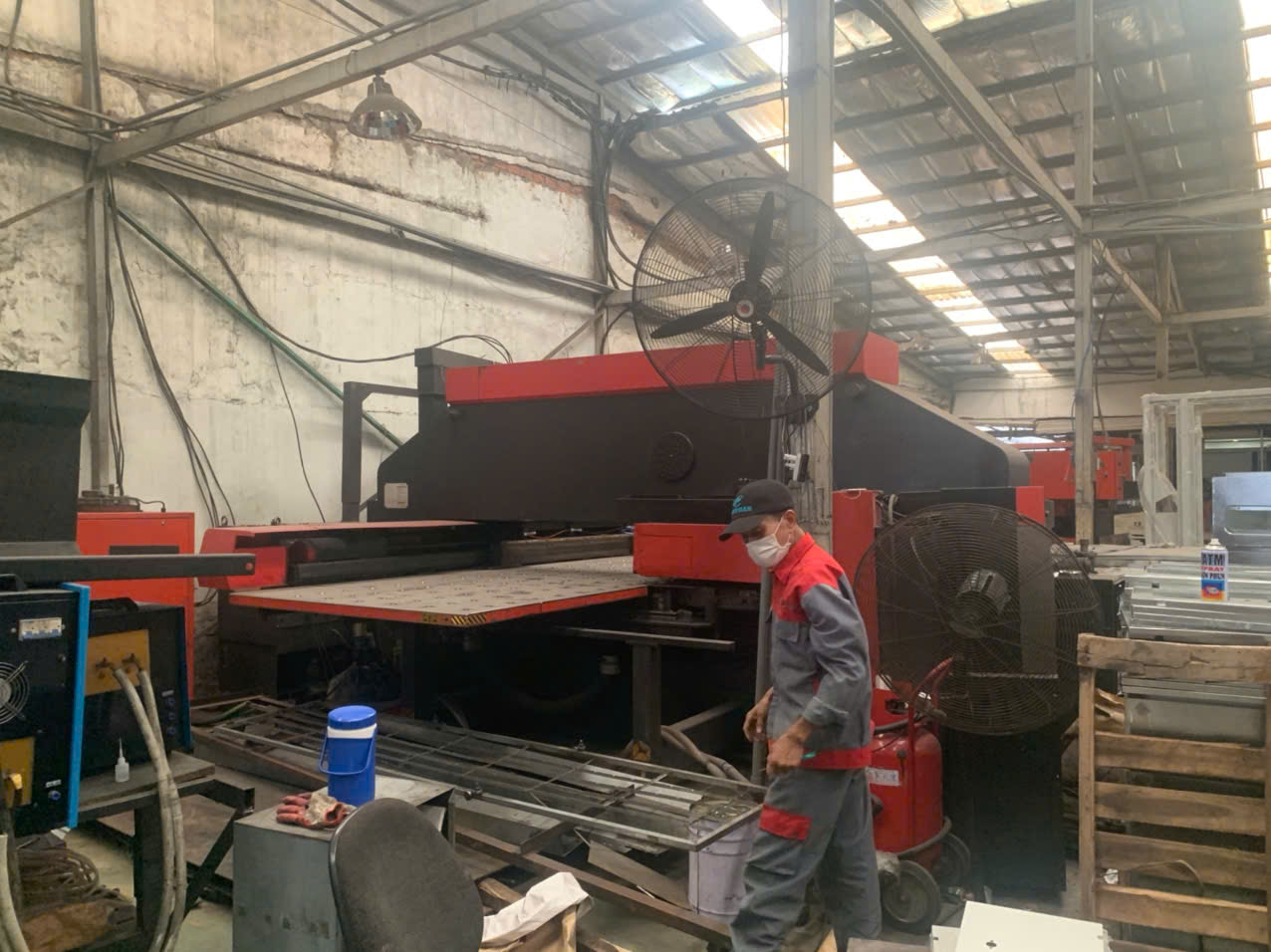

Last January, a long-time U.S. client called our Vietnam office in a panic — their stamping parts order was suddenly three weeks behind schedule, and nobody at the factory was answering the phone.
Vietnamese holidays like Tet extend stamping parts lead times by 2 to 4 weeks beyond the official closure. The total supply chain disruption spans 3 to 4 weeks due to pre-holiday production surges, factory shutdowns, labor shortages, and port congestion that compound delivery delays for custom metal components.
This is not a one-week inconvenience. It is a structural stress event that ripples through every link in the supply chain — from raw steel coil procurement 1 to final freight shipping delays at Vietnamese ports. Below, I break down exactly how Tet and other holidays affect your stamping orders, and what our team recommends to keep your production schedule intact.
How much extra lead time should I plan for around Tet when ordering stamping parts from Vietnam?
One trade-off we weigh every year at our Vietnam office is this: do we push suppliers to accelerate orders before Tet, or do we build in extra weeks and accept a later delivery safety stock levels 2? The answer depends on how well you understand the real timeline behind Lunar New Year factory closures.
Plan for at least 3 to 4 extra weeks of lead time around Tet. The official holiday lasts 7 to 10 days, but most stamping factories shut down for 15 to 20 days. Pre-holiday rushes and post-holiday ramp-ups add another 2 weeks of reduced capacity on each side.

The Three-Phase Disruption Model
Most buyers think Tet is a one-week break. It is not. The real impact follows three phases that stretch the disruption far beyond the calendar holiday.
Phase 1 — Acceleration (2 weeks before Tet). Every factory in Vietnam tries to clear its backlog before the shutdown. Utilization rates spike from a normal 80–85% to over 95%. This sounds productive, but it creates bottlenecks. Tooling maintenance gets deferred. Quality control standards slip as factories prioritize volume. We have seen defect rates climb noticeably during this rush period, especially on precision stamping parts where dimensional tolerances are tight.
Phase 2 — Shutdown (7 to 20 days). The official Labor Code 3 mandates about 5 days off plus weekends, which gives roughly 7 to 10 calendar days. But manufacturing facilities rarely reopen that quickly. Many stamping plants close for 15 to 20 days. Skeleton crews may guard the facility, but production is at near-zero.
Phase 3 — Stabilization (2 weeks after Tet). This is the phase most buyers underestimate. The majority of workers in southern industrial zones 4 are migrants from rural provinces. They travel home for Tet and often return late. Factories face a 15–20% workforce gap 5 that can persist until mid-March. New hires need retraining. Stamping presses that sat idle for weeks require recalibration — thermal expansion variations after a prolonged shutdown can cause dimensional drift in the first production batches.
Official vs. Actual Shutdown Comparison
| Factor | Official Holiday | Actual Operational Impact |
|---|---|---|
| Duration | 7–10 calendar days | 15–20 days (factory closure) |
| Total lead time extension | 1 week | 3–4 weeks (standard); up to 8 weeks (severe) |
| Factory utilization pre-Tet | 80–85% | Spikes to >95% |
| Post-holiday workforce gap | 0% (on paper) | 15–20% labor shortage |
| Normalization timeline | Day 1 after holiday | 2–4 weeks after reopening |
Why Stamping Parts Are Especially Vulnerable
Stamping relies on a chain of inputs. Steel coils and metal alloys must be sourced — often from China, which has its own Chinese New Year shutdown around the same dates. If your raw material is late, your stamping run cannot start. Tooling and die sampling are usually suspended entirely during the holiday window. If you send late artwork or dieline confirmations before Tet, sampling gets pushed to after the holiday. That alone adds 4 to 6 weeks to your prototyping phase.
Secondary service providers — heat treatment shops 6, plating facilities — often close 5 to 7 days before the main stamping plant does. This creates a hidden bottleneck in the finishing stage that many sourcing managers overlook. Our team learned this the hard way on a bracket order that was stamped on time but sat unplated for three extra weeks.
Can I keep my production schedule on track if my supplier shuts down for Tet?
A U.S. client once told me, "I don't care about Vietnamese holidays — I just need my parts on time." I understood the frustration. But I also knew that fighting the Tet cycle is like fighting the tide. You work with it, not against it.
Yes, you can keep your production schedule on track, but only with 6-month forward planning, higher safety stock levels, and early order placement. Finalizing purchase orders and deposits at least 6 to 8 weeks before Tet is critical to securing pre-shutdown shipment slots.

The 6-Month Visibility Rule
Effective Tet planning does not start in January. It starts in August or September. Our Singapore team begins reviewing client forecasts and supplier capacity around that time every year. This gives us enough runway to lock in raw material, confirm tooling schedules, and navigate production schedules and peak-season capacity before the pre-Tet rush begins.
Here is a practical timeline we follow:
| Planning Milestone | Timing | Action |
|---|---|---|
| Forecast review | August–September (6 months before Tet) | Align demand forecasts with supplier capacity |
| Purchase order finalization | October–November | Lock in orders, pay deposits, confirm material |
| Pre-Tet production window | December–early January | Monitor production progress weekly |
| Supplier freeze date | 6–8 weeks before Tet | Last date for new orders to ship pre-holiday |
| Safety stock buildup | November–December | Build 15–25% extra inventory buffer |
| Post-Tet follow-up | 1 week after holiday ends | Confirm workforce return and restart dates |
Safety Stock: How Much Is Enough?
For operations sourcing from Vietnam, we recommend maintaining 15–25% higher safety stock than you would for European or North American suppliers. This is not a temporary fix. It is a structural adjustment to account for the annual Tet cycle plus other Vietnamese public holidays.
The math is simple. If your normal consumption during the disruption window is 10,000 stamped brackets, you need 11,500 to 12,500 on hand before the shutdown begins. This buffer covers not just the factory closure but also the freight shipping delays caused by port congestion.
Contractual Protections
Generic force majeure clauses 7 are not enough. Contracts with Vietnamese stamping suppliers should include specific provisions for holiday delays. These clauses should define:
- Exact shutdown dates and expected restart dates
- Penalties or remedies for delays beyond the agreed restart
- Pre-holiday shipment deadlines
- Communication obligations during the shutdown period
Our team includes these provisions in every supplier agreement we manage. It sets clear expectations and gives our clients legal standing if things go sideways.
The Cost of Not Planning
When peak season planning fails, the costs escalate fast. A stamped mounting bracket that was supposed to ship by ocean freight at standard rates may need to go by air. Air freight costs 5 to 10 times more than ocean shipping 8. On a large order of custom stamping parts, that difference can wipe out months of margin.
What other Vietnamese holidays besides Tet could delay my custom parts orders?
During a supplier audit at a stamping facility near Ho Chi Minh City, I noticed the production calendar pinned to the factory manager's wall. It was marked with red blocks — not just for Tet, but for half a dozen other holidays scattered through the year.
Beyond Tet, Vietnamese holidays including Reunification Day (April 30), International Labour Day (May 1), and National Day (September 2) create multi-day closures. When these fall near weekends, factories may shut for 4 to 5 consecutive days, adding 1 to 2 weeks to stamping lead times.
Full Calendar of Vietnamese Public Holidays
Vietnam has several public holidays throughout the year. While none match Tet in scale, they still cause supply chain disruption — especially when they cluster or fall on Thursdays or Tuesdays, creating extended "bridge" weekends.
| Holiday | Date(s) | Official Days Off | Risk to Lead Time |
|---|---|---|---|
| Tet (Lunar New Year) | Late Jan–Mid Feb (varies) | 5 days + weekends (7–10 total) | Very High (3–8 weeks) |
| Hung Kings' Commemoration | 10th day of 3rd lunar month | 1 day | Low (1–3 days) |
| Reunification Day 9 | April 30 | 1 day | Medium (combined with May 1) |
| International Labour Day | May 1 | 1 day | Medium (3–5 day block with April 30) |
| National Day | September 2 | 2 days | Medium (up to 4–5 day closure) |
| New Year's Day | January 1 | 1 day | Low (1–2 days) |
The April 30 – May 1 Cluster
The Reunification Day and Labour Day combination creates a block that many factories extend to 4 or 5 days. This is a critical window for Q2 orders. If you have stamping parts in production during mid-to-late April, confirm with your supplier whether they plan to bridge the gap between these holidays and the surrounding weekend. A 5-day shutdown in late April can push deliveries into mid-May once you factor in the restart.
September's Hidden Risk
National Day on September 2 now includes a second day off. When it aligns with a weekend, factories may take 4 to 5 consecutive days. This falls right when many U.S. buyers are placing orders for Q4 and holiday-season inventory. The timing is inconvenient, but it is predictable.
Compounding Effects
Each individual holiday is manageable. The risk grows when holidays coincide with other supply chain stress points — port maintenance schedules, typhoon season (July–November), or raw material price fluctuations. Our team tracks all of these variables so clients are not caught off guard by a production backlog they did not see coming.
How do I communicate with my supplier in Vietnam to avoid Tet-related delivery surprises?
A lesson we learned early in our Vietnam operations is that silence before Tet is not a sign that everything is fine. It usually means your contact person has already mentally checked out for the holiday — and your order might be sitting in a queue nobody is watching.
Start communicating about Tet plans at least 4 to 6 months in advance. Ask your supplier for their specific shutdown and restart schedule, confirm freeze dates for new orders, and establish a post-holiday check-in protocol. Written confirmation via email is essential — verbal commitments often get lost.

The Supplier Communication Checklist
Effective communication with Vietnamese stamping suppliers before Tet requires structure. Here is the checklist our team uses every year:
-
Request the Tet production calendar — Ask for exact shutdown and restart dates, not just "we close for Tet." Pin down the day the last shipment leaves and the day the first production run begins.
-
Confirm the freeze date — Most suppliers enforce a cutoff date for new purchase orders, typically 6 to 8 weeks before Tet. If your order is not finalized before this date, it ships after the holiday. No exceptions.
-
Get a written pre-Tet shipment commitment — If your supplier promises to ship before Tet, get it in writing with a specific date. Track the shipment daily in the final two weeks.
-
Establish a post-holiday check-in — Schedule a call or email exchange for the first Monday after the factory reopens. Confirm workforce return rates, any equipment issues, and the revised production schedule.
-
Ask about sub-supplier closures — Your stamping supplier may reopen on time, but their heat treatment shop, plating facility, or raw material vendor may not. Ask specifically about tier-two supplier timelines.
-
Discuss logistics early — Port congestion at Cat Lai and Hai Phong surges 40–60% in the weeks before Tet. Vessel waiting times jump from 2–3 days to 7–10 days. If your parts are ready but stuck at the port, the delay is just as real. Coordinate container bookings and trucking well in advance.
North vs. South: Regional Communication Nuances
Our team has observed that factories in northern Vietnam (around Hanoi and Hai Phong) tend to take longer to normalize after Tet compared to those in the south (around Ho Chi Minh City and Binh Duong). Northern workers often return later. Southern industrial zones face severe labor shortage issues due to the high concentration of migrant workers, but the management culture tends to enforce earlier restarts.
When sourcing from Vietnam, ask your supplier which region their factory and sub-suppliers are located in. This detail affects your realistic restart date.
The Human Element
Tet is not just a holiday. It is the most important cultural event of the year. Workers save all year for the journey home. Mandatory Tet bonus payouts can strain the working capital of smaller tier-two suppliers, sometimes delaying their ability to procure raw steel or aluminum right after the holiday. Understanding this context helps you communicate with empathy — and plan with realism.
Our Vietnam office stays in touch with supplier management teams throughout the holiday season. We do not just send emails and wait. We follow up, verify, and escalate when timelines slip. That hands-on approach is what keeps our clients' schedules intact when handling supply chain delays for Vietnam stamping parts.
Conclusion
Vietnamese holidays like Tet are predictable. The supply chain disruption they cause is avoidable — but only with early planning, clear supplier communication, and realistic safety stock buffers built months in advance.
Frequently Asked Questions
Safety Stock: How Much Is Enough?
For operations sourcing from Vietnam, we recommend maintaining 15–25% higher safety stock than you would for European or North American suppliers. This is not a temporary fix. It is a structural adjustment to account for the annual Tet cycle plus other Vietnamese public holidays.
How much extra lead time should I plan for around Tet when ordering stamping parts from Vietnam?
One trade-off we weigh every year at our Vietnam office is this: do we push suppliers to accelerate orders before Tet, or do we build in extra weeks and accept a later delivery safety stock levels 2 ? The answer depends on how well you understand the real timeline behind Lunar New Year factory closures .
Can I keep my production schedule on track if my supplier shuts down for Tet?
A U.S. client once told me, "I don't care about Vietnamese holidays — I just need my parts on time." I understood the frustration. But I also knew that fighting the Tet cycle is like fighting the tide. You work with it, not against it.
Footnotes
1. Authoritative source for global steel production data and supply chain standards for raw materials. ↩︎
2. Standard supply chain management definition for inventory buffer strategies and safety stock. ↩︎
3. Official international database entry for Vietnam’s primary labor and employment legislation. ↩︎
4. General definition and overview of industrial zones and manufacturing clusters in global trade. ↩︎
5. Academic overview of labor shortages and workforce gaps in manufacturing and industrial sectors. ↩︎
6. Professional society resource for thermal processing, metal finishing, and heat treatment standards. ↩︎
7. Legal definition and application of contractual relief during unforeseen or uncontrollable events. ↩︎
8. Official international regulatory body for the safety and security of global ocean shipping. ↩︎
9. Stable Wikipedia entry providing historical and cultural context for the holiday. ↩︎