
Last quarter, a long-time U.S. buyer called our Singapore office in frustration — his Chinese stamping supplier’s landed costs had jumped 30% overnight due to new tariff escalations, and his margins were gone.
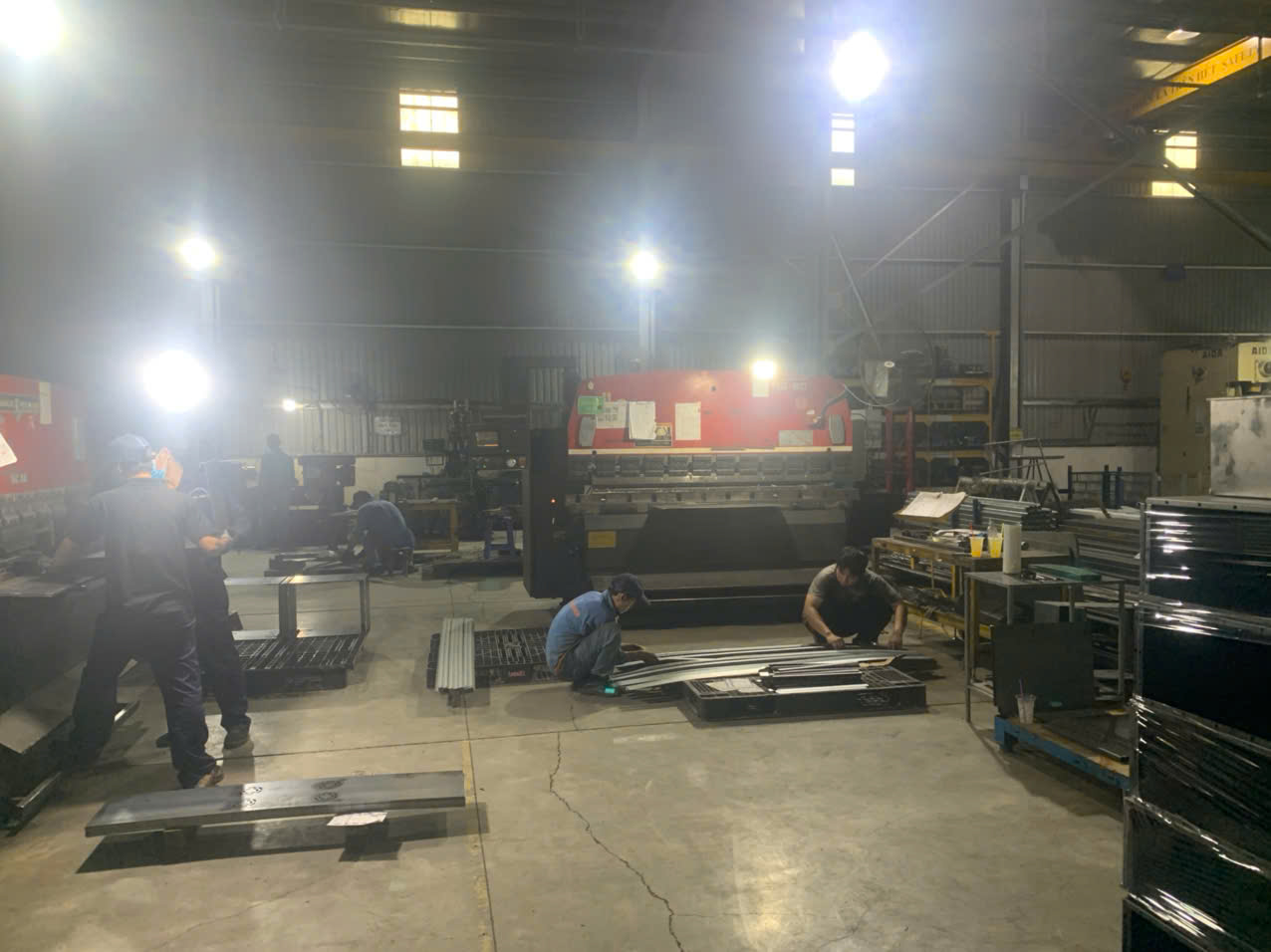
Vietnamese stamping parts suppliers boost cost competitiveness in the U.S. market by leveraging Section 301 tariff avoidance, 30–50% lower progressive die tooling costs, and 45–55% lower labor wages than coastal China, delivering a total landed cost 25–35% lower for U.S.-bound stamped metal parts.
This article breaks down exactly how to capture those savings. We will cover total landed costs, tariff advantages, quality control, and payment terms — the four pillars that determine whether sourcing stamping parts from Vietnam actually works for your bottom line.
How can I reduce total landed costs when sourcing stamping parts from Vietnam?
When our Vietnam office team ran a side-by-side cost breakdown for a U.S. client's mounting bracket program last year, the numbers told a clear story — and it was not just about piece price.
You reduce total landed costs by combining Vietnam's lower piece prices (30–50% below U.S. domestic), near-zero MFN tariff rates (0–3.5%), and competitive tooling investments, then managing logistics with buffer stock strategies and lean freight consolidation to keep door-to-door costs predictable.

Why Piece Price Alone Is Misleading
Many purchasing managers focus on the per-unit quote. That is a mistake. Total landed cost (TLC) includes the piece price, tooling amortization 1, tariff duties, ocean freight and logistics costs, inspection fees, and warehousing. When you add Section 301 tariffs 2 of 25–145% on Chinese-origin stampings, a seemingly cheap quote from China becomes expensive at the U.S. port.
From our experience coordinating shipments from both China and Vietnam to U.S. clients, the TLC calculation flips the script. A stamped bracket 3 quoted at $0.50 from a Chinese supplier, after a 25% tariff, lands at $0.625. The same bracket from a Vietnamese supplier might quote at $0.48, and with a 0–3.5% MFN rate 4, it lands at roughly $0.497. Multiply that gap across 100,000 units per year and the savings are real.
The TLC Breakdown Table
| Cost Component | Vietnam (per unit) | China (per unit) | U.S. Domestic (per unit) |
|---|---|---|---|
| Piece price | $0.45–$0.50 | $0.42–$0.50 | $0.80–$1.20 |
| U.S. import tariff | 0–3.5% | 25–145% | N/A |
| Ocean freight (allocated) | $0.03–$0.05 | $0.02–$0.04 | N/A |
| Tooling amortization (per unit) | $0.02–$0.04 | $0.04–$0.06 | $0.08–$0.15 |
| Inspection & compliance | $0.01 | $0.01 | $0.005 |
| Estimated landed cost | $0.52–$0.62 | $0.56–$0.82 | $0.89–$1.36 |
Lead Time and Inventory Planning
Ocean lead times from Vietnam to U.S. West Coast ports run 5–8 weeks. That is comparable to China. The key to lead time optimization is building 6–10 weeks of buffer stock at a U.S.-based warehouse or third-party logistics 5 (3PL) facility. We help clients set up vendor-managed inventory programs so that parts arrive before they are needed, not after a production line stops.
Freight and logistics costs can spike during peak shipping seasons. We recommend locking in quarterly freight contracts and consolidating shipments to fill containers efficiently. A half-empty container doubles your per-unit freight allocation.
Raw Material Procurement Advantage
Vietnam's proximity to regional steel mills — especially in Japan, South Korea, and Taiwan — gives local stamping factories competitive access to raw material procurement channels. Coil steel and sheet metal prices from these regional sources are often lower than what Chinese coastal factories pay for the same grades, because Vietnam's free trade agreements reduce import duties on raw materials entering the country.
What tariff advantages can I gain by shifting my stamping supply chain to Vietnam?
One conversation changed how I explain tariffs to buyers. A purchasing manager in Ohio told me he had been paying a 25% surcharge on every shipment from China for two years without realizing a compliant alternative existed just one country over.
By shifting your stamping supply chain to Vietnam under the China Plus One strategy, you avoid U.S. Section 301 tariffs of 25–145% on Chinese metal stampings and instead pay standard MFN rates of only 0–3.5%, saving thousands of dollars annually on even moderate-volume programs.

How Section 301 Tariffs Work Against You
The U.S. imposed Section 301 tariffs on a broad range of Chinese goods, including stamped metal parts, brackets, clips, and hardware. Depending on the HTS code 6, these tariffs add 25% — and in some categories up to 145% — on top of the standard duty rate. For a company importing 100,000 stamped brackets per year at $0.50 each, a 25% tariff alone costs $12,500 annually. That is money going directly to customs, not to your product or your margin.
Vietnam's MFN Rate Advantage
Vietnamese-origin stamping parts enter the U.S. at Most Favored Nation rates, typically between 0% and 3.5%. This is a structural advantage rooted in trade policy, not a temporary loophole. As long as parts are genuinely manufactured in Vietnam — meaning the stamping, forming, and finishing operations happen on Vietnamese soil — they qualify.
| Tariff Scenario | China-Origin Rate | Vietnam-Origin Rate | Annual Savings (100K units at $0.50) |
|---|---|---|---|
| Standard HTS bracket | 25% | 0–3.5% | $10,750–$12,500 |
| Higher-tariff HTS code | 54.5% | 0–3.5% | $25,500–$27,250 |
| Maximum exposure HTS | 145% | 0–3.5% | $70,750–$72,500 |
Compliance Is Non-Negotiable
The tariff advantage only holds if origin documentation is airtight. U.S. Customs and Border Protection (CBP) scrutinizes imports that appear to be Chinese goods re-routed through Vietnam — so-called "transshipment." Our Vietnam team maintains full production records for every order: raw material purchase invoices from regional steel suppliers, in-process stamping and forming records, and the final Certificate of Origin (CO Form B) issued by Vietnamese trade authorities.
This "transformation story" proves that the parts were genuinely manufactured in Vietnam, not just packaged there. We keep records of every step — from coil slitting to progressive die stamping to surface finishing — so our clients can present a clean compliance file if CBP ever requests one.
Supply Chain Diversification Beyond Tariffs
Tariff avoidance is the immediate financial win, but the strategic benefit of supply chain diversification 7 is equally important. Companies that rely on a single-country source face concentration risk. Political tensions, pandemic shutdowns, or sudden tariff escalations can disrupt an entire product line overnight. Vietnam offers a stable alternative. Its government actively courts foreign manufacturers, and its trade agreements — including EVFTA and CPTPP — open doors to European and Asia-Pacific markets as well. For a detailed comparison of how Vietnamese suppliers compare to Chinese suppliers for stamping parts, the cost and risk differences are well-documented.
How do I ensure quality control while cutting costs with Vietnamese stamping suppliers?
A few years ago, one of our U.S. clients rejected an entire container of stamped clips from a previous Asian supplier because the hole positions were off by 0.15 mm — a tolerance the factory had simply ignored. That experience taught us that cost savings mean nothing if parts fail at incoming inspection.
You ensure quality control by selecting Vietnamese stamping suppliers with IATF 16949 certification or equivalent QMS, implementing PPAP documentation before mass production, conducting in-process SPC monitoring, and performing final inspections with calibrated CMM equipment — all achievable while maintaining Vietnam's 25–35% cost advantage.

The Japanese Training Factor
Vietnam's precision manufacturing workforce was largely trained by Japanese and Korean companies that established motorcycle, automotive, and electronics operations in the country over the past two decades. This means that operators on automated production lines understand concepts like poka-yoke (mistake-proofing), 5S workplace organization 8, and statistical process control. It is not theory for them — it is daily practice.
Our Vietnam office conducts supplier audits that specifically evaluate a supplier’s competitiveness when sourcing stamping parts from Vietnam. We look at whether a factory's quality system was built from scratch or inherited from a Japanese OEM partnership. The difference shows up in scrap rates, first-pass yield, and how operators respond to out-of-tolerance readings.
The PPAP and Process Control Framework
For U.S. buyers — especially those supplying to automotive or aerospace OEMs — the Production Part Approval Process 9 (PPAP) is the gold standard. We guide Vietnamese stamping factories through Level 3 PPAP submissions, which include:
- Design records and engineering change documents — ensuring the factory works from the latest revision.
- Process flow diagrams and control plans — mapping every operation from blanking to final packaging.
- Dimensional results from CMM or optical measurement — verifying critical-to-quality (CTQ) dimensions.
- Material certifications — confirming alloy grade, hardness, and coating thickness.
- Capability studies (Cpk) — proving the process can hold tolerances consistently, not just on one sample.
Design for Vietnam: Optimize Before You Quote
One underappreciated cost-saving lever is what we call "Design for Manufacturing" consultation. Before a part goes to production, our engineering team reviews the drawing and flags opportunities to reduce cost without sacrificing function. Here are common examples:
| Design Change | Cost Impact | Quality Impact |
|---|---|---|
| Relax tolerance from ±0.01 mm to ±0.05 mm on non-critical features | 15–25% tooling cost reduction | No functional change |
| Standardize hole sizes to reduce punch inventory | 5–10% die cost reduction | Improved die life |
| Add bend relief notches at corners | Reduces cracking, lowers rejection rate | Better part consistency |
| Specify surface finish by Ra value instead of subjective description | Eliminates rework disputes | Clearer acceptance criteria |
This early supplier involvement approach catches problems at the drawing stage, not on the production floor. It is far cheaper to change a CAD file than to rework a progressive die.
Ongoing Inspection Discipline
Cost cutting fails when inspection is relaxed. We maintain a strict protocol: first-article inspection before mass production begins, in-process checks at defined intervals (typically every 500–1,000 strokes), and 100% final inspection for critical dimensions on the first three production runs. After the process is proven stable, we shift to AQL-based sampling — but we never skip the data.
Our PPAP documentation and process control records travel with every shipment. When a U.S. buyer's incoming quality team opens the box, they find a complete inspection report, dimensional data, and material certs. That is how you build trust and get it right the first time.
Can I negotiate better payment terms with Vietnamese stamping parts manufacturers to improve my cash flow?
During a recent project kickoff call, a U.S. purchasing manager told me bluntly: "I can find a good price anywhere. What I cannot find is a supplier willing to give me 60-day terms on a new program." That single constraint — cash flow — was blocking him from switching suppliers.
Yes, you can negotiate 60–90 day open account (credit) payment terms with established Vietnamese stamping manufacturers, especially when working through experienced contract manufacturing services partners who absorb the financial risk and bridge the gap between factory payment cycles and U.S. buyer cash flow needs.
Why Payment Terms Matter More Than Price
A 5% price reduction means little if you must wire 50% upfront and the remaining 50% before shipment. That structure locks up working capital for 8–12 weeks while parts are in transit. For mid-size U.S. sourcing companies managing multiple programs, the cash flow impact of prepayment terms can be more damaging than a higher piece price.
The Standard Payment Landscape
Most Vietnamese stamping factories operate on tight margins and limited credit lines. Their default terms typically look like this:
| Payment Stage | Typical Factory Requirement | Impact on Buyer Cash Flow |
|---|---|---|
| Tooling deposit | 50% upfront, 50% on approval | Cash locked during 6–10 week tooling build |
| First production order | 30% deposit, 70% before shipment (T/T) | Cash committed before goods arrive in the U.S. |
| Repeat orders | 30% deposit, 70% before shipment | Ongoing cash flow pressure |
This is where a supply chain partner changes the equation. Because our Singapore entity has established relationships and credit histories with Vietnamese factories, we can offer U.S. buyers open account terms — typically net 60 or net 90 days from shipment date. We pay the factory on their terms and extend credit to the buyer on ours.
How Open Account Terms Work in Practice
Here is the flow:
- Buyer places order with DEWIN under agreed net-60 or net-90 terms.
- We issue the PO to the Vietnamese factory and pay their required deposits and balances on schedule.
- Parts ship, and the buyer receives goods at their U.S. warehouse or 3PL.
- Invoice clock starts from the shipment date, not the order date.
- Buyer pays within the agreed credit window.
This structure means the buyer does not pay a single dollar until parts are on the water — or in many cases, until parts have already arrived and been inspected. For companies managing multiple product lines, this frees up significant working capital.
Tooling Ownership and Amortization Options
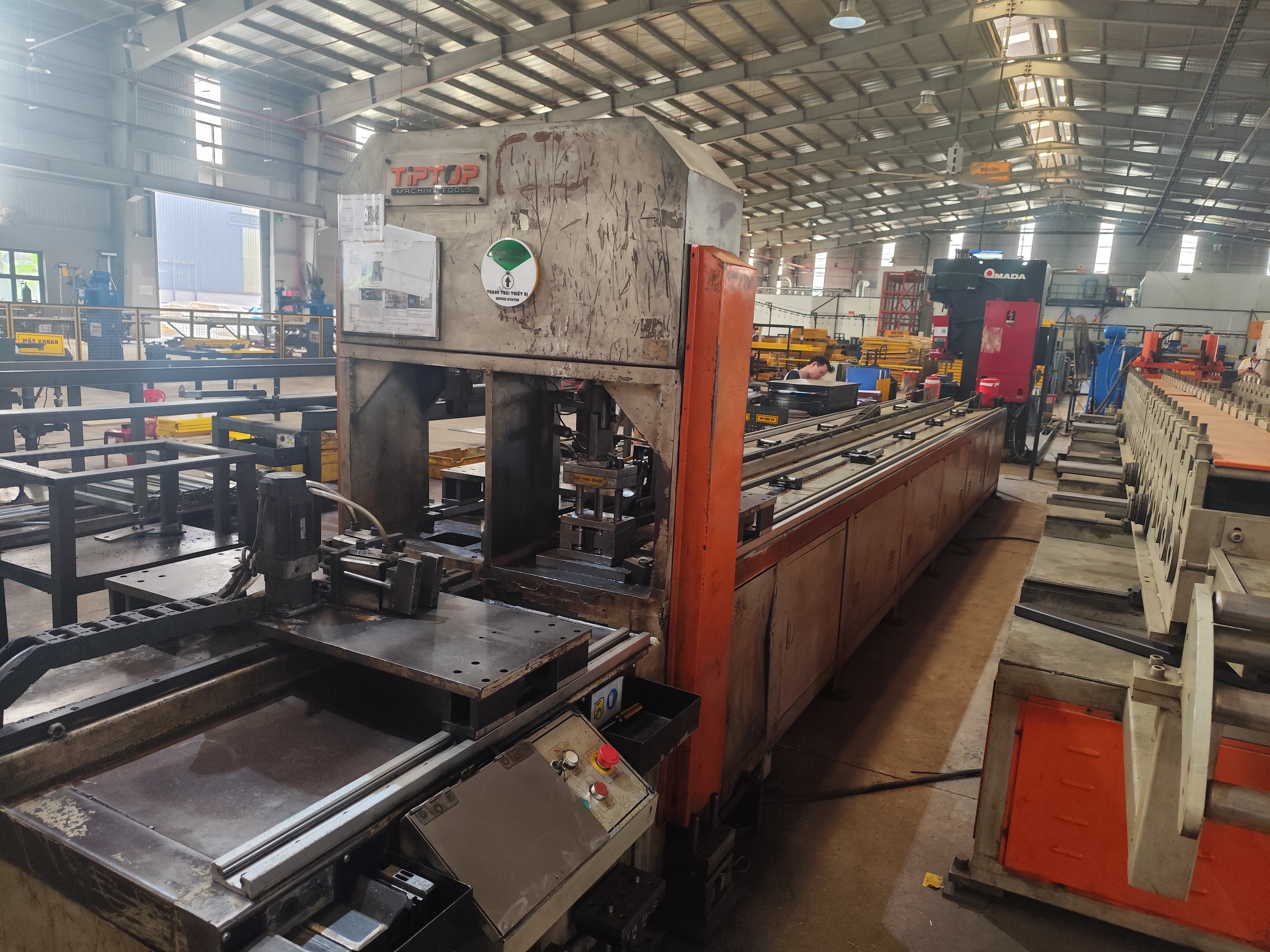
Beyond payment terms on production orders, tooling economics deserve attention. A 6-station progressive die built in Vietnam costs $12,000–$18,000 — already 30–50% less than the same die in China. But the payment structure matters too.
We offer two models:
- Buyer-owned tooling: The buyer pays for the die upfront (or in two installments). They own it outright. If the supplier relationship changes, the die can be transferred — we include contractual die mobility clauses in every agreement.
- Amortized tooling: The tooling cost is spread across a defined volume of parts. This lowers the upfront investment but increases the per-unit price until the volume threshold is met.
Both models protect the buyer. The die mobility clause is critical — it means that if a factory underperforms, we can physically move the die to another qualified facility. This turns a potential re-tooling crisis into a simple transfer exercise, saving weeks and thousands of dollars.
Conclusion
Vietnamese stamping parts suppliers offer U.S. buyers a powerful combination: tariff savings, lower tooling and labor costs, and reliable quality when managed with proper process control and experienced supply chain partners.
Frequently Asked Questions
How can I reduce total landed costs when sourcing stamping parts from Vietnam?
When our Vietnam office team ran a side-by-side cost breakdown for a U.S. client's mounting bracket program last year, the numbers told a clear story — and it was not just about piece price.
What tariff advantages can I gain by shifting my stamping supply chain to Vietnam?
One conversation changed how I explain tariffs to buyers. A purchasing manager in Ohio told me he had been paying a 25% surcharge on every shipment from China for two years without realizing a compliant alternative existed just one country over.
How do I ensure quality control while cutting costs with Vietnamese stamping suppliers?
A few years ago, one of our U.S. clients rejected an entire container of stamped clips from a previous Asian supplier because the hole positions were off by 0.15 mm — a tolerance the factory had simply ignored. That experience taught us that cost savings mean nothing if parts fail at incoming inspection.
Footnotes
1. Explains the accounting method for spreading the cost of manufacturing tools over time. ↩︎
2. Official USTR hub for Section 301 investigations and current tariff actions. ↩︎
3. Provides technical context on the metal forming process used to create industrial components. ↩︎
4. Defines the international trade principle for non-discriminatory treatment between trading partners. ↩︎
5. Explains the role of outsourced logistics providers in managing global supply chains. ↩︎
6. Official U.S. government tool for classifying goods and determining applicable import duties. ↩︎
7. Official statement on strengthening global supply chains through diversification and international partnerships. ↩︎
8. Official EPA page specifically detailing the 5S methodology and its pillars. ↩︎
9. Industry standard for ensuring manufacturing processes consistently meet customer quality requirements. ↩︎