When specifying stainless steel precision components—whether CNC machined, stamped, or cast—procurement engineers frequently debate between chemical passivation and electropolishing (EP). While both surface treatments dramatically enhance corrosion resistance by optimizing the passive chromium oxide layer, they operate on fundamentally different chemical and physical mechanisms, yield distinct surface finishes, and demand specific tolerance allowances.
As global OEMs shift manufacturing contracts from China to Vietnam to diversify supply chains and mitigate punitive trade duties, understanding the technical and regional ecosystem capabilities for stainless steel surface finishing in Vietnam is essential.
Quick Answer for Sourcing Engineers
- Chemical Passivation (ASTM A967 / AMS 2700) is a non-destructive chemical immersion (citric or nitric acid) that dissolves free iron and surface contaminants without altering part dimensions ($\Delta d < 0.1,\mu\text{m}$) or modifying surface roughness ($Ra$). It does not deburr or brighten the part.
- Electropolishing (ASTM B912 / ISO 15730) is an electrochemical process utilizing an acid electrolyte bath and direct electrical current (DC) to selectively dissolve surface micro-peaks. It reduces surface roughness ($Ra$ reduced by 30% to 50%), removes micro-burrs, yields a mirror-like finish, and removes measurable material (typically $5,\mu\text{m}\text{ to }25,\mu\text{m}$ per surface).
- Cost & Lead Time: Electropolishing typically incurs higher tooling and operating costs than chemical passivation due to custom racking, high electrical current density, and chemical bath maintenance.
1. Metallurgical & Chemical Fundamentals
Stainless steel derives its corrosion resistance from a microscopically thin, self-healing chromium oxide ($\text{Cr}_2\text{O}_3$) passive film (typically 1 to 5 nanometers thick). During CNC machining, stamping, laser cutting, or bending, cutting tools transfer microscopic particles of free iron onto the workpiece. In atmospheric moisture, these free iron inclusions oxidize into iron oxide (rust) before the chromium can react with ambient oxygen, causing localized pitting and galvanic corrosion.
graph TD
    subgraph Raw ["1. Raw Machined Surface"]
        R1["Micro-peaks & Valleys (Tool Marks)"]
        R2["Exogenous Free Iron & Smear Layer"]
        R1 --- R2
        R2 -->|High Risk| CORR["Atmospheric Corrosion & Galvanic Pitting"]
    end

    subgraph Passivation ["2. Chemical Passivation (ASTM A967)"]
        P1["Citric or Nitric Acid Immersion"]
        P2["Selective Free Iron Dissolution"]
        P3["Intact Geometry (Δd < 0.1 µm, Ra unchanged)"]
        P4["Pure Cr2O3 Film (Cr/Fe Ratio ≥ 1.5)"]
        P1 --> P2 --> P3 --> P4
    end

    subgraph Electropolish ["3. Electropolishing (ASTM B912)"]
        E1["Phosphoric/Sulfuric Electrolyte + DC Current"]
        E2["Anodic Field Peak Concentration Dissolution"]
        E3["Planarized Micro-peaks (Ra reduced 30% to 50%)"]
        E4["Deep Chromium Enrichment (Cr/Fe Ratio ≥ 2.0 to 3.5)"]
        E1 --> E2 --> E3 --> E4
    end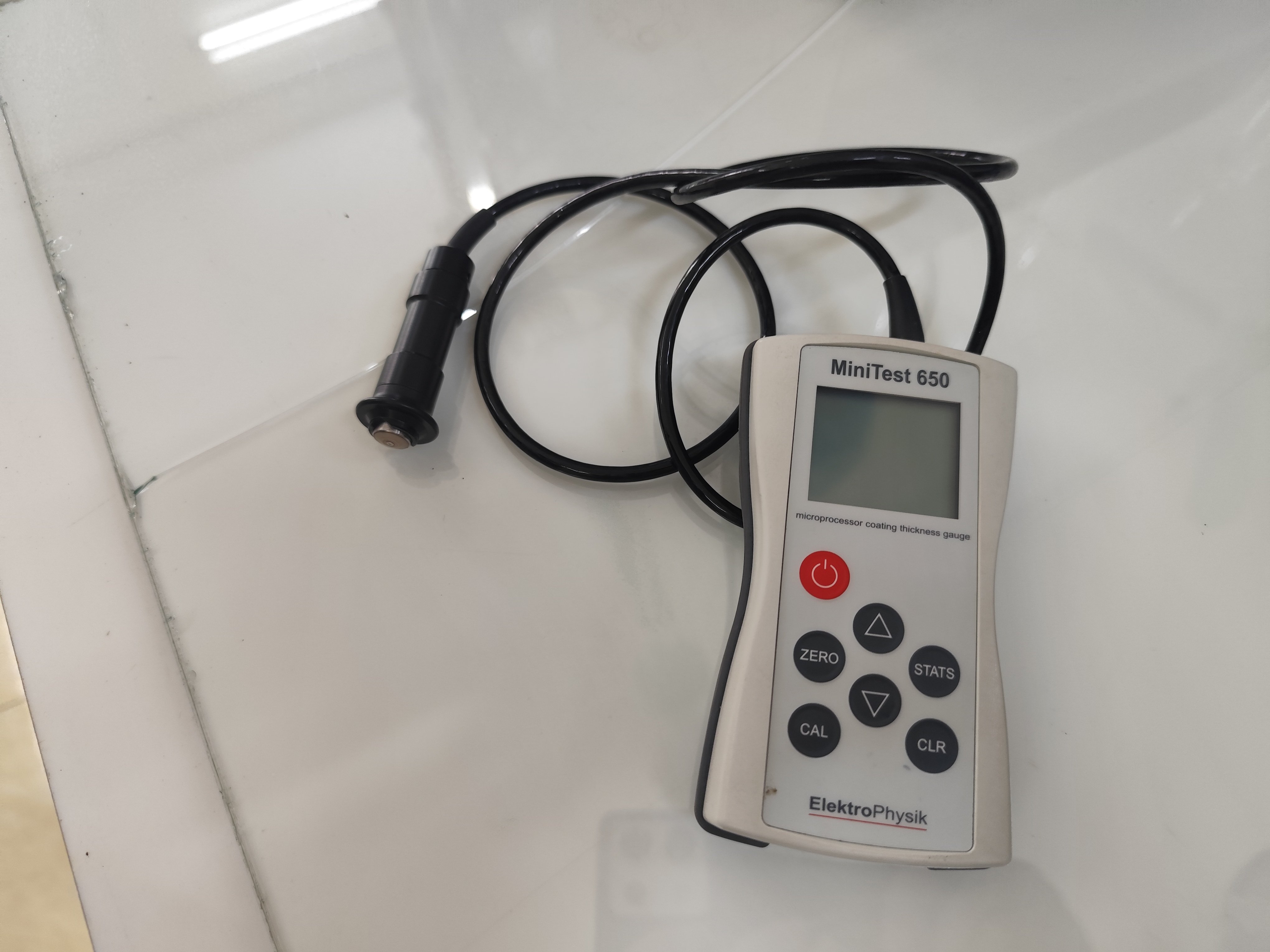
Chemical Passivation (ASTM A967 / AMS 2700)
Passivation is an immersion treatment in an oxidizing acid bath. The acid dissolves exogenous free iron and sulfides without attacking the base stainless steel alloy. Once free iron is depleted, chromium on the surface oxidizes upon exposure to air, forming an enriched passive layer with a chromium-to-iron ($\text{Cr}/\text{Fe}$) ratio typically exceeding $1.5:1$.
Two primary chemical bath systems are specified:
- Citric Acid Passivation (ASTM A967 Citric 1 to 5): Uses organic citric acid concentrations (4% to 10% by weight) at temperatures between 20°C and 70°C. Citric acid acts as a chelating agent that selectively targets iron ions without leaching nickel or chromium. It is non-toxic, produces zero hazardous NOx fumes, and is increasingly mandated by medical and food-contact OEMs.
- Nitric Acid Passivation (ASTM A967 Nitric 1 to 5): Uses 20% to 50% nitric acid solutions, sometimes augmented with sodium dichromate for martensitic or precipitation-hardened grades (e.g., 410, 420, 440C, 17-4 PH). While historically standard, nitric acid requires rigorous environmental scrubbing and effluent neutralization.
Electropolishing (ASTM B912 / ISO 15730)
Electropolishing is often described as “reverse electroplating.” The stainless steel workpiece serves as the anode in an electrolytic bath—typically composed of concentrated phosphoric acid ($\text{H}_3\text{PO}_4$) and sulfuric acid ($\text{H}_2\text{SO}_4$)—connected to a high-amperage direct current (DC) power supply with lead or copper cathodes.
As current flows, metal ions dissolve from the part into the electrolyte. Because electrical field intensity concentrates at micro-peaks and sharp edges, high points dissolve faster than valleys. This produces three distinct mechanical benefits:
- Micro-deburring: Burrs with high surface-area-to-volume ratios dissolve rapidly.
- Surface smoothing: Micro-roughness ($Ra$) is reduced by 30% to 50%, eliminating micro-crevices where bacteria, particulate matter, or chlorides can lodge.
- Extreme Passive Film Enrichment: Because iron and nickel dissolve more readily than chromium in the electrochemical bath, the remaining surface layer attains a $\text{Cr}/\text{Fe}$ ratio between $2.0:1$ and $3.5:1$, providing superior resistance to crevice and pitting corrosion.
2. Engineering Comparison Matrix
The table below outlines technical criteria for evaluating chemical passivation vs. electropolishing across critical production parameters:
| Engineering Parameter | Chemical Passivation | Electropolishing |
|---|---|---|
| Governing Standards | ASTM A967, AMS 2700, ISO 16048 | ASTM B912, ISO 15730, ASME BPE |
| Operating Mechanism | Pure chemical dissolution of free iron | Anodic electrochemical metal removal |
| Dimensional Stock Removal ($\Delta d$) | Negligible ($< 0.1,\mu\text{m}$ / $< 0.000004’’$) | Measurable: $5,\mu\text{m}\text{ to }25,\mu\text{m}$ ($0.0002’‘\text{ to }0.001’’$) per side |
| Surface Roughness Impact ($Ra$) | No change (maintains pre-treatment $Ra$) | Reduced by 30%–50% (can achieve $Ra < 0.2,\mu\text{m}$ / $8,\mu\text{in}$) |
| Visual Appearance | Matte / clean uniform metallic finish | High-luster, brilliant reflective / mirror finish |
| Micro-Deburring | None | Highly effective for microscopic machining burrs |
| Corrosion Resistance (ASTM B117) | High: 304 (96–150 hrs); 316L (200–300 hrs) | Superior: 304 (300–500 hrs); 316L (500–1000+ hrs) |
| Cr-to-Fe Surface Ratio | $\approx 1.5:1\text{ to }1.8:1$ | $\ge 2.0:1\text{ to }3.5:1$ |
| Internal / Blind Hole Coverage | Excellent (liquid penetration into all cavities) | Limited without auxiliary internal cathodes |
| Tooling & Fixturing Costs | Minimal (bulk baskets or simple racks) | Moderate to High (custom titanium/copper racks) |
| Common Industrial Use Cases | Industrial fasteners, automotive brackets, hardware | Semiconductor UHP valves, pharma vessels, medical implants |
3. Dimensional Tolerance & Pre-Machining Allowances
A common defect in outsourced stainless steel manufacturing is dimensional failure following surface treatment. When designing drawings and purchase orders:
Allowances for Chemical Passivation
Because chemical passivation does not remove base metal, drawings do not require pre-treatment machining allowances. Critical tolerances such as bearing bores (e.g., ISO H7), thread pitch diameters (e.g., 6H/6g), and ground sealing faces can be machined directly to finished print dimensions prior to passivation.
Allowances for Electropolishing
Electropolishing removes measurable surface metal. If an engineer specifies a $\pm 0.010,\text{mm}$ bore tolerance without noting that dimensions apply after electropolishing, the part will likely fail inspection.
- External Diameters / Thicknesses: Metal removal reduces outside dimensions by $2 \times \Delta d$. For example, a $12.700,\text{mm}$ pin electropolished with $0.010,\text{mm}$ material removal will measure $12.680,\text{mm}$.
- Internal Diameters / Bores: Bores expand by $2 \times \Delta d$.
- Threads: Electropolishing attacks the sharp crests and pitch flanks of external threads faster than the root. External threads must be cut slightly oversized, or masked if pitch engagement is critical.
- Drawing Callout Best Practice: Always state on the title block:
“All dimensions, tolerances, and surface roughness callouts apply AFTER electropolishing per ASTM B912.”
4. The Vietnam Precision Finishing Ecosystem
Vietnam’s industrial manufacturing base has evolved rapidly from basic assembly into high-precision contract manufacturing, backed by investments in CNC milling, multi-axis Swiss turning, stamping, and metal surface finishing.
flowchart TB
    subgraph North ["Northern Vietnam Precision Ecosystem (Bac Ninh, Hai Phong, Vinh Phuc)"]
        direction TB
        N1["Electronics, Medical & Aerospace Clusters"]
        N2["Cleanroom Ultrasonic Degreasing & Micro-Passivation"]
        N3["Automated Small-Part Immersion Lines"]
        N1 --- N2 --- N3
    end

    subgraph South ["Southern Vietnam Industrial Ecosystem (Binh Duong, Dong Nai, HCMC)"]
        direction TB
        S1["Heavy Commercial & Precision Mechanical Clusters"]
        S2["Large-Tank Electropolishing (Tanks Up to 4m)"]
        S3["Centralized WWTP & Environmental Compliance (QCVN 40:2011)"]
        S1 --- S2 --- S3
    end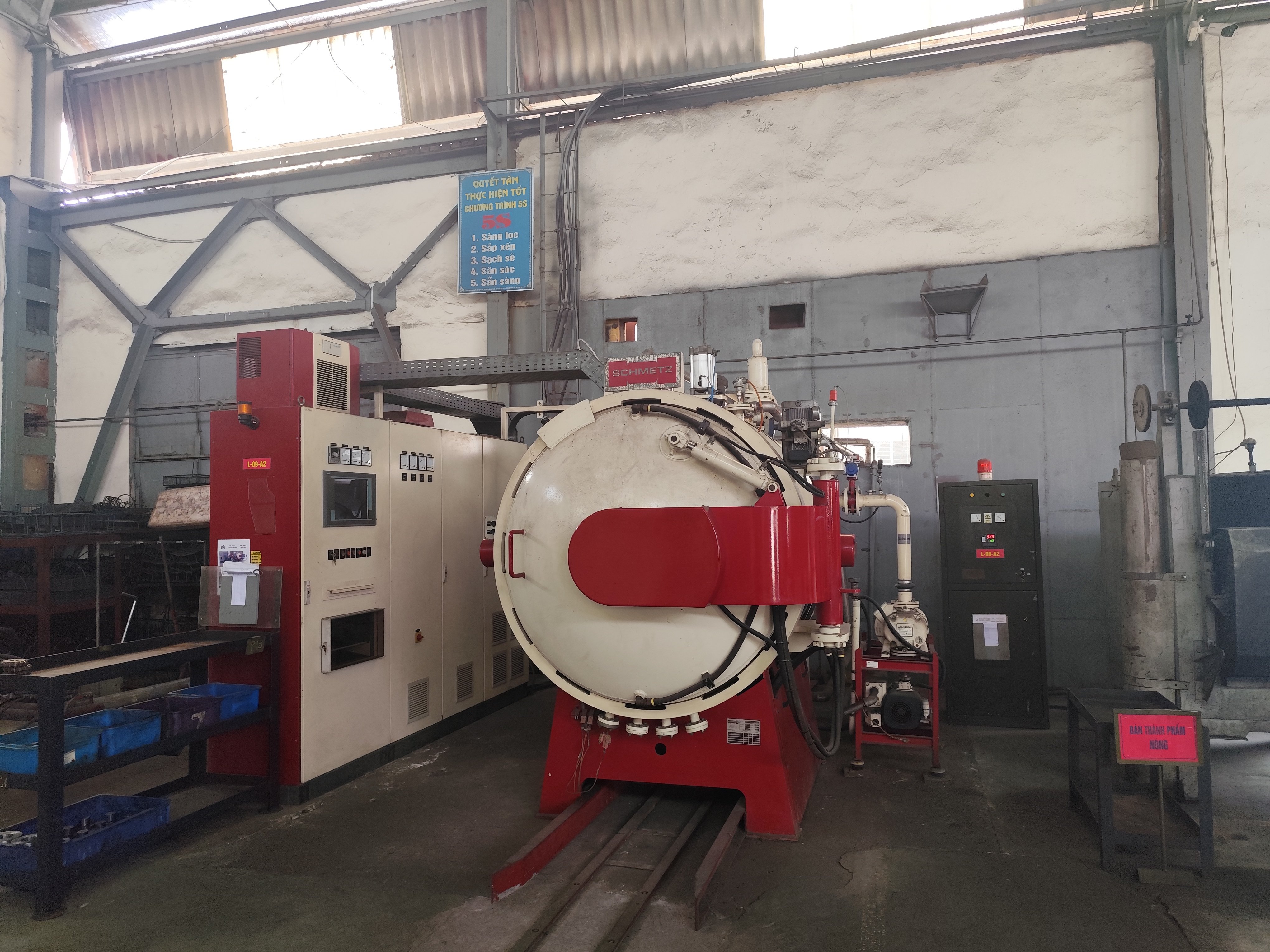
Southern Vietnam Finishing Cluster (Binh Duong & Dong Nai)
- Binh Duong Province: Industrial zones including VSIP I & II (Vietnam-Singapore Industrial Park), Song Than, and My Phuoc host dedicated surface treatment facilities equipped with automated chemical lines.
- Dong Nai Province: Zones such as Amata City Bien Hoa and Nhon Trach feature heavy industrial finishing plants capable of handling large electropolished vessels (up to 4 meters), piping manifolds, and high-volume stamped assemblies.
- Environmental Wastewater Compliance: Vietnam enforces strict environmental regulations for metal finishing operations under Decree 08/2022/ND-CP and National Technical Regulation QCVN 40:2011/BTNMT (National Technical Regulation on Industrial Wastewater). Licensed finishing suppliers must operate within designated industrial zones equipped with centralized Class-A wastewater treatment plants (WWTP) capable of monitoring heavy metal concentrations ($\text{Cr}^{6+}$, $\text{Ni}$, $\text{Cu}$, $\text{Zn}$) and acidic effluent neutralization.
Northern Vietnam Precision Hub (Bac Ninh & Hai Phong)
- Bac Ninh & Hai Phong: Anchored by multinational electronics ecosystems (Samsung, Foxconn, Pegatron), Northern Vietnam specializes in micro-passivation, cleanroom ultrasonic degreasing, and automated passivation lines for miniature precision parts.
- Modern facilities routinely maintain automated bath temperature monitoring, chemical titration logs, and vacuum de-aeration for complex miniature geometries.
5. China-to-Vietnam Sourcing Transition & Tariff Economics
For Western procurement teams, moving stainless steel component manufacturing from China to Vietnam delivers both risk diversification and direct commercial advantages:
- US Section 301 Tariff Mitigation: Stainless steel fabricated components, valves, fasteners, and turned assemblies exported from China into the United States face punitive 25% tariffs under US Section 301 (covering HTS subheadings within Chapters 73 and 84). By contrast, originating goods manufactured in Vietnam enter under normal Most-Favored-Nation (MFN) tariff schedules (typically 0% to 3.5%), eliminating the 25% punitive surcharge on landed costs.
- Tooling Transfer & Regional Qualification: When relocating progressive stamping dies, plastic molds, or CNC fixtures from China to Vietnam, tooling should be inspected for wear and dimensional alignment before running pilot batches. Sourcing engineers should require first article inspection reports (FAIR) alongside verified material test certificates (MTC 3.1) confirming alloy chemistry (e.g., proper nickel and molybdenum content in 316L to prevent premature pitting).
- Dual Sourcing Resilience: Establishing qualified contract manufacturers in Vietnam protects supply chains against regional export restrictions, energy rationing, and single-origin supply shocks.
6. Verification & Quality Acceptance Testing (ASTM A967)
Specifying “passivate per print” without defining the acceptance test is a primary cause of supplier disputes. ASTM A967 defines six standardized verification practice methods:
- Practice A — Water Immersion Test: Parts are cleaned and immersed in distilled or deionized water for a minimum of 24 hours at room temperature. Inspection requires zero rust or staining on critical surfaces. Ideal for austenitic grades (304, 316L).
- Practice B — High Humidity Test: Workpieces are placed in a humidity cabinet at 97% to 100% relative humidity at 38°C (100°F) for 24 to 240 hours. Any rust formation indicates incomplete passivation.
- Practice C — Salt Spray Test (ASTM B117): Parts are exposed to a 5% neutral salt fog at 35°C for a specified duration (typically 24 to 96 hours for passivated parts, and 200 to 500+ hours for electropolished parts).
- Practice D — Copper Sulfate Test: A copper sulfate ($\text{CuSO}_4$) and sulfuric acid solution is applied to the component surface for 6 minutes. If free iron is present, copper plates out as a visible pink copper stain. Note: Not suitable for martensitic (400-series) alloys due to false positives.
- Practice E — Potassium Ferricyanide Test: Used when high sensitivity is needed for detecting trace free iron on food or pharmaceutical processing equipment. A clear solution turns deep Prussian blue in the presence of iron ions.
- Practice F — Free Iron Swab Test: Fast chemical swab test for large structural parts where immersion testing is impractical.
When drafting an RFQ, explicitly state:
- Alloy Grade: e.g., AISI 316L (UNS S31603).
- Treatment Standard: e.g., ASTM A967 Citric 2 or ASTM B912.
- Verification Practice: e.g., ASTM A967 Practice A (Water Immersion, 24h, zero rust accepted).
- Lot Traceability: Require chemical bath lot records and certificate of conformance (CoC) with each shipment.
Frequently Asked Questions (FAQ)
Can electropolishing replace chemical passivation?
Yes. Electropolishing inherently achieves chemical passivation while simultaneously deburring and improving surface roughness. ASTM B912 specifically covers passivation by electropolishing. However, chemical passivation cannot replace electropolishing if the drawing mandates a specific surface roughness reduction ($Ra$) or microscopic deburring.
How much material does electropolishing remove from stainless steel?
Electropolishing typically removes between $0.005,\text{mm}\text{ and }0.025,\text{mm}$ ($0.0002’‘\text{ to }0.001’’$) of material per surface. Critical features such as bearing bores, tight-tolerance dowel pin holes, and fine thread pitch diameters must be pre-machined with appropriate allowances or masked prior to bath immersion.
What causes “orange peel” or pitting during electropolishing?
Defects during electropolishing usually stem from:
- Poor pre-cleaning (residual cutting oil or buffing compounds left on the metal).
- Improper electrical current density (too low causes etching; too high causes gas pitting).
- Sub-standard base material metallurgy (high non-metallic inclusions or grain boundary carbide precipitation in un-annealed stainless steel).
Why are US and European buyers relocating stainless steel fabrication to Vietnam?
Primary drivers include mitigating US Section 301 tariffs (25% on Chinese goods), diversifying supply chain concentration risks (China Plus One), and leveraging Vietnam’s expanding precision manufacturing clusters in Binh Duong, Bac Ninh, and Dong Nai, where modern facilities maintain ISO 9001 and IATF 16949 quality management systems.
Technical Sourcing Next Steps
To receive a detailed engineering quote for precision stainless steel components manufactured and surface-finished in Vietnam:
- Submit CAD Drawings: Provide 2D blueprints (PDF with geometric dimensioning and tolerancing) and 3D native models (STEP / STP).
- Define Surface Requirements: Specify applicable ASTM/AMS standards, target surface roughness ($Ra$), and required acceptance test practices.
- Indicate Annual Quantities: Specify initial pilot production batch size and expected annual volume for tooling and racking optimization.
Submit Your RFQ & Drawings to DEWIN Vietnam to initiate technical review with our precision manufacturing team.