FSW Liquid Cold Plates for AI Servers and EV Batteries: Precision Milling, Welding, and Verification
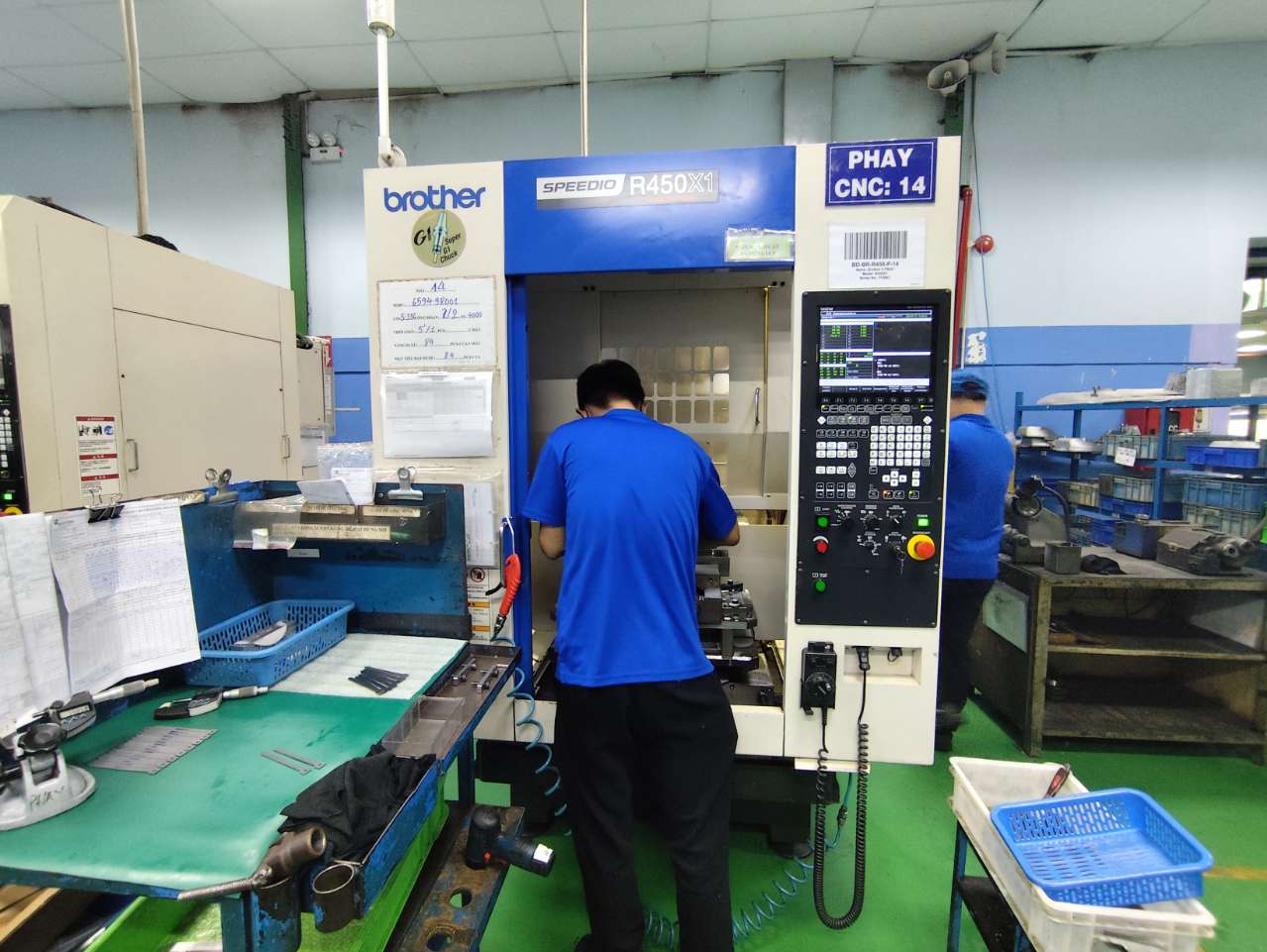
Sourcing liquid cold plates for AI server thermal management and EV battery cooling requires integrating CNC milling, micro-fin channel fabrication, solid-state friction stir welding (FSW), and non-destructive testing. Regional supplier networks maintain precision subtractive equipment, including 30 listed CNC machining suppliers and 38 factories listing CNC milling machines, to support channel profiling and plate preparation.
> Key Takeaways: > - Solid-state Friction Stir Welding (FSW) joins cold plate cover structures below the alloy melting point, eliminating weld porosity and minimizing thermal distortion. > - Complex liquid fluid channels and micro-fin placement rely on precision CNC machining services to achieve required surface flatness and fluid path alignment. > - Quality verification combines 3D coordinate measurement with hydrostatic pressure testing and helium mass-spectrometer leak detection. > - Sourcing teams can evaluate core machining infrastructure on DEWIN suppliers while confirming specialized FSW and leak detection capabilities per project during quoting.

What Manufacturing Processes Are Essential for FSW Liquid Cold Plates?
High-heat-flux liquid cold plates utilized in artificial intelligence GPU servers, power inverters, and electric vehicle battery packs demand tight thermal resistance profiles and complete leak prevention. Manufacturing these assemblies involves a multi-stage production sequence combining high-precision metal removal, internal surface area extension, and solid-state joining.
The process begins with the structural base plate, typically machined from high-thermal-conductivity aluminum or copper alloys. Internal flow channels, manifold ports, and perimeter sealing surfaces are formed using multi-axis CNC milling setups. Micro-fin inserts or direct skived fin structures are integrated into high-heat-flux zones directly above critical heat sources. These micro-fins increase the internal surface contact area with the circulating liquid coolant, optimizing heat dissipation without creating excessive fluid pressure drops.
To seal the fluid channel network without introducing thermal defects, manufacturers employ Friction Stir Welding (FSW). Unlike conventional fusion welding processes, FSW is a solid-state joining technique. A rotating shoulder tool generates friction heat and mechanical forging force to intermix the cover plate material with the base plate housing below the alloy melting point. This solid-state process avoids weld pool solidification cracking, filler-metal gas porosity, and severe thermal warping of thin-walled channel features.
``mermaid flowchart LR A[Raw Alloy Plate Stock] --> B[CNC Milling & Channel Profiling] B --> C[Micro-Fin Insert & Channel Fitting] C --> D[Friction Stir Welding Joint Sealing] D --> E[CMM Dimensional & Surface Inspection] E --> F[Hydrostatic Proof & Helium Leak Testing] ``
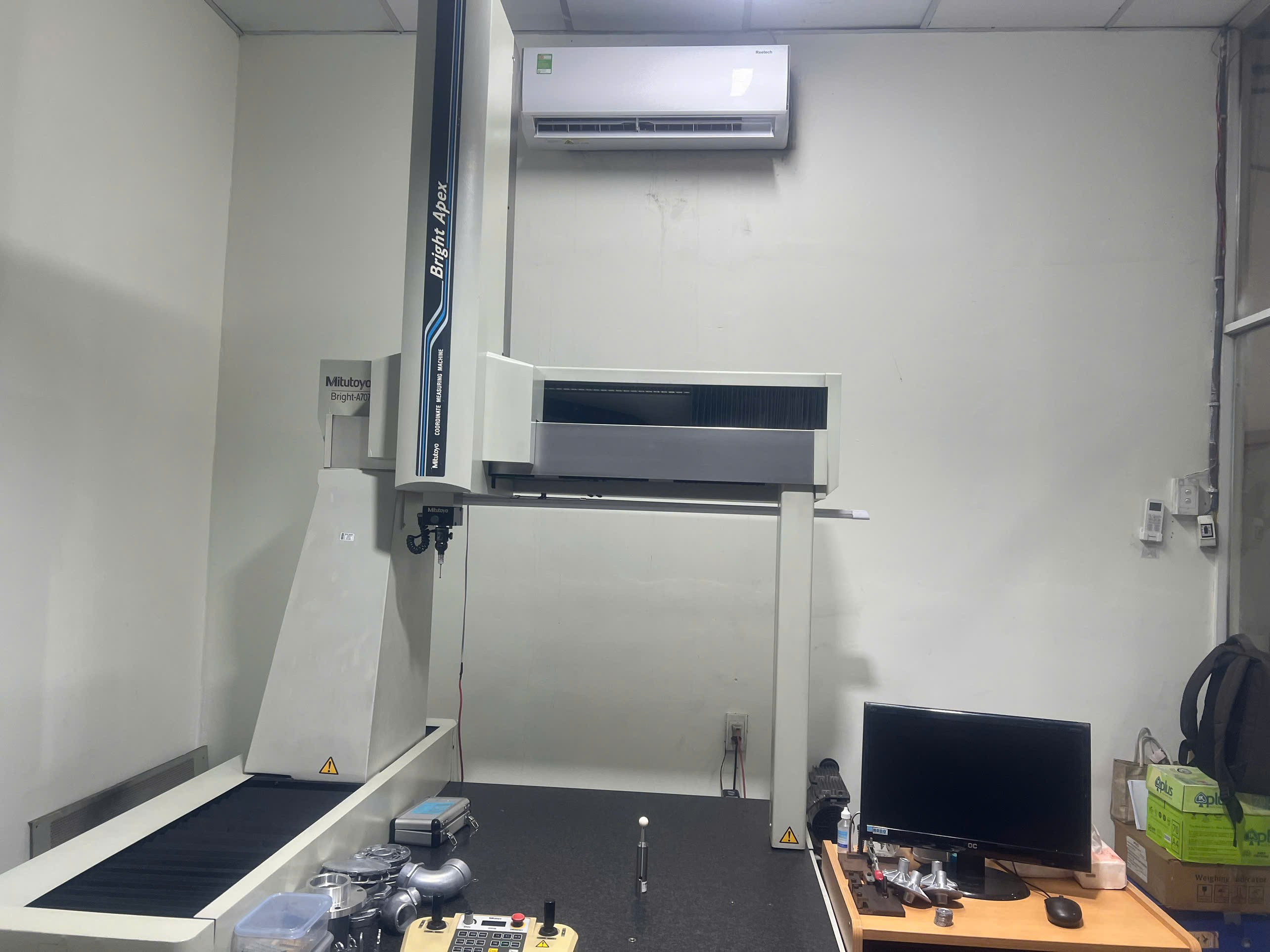
For complementary thermal enclosures and motor end-shield housings requiring integrated cooling passages, engineers frequently pair milled structures with structural castings. Sourcing teams evaluating regional production can review specialized cast shops; for instance, Minh Uy Production Technology Company Limited is listed under the Aluminum Die-Casting category on DEWIN, with factory equipment files detailing a 3D CMM and Die casting machine 1.
!Coordinate measuring machine used for dimensional inspection in a Vietnamese factory
How Do Quality Inspection Protocols Verify Hermetic Sealing and Dimensional Accuracy?
Because cold plates operate directly near electronics and server racks, structural defect prevention is critical. Quality verification spans non-destructive joint evaluation, dimensional metrology, and pressure containment checks.
Dimensional verification focuses on joint seam flatness, interface parallelism, and manifold port alignments. Precision metrology departments rely on coordinate measuring equipment; across the DEWIN database, 8 factories list 3d cmm tools and 6 factories list cmm machine units. These instruments verify that surface flatness across the mounting interface meets project specifications to maintain minimal thermal interface material thickness during final assembly.
| Manufacturing Stage | Primary Technical Objective | Quality Inspection Method | Process & Equipment Setup | | :--- | :--- | :--- | :--- | | Channel Base Machining | Channel depth & surface finish | 3D CMM / Tactile Profilometry | 38 factories listing CNC milling machine | | Micro-Fin Insertion | Fin alignment & flow gap uniformity | Optical Metrology / Gauge Pin Inspection | High-speed CNC & precision fitting workcells | | Solid-State FSW Seam | Porosity-free metallic bond | Ultrasonic Phased Array Scanning | Dedicated FSW tooling fixtures (confirmed per project) | | Hermetic Quality Control | Zero fluid passage leakage | Hydrostatic & Helium Mass Spectrometry | Sealed leak detection test chambers (confirmed per project) |
Following physical dimensional checks, the welded assembly undergoes non-destructive evaluation. Ultrasonic phased-array scanning evaluates the solid-state weld interface along the cover perimeter to confirm complete metallic bonding without void formation. To ensure structural integrity under operational pressure spikes, assemblies undergo hydrostatic proof pressure testing. Finally, hermetic integrity is validated using helium mass-spectrometer leak detection, where the internal volume is evacuated and charged with helium to detect trace escape rates under vacuum conditions.
Which Regional Capabilities Support Subtractive Machining and Assembly in Vietnam?
As global supply chains diversify thermal management hardware manufacturing across Southeast Asia, Vietnam maintains machining and casting infrastructure suitable for thermal component preparation. The DEWIN database tracks 179 total Vietnamese factories on file across 37 distinct categories, providing procurement teams with verifiable metrics regarding regional machinery availability.
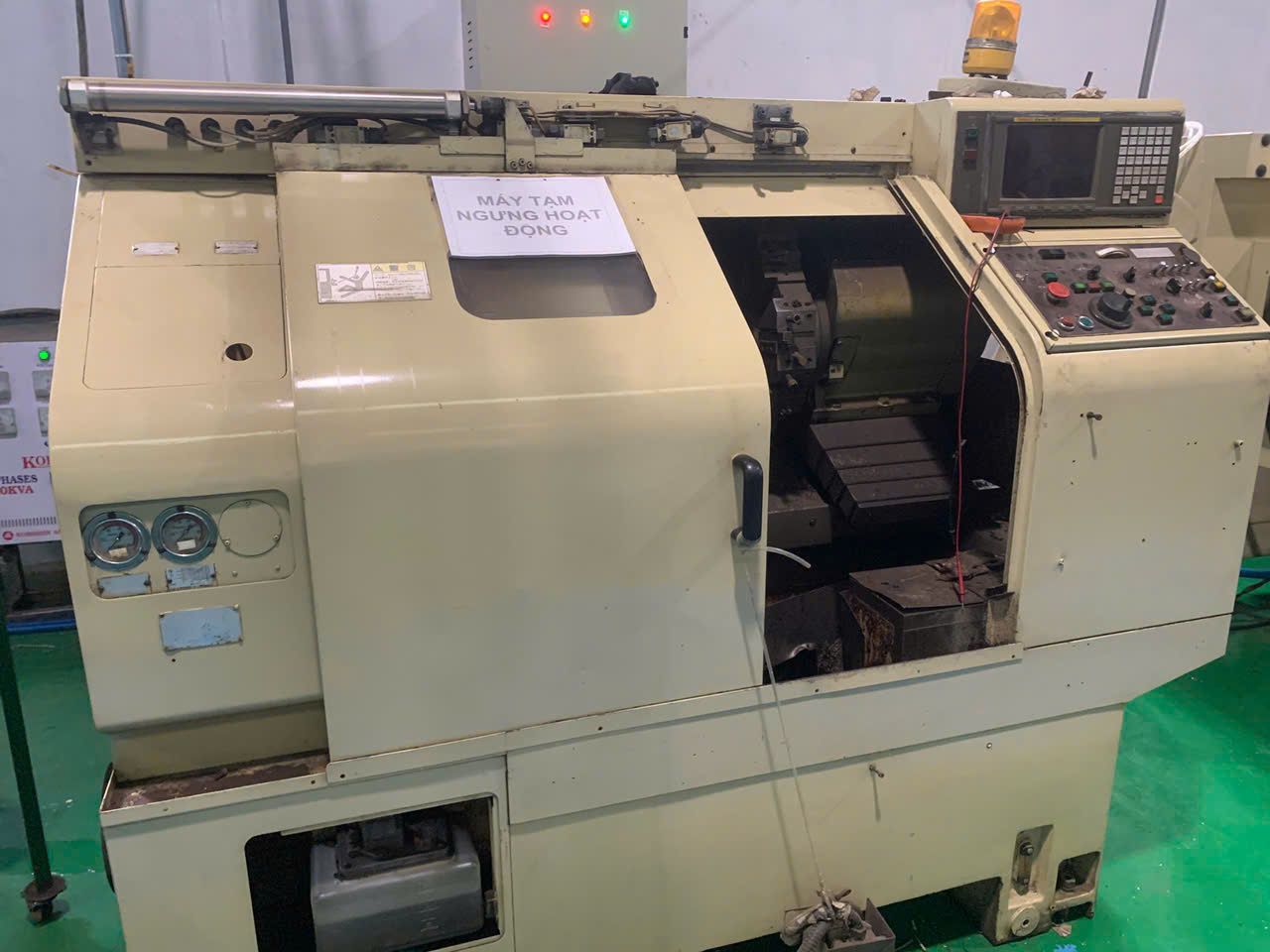
- Within this supplier landscape, precision subtractive manufacturing forms a core pillar. Currently, 30 factories are listed under the CNC Machining category, and 11 factories are listed under Aluminum Die-Casting. Specific shop-floor inventory records include:
- 38 factories list a cnc milling machine
- 30 factories list a cnc lathe machine
- 8 factories list a 3d cmm
- 6 factories list a cmm machine
- 3 factories list an aluminum die casting machine
- 4 factories list a die casting machine
Suppliers such as Mfc Trading Manufacture Joint Stock Company demonstrate this subtractive capability profile, operating as a listed CNC Machining supplier whose equipment record includes both a 3D CMM and a CNC Milling machine. While foundational milling and dimensional inspection equipment are logged directly in factory records, specialized post-machining processes such as FSW joining and helium leak detection are evaluated per project specification during the quoting stage.
To begin evaluating suppliers for customized cold plate fabrications or to submit technical drawing packages for review, engineering teams can request a quote to connect directly with verified manufacturing partners.
Engineering & Production Specification Matrix
| Process Parameter | Prototype / Short-Run Standard | Production Progressive / Hard-Tool Standard | Verification Method |
|---|---|---|---|
| Linear Dimensional Tolerance | ±0.10 mm to ±0.15 mm (ISO 2768-m) | ±0.03 mm to ±0.08 mm (ISO 2768-f) | Optical 2D/3D CMM & Go/No-Go Check Fixtures |
| Edge Burr Height Limit | ≤ 10% of material thickness | ≤ 5%–8% of material thickness | Digital Micrometer & Cross-Section Audit |
| Material & Coating Traceability | Mill Test Certificate (EN 10204 3.1) | Heat-lot MTC + RoHS/REACH + ASTM B117 Salt-Spray | Spectrometer (OES) & XRF Screening |
| Standard Tooling & Lead Time | Laser + CNC Press Brake (5–10 days) | Progressive / Transfer Die (3–5 weeks T1) | First Article Inspection (FAI) & CPK ≥ 1.33 |