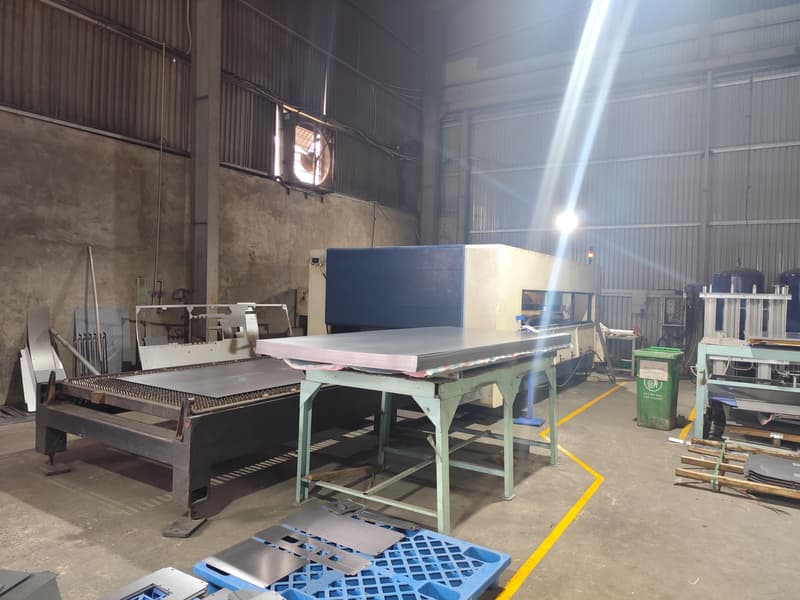
Procurement teams struggle to balance tooling amortization and unit costs when sourcing medium-volume metal parts. Selecting the wrong casting method leads to excessive tooling expense or post-processing costs. Our sourcing audit evaluates mechanical requirements to identify optimal foundry processes.
Investment casting suits medium-volume production of complex ferrous or non-ferrous parts with low tooling budgets, while die casting delivers lower unit costs for high-volume non-ferrous components despite significantly higher initial tooling investments.
Key takeaways:
- Investment casting uses wax patterns for complex geometries, while high-pressure die casting forces molten metal into steel molds.
- Medium-volume runs (1,000 to 10,000 units) often favor investment casting due to lower initial tooling amortization.
- Die casting offers faster cycle times and superior dimensional repeatability for aluminum and zinc components.
- Partnering with vetted suppliers in our audited network helps optimize production costs and process selection.
How Do Investment Casting and Die Casting Mechanics Differ?
When our audit engineers inspect foundry floors, we observe fundamental mechanical differences in how molten metal fills ceramic shells versus hard steel dies.
Investment casting utilizes ceramic shells created around sacrificial wax patterns to form intricate components, whereas die casting injects liquid metal under extreme pressure into hardened tool steel cavities.
Defining Investment Casting and Die Casting
Investment casting, also known as lost-wax casting, is a precision metal forming process where liquid metal is poured into a disposable ceramic mold formed around a disposable wax pattern. Die casting is a high-pressure manufacturing process where molten non-ferrous metal is injected into reusable steel dies at high velocity.
Process Mechanics and Shell Creation
Our team regularly evaluates investment casting facilities across Vietnam. The lost-wax process begins by injecting wax into an aluminum tool to create a sacrificial pattern. Workers cluster these patterns onto a central wax sprue. The assembly undergoes repeated dipping into liquid ceramic slurry and stuccoing with fine refractory sand to build a durable shell. Once dried, the wax is melted out in an autoclave, leaving a hollow ceramic mold. Foundries burn out residual wax and preheat the ceramic shell before pouring molten steel, stainless steel, or bronze.
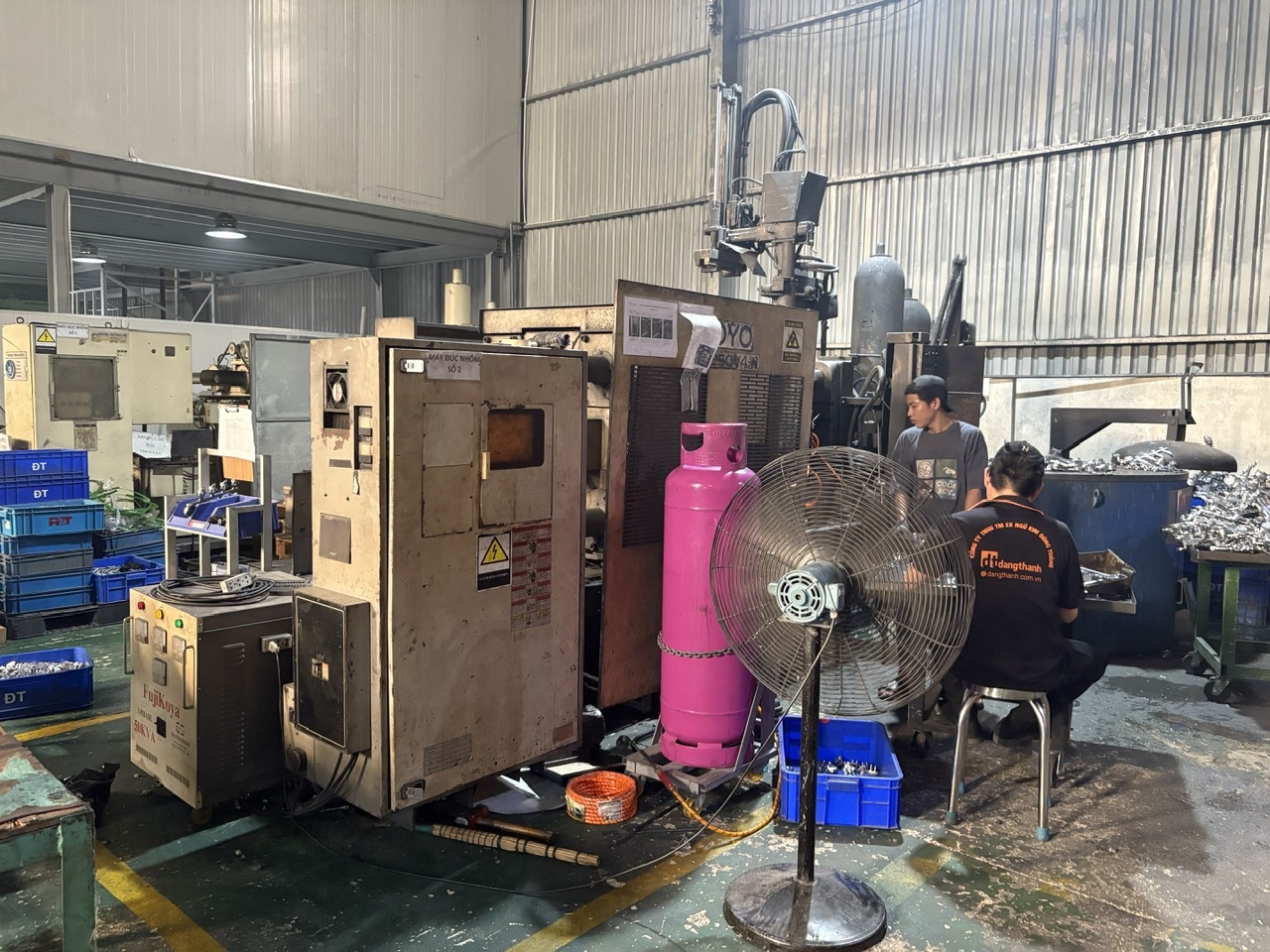
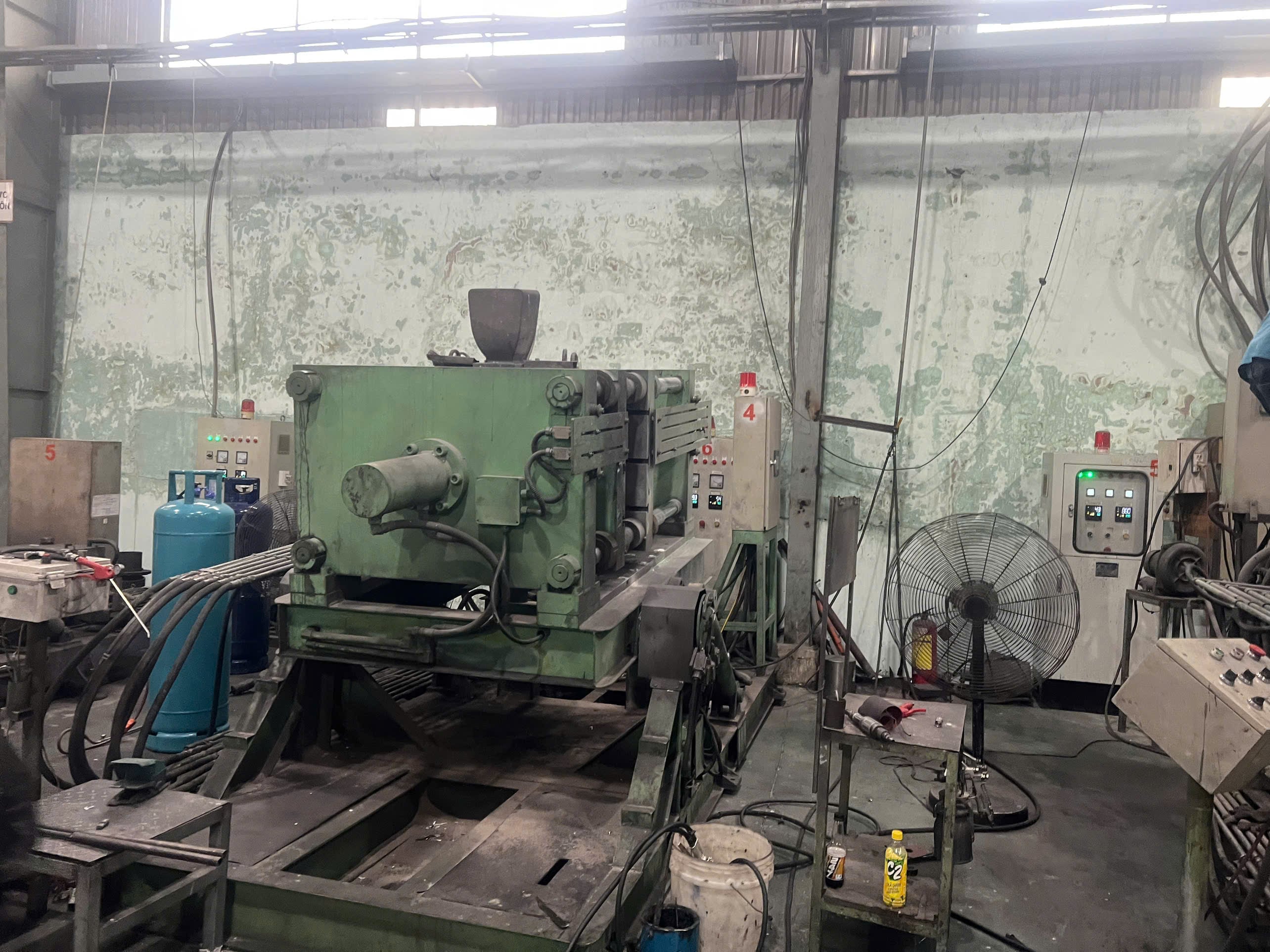
In contrast, high-pressure die casting bypasses ceramic shells entirely. High-tonnage cold-chamber or hot-chamber die casting machines force liquid aluminum, zinc, or magnesium into hardened tool steel dies under hydraulic pressure ranging from 1,000 to 10,000 PSI. Rapid solidification allows quick cycle times, often yielding finished parts every 30 to 60 seconds. In our database of audited manufacturers listed on /suppliers/, 11 factories specialize in precision investment casting and 11 specialize in aluminum die-casting. For instance, Eguchiseiko Die Cast provides lost wax casting and die casting capabilities alongside secondary finishing operations.
Which Process Offers Better Cost Efficiency at Medium Volumes?
Our procurement team analyzes total cost curves across annual volume thresholds to prevent engineers from overpaying on hard tooling for mid-tier production runs.
Medium-volume production runs between 1,000 and 10,000 units typically favor investment casting because aluminum wax molds cost significantly less upfront than hardened steel high-pressure die casting tooling.
Tooling Amortization and Breakeven Analysis
Tooling expenditure represents the primary financial divide between casting methods. Investment casting molds are machined from aluminum or soft steel to produce wax patterns. These tools incur relatively low upfront costs, generally ranging between $2,000 and $10,000 depending on geometry. Conversely, high-pressure die casting tooling requires multi-cavity, hardened H13 tool steel dies capable of withstanding extreme thermal shock and high hydraulic pressures. Die casting tooling often costs between $20,000 and $100,000 or more.
When evaluating medium-volume orders (typically 1,000 to 10,000 parts per year), the high initial capital expenditure of die casting tool steel can skew total cost per unit unfavorably. Unless annual production extends beyond 10,000 to 20,000 units, the amortized cost per piece for die casting remains high. However, die casting yields lower unit labor costs due to automated, rapid cycle times.
Material Selection Impact on Unit Economics
Material capability also drives process selection. Investment casting accommodates virtually any alloy, including carbon steel, stainless steel, superalloys, and aluminum. Die casting is strictly limited to non-ferrous alloys with low melting points, primarily aluminum, zinc, and magnesium. Buyers needing stainless steel or high-temperature alloys must select investment casting regardless of volume.
| Sourcing Parameter | Investment Casting | Die Casting |
|---|---|---|
| Typical Upfront Tooling Cost | $2,000 – $10,000 | $20,000 – $100,000+ |
| Optimal Annual Volume | 500 – 10,000 units | 10,000+ units |
| Tooling Material | Aluminum / Soft Steel | Hardened Tool Steel (H13) |
| Unit Production Speed | Moderate (Hours per batch) | High (Seconds per part) |
| Compatible Material Class | Ferrous & Non-Ferrous Alloys | Non-Ferrous Alloys Only |
How Do Dimensional Tolerances and Surface Finishes Compare?
When walking audited production floors in Vietnam, our engineers inspect CMM inspection stations to verify dimensional tolerance holds across complex geometries.
Die casting yields tighter dimensional repeatability and smoother surface finishes directly from the mold, whereas investment casting offers superior geometric freedom and thin-wall capabilities without draft angles.
Geometric Complexity and Wall Thickness
Investment casting excels at producing intricate internal passages, severe undercuts, and thin cross-sections without requiring draft angles. Because the ceramic shell breaks away during post-casting knockout, complex internal channels created via soluble wax cores are readily achievable. Wall thicknesses down to 1.5 mm are routinely cast with high fidelity.
Die casting requires fixed steel mold halves that must physically separate to eject the solidified component. Consequently, parts must incorporate draft angles (typically 1° to 3°) on all vertical walls. Undercut features require complex moving side actions or hydraulic slides, which increase tool complexity and maintenance costs.
Tolerances and Surface Quality
Die casting provides tighter dimensional tolerances across long production runs due to rigid steel mold cavities. Standard die casting tolerances range within ±0.05 mm to ±0.2 mm, whereas investment casting standard tolerances hover around ±0.1 mm to ±0.3 mm. For surface texture, die casting routinely achieves 1.6 to 3.2 µm Ra straight out of the tool. Investment casting yields typical surface finishes between 3.2 and 6.3 µm Ra.
Where secondary finishing or tight bearing seats are required, foundries integrate precision CNC machining or secondary surface finishes. Within our audited database, suppliers like Dysm Alumium Die-Casting Co.,Ltd utilize dedicated die casting machinery and secondary CNC finishing to ensure parts meet tight buyer specifications. Furthermore, 8 factories in our dataset possess 3D CMM equipment to verify critical dimensions.
| Technical Metric | Investment Casting | Die Casting |
|---|---|---|
| As-Cast Surface Finish (Ra) | 3.2 – 6.3 µm | 1.6 – 3.2 µm |
| Standard Linear Tolerance | ±0.1 mm to ±0.3 mm | ±0.05 mm to ±0.2 mm |
| Draft Angle Requirement | 0° (Zero draft possible) | 1° – 3° required |
| Internal Geometry Freedom | High (Soluble wax cores) | Limited (Requires mechanical slides) |
| Ferrous Alloy Compatibility | Fully Compatible | Not Applicable |
How Should Engineers Select Between the Two Casting Methods?
Our sourcing team uses structured technical rubrics to guide OEM procurement managers through process selection based on total landed cost and engineering requirements.
Selecting between investment casting and die casting requires evaluating annual production volumes, alloy requirements, geometric draft limitations, and total budget constraints before committing to production tooling.
Decision Framework for Medium-Volume Parts
When choosing between processes for medium-volume components (1,000 to 10,000 units), buyers must systematically evaluate four core variables:
- Material Specification: If the design requires carbon steel, stainless steel, tool steel, or copper alloys, investment casting is mandatory. If aluminum, zinc, or magnesium is acceptable, both processes remain viable.
- Tooling Amortization: Calculate the upfront tooling budget impact. If cash flow restricts early investment to under $10,000, investment casting provides a clear pathway to production.
- Geometric Features: Assess whether internal cavities or draft-free walls are essential. Removing draft angles from a die-cast part requires secondary milling, which can erode per-unit cost advantages.
- Lead Time and Flexibility: Investment casting allows easier, less expensive mold modifications if product design iterations are expected during early production phases.
Sourcing via Audited Vietnamese Foundries
Leveraging Vietnam’s expanding industrial base allows buyers to optimize manufacturing costs while maintaining strict quality controls. Under current trade frameworks, qualifying Vietnam-origin goods are not subject to US Section 301 Chinese punitive tariffs, creating significant landed-cost savings compared to traditional sourcing routes. Additionally, Vietnam maintains 16+ Free Trade Agreements including the CPTPP, EVFTA, and RCEP.
To mitigate sourcing risk, our 50-point Dolphin Audit evaluates factory equipment, quality control labs, and production workflows. All quotes issued through our platform rely on vetted QCLDM Tier 1 and Tier 2 factories, backed by a Delaware LLC contracting entity and full DDP delivery. Sourcing teams can submit project parameters through our RFQ template or calculate project metrics using our instant quoting portal to get rapid RFQ response and structured technical quotes.
FAQ
Which casting process is cheaper for 2,000 units per year?
Investment casting is typically cheaper for 2,000 units per year due to lower initial tooling costs. High-pressure die casting tooling amortizes poorly at this volume, resulting in a higher total cost per part despite lower unit production costs.
Can investment casting achieve zero draft angles?
Yes, investment casting can achieve zero draft angles on internal and external walls. Because ceramic shells are broken away during component extraction, complex geometries do not require draft angles for mold release.
Are US tariffs applied to metal castings imported from Vietnam?
Under current trade regulations, qualifying Vietnam-origin goods are not subject to US Section 301 Chinese punitive tariffs. Sourcing metal castings from verified Vietnamese foundries provides a tariff-neutral supply chain alternative compared to Chinese sourcing routes.
Conclusion
Choosing between investment casting and die casting requires balancing tooling budgets, material specifications, and annual volume projections. Contact our technical team today to analyze your part drawings and get an instant quote.