
Sourcing custom die casting and metal forming overseas often leads to unexpected dimensional defects and hidden tooling delays. Our engineering team audited over 179 factories in Vietnam to simplify your supply chain with vetted, high-precision production partners.
Western buyers source custom die casting and metal forming services in Vietnam by evaluating foundry press tonnage and secondary CNC capabilities, enforcing strict First Article Inspections under ISO 9001 or IATF 16949 standards, and leveraging favorable trade treaties.
Key takeaways:
- Vietnam features 11 audited aluminum die-casting factories and 13 stamping and bending facilities across our verified supplier network.
- Procurement teams should mandate secondary CNC machining integration to eliminate inter-factory quality disputes on tight-tolerance castings.
- qualifying Vietnam-origin goods are not subject to US Section 301 Chinese punitive tariffs, generating significant cost advantages over China-based sourcing routes.
- Phased tooling validation with early chemical composition analysis prevents mass-production alloy non-conformances.
How do I evaluate technical capabilities of Vietnamese die casting suppliers?
When our audit engineers evaluate overseas foundries, we conduct a rigorous review of press tonnage, alloy handling, and secondary machining equipment on the production floor.
Evaluating technical capabilities of Vietnamese die casting suppliers requires inspecting on-site press tonnage for high-pressure die casting, reviewing secondary CNC machining equipment for critical tolerances, and verifying metallurgic alloy testing capabilities for aluminum, zinc, or magnesium components.
Technical Definitions: Custom Die Casting and Metal Forming
High-pressure die casting is a metal casting process that injects molten alloys under elevated pressure into reusable steel molds to produce complex, thin-walled structural parts. Metal forming encompasses mechanical processes such as progressive die stamping and metal bending that plastically deform sheet metal into custom hardware without melting the raw material.
Foundry Machinery and Secondary Machining Integration
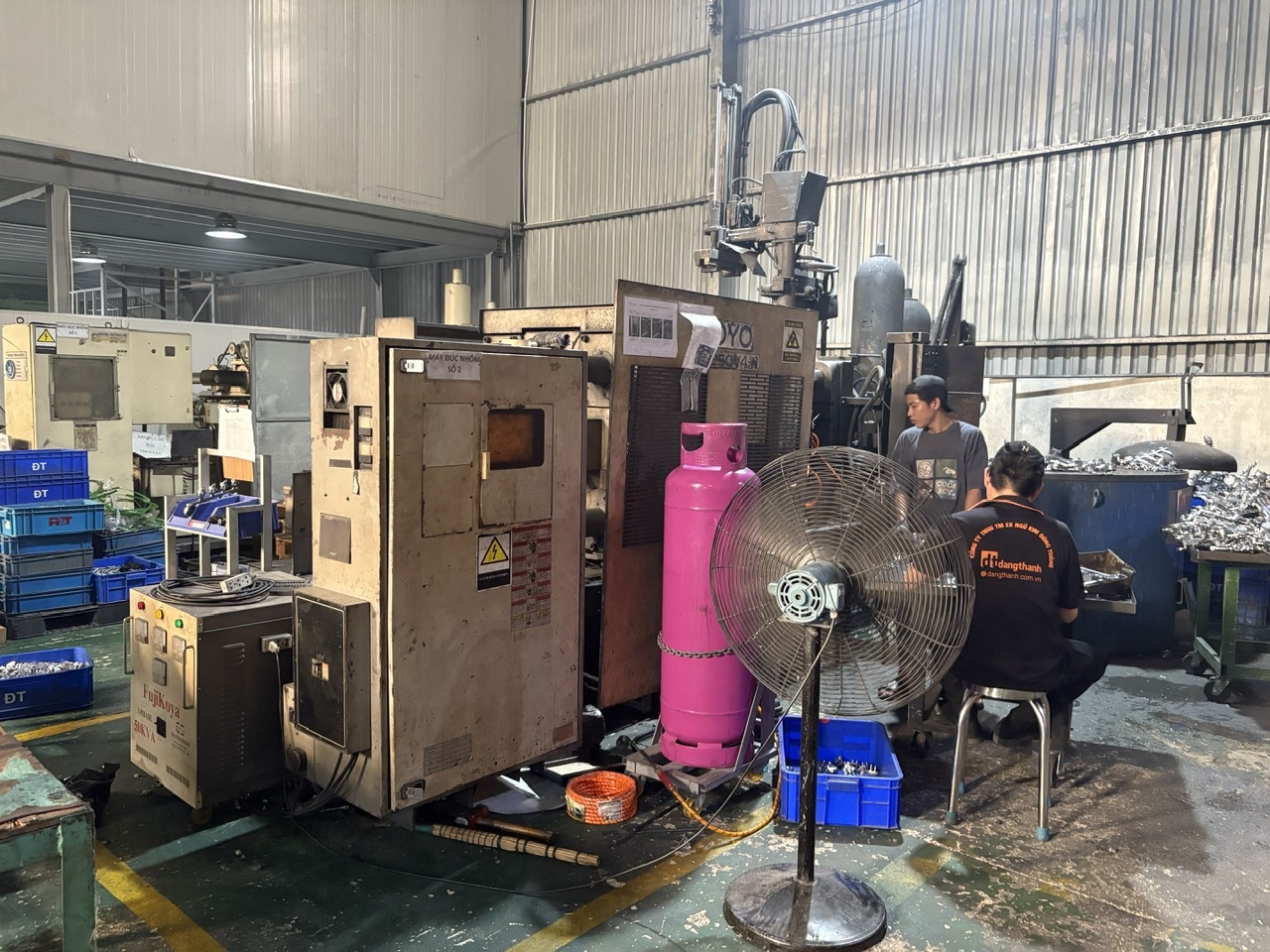
When we inspect facilities across our verified database of suppliers, our team evaluates both primary casting machinery and post-casting processing units. Across Vietnam’s manufacturing landscape, 11 dedicated aluminum die-casting factories operate alongside 30 CNC machining suppliers. In high-pressure die casting, achieving dimensional stability on thin-walled components requires controlled injection velocity and high locking force. However, raw castings rarely meet aerospace or automotive tolerances straight out of the mold.
Procurement teams should prioritize vertically integrated suppliers that offer both casting and secondary CNC machining to minimize quality handoff disputes. Facilities like Tho Thanh Phat Die-Casting Company maintain die casting, CNC machining, and surface treatment capabilities on-site, using equipment such as 3D CMMs, CNC lathes, and CNC milling machines to verify dimensions internally.
| Process Type | Primary Materials | Key Capability Indicators | Common Applications |
|---|---|---|---|
| High-Pressure Die Casting | Aluminum (ADC12, A380), Zinc, Magnesium | Press tonnage, automated ladling, vacuum assist | Automotive housings, heat sinks, thin-wall enclosures |
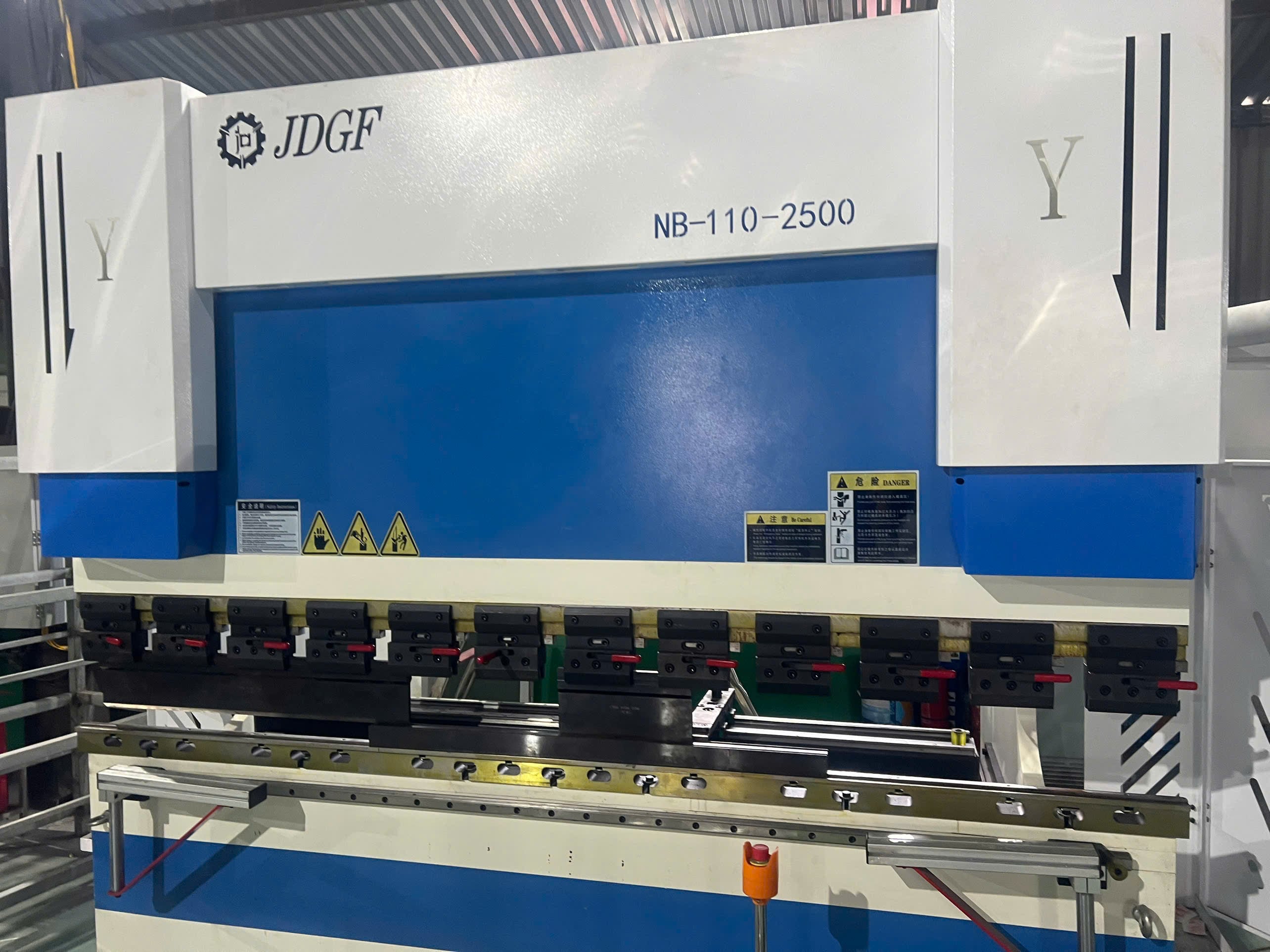
| Progressive Die Stamping | Cold-rolled steel, Stainless steel, Brass | Multi-station die alignment, coil feeding speed | High-volume brackets, terminals, structural clips |
| Deep Drawing | Aluminum, Stainless steel, Copper | Draw ratio control, hydraulic press tonnage | Cylindrical cans, deep enclosures, automotive shells |
What quality assurance standards should I require for custom metal forming projects?
Setting strict quality gates guarantees that high-volume stamped and formed metal parts maintain structural integrity across consecutive production batches.
Quality assurance standards for custom metal forming projects must require ISO 9001 certification, IATF 16949 compliance for automotive components, rigorous First Article Inspections with 3D CMM dimensional reports, and raw material spectrographic analysis prior to mass production runs.
Essential Quality Management Systems
Adherence to international standards like ISO 9001 and IATF 16949 provides essential verification of a supplier’s quality management systems. For high-volume progressive die stamping and deep drawing projects, quality systems must trace material heat numbers directly back to mill test reports. Aluminum, zinc, and magnesium alloys represent the primary materials utilized for precision pressure die casting in Vietnamese foundries. Verifying material purity via optical emission spectrometry prevents structural failures caused by alloy contamination or improper scrap recycling ratios.
First Article Inspection and CMM Verification
Conducting detailed First Article Inspections and dimensional reports is critical before approving full production runs with overseas suppliers. On-site 3D Coordinate Measuring Machines (CMM) ensure that complex bend radii and hole patterns match CAD drawings exactly. In our audited database, 8 factories maintain 3D CMM equipment, enabling precise verification of complex geometries before export. Buyers should mandate full CMM layout reports for all critical-to-quality dimensions prior to final tool sign-off.
| Quality Verification Phase | Inspection Method | Key Deliverables | Risk Mitigated |
|---|---|---|---|
| Raw Material Receiving | Spectrographic alloy analysis | Mill Test Report (MTR) verification | Out-of-spec chemical composition |
| Tooling Qualification | First Article Inspection (FAI) | Full CMM dimensional layout report | Mold geometry and shrink factor errors |
| In-Process Production | Statistical Process Control (SPC) | Control charts ($C_{pk}$ / $P_{pk}$ metrics) | Dimensional drift during high-volume runs |
How do I manage tooling costs and lead times when sourcing from Vietnam?
Tooling investments represent the largest upfront capital expense when launching custom die casting or progressive stamping programs in Southeast Asia.
Managing tooling costs and lead times when sourcing from Vietnam involves establishing a phased tooling validation process, utilizing local toolmaking capabilities for lower initial capital outlays, and defining clear milestones for sample approval prior to production release.
Capital Outlay Optimization and Tooling Life
Vietnamese manufacturing hubs offer competitive tooling investment requirements compared to traditional Western supply sources. Lower labor and mold-making overheads reduce the initial capital necessary for complex multi-cavity dies and progressive stamping tools. Western buyers ought to establish a phased tooling validation process, using preliminary sampling runs to verify material chemistry and mechanical properties prior to mass production.
Managing Prototype and T1 Lead Times
Tooling production typically follows a structured timeline from Design for Manufacturability (DFM) review to T1 sample delivery. To avoid schedule slippage, buyers should require steel certification documents and mold flow simulation results during the design phase. Our 50-point Dolphin Audit verifies that factories maintain robust preventive maintenance schedules for active dies, extending mold life across multi-year production programs. Working with vetted Tier 1 and Tier 2 factories ensures quotes are issued within 24 hours and production timelines remain predictable.
What supply chain strategies mitigate risks in Vietnamese custom metal manufacturing?
Building a resilient supply network requires looking beyond factory gate pricing to evaluate tariffs, trade agreements, and freight logistics.
Supply chain strategies that mitigate risks in Vietnamese custom metal manufacturing include utilizing DDP delivery agreements under a US-based Delaware LLC entity, leveraging favorable free trade agreements, and conducting total landed cost calculations that factor in safety stock.
Landed Cost Analysis and Duty Advantages
Sourcing strategies should evaluate total landed costs—including freight, tariffs, and safety stock management—rather than relying strictly on unit piece prices. Under current US trade policies, qualifying Vietnam-origin goods are not subject to US Section 301 Chinese punitive tariffs, eliminating the heavy tariff burdens associated with alternate Asian sourcing routes. Furthermore, Vietnam benefits from over 16 Free Trade Agreements, including CPTPP, EVFTA, and RCEP. Under the EVFTA, European buyers can access reduced or zero-percent customs duties on qualified custom metal components.
Risk Mitigation via Dual Sourcing and Contracting
To minimize geopolitical and operational risks, procurement engineers frequently adopt a China Plus One strategy by qualifying Vietnamese suppliers for new product launches. Structuring contracts through a US Delaware LLC entity provides Western buyers with familiar legal protections, while DDP (Delivered Duty Paid) shipping terms shift transit risks away from the buyer. Across our network of vetted Vietnamese manufacturing facilities, our team verifies operational readiness on-site, ensuring smooth freight consolidation and risk-free delivery.
FAQ
What alloys are most commonly used for die casting in Vietnam?
Aluminum, zinc, and magnesium alloys represent the primary materials utilized for precision pressure die casting in Vietnamese foundries. Aluminum alloys like ADC12 and A380 are widely chosen for lightweight structural parts requiring high strength and thermal conductivity.
How do tariffs impact custom metal parts imported from Vietnam to the US?
qualifying Vietnam-origin goods are not subject to US Section 301 Chinese punitive tariffs, providing significant duty savings compared to imports subject to Chinese trade tariffs. Buyers must ensure correct rules-of-origin documentation to substantiate Vietnamese country of origin.
What is the advantage of combined stamping and machining services?
Combining stamping and machining services within a single facility reduces logistics delays and prevents quality handoff disputes between separate vendors. Integrated production streamlines dimensional quality control from raw coil stock to final finished hardware.
Conclusion
Sourcing custom die casting and metal forming in Vietnam delivers high precision at competitive landed costs. Partner with our audited Tier 1-2 suppliers to simplify your supply chain and get an instant quote.