
Global trade regulations like the EU Deforestation Regulation and US Uyghur Forced Labor Prevention Act mandate strict origin proof. Opaque supply chains risk severe customs delays or shipment rejections. Vietnamese export factories solve this through structured material verification and lot tracking.
Vietnamese manufacturers ensure supply chain traceability by issuing mill test certificates, applying heat number tracking across raw material lots, implementing barcode production routing, and maintaining audited tier-2 supplier records to satisfy international compliance and customs origin verification requirements.
Key takeaways:
- Supply chain traceability relies on verified Mill Test Reports (MTRs) and heat number matching at raw material intake.
- Serialized batch tracking and digital traveler cards log step-by-step production from raw stock to final DDP delivery.
- International trade agreements like EVFTA and CPTPP require documented Rules of Origin proof to secure preferential tariffs.
- Physical factory audits verify tier-2 material sources, preventing illicit transshipment and ensuring regulatory compliance.
What Is Material Origin Verification in Vietnamese Manufacturing?
Our audit engineers inspect raw material warehouses across Vietnam to confirm that incoming heat numbers strictly match original mill certificates before production begins.
Material origin verification in Vietnamese manufacturing is the process of documenting raw metal or polymer provenance using mill test reports, chemical composition analysis, and heat numbers to prove non-restricted sourcing and qualify for tariff benefits.
Defining Supply Chain Traceability
Supply chain traceability is the capability to track every step of a component’s manufacturing history, from raw material extraction to final delivery. In export manufacturing, this process connects physical heat numbers on raw metals to digital inspection reports and customs documentation.
When evaluating a factory floor, our team reviews raw material intake procedures. For /services/sheet-metal components, mill test certificates (MTRs) must list mechanical properties, tensile strength, and chemical breakdown matching ASTM or ISO standards. Factories log steel coils or aluminum billets into warehouse management systems immediately upon receipt.
Out of 17 sheet metal manufacturers in our audited network, facilities like An Thanh Technology—equipped with a CNC laser cutting machine 1 and bench drilling machine—maintain explicit heat number logs for every raw plate. When raw metal enters the cutting stage, technicians etch or stamp the batch number directly onto parent sheets to maintain clear material identity.
| Document Type | Verification Purpose | Key Data Captured |
|---|---|---|
| Mill Test Report (MTR) | Verifies raw chemical & physical properties | Heat number, yield strength, alloy grade |
| Certificate of Origin (CO) | Proves country of origin for tariff relief | HS code, producer location, local value add |
| Material Chemical Analysis | Confirms absence of restricted elements | XRF spectrographic breakdown, RoHS compliance |
| Intake Receiving Log | Connects raw stock to internal batch numbers | Delivery date, purchase order, inspector ID |
Verifying raw origin protects Western buyers under global trade frameworks like EVFTA and CPTPP. Traceability documentation confirms that processed goods genuinely originate in Vietnam rather than passing through unverified transshipment hubs.
How Do Production Traveler Cards and Serialization Maintain Traceability?
during on-site production audits in Vietnam, we verify that physical routing sheets move alongside parts through cut, bend, machine, and finishing stages.
Production traveler cards and serialization maintain traceability by assigning unique lot numbers or barcodes to raw stock, logging operator actions at each workstation, and recording inline quality measurements to create an unbroken digital manufacturing history.
On a structured shop floor, a production traveler card serves as the central identity document for a batch of parts. The traveler moves physically inside tote bins or digitally via handheld barcode scanners across machining lines. Among the 30 /services/cnc-machining facilities in our network, automated tracking ensures that machine operators register their worker ID, CNC lathe machine number, and cycle time for every batch.
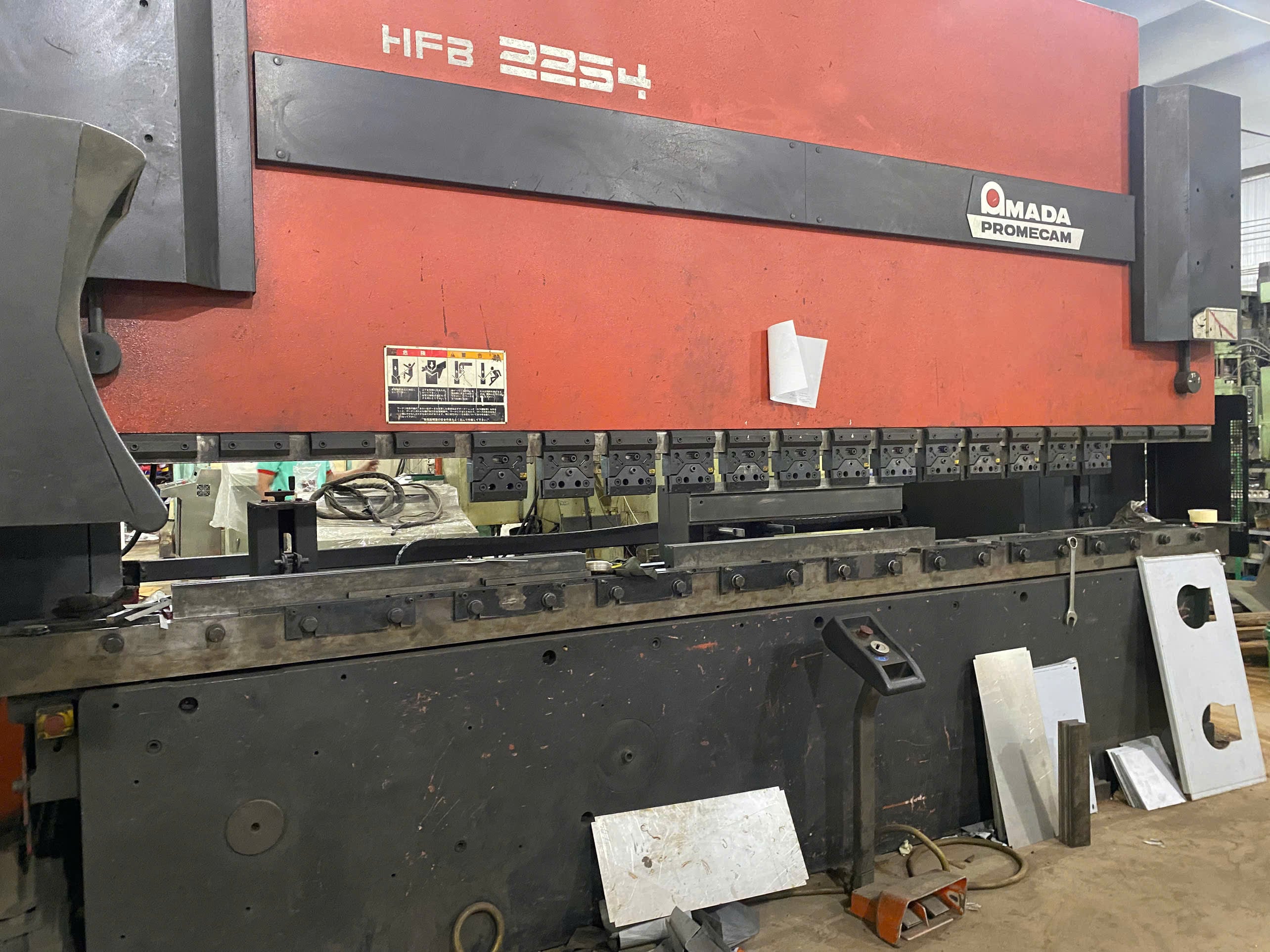
For complex assemblies involving /services/bending or /services/stamping, manufacturers mark individual sub-components using dot-peen engraving or laser marking. Tomoda Trading Production, an audited sheet metal factory equipped with bending machines and CNC bending machines, utilizes traveler cards to track multi-stage fabrication runs from initial laser cutting to final powder coating.
Quality engineers perform dimensional checks at designated control gates. Inspection data recorded during inline quality gate reviews—such as measurements taken on 3D CMM machines (listed on file by 8 network factories)—is appended directly to the traveler record. If an out-of-spec dimension occurs, quality teams isolate the exact batch lot within minutes, preventing non-conforming items from reaching shipment staging areas.
Surface treatment processes like anodizing or electroplating are recorded on traveler logs under /services/finishes. Bath chemical concentrations, immersion duration, and post-bake temperatures are indexed to the sub-lot code, providing complete technical auditability for mission-critical industrial components.
Why Are Audited Sub-Tier Suppliers Critical for Supply Chain Transparency?
Our field audits evaluate not just prime contract factories, but also sub-tier suppliers providing raw castings, extrusions, plating, and specialized heat treatment services.
Audited sub-tier suppliers are critical for supply chain transparency because they prevent illicit transshipment, ensure raw material compliance with global labor and environmental laws, and guarantee consistent raw input quality before primary processing starts.
Tier-1 manufacturing plants frequently rely on external vendors for raw inputs like aluminum extrusions or investment castings. If a primary facility purchases unvetted raw material, the transparency of the entire finished component is compromised. Securing full visibility requires auditing tier-2 chemical suppliers, foundry houses, and plating subcontractors.
| Audit Area | Tier-2 Verification Focus | Compliance Impact |
|---|---|---|
| Raw Material Procurement | Direct mill invoices & bill of lading checks | Prevents illegal transshipment & unverified stock |
| Environmental & Chemical Safety | Wastewater treatment & REACH/RoHS logs | Ensures legal compliance in US & EU markets |
| Sub-Contract Finishing | Anodizing/plating thickness & salt spray tests | Guarantees secondary coating durability |
| Labor & Social Standards | Worker age verification & shift log reviews | Satisfies ESG regulatory obligations |
Our on-ground audit engineers execute the 50-point Dolphin Audit protocol across facilities listed in our audited supplier database. Across 179 total factories in Vietnam on file, on-site physical evaluations verify whether sub-contracted processes comply with quality management expectations.
Documenting tier-2 operations is especially critical because qualifying Vietnam-origin goods are not subject to US Section 301 Chinese punitive tariffs. To maintain this tariff structure, manufacturers must clearly demonstrate substantial transformation within Vietnam rather than basic assembly of pre-processed foreign kits.
How Do Preferential Trade Agreements Impact Vietnam Traceability Requirements?
Sourcing managers targeting tariff relief must establish strict chain-of-custody documentation to satisfy customs authorities under multi-lateral trade frameworks like CPTPP and EVFTA.
Preferential trade agreements impact Vietnam traceability requirements by establishing strict Rules of Origin criteria, requiring manufacturers to maintain detailed Bill of Materials, production logs, and regional value content calculations to claim reduced tariff rates.
Free trade agreements offer significant financial incentives for global buyers. Vietnam benefits from over 16 active FTAs, including the EU-Vietnam Free Trade Agreement (EVFTA), the Comprehensive and Progressive Agreement for Trans-Pacific Partnership (CPTPP), and RCEP. However, claiming 0% or reduced duty rates requires strict adherence to Rules of Origin (ROO).
Customs officials inspect two main origin standards:
- Wholly Obtained (WO): Goods produced entirely within Vietnam using domestic raw materials.
- Substantial Transformation / Regional Value Content (RVC): Products utilizing imported raw materials that undergo sufficient processing in Vietnam to change tariff classification (typically at the 4-digit or 6-digit HS code level).
To verify compliance, procurement teams request structured cost breakdowns before issuing production purchase orders. Buyers evaluating local cost structures can use our quoting portal to model material expenses against regional value content requirements.
Executing contracts through a US-based Delaware LLC entity paired with DDP (Delivered Duty Paid) terms transfers customs compliance risk away from the buyer. Under DDP terms, verified traceability dossiers are provided directly to customs brokers before vessel arrival, eliminating risk of port holds. To understand how Vietnam’s regulatory environment compares to traditional regional hubs, review our guide on /vietnam-vs-china-manufacturing.
FAQ
What documentation is required to prove product origin in Vietnam?
Product origin in Vietnam is proven using Certificates of Origin (Form EUR.1 or Form B), Mill Test Reports for raw materials, export declarations, and detailed manufacturing process logs. Customs authorities review these documents alongside production invoices to confirm preferential tariff eligibility.
How do Vietnamese factories prevent component mixing during batch processing?
Vietnamese factories prevent component mixing by implementing physical lot segregation, color-coded tote bins, traveler cards, and barcode scanning at every workstation. Quality control inspectors verify lot numbers before parts transition between machining, heat treatment, and surface finishing operations.
Can overseas buyers verify material test reports from Vietnamese suppliers?
Overseas buyers can verify material test reports by requesting third-party spectrographic analysis from accredited labs or cross-referencing heat numbers directly with raw material mills. Sourcing platforms conduct on-site factory audits to validate mill certificates against actual warehouse inventory.
Conclusion
Establishing verified supply chain traceability protects your procurement pipeline from compliance risks and unexpected tariffs. Partner with our audited network of 179+ Vietnamese factories to ensure total transparency and get an instant quote.