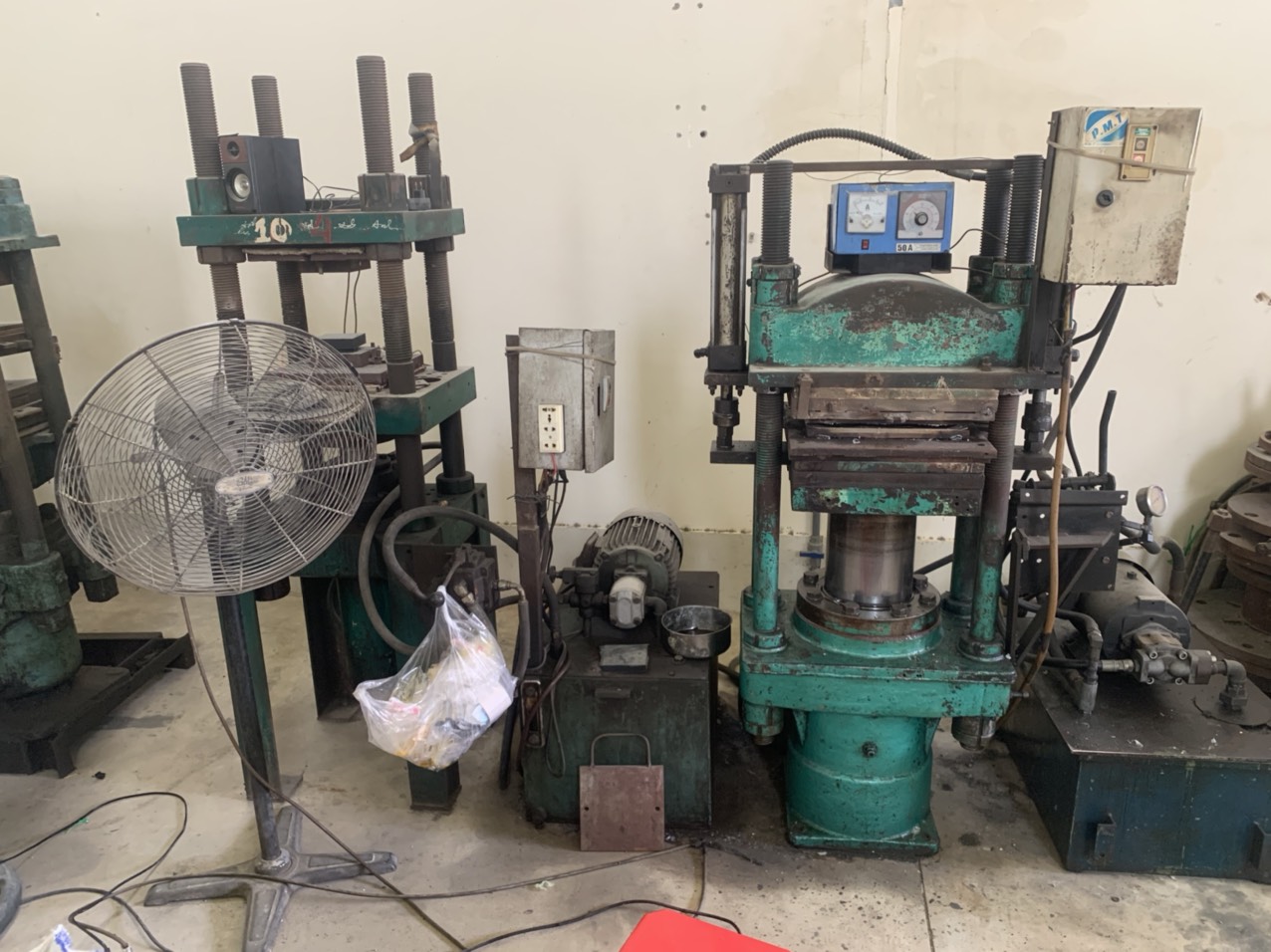
Controlling flash and compression set on custom EPDM and FKM seals in Vietnam relies on precise mold design, vacuum-assisted compression presses, controlled thermal curing, and post-vulcanization processes. Vietnamese precision molders utilize custom tooling, vacuum degasification, and automated deflashing workflows to ensure tight cross-linking density, zero parted-line flash, and long-term elastomeric sealing performance for global assemblies.
> Key Takeaways: > - Flash Mitigation: Vacuum chamber compression molding evacuates entrapped air to eliminate parting-line flash, micro-voids, and non-fill defects in complex seal geometries. > - Compression Set Optimization: Secondary convection oven post-curing stabilizes cross-link networks to prevent permanent deformation under continuous mechanical load. > - Vietnam Rubber Infrastructure: The DEWIN supplier directory includes 9 specialized Plastic & Rubber manufacturing records on file, supported by tooling shops equipped with CNC milling and turning machinery.
---
!Injection moulding machine in a Vietnamese factory/Kahong%20-%20Photo/Injection%20machine.JPG)
How Do Vietnamese Molders Control Flash and Parting-Line Defects in Custom EPDM and FKM Seals?
Precision elastomeric seals—such as custom O-rings, lip seals, and diaphragm gaskets molded from ethylene propylene diene monomer (EPDM) and fluoroelastomer (FKM)—require strict parting-line management. Excess rubber flash on critical sealing beads creates potential leakage paths and compromises static or dynamic mating surfaces.
Vietnamese rubber molding suppliers minimize flash through high-tonnage vacuum compression molding and precision mold tooling design. Tooling engineers incorporate micro-tear-trim grooves ( overflow tears) positioned parallel to the parting line. During mold closure, compound displacement fills the cavity while excess material flows into designated overflow wells without widening the primary sealing land. Precision vacuum chambers surround the mold plates, reducing atmospheric pressure prior to compound flow. Evacuating trapped air prevents micro-void formation and reduces vulcanization temperature gradients across multi-cavity plates.
``mermaid flowchart TD A[Raw Compound Preparation & Pre-Forming] --> B[Mold Tool Loading & Pre-Heating] B --> C[Vacuum Chamber Evacuation] C --> D[High-Pressure Compression / Injection Molding] D --> E[Primary Thermal Vulcanization] E --> F[Demolding & Tear-Trim Flash Removal] F --> G[Convection Oven Post-Curing Stage] G --> H[CMM & Dimensional Inspection] ``
Suppliers listed on DEWIN, such as Nhat Minh Tt (categorized under Plastic & Rubber with capabilities in injection molding, rubber molding, and assembly), utilize CNC VMC machinery and CMM inspection units on file to manufacture high-precision mold inserts with tight tolerance parting lines. Tool steel matching and shear edge fitment directly control flash thickness prior to secondary operations.
---
!Tooling and die storage in a Vietnamese factory.jpg)
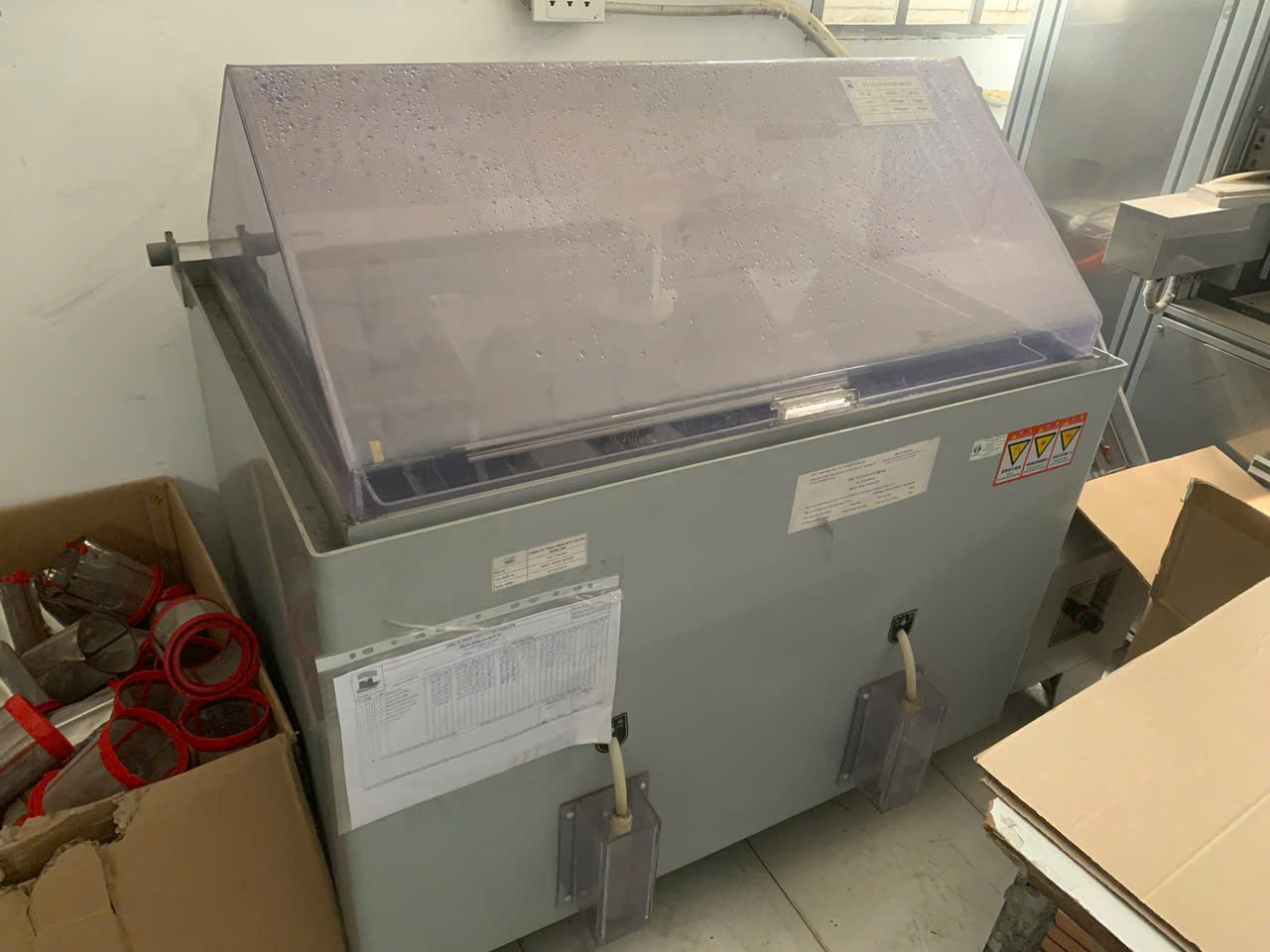
What Thermal and Tooling Strategies Prevent High Compression Set in Elastomeric Compounds?
Compression set represents the residual permanent deformation of an elastomeric seal after the compressive stress is released. In high-performance fluid handling and automotive sub-assemblies, maintaining cross-link resilience under continuous thermal load is critical to maintaining a dynamic sealing force.
Controlling compression set begins with chemical compound formulation and primary curing parameters. EPDM formulations cured with organic peroxides yield carbon-carbon cross-links that demonstrate superior thermal stability compared to sulfur-cured compounds. Fluoroelastomers (FKM) require precise thermal control during both primary molding and secondary post-curing.
| Technical Parameter | Peroxide-Cured EPDM Seals | Bisphenol / Polyol Cured FKM Seals | | :--- | :--- | :--- | | Primary Molding Temp Range | High Thermal Platen Uniformity | High Thermal Platen Uniformity | | Tooling Clearance Requirement | Ultra-tight parting land fitment | Micro-step tear-trim grooves | | Vacuum Pressure Range | Deep vacuum evacuation | Deep vacuum evacuation | | Post-Cure Function | Removes residual volatile byproducts | Completes cross-linking & optimizes elasticity | | Primary Deflashing Method | Cryogenic tumbling / Tear-off bead | Precision manual tear / Cryogenic shot-blast |
During primary molding in heated platens, vulcanization kinetics must be held uniform across all cavities. Insufficient heating results in incomplete polymer cross-linking, which drastically increases compression set values. Following primary molding, secondary post-curing in forced-convection thermal ovens completes the chemical cross-linking reaction and drives off volatile byproducts. This secondary baking stabilizes durometer hardness and ensures long-term sealing elasticity when subjected to prolonged compressive loads in customer assemblies.
---
Which Quality Inspection Protocols and Tooling Workflows Ensure Dimensional Accuracy?
Achieving consistent cross-sectional diameters, inner/outer radii, and complex sealing profiles requires coordinated tooling production, rubber formulation, and metrology verification. Because elastomeric compounds exhibit thermal shrinkage upon cooling after demolding, mold cavity dimensions must be oversized according to exact polymer shrink rates.
Vietnamese manufacturers handle precision tooling development using internal or partner machining capabilities. Within the DEWIN database, 38 Vietnamese factories list a cnc milling machine, 30 list a cnc lathe machine, and 8 list a 3d cmm machine on file. Suppliers like Nam Lam Mechanical Trading Services maintain capabilities in injection molding and rubber molding, with equipment on file including an injection molding machine and a balance testing machine.
Dimensional verification for elastomeric components requires non-contact or low-force measuring instruments to prevent part deflection during inspection. Coordinate measuring machines (CMM) and optical profile projectors verify complex profiles without distorting flexible sealing lips.
To initiate production for custom elastomeric seals, procurement engineers should submit detailed technical drawing files, material chemistry requirements, durometer targets, and operating fluid compatibility specifications directly through DEWIN to request a quote for custom injection mold tooling and precision rubber components.
---
Polymer & Tooling Engineering Comparison Matrix
| Engineering Criterion | Bridge / Soft Tooling (P20 / 718H) | High-Volume Production Tooling (H13 / S136) | Quality Control Gate |
|---|---|---|---|
| Mold Steel & Cavity Life | 50,000 – 100,000 shots (Pre-hardened steel) | 500,000 – 1,000,000+ shots (Vacuum heat-treated) | Steel Hardness (HRC) & Cavity CMM Report |
| Dimensional Tolerance | DIN 16742 TG5 / Commercial standard | DIN 16742 TG3–TG4 / Fine engineering grade | T0/T1/T2 30-Piece Capability Study |
| Wall Thickness & Draft Angle | 1.5 mm – 4.0 mm wall; 1.0°–1.5° minimum draft | Uniform ±10% nominal wall; textured draft ≥ 2.5° | Moldflow Simulation & Cross-Section Check |
| Resin & Regulatory Compliance | Virgin resin lot certificate + COA | UL94, RoHS, REACH, FDA / ISO 10993 traceability | DSC Melt-Flow & Moisture Analyzer Check |