Investment Casting in Vietnam: Costs, Capabilities & Sourcing Guide 2026
February 24, 2026 · 14 min read

Investment casting — also called lost wax casting — is the go-to process for complex, near-net-shape metal parts in stainless steel, carbon steel, and specialty alloys. Vietnam's investment casting industry has grown significantly since 2020, driven by China+1 diversification and the 25% Section 301 tariffs on Chinese castings.
This guide covers Vietnam's investment casting capabilities, real 2026 pricing, quality standards, and how to evaluate foundries for your custom parts.
Investment casting, or lost-wax casting, builds a ceramic shell around a wax pattern, melts the wax out, and pours molten metal into the cavity — producing complex, near-net-shape parts in stainless steel, carbon steel, and specialty alloys with fine detail and smooth as-cast surfaces.
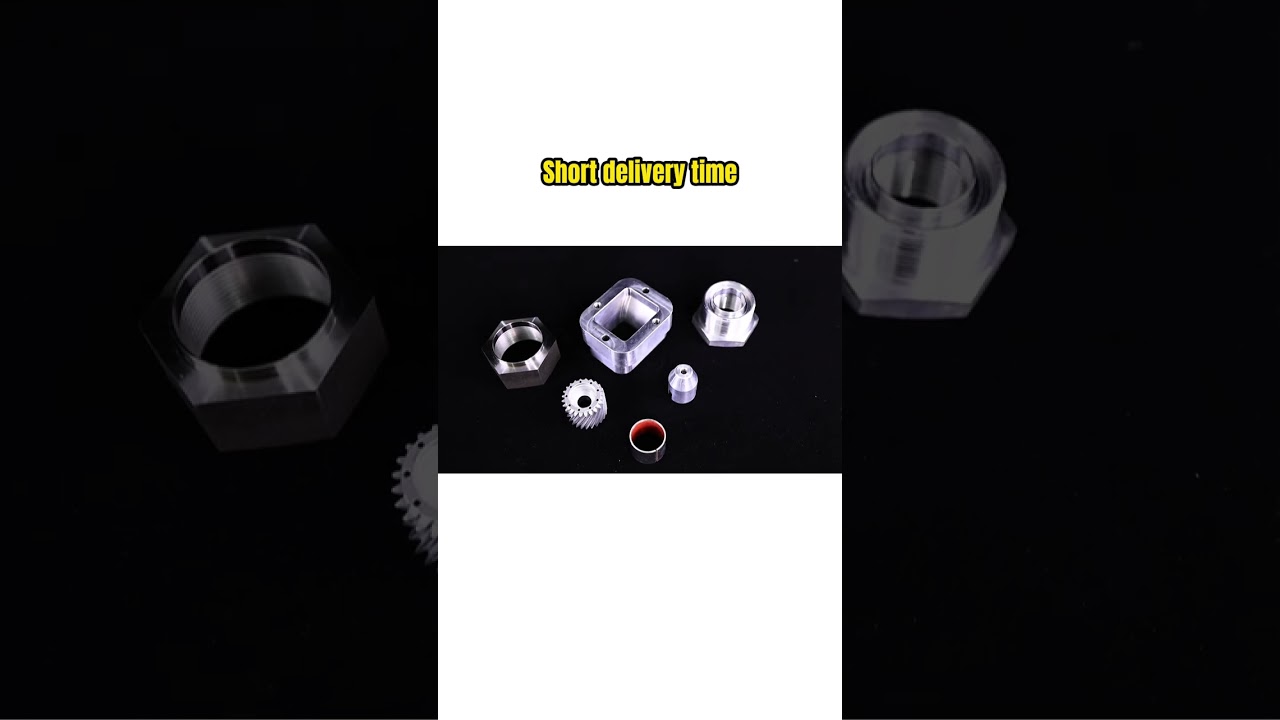
Real Vietnam Factory Samples — Custom Machined & Metal Parts
Watch on YouTube
Real footage from an audited DEWIN partner factory in Vietnam.
Vietnam's Investment Casting Industry: Current State
- 30–50 investment casting foundries across Ho Chi Minh City, Binh Duong, Dong Nai, and northern provinces (Hai Phong, Hung Yen). Capacity ranges from small workshops (500 kg/month) to mid-size facilities (50+ tons/month).
- Primary alloys: Stainless steel (CF8/304, CF8M/316, CD4MCuN duplex), carbon steel (WCB/1020/1045), alloy steel (8620, 4140), and brass/bronze. Superalloys (Inconel, Hastelloy) available at select foundries.
- Key end markets: Valve and pump components (40%), marine hardware (20%), food/beverage equipment (15%), agricultural equipment (10%), general industrial (15%).
- Quality certifications: ISO 9001 is standard. Some facilities have PED 2014/68/EU (pressure equipment), AD 2000-Merkblatt W0 (German pressure certification), and IATF 16949 (automotive).
Investment Casting Process in Vietnam: What to Expect
Vietnamese foundries use the same silica sol (ceramic shell) process as global competitors. The typical workflow:
Vietnamese foundries run the same silica-sol ceramic-shell process as global competitors: wax pattern tooling, wax injection, 5–8 shell-coat layers, steam dewax, high-temperature firing, pouring, then knockout and finishing. Humidity-controlled shell drying is the key quality variable in Vietnam's tropical climate.
- Step 1: Wax pattern tooling — Aluminum molds (CNC machined) for wax injection. Tooling lead time: 2–4 weeks. Cost: $2,000–10,000 depending on complexity.
- Step 2: Wax injection — Patterns injected at 55–65°C. Multi-cavity wax molds run 100–500 patterns/day. Quality foundries use automated wax injection machines (Howmet/MPI type).
- Step 3: Shell building — 5–8 layers of ceramic slurry + stucco, with drying between layers. Total shell building time: 3–7 days. This is the biggest process bottleneck. Vietnamese foundries in tropical climates use humidity-controlled drying rooms — ask about this during audits.
- Step 4: Dewax & fire — Steam autoclave dewax at 150°C, then shell firing at 1,000–1,100°C. Wax is reclaimed and recycled (80–90% recovery rate).
- Step 5: Pour — Induction furnace melting (50–500 kg capacity typical). Pouring temperature depends on alloy: 1,550–1,600°C for stainless steel, 1,580–1,650°C for carbon steel. Vacuum pouring for superalloys.
- Step 6: Knockout & finish — Shell removal (vibration + water blast), gate cutting (abrasive wheel or plasma), grinding, heat treatment (solution annealing for stainless at 1,050°C/water quench), and final inspection.

Vietnam Investment Casting Costs: 2026 Benchmarks
Tooling Costs
- Simple wax mold (single cavity): $2,000–4,000
- Medium complexity (cores, multi-cavity): $4,000–8,000
- Complex (soluble cores, high-precision): $8,000–15,000
- Comparison — US tooling costs 2–3x higher; China tooling 10–20% lower
Per-Part Pricing (Vietnam)
| Part Type | 500 pcs | 2,000 pcs | 10,000 pcs |
|---|---|---|---|
| SS316 valve body (200g) | $14–20 | $10–15 | $8–12 |
| Carbon steel bracket (300g) | $8–14 | $6–10 | $4–7 |
| SS304 impeller (500g) | $22–35 | $16–25 | $12–18 |
| Bronze marine fitting (1 kg) | $18–30 | $14–22 | $10–16 |
| 17-4PH precision housing (150g) | $16–28 | $12–20 | $9–15 |
Vietnam vs. China pricing: Vietnam investment castings run 10–20% higher than China on a per-unit basis. However, Chinese investment castings face 25% Section 301 tariffs (HTS 7325/7326 for steel castings). After tariffs, Vietnam is 5–15% cheaper on landed cost.
Vietnam vs. US pricing: Vietnam investment castings run 45–65% below US domestic pricing. The gap is driven by labor costs (foundry work is labor-intensive), energy costs, and overhead.
Tolerance & Surface Finish Capabilities
- Linear tolerances: ±0.10 mm per 25 mm (CT5-CT6 per ISO 8062). Most Vietnam foundries achieve CT6 reliably; CT5 at select facilities.
- Surface finish: Ra 3.2–6.3 µm as-cast (silica sol process). Water glass process (cheaper, lower quality): Ra 6.3–12.5 µm. Always specify silica sol for precision parts.
- Flatness: 0.3–0.5 mm over 100 mm as-cast. Tighter requires machining.
- Post-cast machining: Most Vietnam foundries have CNC milling and turning in-house. Add 0.5–1.0 mm machining stock on critical dimensions. CNC rates: $25–45/hr.
Quality Control: Critical Checks for Investment Castings
- Chemical composition — Spectrometer analysis on every heat (pour batch). Verify Cr, Ni, Mo content matches grade spec. Some foundries cut costs by using lower-grade scrap — spectrometer reports catch this.
- Heat treatment verification — For stainless steel: solution annealing at 1,040–1,080°C + water quench. Request furnace charts showing time-at-temperature. Improper heat treatment causes intergranular corrosion (a common failure in Asian-sourced stainless castings).
- NDT (Non-Destructive Testing) — Visual inspection (VT) on all parts. Liquid penetrant testing (PT/LPI) per ASTM E165 for surface defects. Radiographic testing (RT) per ASTM E446 for internal porosity on pressure-rated castings. Specify acceptance criteria (e.g., ASTM A351 for stainless valve castings).
- Dimensional inspection — First articles: CMM report on all GD&T callouts. Production: fixture gauges + spot CMM checks (5–10% sampling typical).
- Mechanical testing — Tensile + yield strength per ASTM A351 (stainless) or ASTM A216 (carbon steel). Test bars poured from same heat as production castings.
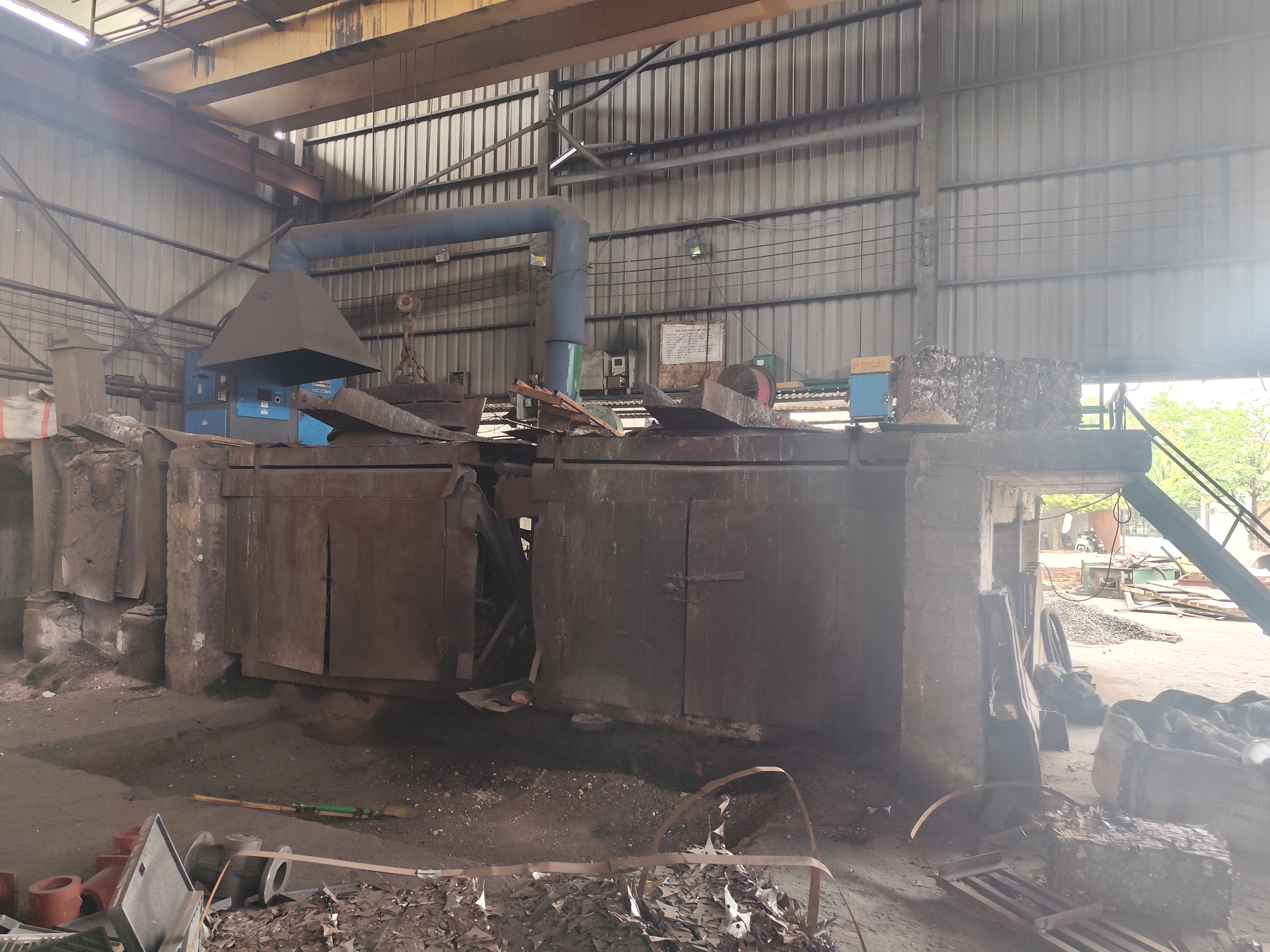
Supplier Evaluation: What to Audit at Vietnam Foundries
- Shell room conditions — Humidity-controlled drying room? Vietnam's tropical climate (70–90% humidity) causes shell cracking if drying is uncontrolled. Air-conditioned shell rooms with 40–50% RH are essential for consistent quality.
- Spectrometer — In-house optical emission spectrometer (OES) is non-negotiable. A foundry relying on third-party labs for composition testing cannot verify alloy chemistry in real time.
- Furnace capacity — Induction furnace size determines heat size and production capacity. 100–200 kg furnaces are standard. 500 kg+ furnaces indicate higher-volume capability.
- Wax injection equipment — Automated wax injection machines produce consistent patterns. Hand-pour wax operations are acceptable for prototypes only — reject for production.
- Heat treatment — In-house solution annealing furnace with calibrated thermocouples and chart recorders. Outsourced heat treatment adds lead time and a quality variable.
- Export experience — Ask for customer references in US/EU. A foundry exporting to Japan or Korea likely meets higher quality standards than one serving only the domestic Vietnamese market.
Common Quality Issues & How to Prevent Them
- Shrinkage porosity — Caused by inadequate risering or non-uniform wall thickness. Prevention: DFM review with the foundry before tooling, include riser simulation if budget allows.
- Intergranular corrosion (stainless) — Caused by sensitization from improper heat treatment. Prevention: Specify solution annealing with water quench and verify with ASTM A262 Practice E (oxalic acid etch test).
- Dimensional drift over production run — Wax mold wear causes gradual size change. Prevention: Specify wax mold inspection at defined intervals (every 5,000–10,000 shots) and include tool refurbishment in the contract.
- Surface inclusions — Ceramic shell fragments embedded in casting surface. Prevention: Thorough knockout and blasting procedures; specify 100% visual inspection with acceptance criteria.
RFQ Checklist for Vietnam Investment Casting
- 3D model (STEP) + 2D drawing with GD&T
- Material grade + standard (e.g., "CF8M per ASTM A351")
- Heat treatment requirements
- NDT requirements (VT, PT, RT — specify acceptance criteria)
- Surface finish requirements (as-cast Ra target or post-machined)
- Mechanical testing requirements (tensile, hardness, impact)
- Certifications needed (material cert 3.1 per EN 10204, FDA, PED)
- Annual volume + batch size + delivery schedule
- Secondary machining scope (specify machined surfaces on drawing)
- Incoterms (FOB HCMC / CIF destination)
Source Investment Castings from Vietnam
Dewin Vietnam sources investment castings from audited foundries with in-house spectrometers, humidity-controlled shell rooms, and heat treatment capabilities. Stainless steel, carbon steel, bronze, and specialty alloys — from prototype to 50,000+ annual production.
Frequently Asked Questions
Should I specify silica sol or water glass investment casting?
Silica sol is the process to specify for precision parts: it produces an as-cast surface finish of Ra 3.2–6.3 µm, while the cheaper water glass process delivers only Ra 6.3–12.5 µm. Vietnamese foundries run the same silica sol ceramic shell process as global competitors, holding linear tolerances of ±0.10 mm per 25 mm, or CT5–CT6 per ISO 8062.
How long does wax pattern tooling take at a Vietnam foundry?
Wax pattern tooling lead time at Vietnamese investment casting foundries is 2–4 weeks. Cost runs $2,000–4,000 for a simple single-cavity wax mold and $8,000–15,000 for complex tooling with soluble cores. US tooling costs 2–3x higher, while China tooling runs 10–20% lower, so the tariff position usually decides the comparison.
Why does humidity matter when auditing a Vietnamese foundry?
Shell room humidity control is a decisive quality variable at Vietnamese foundries, because the tropical climate runs 70–90% humidity and causes shell cracking when drying is uncontrolled. Air-conditioned shell rooms held at 40–50% RH are essential for consistent quality. Shell building takes 3–7 days and is the biggest process bottleneck, so ask about drying conditions during audits.
How do I prevent intergranular corrosion in stainless castings?
Intergranular corrosion in stainless castings comes from sensitization caused by improper heat treatment, so specify solution annealing with a water quench and verify it using ASTM A262 Practice E, the oxalic acid etch test. Request furnace charts showing time at temperature — solution annealing runs at 1,040–1,080°C, and this is a common failure in Asian-sourced stainless castings.