Laser Welding: Process, Advantages, and Applications in Vietnamese Manufacturing
February 12, 2026 · 6 min read
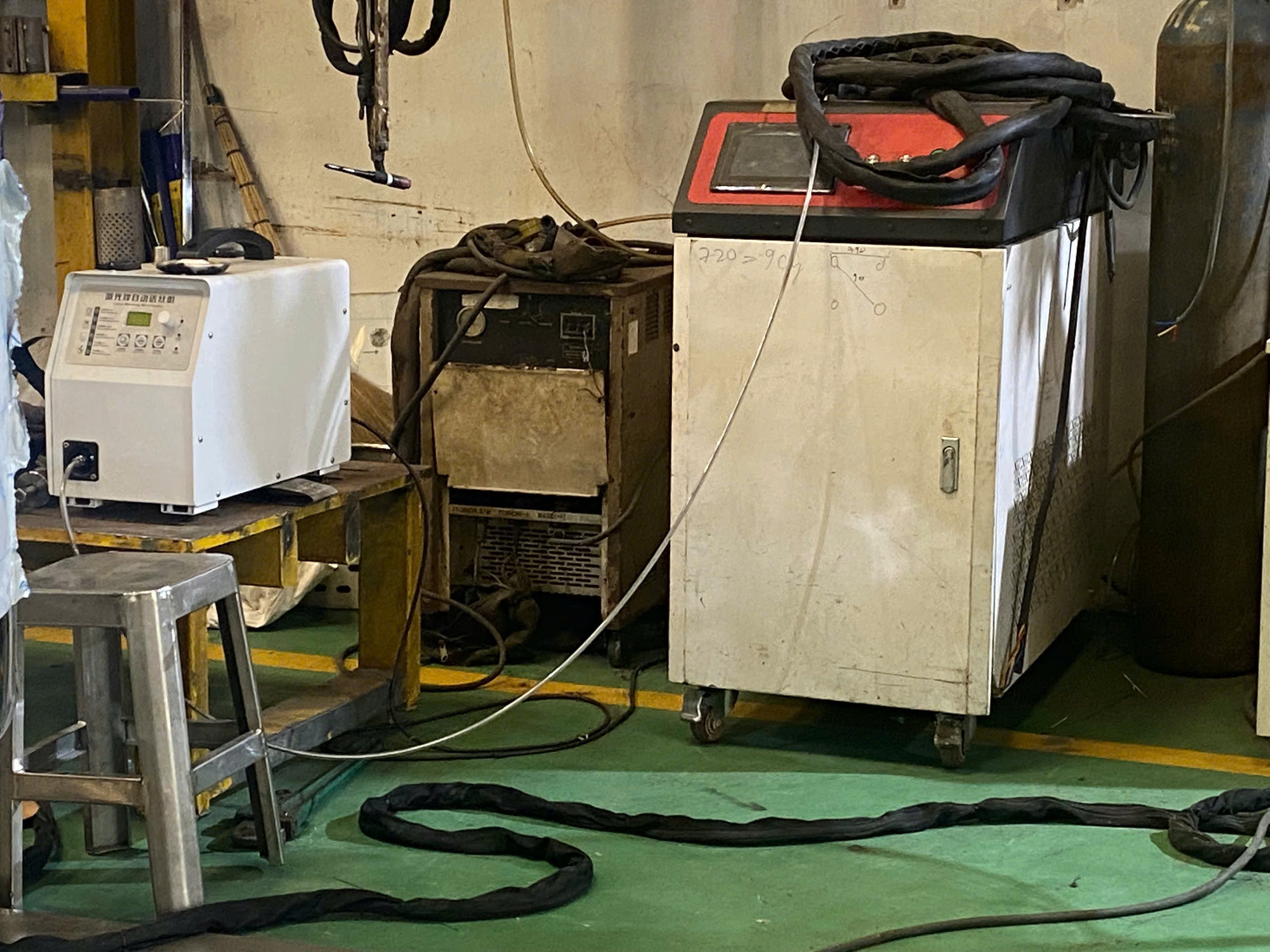
Laser welding uses a concentrated beam of coherent light to fuse metals with exceptional precision, minimal heat distortion, and high repeatability. Originally developed for aerospace applications in the 1970s, laser welding has become a mainstream joining process across automotive, electronics, medical devices, and general manufacturing.
As Vietnam's manufacturing sector moves into higher-value production, laser welding capability is becoming a key differentiator for factories serving global OEMs.
Laser welding fuses metals with a tightly focused, high-energy light beam, melting a narrow zone that solidifies into a strong joint. Compared with TIG or MIG, it delivers a very small heat-affected zone, minimal distortion, high speed, and precise, repeatable results — often with no filler.

Step Inside a Real Vietnamese Factory with Our Sourcing Team
Watch on YouTube
Real footage from an audited DEWIN partner factory in Vietnam.
How Laser Welding Works
A laser welding system focuses a high-energy beam — typically from a fiber, Nd:YAG, or CO₂ laser source — onto the joint between two workpieces. The concentrated energy melts a narrow zone of material, which solidifies into a strong metallurgical bond as the beam moves along the joint path.
A laser welder focuses a fiber, Nd:YAG, or CO₂ beam onto the joint between two parts. Conduction mode gently melts the surface for clean, shallow welds, while keyhole mode vaporizes a deep, narrow channel for full-penetration structural joints.
Two primary modes exist:
- Conduction welding: Lower power density melts the surface without deep penetration. Produces smooth, aesthetic welds ideal for visible surfaces and thin materials.
- Keyhole welding: Higher power density vaporizes material, creating a deep, narrow cavity (the "keyhole") that allows penetration-to-width ratios of 10:1 or more. Used for structural joints requiring full penetration.
Advantages Over Traditional Welding
- Minimal heat-affected zone (HAZ): The focused beam limits thermal distortion, preserving part geometry and material properties adjacent to the weld.
- High speed: Laser welding is significantly faster than TIG or MIG for thin-to-medium gauge materials, reducing cycle times.
- No filler material required: For many joint configurations, autogenous (no-filler) welding eliminates consumable costs and simplifies the process.
- Automation-friendly: Laser heads integrate easily with robotic arms and CNC gantry systems, enabling lights-out production.
- Precision and repeatability: Beam positioning accuracy of ±0.05 mm ensures consistent weld quality across thousands of parts.
- Dissimilar material joining: Certain laser welding techniques can join dissimilar metals (e.g., steel to aluminum) that are difficult or impossible to weld conventionally.

Common Applications
- Automotive: Battery enclosures, transmission components, body-in-white assemblies, sensor housings
- Electronics: Battery tab welding, hermetic sealing of sensor packages, micro-welding of connectors
- Medical devices: Surgical instrument assembly, implant components, catheter tip bonding
- Consumer products: Stainless steel housings, jewelry, watch cases
Design Guidelines for Laser Welding
- Joint fit-up is critical: Laser welding requires tight gap tolerances (typically <0.1 mm) due to the narrow beam. Design parts with features that self-locate and clamp tightly.
- Material selection matters: Low-carbon and stainless steels weld excellently. Aluminum is feasible but requires higher power due to reflectivity. High-carbon steels and some alloys may crack without pre/post-heat treatment.
- Avoid highly reflective surfaces at the joint: Polished surfaces can reflect the beam. Surface preparation or beam angle adjustment may be needed.
- Design for beam access: The laser needs line-of-sight to the joint. Avoid geometries that obstruct beam delivery.
- Consider shielding gas: Argon or nitrogen shielding prevents oxidation during welding — factor in gas delivery access when designing fixtures.
Laser Welding in Vietnam
Vietnam's rapid industrialization — driven by automotive, electronics, and EV battery manufacturing — has accelerated adoption of laser welding technology. Japanese and Korean joint ventures operating in Vietnam have introduced advanced fiber laser systems, and local suppliers are following suit.
DEWIN partners with factories equipped with modern fiber laser welding cells, including robotic systems capable of handling complex 3D weld paths. Whether you need micro-welding for electronics or structural welds for automotive components, our network covers the capability.
Need Laser Welding for Your Project?
DEWIN connects you with certified laser welding facilities in Vietnam. Get a quote →
Frequently Asked Questions
How tight must part fit-up be for laser welding?
Laser welded joints typically need gaps under about 0.1 mm, because the narrow beam cannot bridge loose fit-up and missed joints or weld defects follow. Design parts with features that self-locate and clamp tightly rather than expecting the weld to close a gap. Beam positioning accuracy of ±0.05 mm then delivers consistent quality across thousands of parts.
Can aluminum be laser welded?
Aluminum is feasible to laser weld but requires higher power because of its reflectivity. Low-carbon and stainless steels weld excellently, while high-carbon steels and some alloys may crack without pre- or post-heat treatment. Polished surfaces at the joint can reflect the beam, so surface preparation or a beam angle adjustment may be needed.
Does laser welding require filler metal?
Filler material is not required for many laser welding joint configurations — autogenous, no-filler welding eliminates consumable costs and simplifies the process. Shielding gas is a separate consideration: argon or nitrogen shielding prevents oxidation during welding, so gas delivery access has to be factored into fixture design from the start.