Every week, I review quotes from fabricators across Asia and the US for our clients — and the sheet metal fabrication cost debate never gets simpler.
Local sheet metal fabrication is generally more cost-effective than remote fabrication for most projects. Lower shipping costs, shorter lead times, zero import duties, and better communication outweigh the lower unit prices that overseas suppliers offer, unless you are running very high volumes of simple, standardized parts.
But the real answer depends on your specific situation customs duties 1. Volume, part complexity, tolerance requirements, and your internal bandwidth all shift the equation. Below, I break down the key factors so you can make a clear-eyed sourcing decision.
How do I calculate the total landed cost of my sheet metal parts when comparing local and overseas fabrication?
A lesson we learned early at DEWIN: the purchase order price is never the final number PPAP documentation 2. Clients who compared only unit prices routinely underestimated their total cost of ownership by 20–40%.
To calculate total landed cost, add the unit price to freight charges, customs duties, insurance, packaging, inland transport, inspection fees, payment-related costs, and the cost of potential rework or delays. This sum — not the piece price alone — reveals the true cost-effectiveness of local versus remote sheet metal fabrication.
What goes into a landed cost calculation?
Most purchasing managers I work with start by comparing per-piece quotes. That is natural. But when we help US clients source custom parts from Vietnam or other Asian countries, we walk them through every cost layer before they commit. Here is the framework we use.
| Cost Component | Local Fabrication | Remote / Overseas Fabrication |
|---|---|---|
| Unit price | Higher (US labor costs) | Lower (labor costs in Asia) |
| Domestic freight | Low (short distance) | Moderate to high (port to warehouse) |
| International freight | None | High (ocean or air) |
| Import duties / tariffs | None | 5–25%+ of declared value |
| Customs brokerage | None | $150–$500+ per shipment |
| Insurance | Minimal | 0.5–2% of shipment value |
| Packaging for export | Standard | Reinforced / export-grade |
| Inspection & QC travel | Drive to local shop | Third-party or on-site audit fees |
| Inventory holding cost | Low (fast replenishment) | High (longer lead times = more safety stock 3) |
| Rework / reject cost | Low (fast correction) | High (return shipping or local rework) |
Why piece price alone misleads you
Design decisions made during the CAD phase determine 70–80% of a product's manufacturing cost. If you optimize the design with your fabricator before production, you can cut fabrication costs by 20–40%. That kind of collaborative design review happens naturally with a local partner — or with a remote partner who has strong project management, like our team. But it rarely happens when you simply email a drawing to the cheapest bidder overseas and wait for a quote.
A practical example
Suppose a remote fabricator quotes $4.00 per bracket versus $6.50 locally. On 5,000 pieces, you save $12,500 on paper. But add $2,800 in ocean freight, $1,500 in duties at 10%, $400 in customs brokerage, $600 in export packaging, and $1,200 in extra safety stock carrying cost. Your remote total is $26,500 versus $32,500 locally — a real gap of only $6,000. Now factor in one quality reject that forces a second shipment or rework. The savings vanish.
The point is simple: calculate every line item. For a deeper look at building a complete cost model, see our guide on how to estimate total landed cost for sheet metal fabrication from Vietnam to the US. Then decide.
Will the long-distance shipping and logistics fees eat into my potential savings from remote manufacturing?
One trade-off I weigh on nearly every project is whether the freight bill will swallow the production savings. For heavy or bulky sheet metal components, the answer is almost always yes.
Long-distance shipping and logistics fees can absolutely eat into — and even exceed — the savings from remote manufacturing. Ocean freight for heavy sheet metal parts, combined with customs clearance delays, insurance, and damage risk, often adds 15–30% to the total cost, making local fabrication the more economical choice for most orders.
How freight costs scale with weight and distance
Sheet metal parts are dense. A pallet of steel brackets weighs far more than a pallet of plastic housings. Freight carriers charge by weight or volume — whichever is greater. For sheet metal, weight almost always governs. That means your shipping costs climb fast.
| Shipping Method | Typical Cost Range (US import) | Transit Time | Best For |
|---|---|---|---|
| Ocean freight (FCL) 5 | $3,000–$8,000 per 20ft container | 4–8 weeks | High-volume, heavy parts |
| Ocean freight (LCL) | $150–$400 per CBM | 5–10 weeks | Smaller batches |
| Air freight | $4–$8 per kg | 5–10 days | Urgent, lightweight parts |
| Domestic ground (local) | $200–$1,500 | 1–5 days | Any volume |
The hidden logistics risks
Beyond the freight invoice, supply chain risks 6 multiply with distance. I have seen shipments delayed three weeks at port because of a paperwork error on the commercial invoice. One client's brackets arrived with surface damage because the export packaging was insufficient for a rough ocean crossing. These are not rare events — they are routine when you source internationally without experienced logistics management.
Customs processing adds another layer. Tariff classifications 7 for sheet metal parts can be disputed. Recent US trade policies have pushed duties on certain metal imports well above 25%. If your product falls under a targeted tariff code, the duty alone can make remote fabrication uncompetitive.
When remote shipping still makes sense
For very high volumes of simple, lightweight sheet metal parts — say stamped washers or small mounting plates — the shipping cost per piece drops to a fraction of a cent. In those cases, the lower labor costs overseas can deliver genuine savings. But for custom part manufacturing with moderate volumes or heavier gauges, local fabrication almost always wins on total logistics cost. For a detailed breakdown of how to balance logistics cost and time when sourcing sheet metal fabrication from Vietnam, we have published a separate guide.
Our role at DEWIN is to give clients an honest logistics estimate before they commit. Sometimes we steer them toward a Vietnam-based supplier because the numbers work. Other times, we tell them the freight math does not add up. Transparency here saves everyone money.
How can I mitigate the risk of quality defects and rework when I choose a remote sheet metal supplier?
A buyer interaction that sticks with me: a US purchasing manager told me he had rejected an entire container of sheet metal housings from a previous overseas supplier because the bend radii were out of spec on 30% of the parts. His company spent weeks sorting, reworking, and re-inspecting. That experience shaped how we built our quality control process 8 at DEWIN.
To mitigate quality defects from a remote supplier, implement a structured approach: require PPAP documentation before mass production, conduct in-process inspections, mandate final inspection with detailed reports, and choose a supplier with a local QC team in the manufacturing country. Clear drawing callouts and early design reviews further reduce the risk of rework.
Why remote fabrication raises quality risk
Communication barriers are the root cause of most quality failures in remote manufacturing. When a fabricator is 12 time zones away, a simple question about a drawing note can take 24 hours to resolve. Multiply that by dozens of dimensions and tolerances, and errors compound.
Local fabrication allows you to walk into the shop, point at the part, and talk through the issue in real time. That feedback loop is measured in minutes, not days.
A step-by-step quality mitigation process
Here is the process we follow with our clients to get it right the first time:
- Drawing review — Before quoting, our engineers review every drawing for ambiguous dimensions, missing tolerances, and material callouts. We flag potential issues and send a formal query sheet.
- PPAP (Production Part Approval Process) — For critical parts, we require first-article samples with full dimensional reports before mass production begins.
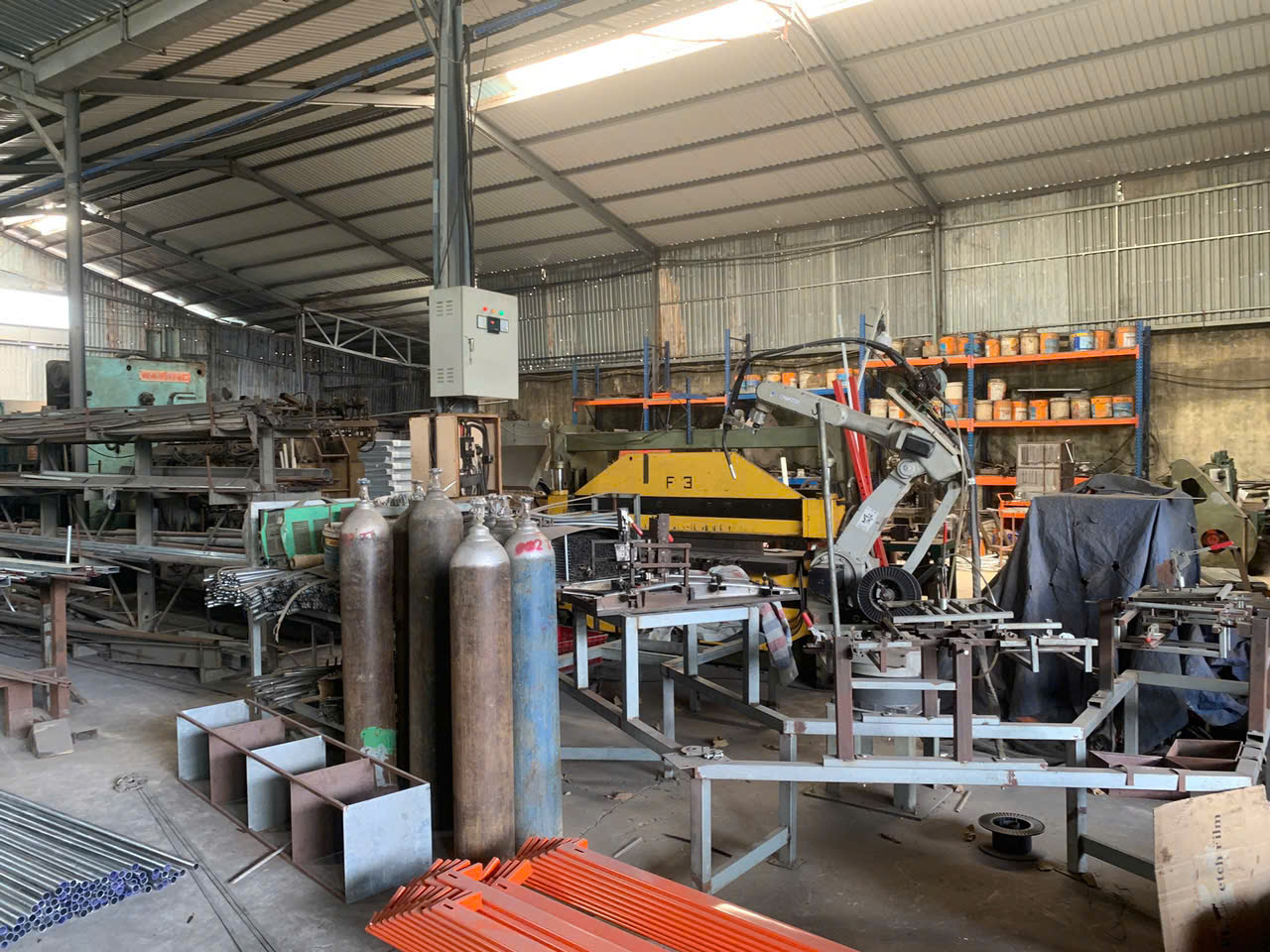
- In-process checks — Our Vietnam and China teams conduct in-process inspections at key stages: after cutting, after bending, after welding, and after surface finishing.
- Final inspection — A comprehensive final inspection covers dimensions, surface quality, coating thickness, and packaging integrity.
- Corrective action loop — If defects are found, production stops. We issue a corrective action request, verify the fix, and re-inspect before shipping resumes.
Tolerance rationalization saves cost and reduces defects
Tighter tolerances cost more and increase the chance of rejects. Tolerance rationalization — relaxing non-critical dimensions to standard fabrication capabilities — can reduce part costs by 15–30% and simultaneously lower defect rates. This is where early collaboration between the design engineer and the fabricator pays off. We often facilitate this review as part of our co-development service.
| Tolerance Level | Typical Cost Impact | Defect Risk |
|---|---|---|
| Standard (±0.5 mm) | Baseline | Low |
| Tight (±0.2 mm) | +15–25% | Moderate |
| Very tight (±0.1 mm) | +30–50% | High |
Choosing the right remote partner
Not all remote suppliers are equal. The key differentiator is whether the supplier has a dedicated quality team and structured processes — or whether they just ship what comes off the line. When we audit suppliers for our clients, we look for documented inspection plans, calibrated equipment, and a track record of corrective action. A supplier who cannot show you their process control records is a supplier who will cost you more in the long run.
Is my internal management time more expensive than the unit price savings I get from sourcing sheet metal abroad?
When I sit down with a new client, I often ask: "How many hours per week does your team spend managing your overseas suppliers?" The number is usually higher than they expect — and the cost of those hours is rarely on any spreadsheet.
Yes, internal management time frequently exceeds the unit price savings from overseas sourcing. Coordinating across time zones, resolving quality disputes, tracking shipments, and managing customs paperwork can consume 10–30 hours per month of senior staff time — cost that often equals or surpasses the per-part savings from remote sheet metal fabrication.
Quantifying your management overhead
Most purchasing managers earn $40–$70 per hour when you include salary, benefits, and overhead. If managing an overseas fabricator takes 15 hours per month, that is $600–$1,050 per month in hidden cost. Over a year, that is $7,200–$12,600 — money that never appears on the purchase order but directly reduces your real savings.
Here is a comparison of typical management tasks for local versus remote sourcing:
| Management Task | Local Fabrication | Remote Fabrication |
|---|---|---|
| RFQ and drawing clarification | 1–2 hours | 3–6 hours (time-zone delays) |
| Sample approval | 1 day (drive to shop) | 2–4 weeks (shipping samples) |
| Order follow-up | 1 email / week | 3–5 emails / week + calls |
| Quality dispute resolution | Same-day visit | Days to weeks |
| Shipment tracking | Minimal | Ongoing (ocean, customs, last-mile) |
| Customs & compliance paperwork | None | 2–5 hours per shipment |
The compounding effect of delays
When lead times stretch from two weeks to eight weeks, your production planning gets harder. You need more safety stock. You lose flexibility to respond to design changes or urgent customer requests. If a quality issue forces rework overseas, you may wait another shipping cycle — adding weeks or months to your timeline.
These delays carry real cost: lost sales, strained customer relationships, and expedited air freight charges when you need parts yesterday.
When the management burden is worth it
For large, recurring programs with stable designs and high volumes, the management overhead per piece drops to almost nothing. If you order 50,000 identical brackets every quarter, the time you spend managing the relationship is spread across enough units that the lower labor costs overseas still deliver net savings. This is the scenario where domestic vs. overseas sheet metal fabrication suppliers tips in favor of offshore.
But for custom part manufacturing with frequent design changes, short runs, or tight tolerances, the management load per piece is heavy. In those cases, a local fabricator — or a managed sourcing partner like our team at DEWIN — saves you more in time than you gain in unit price.
Production efficiency and the role of technology
Modern local fabricators with automated laser cutters, CNC press brakes 9, and robotic welders have narrowed the production efficiency gap with overseas shops. Their higher equipment investment translates into faster setups, tighter tolerances, and less manual rework. For short-run fabrication, where setup and programming time dominate the cost, a tech-savvy local shop can match or beat the total cost of a remote supplier — without the management headache.
At the same time, material sourcing plays a role. Local fabricators buy from domestic steel service centers with shorter lead times and no import complications. Remote fabricators may offer access to lower-cost raw materials, but the savings are offset by longer procurement cycles and the risk of material substitution if quality control is weak.
Conclusion
Choosing between local and remote sheet metal fabrication comes down to total cost — not unit price. Factor in shipping, duties, quality risk, lead times, and your own management hours before you decide.
Frequently Asked Questions
What goes into a landed cost calculation?
Most purchasing managers I work with start by comparing per-piece quotes. That is natural. But when we help US clients source custom parts from Vietnam or other Asian countries, we walk them through every cost layer before they commit. Here is the framework we use.
How do I calculate the total landed cost of my sheet metal parts when comparing local and overseas fabrication?
A lesson we learned early at DEWIN: the purchase order price is never the final number PPAP documentation 2 . Clients who compared only unit prices routinely underestimated their total cost of ownership by 20–40%.
Will the long-distance shipping and logistics fees eat into my potential savings from remote manufacturing?
One trade-off I weigh on nearly every project is whether the freight bill will swallow the production savings. For heavy or bulky sheet metal components, the answer is almost always yes.
Footnotes
1. Official government source defining customs duties and their purpose. ↩︎
2. Provides a comprehensive explanation of the PPAP process and its importance. ↩︎
3. Defines safety stock and its role in inventory management. ↩︎
4. Explains the components of total landed cost in supply chain. ↩︎
5. Defines Full Container Load (FCL) shipping and its characteristics. ↩︎
6. Explains what supply chain risks are and their management. ↩︎
7. Explains tariff classifications and their role in international trade. ↩︎
8. Describes the steps and principles of a manufacturing quality control process. ↩︎
9. Explains the function and technology of CNC press brakes in metal forming. ↩︎