What DFM and Inspection Steps Control Precision CNC Machining and Driveline Forging?
Precision manufacturing relies on pre-quote 2D and 3D tolerance analysis, mold flow simulations, and multi-stage metrology. Operations integrate 16-stage driveline forging workflows alongside 136 robotic CNC turning centers, hydraulic internal spline broaching holding ±0.008 mm raceway concentricity, CQI-9 controlled carbonitriding, eddy-current crack sorting, and coordinate measuring machine dimensional verification.
Key Takeaways
- Engineering teams in Xi'an, China (26 staff) and Ho Chi Minh City, Vietnam (11 staff) execute pre-quote DFM reviews, PPAP Level 3 validation, and ZEISS 3D CMM inspection.
- Precision driveline forging and internal spline broaching achieve ±0.008 mm concentricity and HRC 58–62 case hardness using CQI-9 heat-treatment protocols.
- Powder metallurgy facilities utilize 15T–500T automatic presses for sintered gears, SAE841 bushings, and 17-4PH or 316L stainless steel MIM components.
- Fabrication lines support progressive stamping up to 315T, robotic welding, 2.0T–5.0T hand pallet trucks, and high-purity fluoropolymer machining.
Engineers implement comprehensive Design for Manufacturability (DFM) reviews before cutting tool steel. This includes 2D and 3D tolerance analysis, progressive die design, and mold flow simulation. Production facilities leverage 5-axis, turn-mill, and Swiss CNC machining cells to produce intricate components across titanium, Inconel, stainless steel, and aluminum alloys for specialized applications.
Automotive drivetrain production follows a 16-stage vertically integrated process flow. Raw steel bar cutting leads to isothermal annealing, shot blasting, saponification, and precision cold or warm forging. Following controlled normalizing, components undergo turning across 136 robotic CNC lathes and four German EMAG centers, followed by high-speed internal spline broaching, robotic CNC milling, groove grinding, CQI-9 carbonitriding, eddy-current defect sorting, and ultrasonic cleaning.
- Spline pitch concentricity controlled within ±0.008 mm on high-speed hydraulic broaching lines
- CQI-9 automated continuous carbonitriding achieving case depth of 0.85 mm to 1.25 mm (HRC 58–62)
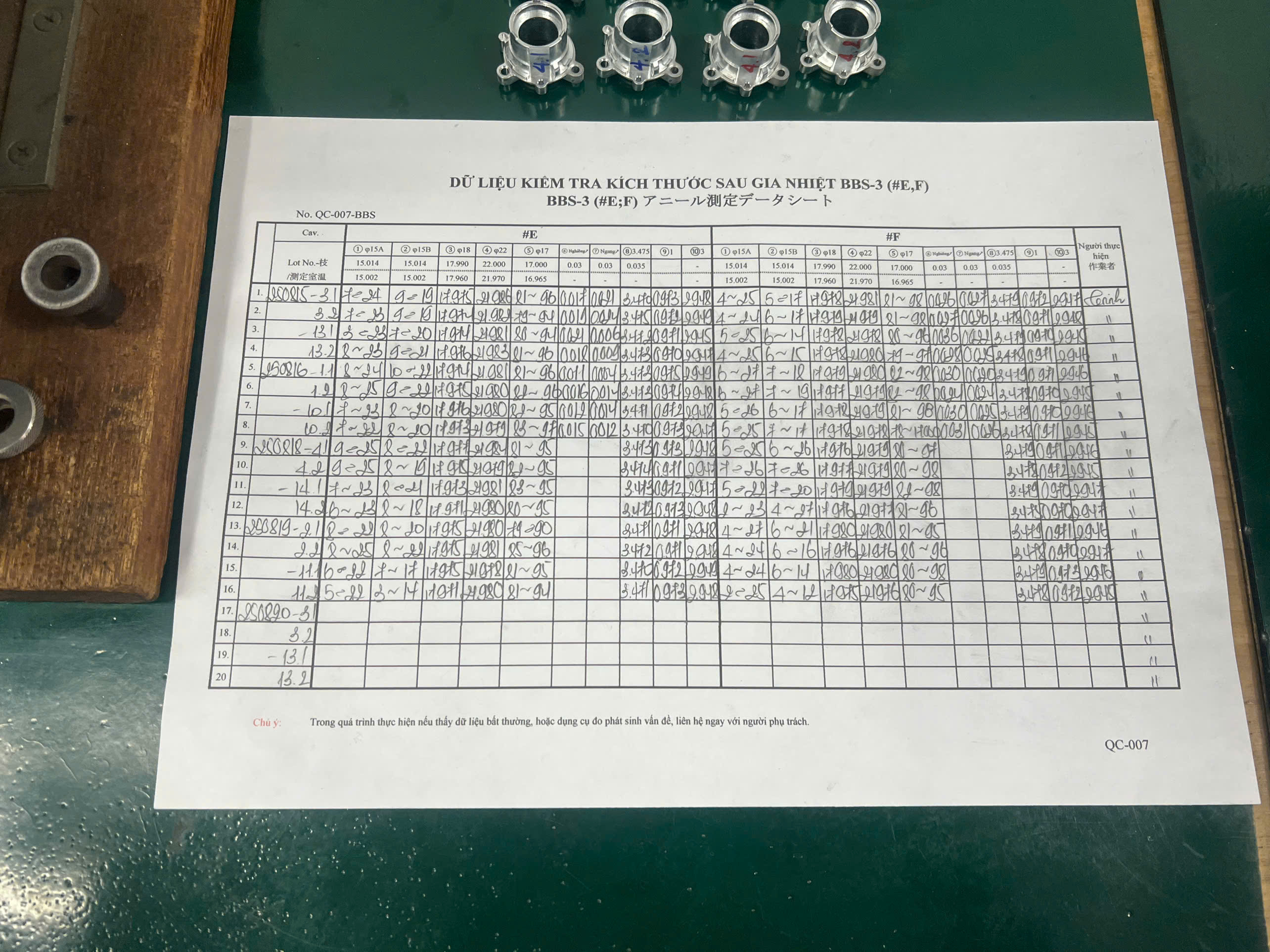
- Metrology verification using ZEISS and Mitutoyo 3D coordinate measuring machines (CMM)
- Driveline components including star-shaped sleeves (#68-3 to #125), trunnion brackets, and core shafts
Which Powder Metallurgy and Bearing Manufacturing Processes Support Heavy Industrial Hardware?
Industrial hardware manufacturing utilizes CNC automatic powder presses ranging from 15 to 500 tons for sintered gears, oil-impregnated bronze bushings, and metal injection molding. Bearing capabilities include single-row to three-row slewing rings up to 5,000 mm in diameter, self-lubricating composite bushings, and spherical plain bearings engineered for high load capacities.
Powder Metallurgy (PM) and Metal Injection Molding (MIM) operations manufacture complex iron, copper, and stainless steel structural parts. Automated 15T to 500T CNC powder presses paired with mesh-belt and vacuum sintering furnaces produce items such as shock absorber pistons, sintered transmission sprockets, oil pump rotors, and soft magnetic cores.
Bearing manufacturing spans multiple specialized facilities. Large-scale plants produce Ø200–5,000 mm four-point contact ball, three-row roller, and crossed-roller slewing bearings, alongside enclosed slewing drives. Additional production lines supply self-lubricating PTFE composite bushings (SF-1/SF-2), bimetal bearings (JF-800), graphite-plugged bronze bearings, and full-range maintenance-free spherical plain bearings.
- Sintered PM materials: SAE841 and Sint B50 oil-impregnated bronze, 304/316L stainless steel, and 17-4PH MIM parts
- Slewing bearing dimensions: Ø200 mm to 5,000 mm single/double-row ball and three-row roller configurations
- Spherical plain bearings: GE, GEG, GEZ inch/metric, GAC angular contact, and GX thrust types
- Surface treatments: Cr, Zn, and MoS2 phosphating surface processing
How Are Progressive Stamping and Fluoropolymer Components Quality-Controlled for Turnkey Assemblies?
Progressive stamping and assembly programs utilize up to 315-ton presses, laser cutting, and robotic MIG welding cells paired with specialized outdoor powder coatings. For fluoropolymer parts, cleanroom high-temperature injection molding and multi-axis CNC centers machine engineering plastics like PEEK, PTFE, and PFA to maintain exact tolerances.
Sheet metal fabrication hubs operate progressive stamping presses up to 315 tons, laser cutting equipment, and multi-robot MIG welding cells. These capabilities deliver high-volume stamped brackets and assemblies, including fire extinguisher brackets made from 2.0 mm to 4.0 mm gauge SPCC or SS304 steel. Finished parts undergo protective coating processes, including 1,500-hour UV powder coating and 240-hour ASTM B117 salt spray processing.
Turnkey assembly facilities in Bac Ninh, Vietnam produce 2.0T to 5.0T hydraulic hand pallet trucks conforming to ISO 3691-5 standards. Lines feature robotic MIG welding, integrated AC/DF cast-iron hydraulic pumps with 100% leak testing, and PU or nylon rollers. Concurrently, specialized engineering plastic units utilize cleanroom environments and multi-axis CNC centers to process high-purity PTFE, PFA, FEP, PVDF, and PEEK components.
- Hand pallet truck lines: 2.0T, 2.5T, 3.0T, and 5.0T capacities with 550 mm and 685 mm fork widths
- Extinguisher brackets: SPCC/SS304 construction with 5G vibration resistance and quick-release latches
- Fluoropolymer materials: PEEK, PTFE, PFA, FEP, PVDF, and FFKM encapsulated O-rings
- Cleanroom manufacturing: Class assembly, DI water cleaning, and high-temperature hot-runner injection molding

Precision Manufacturing & Sourcing Specification Matrix
| Technical Dimension | Standard Commercial Grade | High-Precision OEM Export Grade | DEWIN Verification Protocol |
|---|---|---|---|
| Machining & Forming Tolerance | ISO 2768-m (±0.10 mm nominal) | ISO 2768-f (±0.01 mm – ±0.025 mm critical bores) | Calibrated 3D CMM & Air/Pin Gauging |
| Surface Roughness & Finish | Ra 1.6 – 3.2 µm as-machined / standard coat | Ra 0.4 – 0.8 µm precision ground / MIL-A-8625 anodized | Profilometer & Coating Thickness Gauge |
| Material & Alloy Certification | Supplier Mill Test Report (MTR) | Independent OES chemical & mechanical verification | EN 10204 3.1 + RoHS/REACH Compliance |
| Batch Inspection & Packaging | ISO 2859-1 (AQL 1.0 Major / 2.5 Minor) | Zero-defect critical features + VCI export crating | Pre-Shipment Inspection (PSI) Report |
Frequently Asked Questions
Where are the engineering and procurement service centers located?
DEWIN operates a 26-person Purchasing and Engineering Service Center in Xi’an, China, an 11-person local team in Ho Chi Minh City, Vietnam, and a Singapore headquarters, with a Thailand automotive forging plant launching in 2027.
What metrology equipment is used to verify machined component dimensions?
Facilities use ZEISS and Mitutoyo 3D coordinate measuring machines (CMM), contour measuring equipment, surface roughness testers, and gear profile meters in temperature-controlled laboratories.
What quality management documentation is provided with production runs?
Production deliverables include PPAP Level 3 documentation, 2D/3D DFM tolerance analysis, material certificates of analysis (COA), resident SQE audit reports, and 100% functional cycle inspection documentation.
What annual output volumes are established for drivetrain spline components?
Ningbo Keminsheng facilities maintain monthly outputs of 2.9 million CV joint star-shaped sleeves (#68-3 to #125) and annual production of 3.6 million trunnion brackets.