How Are Precision Automotive Driveline Parts Manufactured to Exact Tolerances?
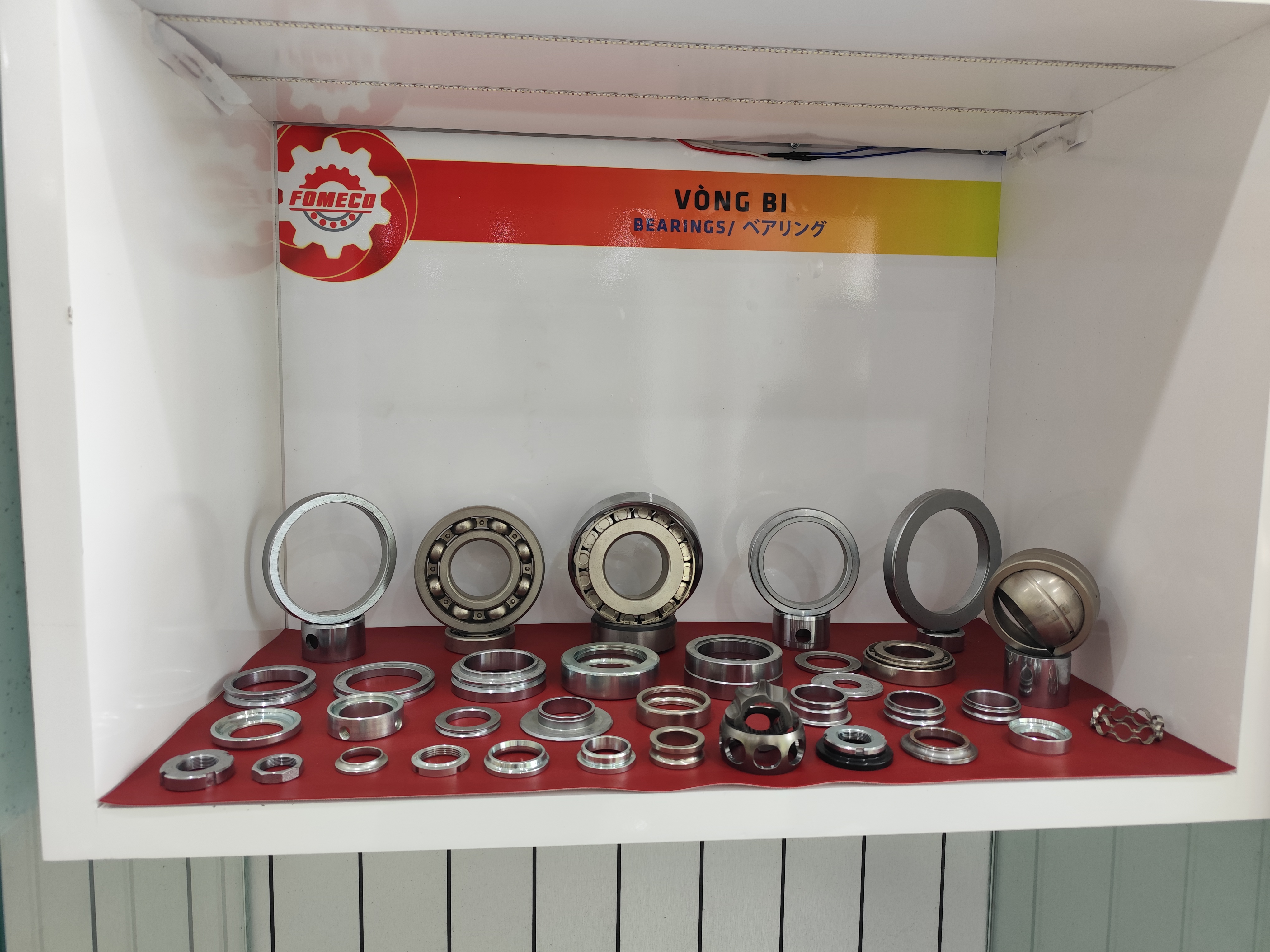
Automotive driveline components such as CV star sleeves and trunnions undergo a 16-stage vertically integrated process flow. Raw steel bars are cut, annealed, cold or warm forged, and machined using 136 robotic CNC lathes and EMAG turning cells to maintain ±0.008 mm spline pitch tolerances before CQI-9 carbonitriding.
Key Takeaways
- Precision automotive driveline components like CV joint star sleeves hold ±0.008 mm spline pitch concentricity using 136 robotic CNC lathes and hydraulic pull broaching.
- Multi-regional production centers in Xi'an (26 staff) and Ho Chi Minh City (7 staff) oversee factory audits, DFM analysis, and CMM metrology verification.
- Technical processes span powder metallurgy, AS9100D aerospace 5-axis CNC machining, high-tonnage stamping, and CQI-9 heat treatment.
The manufacturing process utilizes 20CrMnTi or SAE 5120H carburizing alloy steel to produce drive components that endure high stress. Closed-die precision forging ranging from 160T to 630T creates blanks with uniform grain flow through controlled normalizing and isothermal annealing.
After cold or warm forging, high-speed hydraulic pull broaching forms internal splines conforming to DIN 5480 and JIS B 1603 standards. Components undergo automated groove grinding, continuous furnace carbonitriding to achieve case depth between 0.85 and 1.25 mm (HRC 58–62), 100% eddy-current crack testing, and vacuum anti-rust packaging.
- 16-stage integrated production flow from raw steel bar cutting to vacuum packaging
- 136 robotic CNC lathes and 4 German EMAG hard-turning centers
- Hydraulic pull broaching achieving ±0.008 mm raceway concentricity
- CQI-9 heat treatment yielding HRC 58–62 case hardness
- Inspection Metrology: ZEISS and Mitutoyo 3D CMM, contour, and surface roughness verification
What Engineering Capabilities Support Powder Metallurgy and 5-Axis CNC Machining?
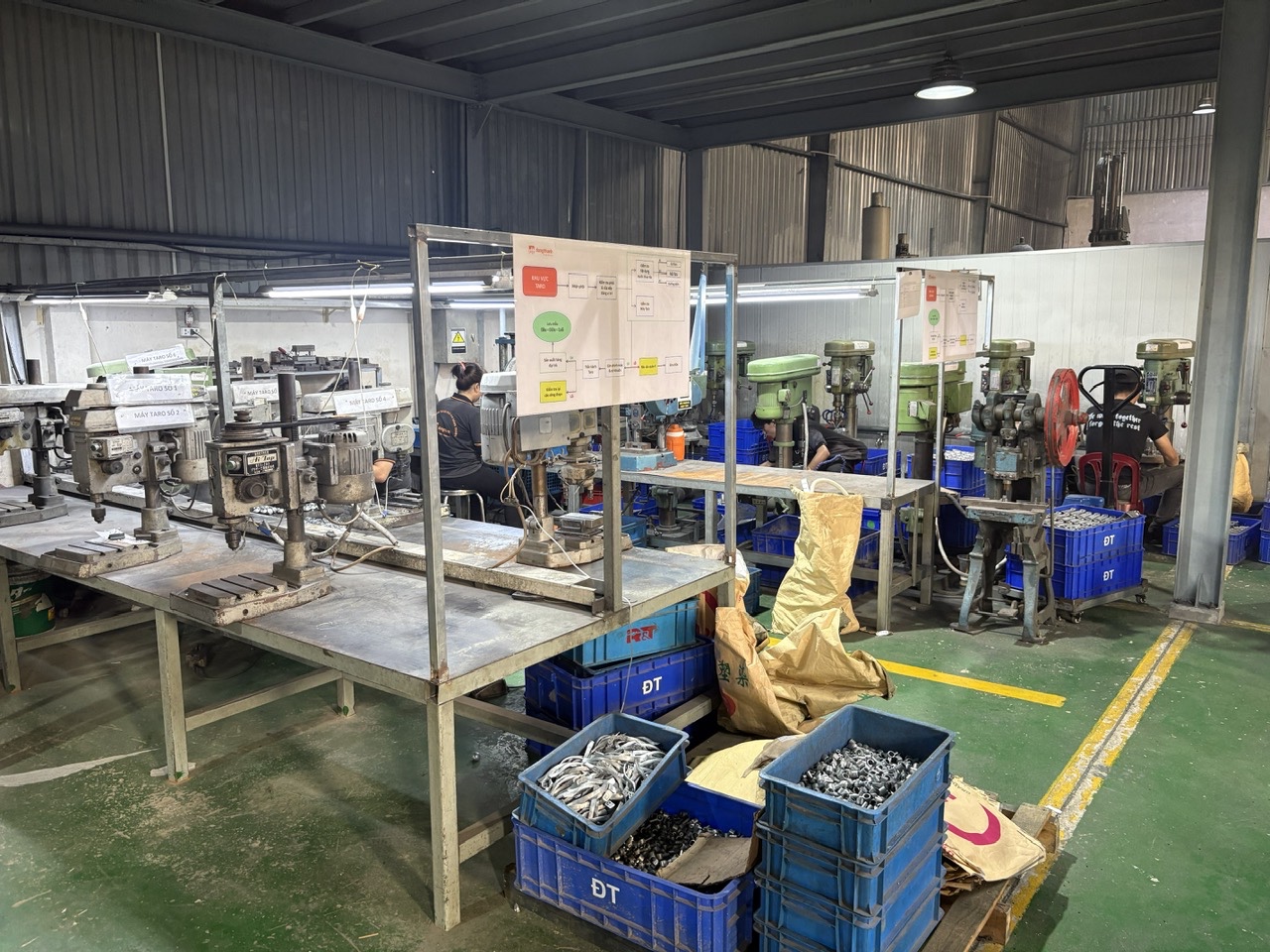
Powder metallurgy and 5-axis CNC machining provide specialized methods for complex structural components. Powder metallurgy utilizes 15-ton to 500-ton presses and sintering furnaces for gears and bushings, while 5-axis CNC centers machine titanium, Inconel, and fluoropolymers under ISO 9001 and AS9100D framework standards.
Powder Metallurgy (PM) and Metal Injection Molding (MIM) utilize iron, copper, bronze, and 17-4PH or 316L stainless steel powders. Automatic CNC powder presses ranging from 15T to 680T form structural gears, shock absorber pistons, oil-impregnated bronze bushings, and intricate MIM lock components using mesh-belt and vacuum sintering furnaces.
For high-complexity aerospace and industrial applications, 5-axis and 4-axis CNC machining centers work alongside turn-mill compound machines and slow-wire EDM tools. Materials processed include titanium, Inconel, aluminum, and high-purity fluoropolymers such as PTFE, PFA, PEEK, and PVDF.
- Powder metallurgy pressing force from 15T to 680T using mesh-belt and vacuum sintering
- Metal injection molding for 17-4PH and 316L stainless steel structural parts
- Aerospace-grade 5-axis CNC machining for titanium, Inconel, and alloy materials
- High-purity fluoropolymer machining: PTFE, PFA, FEP, PVDF, and PEEK materials
- Quality metrology: ZEISS CMM, gear profile testing, and 3D coordinate measuring
Which Quality Inspection and Factory Oversight Protocols Ensure Sub-50 PPM Performance?
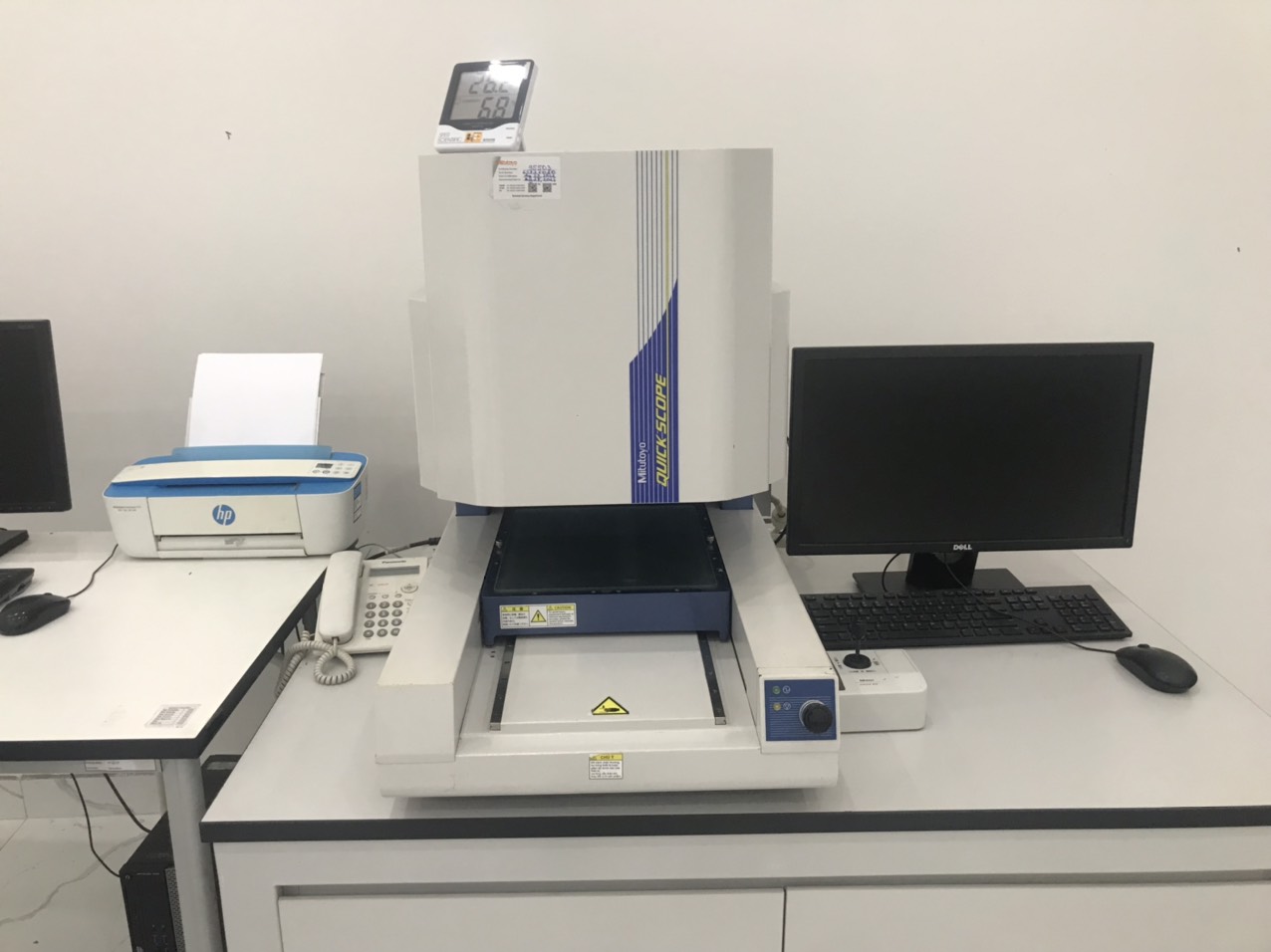
Quality control relies on on-site engineering supervision, DFM tolerance reviews, and dimensional verification using ZEISS and Hexagon 3D CMM metrology. Technical centers in Xi'an and Ho Chi Minh City conduct factory audits, material composition analysis, and full PPAP Level 3 documentation to maintain strict defect benchmarks.
Dedicated service hubs in Xi'an (26 engineering staff) and Ho Chi Minh City (7 local staff) manage quality control across manufacturing facilities in China, Vietnam, and Thailand. Pre-production steps include 2D and 3D tolerance stack-up analysis, progressive die simulation, and mold flow modeling.
In-process quality verification combines 3D CMM dimensional checking with metallographic density testing, surface roughness analysis, and 240-hour ASTM B117 salt spray exposure for stamped and welded assemblies. Full Production Part Approval Process (PPAP Level 3) documentation and material certificates confirm batch consistency.
- Pre-production DFM analysis and 2D/3D tolerance verification
- ZEISS and Hexagon 3D coordinate measuring machines (CMM)
- Metallographic density verification and eddy-current crack detection
- 240-hour ASTM B117 salt spray testing and 1,500-hour UV powder coat testing
- PPAP Level 3 documentation and batch material analysis (COA)
Precision Manufacturing & Sourcing Specification Matrix
| Technical Dimension | Standard Commercial Grade | High-Precision OEM Export Grade | DEWIN Verification Protocol |
|---|---|---|---|
| Machining & Forming Tolerance | ISO 2768-m (±0.10 mm nominal) | ISO 2768-f (±0.01 mm – ±0.025 mm critical bores) | Calibrated 3D CMM & Air/Pin Gauging |
| Surface Roughness & Finish | Ra 1.6 – 3.2 µm as-machined / standard coat | Ra 0.4 – 0.8 µm precision ground / MIL-A-8625 anodized | Profilometer & Coating Thickness Gauge |
| Material & Alloy Certification | Supplier Mill Test Report (MTR) | Independent OES chemical & mechanical verification | EN 10204 3.1 + RoHS/REACH Compliance |
| Batch Inspection & Packaging | ISO 2859-1 (AQL 1.0 Major / 2.5 Minor) | Zero-defect critical features + VCI export crating | Pre-Shipment Inspection (PSI) Report |
Frequently Asked Questions
What technical specifications apply to custom stamped and welded hardware programs?
Custom stamped hardware programs utilize high-tonnage progressive presses up to 315T, laser cutting, and robotic MIG/TIG welding. Parts use SPCC steel or SS304 stainless steel in 2.0 to 4.0 mm gauges, featuring 240-hour ASTM B117 salt spray resistant powder coatings and 5G vibration testing.
How are hydraulic hand pallet trucks manufactured and tested in Vietnam?
Hand pallet trucks with capacities from 2.0T to 5.0T are manufactured in Bac Ninh, Vietnam, adhering to ISO 3691-5 standards. Lines feature robotic MIG welding, integrated AC/DF cast-iron hydraulic pumps, PU/Nylon rollers, and 100% hydraulic leak testing.
What types of slewing bearings can be produced through these regional manufacturing networks?
Slewing bearing production covers diameters from Ø200 mm to Ø5,000 mm. Styles include single and double-row four-point contact ball, three-row roller, and crossed-roller slewing bearings, alongside enclosed SE/WE slewing drives built with induction-hardened raceways.
What materials are used for precision self-lubricating and spherical bearings?
Self-lubricating and spherical bearings utilize PTFE composite linings, bimetal steel-bronze strips, graphite-plugged bronze, and chromium/zinc/phosphate surface treatments. Spherical plain bearings meet GB/T 9161–9164 standards for maintenance-free operation under heavy radial and axial loads.