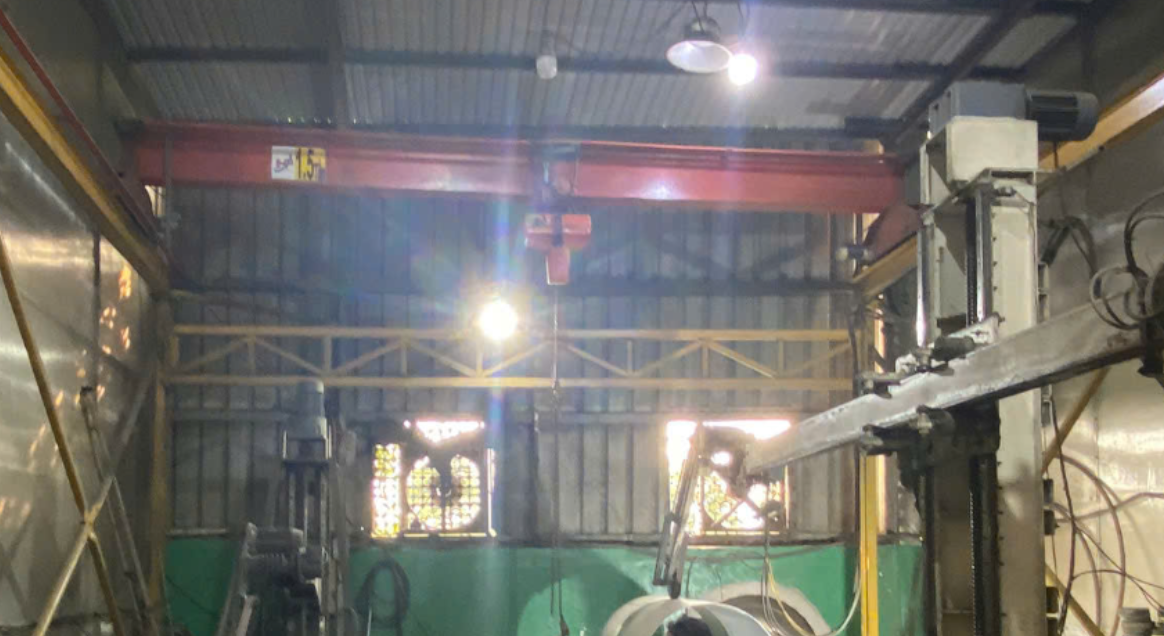
What Manufacturing Processes Power Driveline and Precision Mechanical Component Production?
Driveline and precision component production relies on integrated multi-step manufacturing workflows. Facilities combine 160T to 630T closed-die cold and warm forging with isothermal normalizing, automated internal spline broaching holding ±0.008 mm pitch concentricity, and robotic CNC hard turning to fabricate automotive CV joint star sleeves, trunnion brackets, and core shafts efficiently.
Key Takeaways
- Multi-region production operations across China, Vietnam, and Thailand are coordinated through engineering hubs in Xi'an and Ho Chi Minh City.
- Precision manufacturing encompasses processes such as AS9100D 5-axis CNC machining, powder metallurgy (PM/MIM), cold and warm forging, spline broaching, and high-tonnage progressive stamping.
- Quality control workflows incorporate ZEISS 3D CMM metrology labs, CQI-9 carbonitriding, eddy-current crack testing, and 100% functional pump leak verification.
High-precision drivetrain production requires strict process control across raw steel bar cutting, shot blasting, saponification, and controlled normalizing. Facilities such as Ningbo Keminsheng Machinery utilize 136 robotic CNC lathes and German EMAG hard-turning centers working alongside 72 robotic CNC mills to execute tight-tolerance features.
Internal spline broaching according to DIN 5480 and JIS B 1603 standards ensures precise fitment for driveline applications. Components undergo automated groove grinding and CQI-9 controlled carbonitriding to achieve uniform case hardness before final sorting.
- 160T to 630T closed-die precision forging with isothermal normalizing for uniform Ferrite-Pearlite grain flow.
- High-speed hydraulic internal spline broaching adhering to DIN 5480 and JIS B 1603 spline standards.
- CQI-9 controlled furnace carbonitriding achieving HRC 58 to 62 case hardness and 0.85 to 1.25 mm case depth.
- Automated groove grinding, eddy-current crack detection, and ultrasonic cleaning prior to vacuum anti-rust packaging.
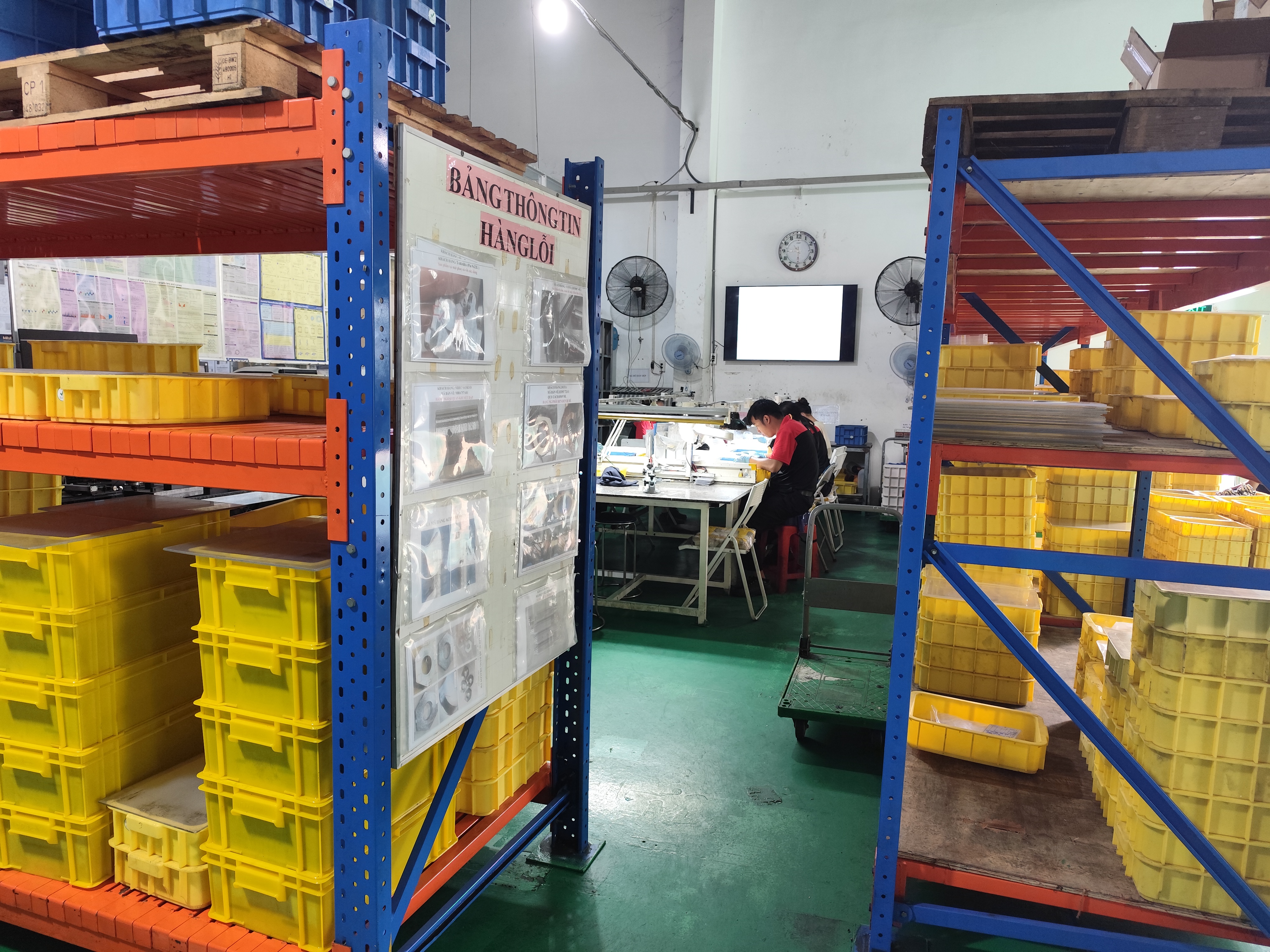
How Do Engineering Teams Coordinate Multi-Country Supplier Networks Across Asia?
Engineering teams coordinate multi-country production through dedicated regional hubs, such as a 26-person engineering service center in Xi'an and a 7-person team in Ho Chi Minh City. These teams manage pre-quote 2D/3D DFM tolerance reviews, PPAP Level 3 documentation, and line transfers from China to Southeast Asian manufacturing nodes.
Multi-region supply chain orchestration enables the migration of progressive stamping dies, plastic injection tooling, and assembly lines without disrupting serial production. Operations link specialized industrial clusters in China with deep-sea export corridors like Lach Huyen Port in Haiphong, Vietnam.
By utilizing unified engineering centers, buyers maintain complete visibility across 300 mapped factories and 150 audited manufacturing sites. Local teams eliminate translation gaps and conduct on-site quality benchmarks to ensure international standards are maintained across every batch.
- Pre-quote 2D/3D tolerance analysis, progressive die design, and mold flow simulation before tool steel cutting.
- QCLDM supplier audits and resident quality engineering monitoring across audited Asian facilities.
- 10-month line relocation playbooks for transferring press tooling, fixtures, and inspection gauges between facilities.
- Integrated supply chain management operating under a unified Singapore corporate entity with Net 90 O/A credit terms.
Which Inspection Technologies and Quality Systems Validate Industrial Part Tolerances?
Industrial part validation relies on advanced metrology labs equipped with ZEISS and Mitutoyo 3D Coordinate Measuring Machines (CMM), surface roughness profile testers, and metallographic density verification. Facilities operate under stringent IATF 16949:2016, AS9100D aerospace, and ISO 9001:2015 quality frameworks to verify strict component tolerances.
Comprehensive inspection protocols prevent assembly defects across structural powder metallurgy gears, self-lubricating bearings, aerospace titanium valve blocks, and high-purity fluoropolymer components. Automated inspection equipment conducts 100% eddy-current sorting and pressure verification on dedicated assembly lines.
Environmental and mechanical testing includes ASTM B117 salt spray exposure and cyclic load fatigue testing. Hardware programs, such as hand pallet trucks and heavy-duty brackets, undergo rigorous functional verification before container loading.
- 3D CMM dimensional verification, gear profile testing, and contour surface roughness analysis.
- Automated 100% eddy-current and magnetic particle crack sorting for heat-treated forgings.
- 240hr+ ASTM B117 salt spray testing and 1,500hr UV exposure evaluation for stamped brackets.
- 100% hydraulic pump leak testing and functional cycle testing for material handling equipment.

Precision Manufacturing & Sourcing Specification Matrix
| Technical Dimension | Standard Commercial Grade | High-Precision OEM Export Grade | DEWIN Verification Protocol |
|---|---|---|---|
| Machining & Forming Tolerance | ISO 2768-m (±0.10 mm nominal) | ISO 2768-f (±0.01 mm – ±0.025 mm critical bores) | Calibrated 3D CMM & Air/Pin Gauging |
| Surface Roughness & Finish | Ra 1.6 – 3.2 µm as-machined / standard coat | Ra 0.4 – 0.8 µm precision ground / MIL-A-8625 anodized | Profilometer & Coating Thickness Gauge |
| Material & Alloy Certification | Supplier Mill Test Report (MTR) | Independent OES chemical & mechanical verification | EN 10204 3.1 + RoHS/REACH Compliance |
| Batch Inspection & Packaging | ISO 2859-1 (AQL 1.0 Major / 2.5 Minor) | Zero-defect critical features + VCI export crating | Pre-Shipment Inspection (PSI) Report |
Frequently Asked Questions
What specialized engineering plastics and fluoropolymers are processed in precision facilities?
Facilities process high-purity PTFE, PFA, FEP, PVDF, PEEK, PI, PEI, PPS, and FFKM encapsulated materials using cleanroom injection molding, compression sintering, and multi-axis CNC machining.
How are powder metallurgy (PM) and metal injection molding (MIM) parts produced?
PM and MIM components are produced using 15T to 680T automatic powder presses, hydraulic presses, vacuum degreasing-sintering furnaces, mesh-belt steam treatment, and catalytic debinding lines.
What types of bearings are manufactured within these supplier networks?
The supplier network produces SF-1 and SF-2 PTFE composite bushings, JF-800 bimetal bearings, JDB graphite bronze bearings, Ø200 to 5,000 mm slewing bearings, and maintenance-free spherical plain bearings.
What production capabilities support turnkey heavy stamping and welded assemblies?
Facilities utilize up to 315T stamping presses, 5G vibration test rigs, laser cutting centers, and 9 OTC or Panasonic welding robots to manufacture progressive sheet metal assemblies and fire extinguisher brackets.