How Do Engineering Teams Evaluate Driveline Forging and CNC Machining Workflows?
Engineering teams evaluate driveline forging and CNC machining by auditing 16-stage vertically integrated workflows. In cold and warm forging setups, raw steel bar cutting and isothermal annealing lead into robotic CNC turning and internal spline broaching. These processes achieve ±0.008 mm spline pitch tolerances and HRC 58 to 62 hardness levels verified via 3D CMM metrology labs.
Key Takeaways
- Precision driveline manufacturing utilizes 16-stage integrated workflows, including cold and warm forging, internal spline broaching, and CQI-9 heat treatment to maintain ±0.008 mm spline pitch tolerances.
- Powder metallurgy and bearing production leverage automatic presses from 5 to 680 tons, vacuum sintering, and ZEISS 3D CMM inspection for structural gears, bronze bushings, and MIM components.
- Stamping and fabrication operations deploy up to 315-ton presses, robotic MIG welding, and 240-hour ASTM B117 salt spray testing for heavy-duty brackets and hydraulic pallet trucks.
Driveline manufacturing relies on vertically integrated production steps to process carburizing alloy steels such as 20CrMnTi and SAE 5120H. The process begins with raw steel bar cutting and isothermal annealing, followed by shot blasting, saponification, phosphating, and closed-die cold or warm forging across 160T to 630T press lines.
Subsequent operations involve controlled normalizing, turning on robotic CNC lathes and EMAG hard-turning cells, and high-speed internal spline broaching. Thermal treatment utilizes automated CQI-9 carbonitriding furnaces, followed by eddy-current crack detection, ultrasonic cleaning, and vacuum anti-rust packaging.
- Spline Pitch Tolerances: Maintains ±0.008 mm raceway concentricity adhering to DIN 5480 and JIS B 1603 spline module standards.
- Hardness and Case Depth: Achieves HRC 58 to 62 case hardness with a case depth of 0.85 to 1.25 mm.
- Production Equipment: Employs 136 robotic CNC lathes, 4 German EMAG turning centers, and 72 robotic CNC milling sets.
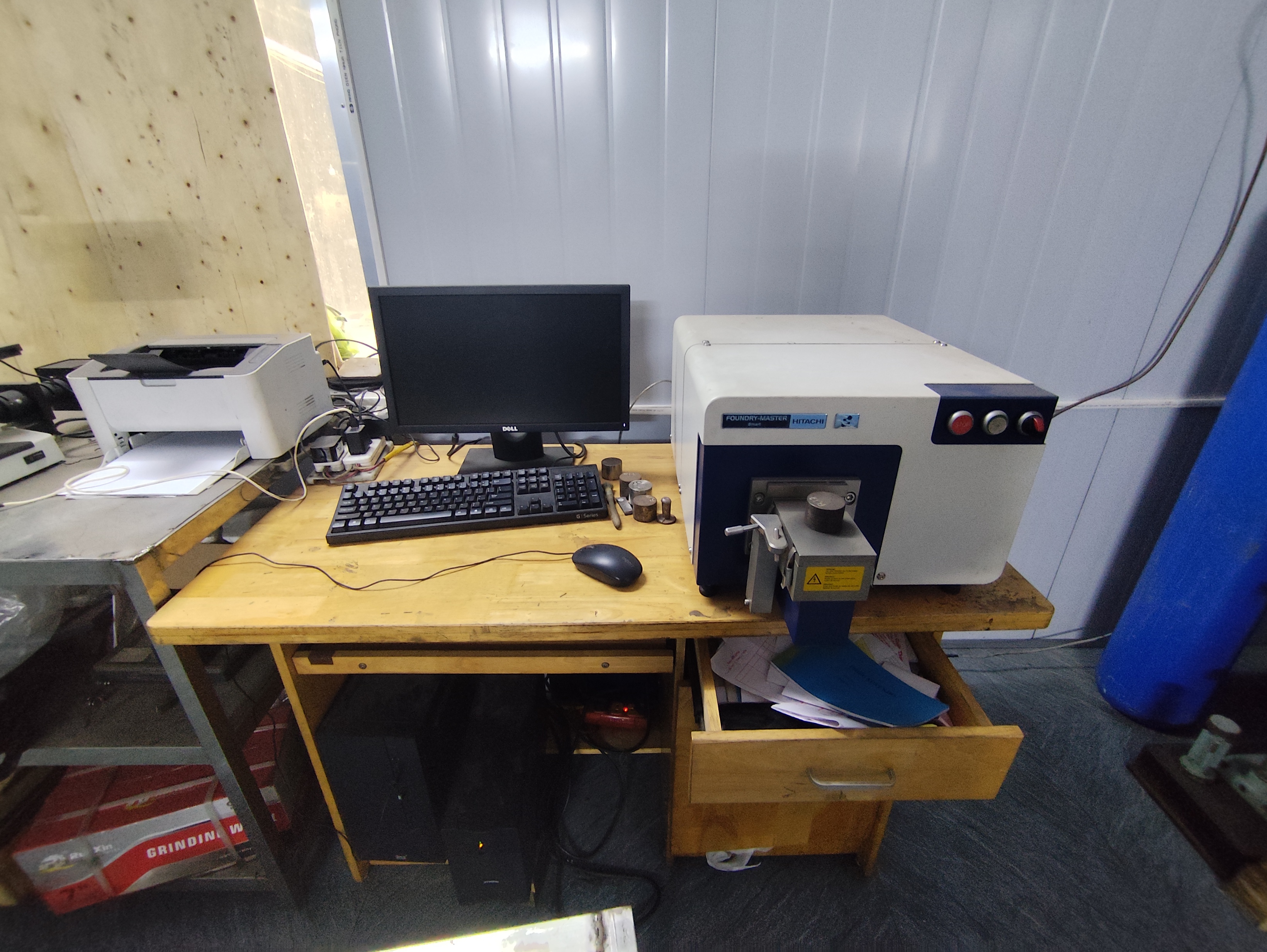
- Metrology Lab Tools: Employs ZEISS and Mitutoyo 3D CMMs, contour testers, and metallographic hardness testing.

What Inspection Standards Apply to Powder Metallurgy and Bearing Manufacturing?
Powder metallurgy and bearing production rely on multi-stage dimensional and density verification. Inspection processes involve 3D CMM equipment, gear profile testers, and metallographic testing for sintered components like bronze bushings and stainless steel parts. Mechanical presses ranging from 5 to 680 tons, along with mesh-belt sintering furnaces, support uniform density across intricate gear geometries.
Powder metallurgy (PM) and metal injection molding (MIM) enable high-density component manufacturing using iron, copper, bronze, and 304 or 316L stainless steel powders. Compression pressing is handled via automatic CNC powder presses from 15T to 500T, as well as hydraulic presses up to 680T.
Sintering processes utilize mesh-belt and vacuum furnaces with optional steam treatment or catalytic debinding lines. Components produced include PM structural gears, shock absorber pistons, oil-impregnated bronze bushings (SAE841 / Sint B50), transmission sprockets, and complex 17-4PH / 316L MIM hardware.
- Bearing Types: SF-1/SF-2 PTFE composite bushings, JF-800 bimetal bearings, JDB graphite bronze bearings, and Ø200–5,000 mm slewing bearings.
- Spherical Plain Bearings: Metric and inch GE/GEG/GEZ series, GAC angular contact, and GX thrust bearings with PTFE fabric liners.
- Aerospace CNC Machining: AS9100D-compliant 5-axis and 4-axis CNC turning and slow-wire EDM for titanium, Inconel, and aluminum aerospace valve blocks.
- Fluoropolymer Machining: Cleanroom injection molding and multi-axis CNC machining of high-purity PTFE, PFA, FEP, PVDF, and PEEK components.
Which Technical Capabilities Support Heavy Stamping and Hardware Assembly?
Heavy stamping and structural assembly require automated presses up to 315 tons, laser cutting equipment, and robotic MIG welding cells. Production of components like fire extinguisher brackets and hydraulic hand pallet trucks relies on SPCC or SS304 materials, 240-hour ASTM B117 salt spray testing, and integrated cast-iron pumps for reliable physical performance.
Heavy stamping and structural metal fabrication combine automated presses up to 315 tons, laser cutting equipment, and 9 OTC/Panasonic welding robots. High-volume output covers automotive steering brackets, standing desk frames, and custom wall mounts.
Turnkey product manufacturing includes hydraulic hand pallet trucks with 2.0T to 5.0T capacity built under ISO 3691-5 standards, featuring AC/DF integrated cast-iron hydraulic pumps and PU/Nylon rollers. Specialized bracket manufacturing uses SPCC or SS304 steel from 2.0 to 4.0 mm gauge with quick-release latches.
- Corrosion Resistance Testing: 240-hour ASTM B117 salt spray exposure and 1,500-hour UV outdoor polyester powder coating.
- Stamping Press Infrastructure: 33 stamping presses up to 315T paired with 22 robotic CNC milling machines.
- Hydraulic Pump Testing: 100% leak testing for integrated cast-iron hydraulic pump units.
- Vibration Rating: Quick-release stamped brackets rated for 5G vibration resistance.

Engineering & Production Specification Matrix
| Process Parameter | Prototype / Short-Run Standard | Production Progressive / Hard-Tool Standard | Verification Method |
|---|---|---|---|
| Linear Dimensional Tolerance | ±0.10 mm to ±0.15 mm (ISO 2768-m) | ±0.03 mm to ±0.08 mm (ISO 2768-f) | Optical 2D/3D CMM & Go/No-Go Check Fixtures |
| Edge Burr Height Limit | ≤ 10% of material thickness | ≤ 5%–8% of material thickness | Digital Micrometer & Cross-Section Audit |
| Material & Coating Traceability | Mill Test Certificate (EN 10204 3.1) | Heat-lot MTC + RoHS/REACH + ASTM B117 Salt-Spray | Spectrometer (OES) & XRF Screening |
| Standard Tooling & Lead Time | Laser + CNC Press Brake (5–10 days) | Progressive / Transfer Die (3–5 weeks T1) | First Article Inspection (FAI) & CPK ≥ 1.33 |
Frequently Asked Questions
What metrology equipment is used to inspect high-precision CNC turned and broached parts?
Metrology labs utilize ZEISS and Mitutoyo Crysta-Apex S 3D coordinate measuring machines (CMM), along with contour, surface roughness, metallographic microstructure, and hardness testing equipment to verify precision tolerances.
What materials and press capacities are used for powder metallurgy structural components?
Powder metallurgy operations utilize iron, copper, bronze (SAE841 / Sint B50), and 304 or 316L stainless steel materials processed through automatic presses ranging from 5 to 680 tons with vacuum or mesh-belt sintering furnaces.
How are corrosion resistance and durability verified for outdoor stamped brackets?
Stamped brackets manufactured from 2.0 to 4.0 mm SPCC or SS304 steel undergo 240-hour ASTM B117 salt spray testing and 1,500-hour UV outdoor-grade polyester powder coating to ensure durability.
What features characterize hydraulic hand pallet truck manufacturing in Bac Ninh?
Pallet trucks built in Bac Ninh, Vietnam feature 2.0T to 5.0T load capacities, AC/DF integrated cast-iron hydraulic pumps, PU or Nylon rollers, and 100% leak testing compliant with ISO 3691-5 standards.