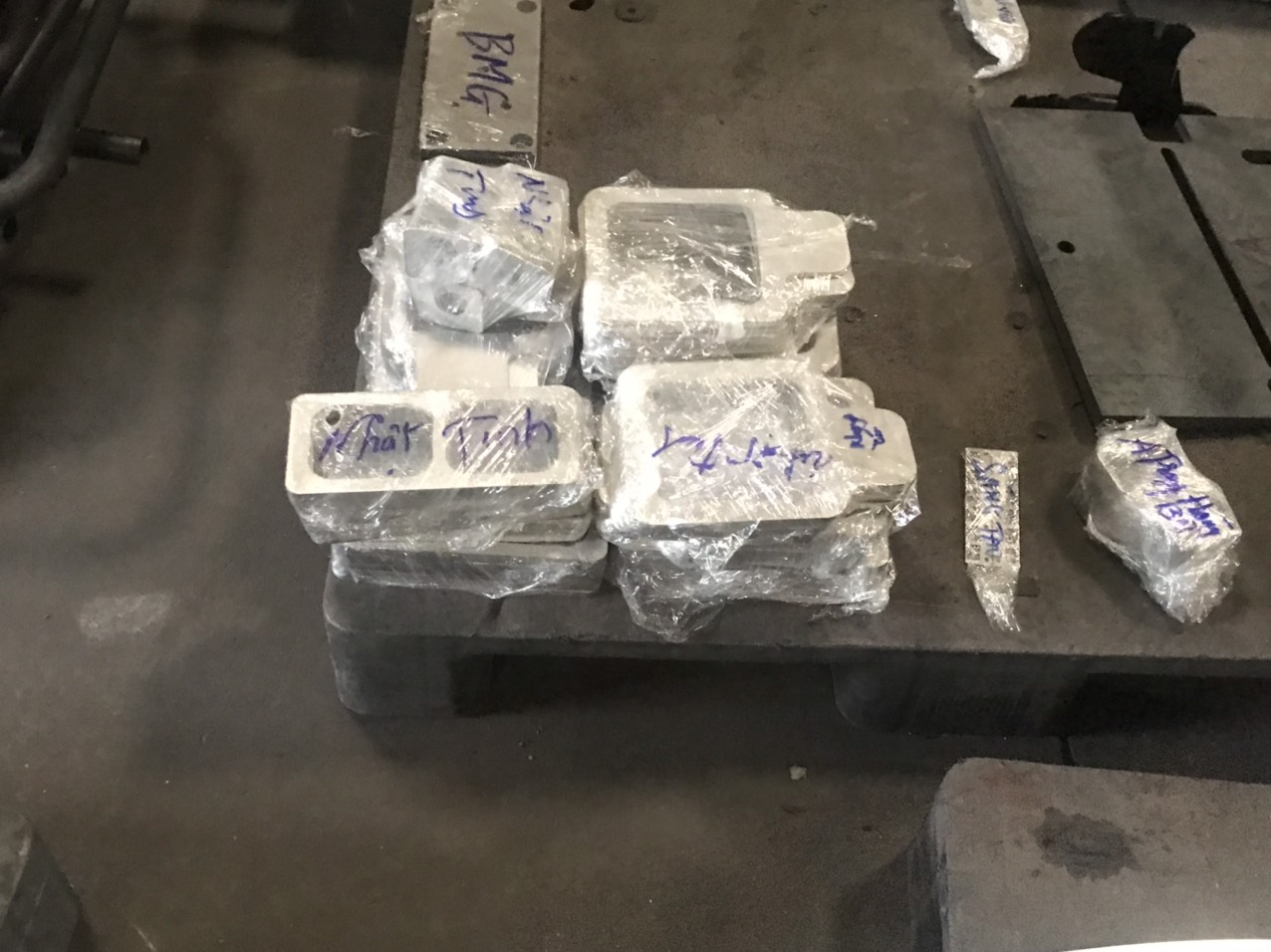
How do engineering teams coordinate dual-shore progressive stamping die fabrication?
Engineering teams coordinate progressive stamping dies by fabricating tooling in Yangtze River Delta toolrooms from D2 or DC53 steel at 60 to 62 HRC using multi-pass wire EDM to maintain punch-to-die clearances within ±0.002 mm, while utilizing standardized MISUMI or FIBRO guide pillars and nitrogen gas springs for high-volume press runs in Vietnam stamping plants.
Key Takeaways
- Toolrooms in the Yangtze River Delta machine progressive stamping dies from D2 or DC53 steel at 60 to 62 HRC with wire EDM tolerances of ±0.002 mm.
- Closed-die forging for CV joint sleeves achieves ±0.008 mm spline pitch and raceway concentricity using hard-turning cells and hydraulic pull broaching.
- Multi-region engineering coordination relies on QCLDM factory audits, DFM review, and ZEISS CMM dimensional verification across China and Vietnam.
Toolroom engineering across Suzhou, Wuxi, and Ningbo utilizes vacuum-hardened D2 (SKD11) or powdered metal DC53 tool steel to handle abrasive sheet metal stamping forces. By applying multi-pass wire EDM, technicians maintain tight punch-to-die clearances down to ±0.002 mm. Standardized MISUMI or FIBRO guide pillars, nitrogen gas springs, and modular pitch-pilot inserts ensure that replacement punches remain interchangeable when transferring die sets to stamping presses in Bac Ninh or Binh Duong.
- Tool steel materials: Vacuum-hardened D2 (SKD11) and powdered metal DC53 hardened to 60–62 HRC.
- Machining tolerances: Multi-pass wire EDM holding punch-to-die clearances within ±0.002 mm.
- Standardized die components: MISUMI or FIBRO guide pillars, nitrogen gas springs, and modular pitch-pilot inserts.
- Production hubs: China Yangtze River Delta toolrooms linked with Bac Ninh and Binh Duong stamping facilities.
What engineering standards govern precision drivetrain forging and spline broaching?
Precision drivetrain forging and spline broaching rely on 20CrMnTi or SAE 5120H carburizing steel forged in 160T to 630T closed dies, followed by isothermal normalizing, high-speed hydraulic pull broaching, automated EMAG hard turning holding ±0.008 mm concentricity, and CQI-9 controlled carbonitriding achieving HRC 58 to 62 hardness.
Precision drivetrain components such as star-shaped sleeves and trunnion brackets require controlled grain flow achieved through closed-die forging between 160T and 630T. Isothermal normalizing establishes a uniform Ferrite-Pearlite structure prior to high-speed hydraulic pull broaching and CNC turning. Hard turning on automated EMAG cells maintains a concentricity and pitch accuracy of ±0.008 mm for DIN 5480 and JIS B 1603 spline profiles.
Surface durability is established via CQI-9 controlled furnace carbonitriding, yielding a surface hardness of HRC 58 to 62 with a carbonitrided depth of 0.85 to 1.25 mm. Inspection involves 100% eddy-current crack sorting along with metrology checking on ZEISS 3D coordinate measuring machines.
- Forging material and tonnage: 20CrMnTi / SAE 5120H carburizing steel formed in 160T to 630T closed dies.
- Machining precision: Hydraulic pull broaching and EMAG hard turning holding ±0.008 mm spline pitch and raceway concentricity.
- Surface hardening specs: CQI-9 carbonitriding providing 0.85 to 1.25 mm depth at HRC 58 to 62.
- Metrology and testing: ZEISS and Mitutoyo 3D CMM inspection paired with 100% eddy-current crack sorting.
Which quality inspection controls support cross-border component production?
Cross-border production quality control uses QCLDM supplier audits, pre-quote DFM tolerance analysis, and in-process ZEISS 3D CMM metrology. Ground engineering teams manage full PPAP Level 3 documentation, material inspection documentation (COA), and automated dimensional reports to maintain strict benchmark standards down to 50 PPM defect limits across multi-factory production networks.
Quality oversight across Southeast Asian and Chinese manufacturing plants relies on structured QCLDM factory audits evaluating Quality, Cost, Logistics, Development, and Management. Embedded engineering teams perform pre-quote 2D and 3D tolerance reviews, mold flow simulations, and DFM analysis before tooling fabrication begins.
Serial production monitoring incorporates ZEISS CMM dimensional reports, metallographic density verification, and PPAP Level 3 compliance. Environmental and durability verification for custom components includes 240-hour ASTM B117 salt spray exposures and 1,500-hour UV powder coat testing.
- Audit Framework: QCLDM scoring evaluating Quality, Cost, Logistics, Development, and Management.
- Engineering Review: Pre-quote 2D/3D tolerance analysis and mold flow simulation.
- Quality Traceability: PPAP Level 3 documentation, COA material certs, and 50 PPM defect benchmark controls.
- Environmental Testing: 240-hour ASTM B117 salt spray exposure and 1,500-hour UV durability evaluation.

Precision Manufacturing & Sourcing Specification Matrix
| Technical Dimension | Standard Commercial Grade | High-Precision OEM Export Grade | DEWIN Verification Protocol |
|---|---|---|---|
| Machining & Forming Tolerance | ISO 2768-m (±0.10 mm nominal) | ISO 2768-f (±0.01 mm – ±0.025 mm critical bores) | Calibrated 3D CMM & Air/Pin Gauging |
| Surface Roughness & Finish | Ra 1.6 – 3.2 µm as-machined / standard coat | Ra 0.4 – 0.8 µm precision ground / MIL-A-8625 anodized | Profilometer & Coating Thickness Gauge |
| Material & Alloy Certification | Supplier Mill Test Report (MTR) | Independent OES chemical & mechanical verification | EN 10204 3.1 + RoHS/REACH Compliance |
| Batch Inspection & Packaging | ISO 2859-1 (AQL 1.0 Major / 2.5 Minor) | Zero-defect critical features + VCI export crating | Pre-Shipment Inspection (PSI) Report |
Frequently Asked Questions
What materials are specified for heavy-duty stamped fire extinguisher brackets?
Stamped fire extinguisher brackets utilize SPCC or SS304 steel in 2.0 mm to 4.0 mm gauges, featuring quick-release latches, 5G vibration resistance, 240-hour ASTM B117 salt spray protection, and 1,500-hour UV powder coating.
How are sintered powder metallurgy parts verified for structural automotive applications?
Sintered parts undergo metallographic density verification, universal gear profile testing, and 3D CMM inspection on ZEISS metrology systems, supporting high-density sprockets, oil pump rotors, and shock absorber pistons under IATF 16949 quality standards.
What production specifications govern heavy slewing bearing manufacturing?
Heavy slewing bearings cover single and double-row four-point contact ball, three-row roller, and crossed-roller configurations ranging from Ø200 mm to Ø5,000 mm, machined on 5-meter vertical turning centers with medium-frequency induction hardening.
What engineering standards apply to hydraulic hand pallet trucks produced in Vietnam?
Hand pallet trucks in Vietnam are manufactured to European standards under ISO 3691-5 and CE compliance, featuring AC/DF integrated cast-iron hydraulic pumps with 100% leak testing, PU/Nylon rollers, and MIG robotic welding.