
What processes control quality across multi-country machining and forging networks?
Multi-country precision manufacturing uses centralized engineering reviews, standardized metrology, and resident quality engineering controls. Technical teams manage pre-quote 2D and 3D tolerance analysis, DFM reviews, and PPAP Level 3 documentation, backed by ZEISS 3D coordinate measuring machines to verify tight tolerances down to ±0.008 mm across production lines.
Key Takeaways
- DEWIN manages production across China, Vietnam, and Thailand using a 26-person engineering team in Xi'an and 7 local engineers in Ho Chi Minh City.
- Precision manufacturing capabilities include cold forging with ±0.008 mm spline pitch tolerances, AS9100D aerospace 5-axis CNC machining, and powder metallurgy.
- Metrology labs utilize ZEISS 3D CMM dimensional verification, contour testing, metallographic analysis, and CQI-9 heat-treatment controls.
- Fabrication and assembly operations combine progressive stamping up to 315T, robotic MIG welding, and ASTM B117 240-hour salt-spray tested coatings.
Supplier coordination across Asian manufacturing hubs requires rigorous technical verification at every stage of production. Centralized engineering centers perform initial blueprint reviews, evaluating geometric dimensioning and tolerancing (GD&T) to align customer drawings with factory capabilities in China, Vietnam, and Thailand.
In-process quality controls combine automated shop-floor inspection with advanced metrology laboratories. Resident quality engineers oversee functional checks, eddy-current crack detection, and 3D CMM inspection to maintain consistency across high-volume automotive, aerospace, and industrial component runs.
- Pre-quote DFM review, 2D/3D tolerance analysis, and mold flow simulation before cutting tooling steel.
- PPAP Level 3 submission, material analysis documentation (COA), and continuous defect control targets.
- Advanced metrology verification using ZEISS and Mitutoyo 3D CMMs, contour measurement, and surface roughness analysis.
- Automated eddy-current and magnetic crack sorting integrated into continuous heat-treatment lines.
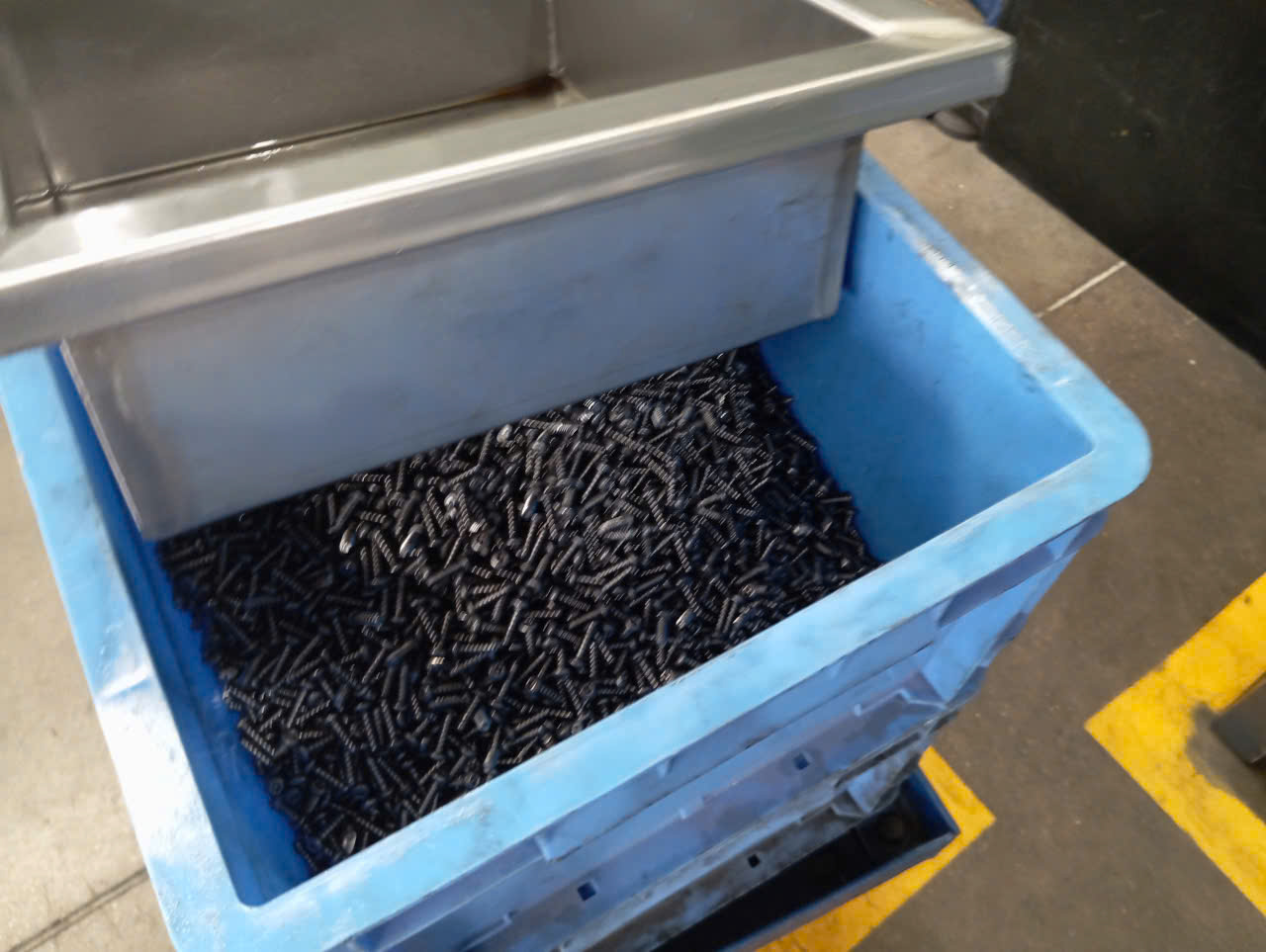
How do suppliers execute specialized cold forging, broaching, and CNC machining tolerances?
Suppliers execute precision cold forging, hydraulic spline broaching, and multi-axis CNC machining by maintaining integrated 16-stage manufacturing workflows. Isothermal normalizing, 136 robotic CNC turning lathes, 4 German EMAG hard-turning centers, and CQI-9 controlled carbonitriding ensure structural integrity and achieve tight ±0.008 mm raceway spline pitch tolerances.
High-precision automotive drivetrains and industrial components rely on vertically integrated production flows. Forging operations utilize 160T to 630T closed-die presses followed by controlled normalizing to create uniform ferrite-pearlite grain structures required for heavy dynamic loads.
Subsequent high-speed hydraulic pull broaching forms internal spline profiles adhering to DIN 5480 and JIS B 1603 standards. Hardened components undergo automated groove grinding and carbonitriding furnaces to achieve a case depth of 0.85 to 1.25 mm with HRC 58–62 surface hardness.
- Cold and warm precision closed-die forging with isothermal annealing and shot blasting.
- Hydraulic pull broaching achieving DIN 5480 and JIS B 1603 spline module specifications.
- Hard turning on EMAG centers and 136 robotic CNC lathes for high concentricity.
- CQI-9 compliant automated continuous furnace carbonitriding and oil quenching.
Which structural components benefit from powder metallurgy and oilless bearing technology?
Structural transmission sprockets, shock absorber pistons, oil pump rotors, and self-lubricating bushings benefit significantly from powder metallurgy and oilless bearing technologies. Sintered iron, copper, and stainless steel formulations provide precise material density, while PTFE composite and graphite-plugged bronze bushings provide maintenance-free wear resistance.
Powder metallurgy (PM) and Metal Injection Molding (MIM) offer structured production for high-density components. Automatic presses ranging from 5T to 680T compact iron, copper, or 316L stainless steel powders into complex shapes before mesh-belt or vacuum sintering.
Specialized oilless bearings utilize multi-layer material constructions, such as SF-1 and SF-2 PTFE composite layers, bimetal strip linings, or graphite-plugged bronze matrices. These designs eliminate liquid lubrication requirements in heavy machinery, hydraulic rod ends, and spherical plain bearings.
- Vacuum-sintered 304 and 316L stainless steel structural parts for transmission and pump assemblies.
- Metal Injection Molding (MIM) for complex 17-4PH geometries used in medical and hardware applications.
- SAE841 and Sint B50 oil-impregnated sintered bronze bushings for low-friction operation.
- Maintenance-free spherical plain bearings and rod ends featuring bonded PTFE fabric liners.

How are progressive stamping, robotic welding, and fluoropolymers coordinated for assemblies?
Turnkey assemblies combine heavy progressive stamping presses up to 315T, laser cutting, and Panasonic or OTC robotic MIG welding cells with high-purity CNC-machined fluoropolymers. Integrated finishing operations include ASTM B117 240-hour salt-spray tested polyester powder coating and 100% leak testing for hydraulic systems.
Heavy fabrication hubs in Vietnam and China utilize automated stamping and robotic welding to manufacture structural brackets, standing desk frames, and material handling equipment. Stamped components made from SPCC or SS304 steel undergo precision CNC bending and automated MIG/TIG welding for consistent structural strength.
For specialized fluid control, semiconductor, and chemical processing assemblies, high-purity fluoropolymers like PTFE, PEEK, PFA, and PVDF are machined or hot-runner injection molded. Cleanroom assembly and DI water cleaning lines prevent contamination in high-purity industrial components.
- Progressive stamping presses up to 315T paired with robotic welding cells for structural assemblies.
- Outdoor-grade polyester powder coating evaluated under 240-hour ASTM B117 salt spray exposure.
- Machined and injection-molded PEEK, PFA, and PTFE components processed in cleanroom environments.
- Hydraulic hand pallet truck assembly compliant with ISO 3691-5 standards featuring integrated pump leak testing.
Precision Manufacturing & Sourcing Specification Matrix
| Technical Dimension | Standard Commercial Grade | High-Precision OEM Export Grade | DEWIN Verification Protocol |
|---|---|---|---|
| Machining & Forming Tolerance | ISO 2768-m (±0.10 mm nominal) | ISO 2768-f (±0.01 mm – ±0.025 mm critical bores) | Calibrated 3D CMM & Air/Pin Gauging |
| Surface Roughness & Finish | Ra 1.6 – 3.2 µm as-machined / standard coat | Ra 0.4 – 0.8 µm precision ground / MIL-A-8625 anodized | Profilometer & Coating Thickness Gauge |
| Material & Alloy Certification | Supplier Mill Test Report (MTR) | Independent OES chemical & mechanical verification | EN 10204 3.1 + RoHS/REACH Compliance |
| Batch Inspection & Packaging | ISO 2859-1 (AQL 1.0 Major / 2.5 Minor) | Zero-defect critical features + VCI export crating | Pre-Shipment Inspection (PSI) Report |
Frequently Asked Questions
What metrology equipment is used to verify precision CNC machining dimensions?
Precision CNC parts are verified using ZEISS and Mitutoyo Crysta-Apex 3D coordinate measuring machines (CMM), contour measurement systems, surface roughness testers, and metallographic microstructure analysis tools.
What material standards apply to sintered powder metallurgy and bearing parts?
Sintered components follow SAE841 and Sint B50 oil-impregnated bronze standards, while spherical plain bearings adhere to GB/T 9161–9164 specifications with PTFE maintenance-free fabric liners.
How are heat treatment standards maintained for automotive drive components?
Drive components undergo CQI-9 compliant continuous furnace carbonitriding and quenching to establish a case depth between 0.85 and 1.25 mm and a surface hardness of HRC 58–62.
What manufacturing locations support DEWIN's Dolphin Services network?
DEWIN operates engineering centers and audited factories in China (Xi'an, Ningbo, Jiangmen, Zhejiang, Jiangsu), Vietnam (Ho Chi Minh City, Bac Ninh, Haiphong), and Thailand (Prachin Buri, Bangkok).