Which Products Are Best Suited for Powder Metallurgy?
August 18, 2024 · 4 min read
/Changzhi%20%20-%20Photo/Shaft%20furnace.jpg)
Powder metallurgy is powerful — but it's not for everything. Understanding which parts are ideal PM candidates can save you months of development time and significant tooling costs. Based on our experience manufacturing PM parts across automotive and industrial applications, here are the two categories where PM delivers the most value.
The best powder-metallurgy candidates are structurally simple, symmetrical parts — gears, rotors, bushings, brackets — made in high volume. When the geometry suits mold-based forming and order quantities justify the tooling, PM delivers the strongest mix of cost, consistency, and speed.
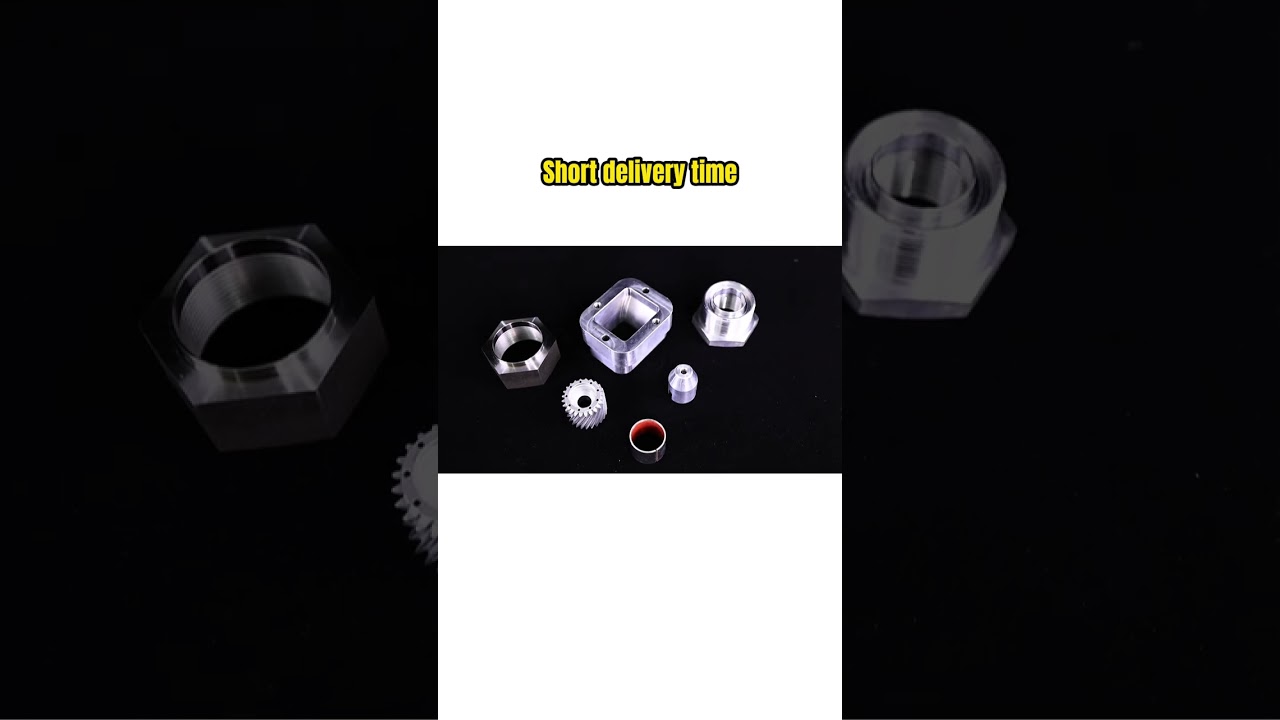
Real Vietnam Factory Samples — Custom Machined & Metal Parts
Watch on YouTube
Real footage from an audited DEWIN partner factory in Vietnam.
Category 1: Structurally Simple Parts
Since PM parts get their shape from molds, the process works best for components with relatively simple, symmetrical geometries and fewer structural layers. Think:
- Oil pump rotors and gears
- Valve guides and bushings
- Structural brackets and spacers
- Lock components and cam mechanisms
Complex multi-level geometries or parts requiring extensive secondary machining may be better suited to other processes.
Category 2: High-Volume Production
Powder metallurgy pays off at volume: the mold cost is fixed, so per-part cost falls as quantities rise. Typical minimums run around 5,000+ pieces for large parts and 10,000+ for small ones before PM's economics beat machining.
PM's economics are volume-driven. The mold provides dimensional consistency across every unit, but the mold investment needs to be amortized:
- Large parts: Minimum order quantity typically 5,000+ pieces
- Small parts: MOQ usually 10,000+ pieces
At these volumes, PM's per-unit cost advantages are compelling: high production speed, excellent consistency, minimal material waste, and lower energy consumption compared to machining.%20DIE-CASTING/XINKE%20-%20Photo/2020731/Automachine-Grinder.jpg)
The Decision Framework
Ask yourself: Is my part geometrically suitable for mold-based production? And will my order volumes justify the tooling investment? If both answers are yes, powder metallurgy will likely deliver the best combination of cost, quality, and speed.
Not Sure If PM Is Right for Your Part?
Send us your drawing — our engineers will evaluate whether powder metallurgy is the optimal process. Get a free evaluation →
Frequently Asked Questions
What is the minimum order quantity for powder metallurgy parts?
Minimum order quantities for powder metallurgy typically run 5,000+ pieces for large parts and 10,000+ for small ones. The mold cost is fixed, so it has to be amortized across the run before PM's per-unit economics beat machining. Below that break-even, prototypes and small batches are usually cheaper machined or cast.
Which part geometries are a poor fit for powder metallurgy?
Complex multi-level geometries and parts requiring extensive secondary machining are poor powder metallurgy candidates and may be better suited to other processes. Because PM parts get their shape from molds, the process favors relatively simple, symmetrical geometries with fewer structural layers — oil pump rotors and gears, valve guides and bushings, brackets, spacers, and cam mechanisms.
Besides unit price, what does powder metallurgy deliver at volume?
At volume, powder metallurgy delivers high production speed, excellent consistency, minimal material waste, and lower energy consumption compared to machining. The mold provides dimensional consistency across every unit, which is why PM suits parts where repeatability matters as much as price. Those advantages only compound once the mold investment has been amortized.