Prototype to Production in Vietnam: Complete Scaling Guide
February 22, 2026 · 15 min read
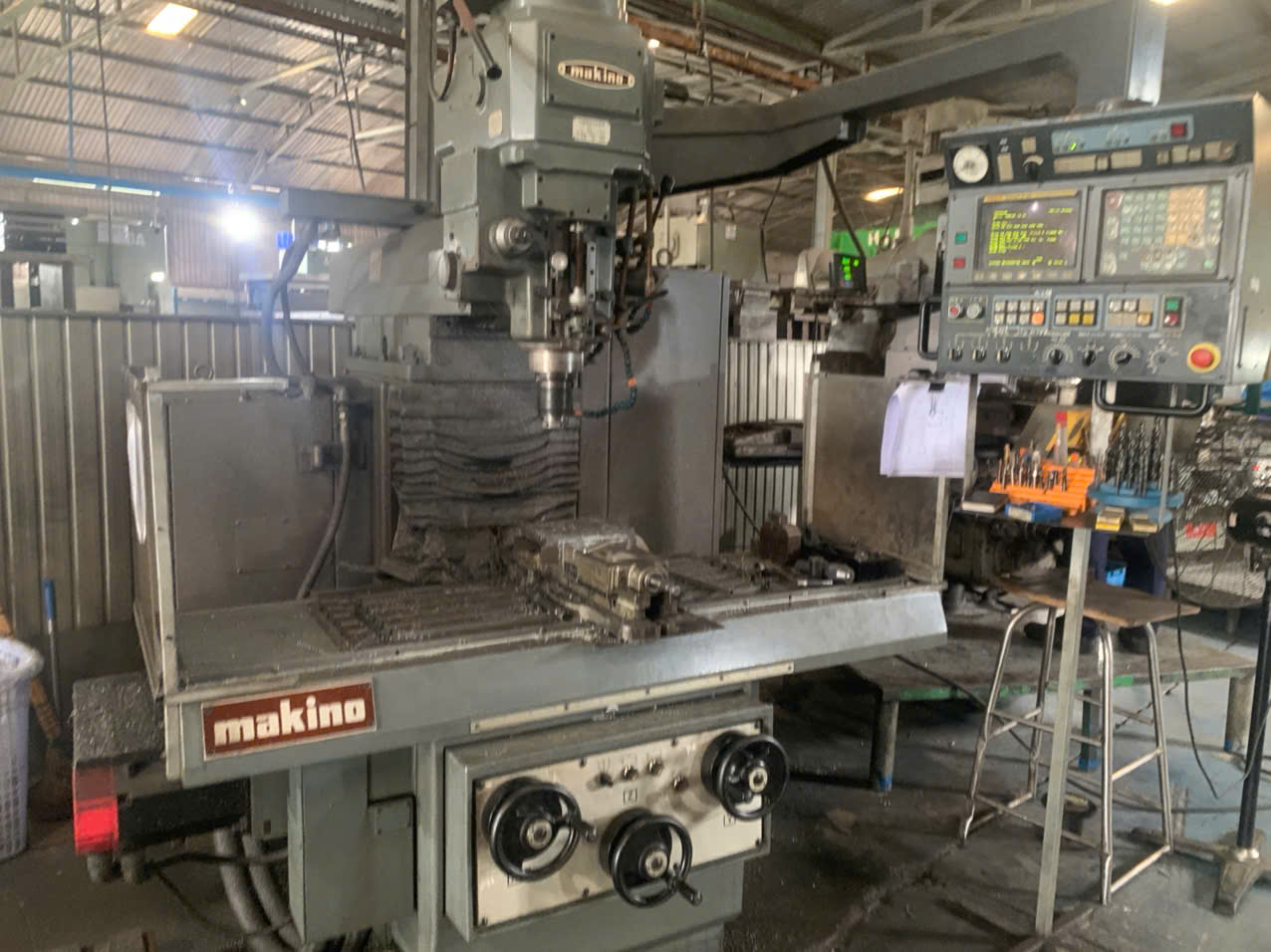
Vietnam is one of the most cost-effective locations to scale custom parts from prototype to full production. But the key to success isn't just finding a cheap supplier — it's knowing when to switch processes, when to invest in tooling, and how to structure the transition so quality scales with volume.
This guide walks through every stage of the prototype-to-production journey with real pricing from our Vietnam supplier network, tooling investment guidance, and the DFM changes that unlock production-level economics.
Scaling in Vietnam means matching the process to volume: CNC or 3D-printed prototypes at 1–50 parts, bridge production to 5,000, then tooling-based stamping, molding, or die casting beyond that. Timing the tooling investment to volume is what unlocks production-level unit economics.

Step Inside a Real Vietnamese Factory with Our Sourcing Team
Watch on YouTube
Real footage from an audited DEWIN partner factory in Vietnam.
Stage 1: Prototyping in Vietnam (1–50 Parts)
Many US companies prototype domestically for speed, then transfer to Vietnam for production. But Vietnam prototyping has become fast enough for many programs:
- CNC machining prototypes: 5–8 business days turnaround. Aluminum: $10–200/part. Stainless steel: $20–350/part. Ships DHL/FedEx to US in 3–5 days. Total: 10–15 days from PO to your desk.
- 3D printing (SLA/SLS): 3–5 business days. $5–60/part. Good for fit checks but not production material properties.
- Urethane casting: Silicone mold: $300–1,500. $10–40/part. 20–50 parts per mold. Simulates ABS, PP, PC, rubber. Lead time: 7–12 days.
When to prototype in Vietnam vs. US: If you need parts in under 5 days, prototype domestically. If 2 weeks is acceptable, Vietnam prototyping saves 40–60% and lets you establish the supplier relationship before production starts.
Stage 2: Bridge Production (50–5,000 Parts)
This is where Vietnam really shines. Bridge production costs in Vietnam are typically 40–60% below US pricing, with lead times only 2–3 weeks longer.
Metal Parts
- CNC machining (batch): $4–60/part for aluminum, $8–120/part for stainless. Lead time: 2–4 weeks + shipping.
- Laser cutting + bending: $1.50–20/part for sheet metal. No tooling cost. 1–3 week production.
- Low-pressure die casting: Tooling $3,000–15,000. Parts $3–25 each. For aluminum housings and structural components.
Plastic Parts
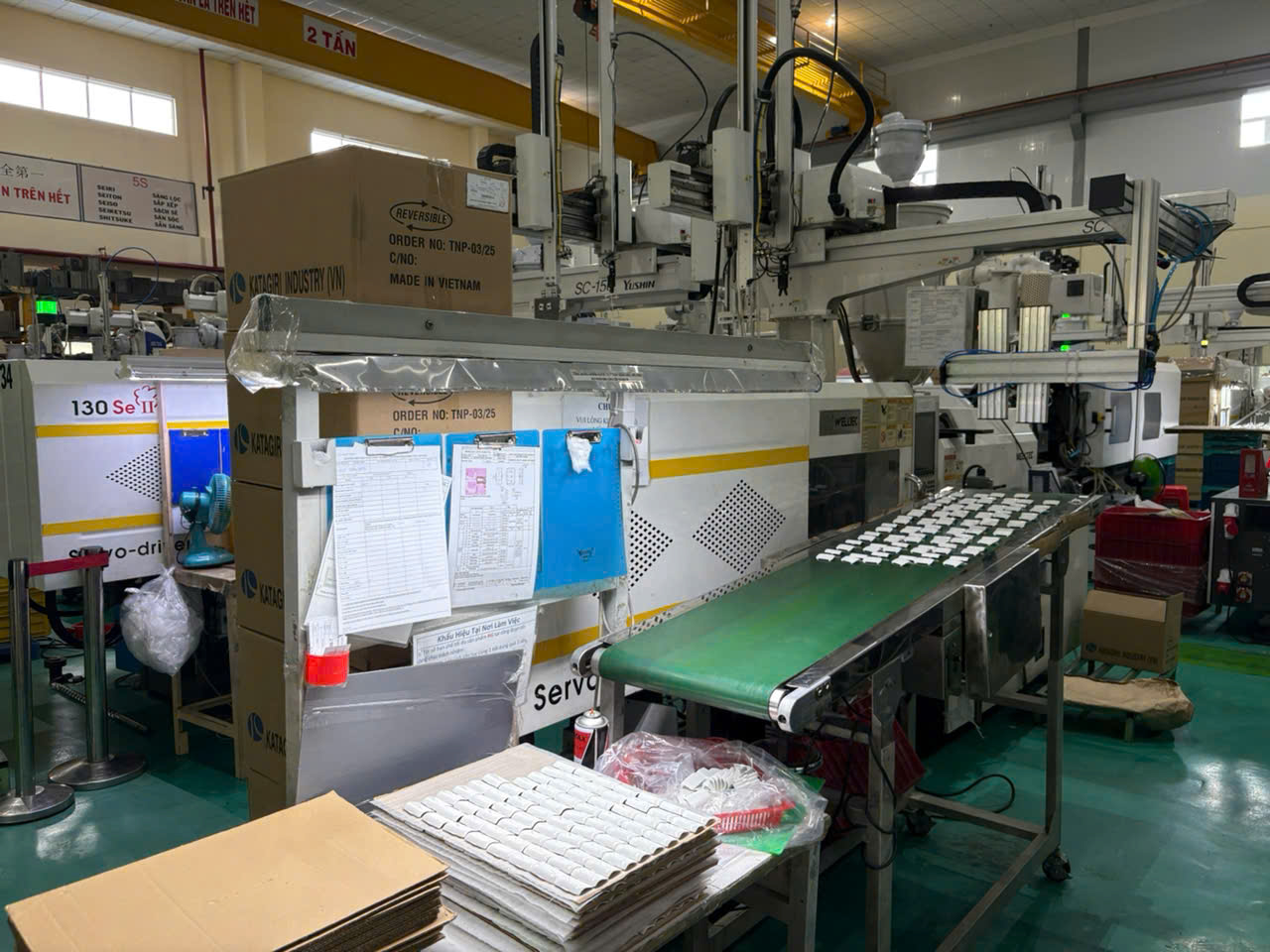
- Soft-tool injection molding (aluminum mold): Mold: $2,000–10,000. Parts: $0.50–5 each. Mold life: 5,000–20,000 shots. Lead time: 3–5 weeks for mold + first articles.
- Urethane casting (scaled): $10–35/part for 50–200 pcs. Multiple silicone molds running in parallel.
Stage 3: Production Ramp (5,000–50,000 Parts)
At this volume, Vietnam tooling investment becomes compelling. The process transitions that unlock production economics:
Around 5,000–50,000 parts, tooling investment starts paying off: CNC gives way to stamping, soft molds to hardened steel molds, and low-pressure to high-pressure die casting. Per-part costs can drop 5–15x, while Vietnam tooling runs 40–65% below US prices.
Key Process Transitions
- CNC → Stamping: Progressive die tooling in Vietnam: $4,000–35,000. Per-part cost drops 5–15x. A bracket that costs $8/part CNC at 1,000 pcs drops to $0.30/part stamped at 10,000 pcs.
- Soft mold → Steel mold: P20 or NAK80 steel mold in Vietnam: $8,000–45,000 (single cavity). Mold life: 500,000+ shots. Multi-cavity (2–8 cavities): $15,000–100,000. Per-part injection molding cost in Vietnam: $0.10–3.00 depending on part size and material.
- Low-pressure → HPDC: HPDC tooling in Vietnam: $12,000–60,000. 3–10x faster cycle times. Better surface finish and dimensional consistency.
- Machined gears → Powder metallurgy: PM tooling in Vietnam: $8,000–30,000. Per-part cost 40–60% below CNC at 10,000+ volumes.
Vietnam Tooling Advantage
Vietnam tooling costs run 40–65% below US prices and 15–30% below China:
- Die maker labor: $8–15/hr (Vietnam) vs. $20–35/hr (China) vs. $40–65/hr (US)
- Wire EDM time: $20–35/hr (Vietnam) vs. $50–80/hr (China) vs. $80–150/hr (US)
- Mold design engineering: $15–25/hr (Vietnam) vs. $30–50/hr (China) vs. $80–150/hr (US)
Tool steel costs are similar globally (D2, SKD11, P20 are commodity materials), so the savings come entirely from labor and machine time.
Stage 4: Volume Production (50,000+ Parts/Year)
At volume, Vietnam factories deliver the best total cost for most custom parts programs:
- Injection molding: Multi-cavity molds (4–16 cavities) reduce cycle time per part by 75–94%. Vietnam molding: $0.03–1.50/part at 100,000+ volumes.
- Stamping: High-speed progressive dies running at 60–200 spm. $0.04–0.70/part at 500,000+ volumes. Automated coil feeding and part ejection.
- Die casting: HPDC with automated ladling and extraction. $0.50–8/part at 50,000+ volumes depending on size and alloy.
- Assembly: Vietnam labor cost for assembly: $2.50–4.50/hr fully burdened. Complex assemblies that cost $3–8/unit in the US cost $0.80–2.00 in Vietnam.
DFM Changes That Cut Vietnam Production Costs
These specific design modifications unlock the biggest savings when transitioning to Vietnam production:
- Uniform wall thickness for injection molding. Varying wall thickness causes sink marks and warping. Design for 1.5–3.0 mm uniform walls. Add ribs (50–60% of wall thickness) for stiffness instead of thick sections. This eliminates 80% of injection molding defects.
- Convert machined features to formed features. Machined pockets and steps become stamped bends and forms. Machined holes become pierced holes. Machined chamfers become coined features. Each conversion saves 30–60 seconds of machine time.
- Reduce setup count for CNC parts. Redesign so features are accessible from fewer orientations. A part that needs 4 setups at $50–100/setup in Vietnam costs $200–400 in setup fees alone at low volume. Reducing to 2 setups cuts that in half.
- Standardize fastener hardware. Every unique screw, nut, or insert adds a SKU to manage. Standardize on 2–3 fastener sizes across your product. Vietnamese suppliers can press-fit PEM inserts, heat-stake threaded inserts, and install rivets as part of the production process.
- Design for the local material supply. Vietnam has excellent availability of SPCC steel, SUS304 stainless, AL6061-T6, ABS, PP, PC, PA6+GF30. Exotic materials (Inconel, PEEK, titanium) require import with 4–6 week lead time. Design with locally available materials when possible.
The Transfer Process: Moving Production to Vietnam
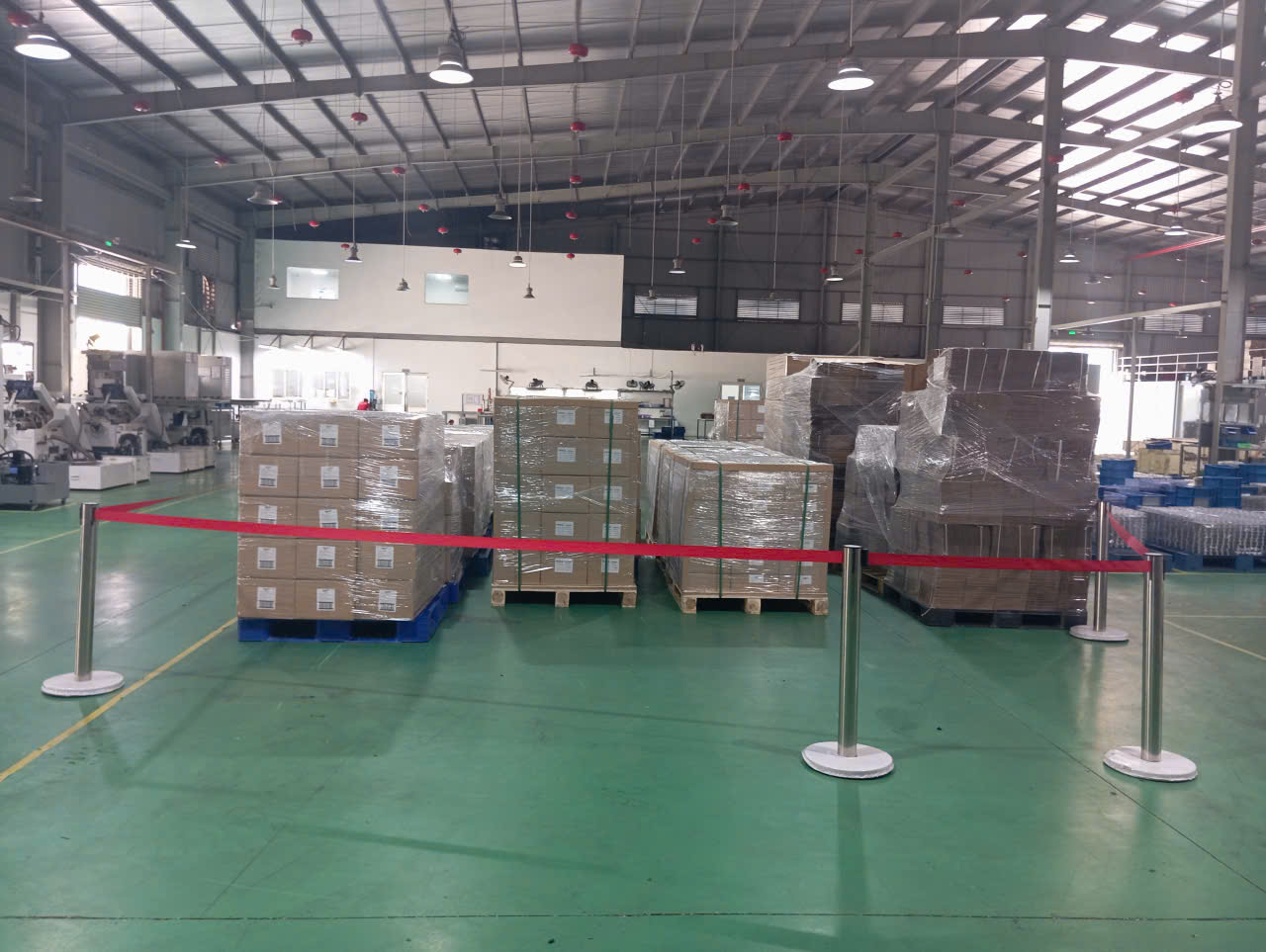
Our recommended sequence for a smooth production transfer:
- Send golden samples + complete documentation. Physical reference parts, 3D CAD (STEP format), 2D drawings with GD&T, material specifications, inspection criteria. The more complete your documentation, the fewer back-and-forth rounds needed.
- Factory builds first articles (T1 samples). First tryout parts from new tooling. Expect 2–3 rounds of adjustment for injection molds, 1–2 rounds for stamping dies. We manage this process and send detailed measurement reports.
- First article approval. Full dimensional inspection report (CMM or optical) comparing T1/T2 samples against your golden samples. Material certification. Surface finish verification.
- Pilot production run. 100–500 parts to validate consistency. SPC data on critical dimensions. Cpk analysis. Package testing for ocean freight survival.
- Full production. With baseline established, production runs on your schedule. Typical ocean freight to US West Coast: 18–22 days. East Coast via Panama: 28–35 days.
Timeline: From documentation handoff to first delivery at your US facility: 12–20 weeks depending on tooling complexity. Subsequent reorders: 4–8 weeks.
Total Cost Comparison: US vs. Vietnam Production
For a typical custom aluminum bracket — 10,000 pcs/year, stamped from 1.6 mm AL5052-H32, 3 bends, 4 holes, anodized Type II:
- US production: Tooling $18,000 + $1.80/part + $0 freight = $36,000 first year
- Vietnam production: Tooling $7,500 + $0.55/part + $0.12/part freight + $0.02/part duty = $14,400 first year
- Savings: $21,600 (60%) in year one. $12,500 (68%) in subsequent years (no tooling).
Even adding a $3,000 quality management fee for our sourcing oversight, Vietnam delivers 50%+ total cost savings for this type of program.
Start Your Production Scaling Program
Tell us what you're making, where you are in the prototype-to-production journey, and your target volumes. We'll map the optimal process at each stage, recommend tooling investments, and provide production pricing from our Vietnam factory network. We handle the full supply chain — from DFM review through tooling, production, quality control, and logistics to your US facility.
Get Your Production Scaling Quote →
Frequently Asked Questions
How long does moving production to Vietnam actually take end to end?
A full production transfer runs 12–20 weeks from documentation handoff to first delivery at your US facility, depending on tooling complexity, with subsequent reorders at 4–8 weeks. The sequence is golden samples and documentation, T1 first articles, first article approval, a 100–500 part pilot run to validate consistency, then full production.
What documentation does a Vietnam factory need to start a transfer?
A Vietnam factory needs physical reference parts plus complete documentation: 3D CAD in STEP format, 2D drawings with GD&T, material specifications, and inspection criteria. The more complete that package, the fewer back-and-forth rounds needed. Even with good documentation, expect 2–3 rounds of adjustment for injection molds and 1–2 rounds for stamping dies.
Is cheaper Vietnamese tooling made from lower-grade mold steel?
Vietnamese tooling uses the same commodity tool steels as anywhere else — D2, SKD11, and P20 cost similar amounts globally. The 40–65% saving versus US pricing comes entirely from labor and machine time: die maker labor at $8–15/hr, wire EDM at $20–35/hr, and mold design engineering at $15–25/hr.
Which materials are stocked locally in Vietnam and which get imported?
Vietnam has excellent availability of SPCC steel, SUS304 stainless, AL6061-T6, ABS, PP, PC, and PA6+GF30. Exotic materials such as Inconel, PEEK, and titanium require import with a 4–6 week lead time, so designing around locally available grades protects your schedule. Treat material choice as a lead-time decision, not only a performance one.