
This guide is for sourcing managers and engineering leaders deciding whether a specific Vietnamese sheet metal fabricator deserves their purchase orders. It walks through the qualification sequence that actually predicts supplier performance: a structured on-site audit, hard verification of certifications, reference checks with US and EU customers, and a paid capability run — plus the red flags that should end a conversation early. If you are still building your candidate list, start with our supplier qualification checklist for Vietnam and come back here for the deep evaluation.
To qualify a Vietnamese sheet metal fabricator, run a structured on-site audit of five areas, verify every certificate with the registrar, call two export references, and place a small paid capability run with a full first-article inspection before committing volume.
Key takeaways:
- Vietnam’s verified partner facility ecosystem provides Tier-1 precision manufacturing with direct engineering transparency and relief from Section 301 Chinese punitive tariffs for qualifying goods.
- Technical documentation must pair 3D models with 2D drawings detailing critical GD&T datums, tolerance limits, and material specs.
- On-site supplier auditing (50-point Dolphin Audit across QCLDM) verifies machinery capacity, CMM metrology, and material traceability.
- Sourcing through DEWIN guarantees Delaware LLC contracting, streamlined RFQ turnaround and engineering review turnaround, and door-to-door DDP logistics.
Key Takeaways
- A website, a certificate PDF, and a good sales engineer prove nothing. Qualification means physically verifying the factory, its equipment, its quality system, and its customers.
- Audit five areas in a fixed order: facility and safety, equipment and capacity, quality management, workforce and management, and export compliance.
- Certificates must be verified three ways: with the issuing registrar, against the audited legal entity name and address, and against the certificate’s scope of work.
- References only count if they are export customers with your rough part complexity — ask for two US or EU references and actually call them.
- A small paid capability run (10–50 parts with an FAI) tells you more than any audit — it tests the whole system from quoting to packing.
Why Is Qualifying a Supplier Different in Vietnam?
Vietnam’s sheet metal sector has expanded fast on the back of electronics, appliance, and machinery investment, which means the market contains everything from world-class fabricators supplying global OEMs to workshops that bought their first fiber laser last year. Both will answer your RFQ within days, and both will have presentable websites. The spread between them does not show up in quotes — it shows up in month three, in weld quality, coating adhesion, and missed shipments.
Qualification matters more in Vietnam because the supplier base spans world-class OEM fabricators and year-old workshops that both answer your RFQ and both look credible online. The real difference surfaces in month three — in weld quality, coating adhesion, and on-time delivery — never in the quote.
That spread is exactly why DEWIN audits every factory before it can receive a quote request: 179+ factories evaluated on-site so far, documented with 1,700+ real factory photos rather than stock imagery. Whether you use our network or qualify suppliers yourself, the method below is the same one our engineers apply.
How Do I Run an On-Site Audit? Five Areas, One Afternoon
You can audit a sheet metal fabricator credibly in half a day if you follow a structure. These five areas mirror the pillars of DEWIN’s 50-point Dolphin Audit, which scores factories 0–100 across Facility & Safety, Equipment & Capacity, Quality Management, Workforce & Management, and Export Compliance. Factories scoring 90–100 rank Tier 1 and 75–89 rank Tier 2; only Tier 1 and Tier 2 factories are quoted to DEWIN customers.
A credible sheet metal audit fits in half a day when you follow a fixed order: verify facility and safety, equipment and capacity, quality management, workforce, and export compliance — requesting hard evidence like machine logs, yesterday’s inspection records, and recent export declarations at each stop.
| Audit Pillar | What You’re Verifying | Quick Evidence to Request |
|---|---|---|
| Facility & Safety | Real premises, organized flow, 5S, fire safety, material storage off the floor | Walk the full floor; check rust on stored coil/sheet |
| Equipment & Capacity | Machines exist, run, and match the quote; capacity headroom for your volume | Machine list with serial numbers, maintenance logs, live demo |
| Quality Management | Working QMS, not a binder: IQC/IPQC/FQC records, calibration, traceability | Yesterday’s inspection records; calibration stickers on gauges |
| Workforce & Management | Skilled operators, low turnover, English-capable engineering contact | Welder certifications, org chart, meet your actual PM |
| Export Compliance | Legal entity, export license, customs record, correct HS/origin documentation | Business license, recent export declarations, CO samples |
Facility and equipment: look for the boring things
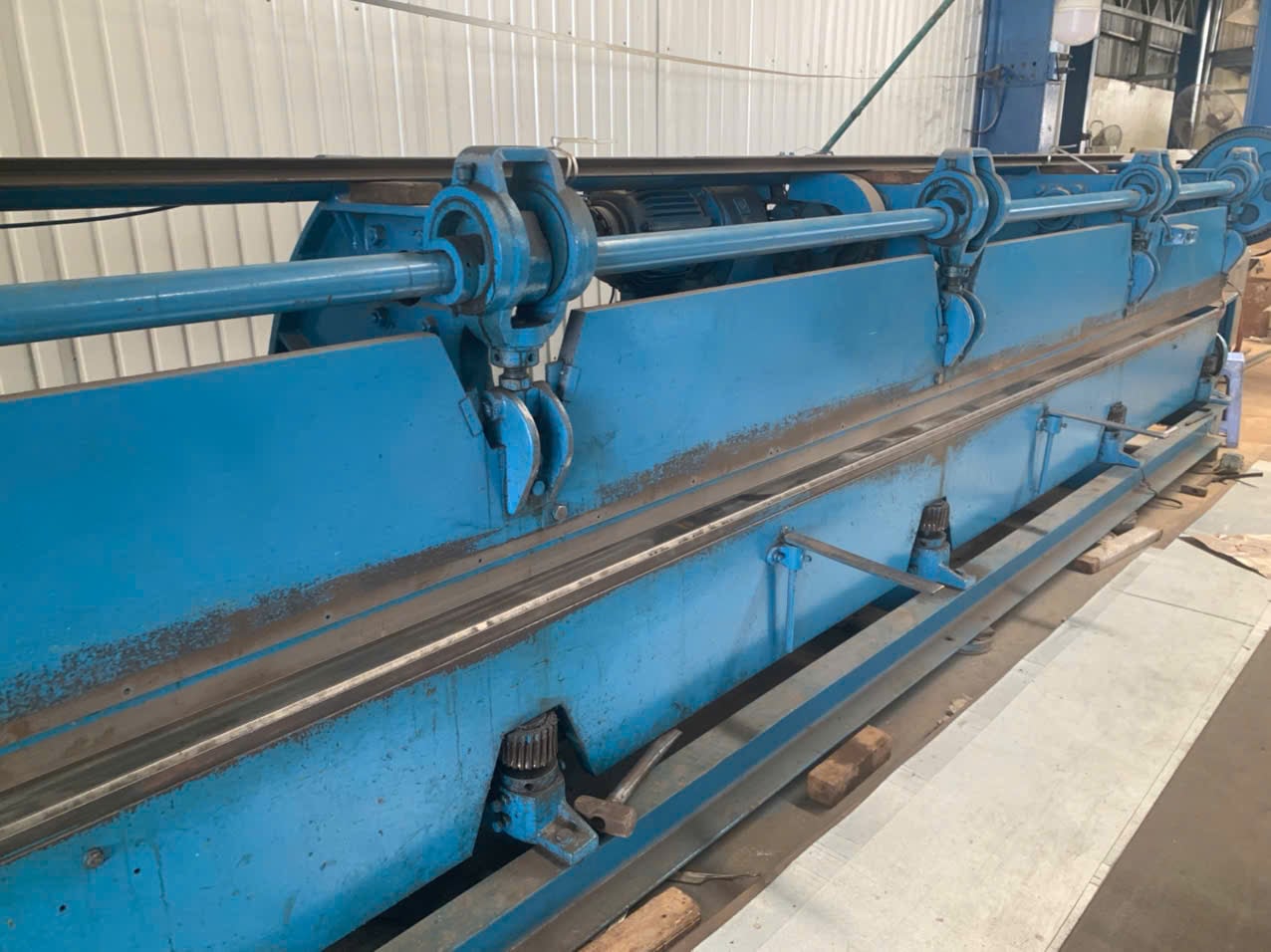
Impressive machines are easy to buy; discipline is not. On the floor, look past the fiber laser and check whether tooling is organized and labeled, whether press brake tooling is stored or piled, whether WIP is identified with traveler cards, and whether the bending and welding stations have posted work instructions. Ask for a live cut or bend on the machine that would run your parts — a factory that hesitates to turn a machine on for you is telling you something.
Quality management: audit records, not certificates
Ask to see the inspection records for whatever shipped yesterday. Real QMS records are slightly messy, handwritten or system-logged, and dated continuously. Records produced for auditors are pristine, uniform, and suspiciously complete. Then pick one finished part in packing and ask them to trace it backward: final inspection → in-process checks → material cert → mill heat number. A factory that completes that chain in twenty minutes has a functioning system. Check the metrology room too: CMM or vision measurement for anything with tight callouts, gauge calibration stickers in date, and a controlled-temperature space if they claim precision work.
How Do I Verify Certifications for Real?
Certificate fraud and certificate stretching both exist in every low-cost sourcing region. Run three checks on any ISO 9001 (or IATF 16949, ISO 14001, ISO 13485) certificate:
- Registrar verification. Look up the certificate number in the issuing body’s online directory (most major registrars operating in Vietnam provide one), or email the registrar. Unaccredited “certificate mills” fail this immediately.
- Entity match. The certified legal name and address must match the factory you visited and the entity on your contract — not a parent company, a trading affiliate, or a second site across town.
- Scope match. Read the scope line. “Design and manufacture of fabricated sheet metal products” is what you want; a scope covering only “trading of mechanical parts” means the cert does not cover manufacturing at all.
How Do I Check References and Run a Pilot?
Ask for export references — then call them
Request two or three references, ideally US or EU customers buying similar part complexity, and actually make the calls. Useful questions: How long have you bought from them? What happened the last time a lot was rejected? How do they behave when a shipment is going to be late — do you hear about it before or after the ship date? A supplier’s handling of its worst month is the only reference data that matters.
Factories may decline to name customers under NDA — that is legitimate. In that case, ask for redacted export declarations or shipping documents showing sustained export volume to your target market.
Run a paid pilot before committing volume
Nothing validates a fabricator like a small real order: 10–50 pieces of a representative part, quoted, produced, and shipped under production conditions with a full first article inspection report. You are testing the entire system — engineering communication, DFM feedback quality, on-time performance, packaging, paperwork — for a few hundred dollars. Score it formally: FAI dimensional results, cosmetic quality against your standard, responsiveness across the time zone, and whether the commercial invoice, packing list, and certificate of origin arrived correct on the first try.

Which Red Flags Should End the Conversation?
- The factory won’t host a visit or live video walkthrough, or keeps rescheduling until “next month”
- Quoted prices far below every other credible bid — the gap usually reappears later as material substitution or quality escapes
- No mill certificates available, or reluctance to commit to material traceability
- Certificates that fail registrar, entity, or scope verification
- The “factory” turns out to be a trading company subcontracting to workshops it won’t identify
- No dedicated QC staff or metrology equipment for the tolerances they quoted
- Perfect sample parts followed by resistance to a documented FAI on production tooling
- Contract entity registered differently from the factory, with vague explanations
One or two yellow flags can be managed with inspection intensity. A pattern of them cannot — walk away while the cost of leaving is still zero.
Supplier Qualification Checklist
- On-site audit completed across all five areas (facility, equipment, quality, workforce, export compliance)
- Machine list verified against the floor; live demonstration on relevant equipment
- Previous-day inspection records reviewed; one part traced back to mill heat number
- Gauge calibration current; metrology matches quoted tolerances
- ISO certificates verified with registrar, entity name, and scope
- Business license and export documentation sighted
- Two references contacted, or export records reviewed in lieu
- Paid capability run completed with approved FAI
- Communication test passed: technical question answered accurately within one business day
- Contract entity, payment terms, and IP protection confirmed before first PO
FAQ
What are the main benefits of sourcing vietnam sheet metal supplier audit: checklist & red flags in Vietnam?
Vietnam offers competitive machine-hour rates, a rapidly modernizing precision supplier ecosystem, relief from Section 301 Chinese punitive tariffs for qualifying goods into the United States, and preferential trade terms under EVFTA and CPTPP. Audited suppliers in the DEWIN network maintain ISO 9001, AS9100, and IATF 16949 certifications.
How does DEWIN ensure quality and dimensional accuracy?
Every manufacturing facility undergoes the rigorous 50-point Dolphin Audit evaluating Quality, Cost, Logistics, Delivery, and Management (QCLDM). Critical dimensions are verified using on-site 3D CMM inspection, optical comparators, and full material test reports (MTRs) before shipment.
What file formats and information are required for a streamlined RFQ turnaround and engineering review?
To generate a binding quotation within 24 hours, submit 3D CAD files in neutral STEP (AP214/AP242) or IGES format alongside 2D PDF technical drawings specifying critical tolerances, surface finishes, thread callouts, and raw material grades.