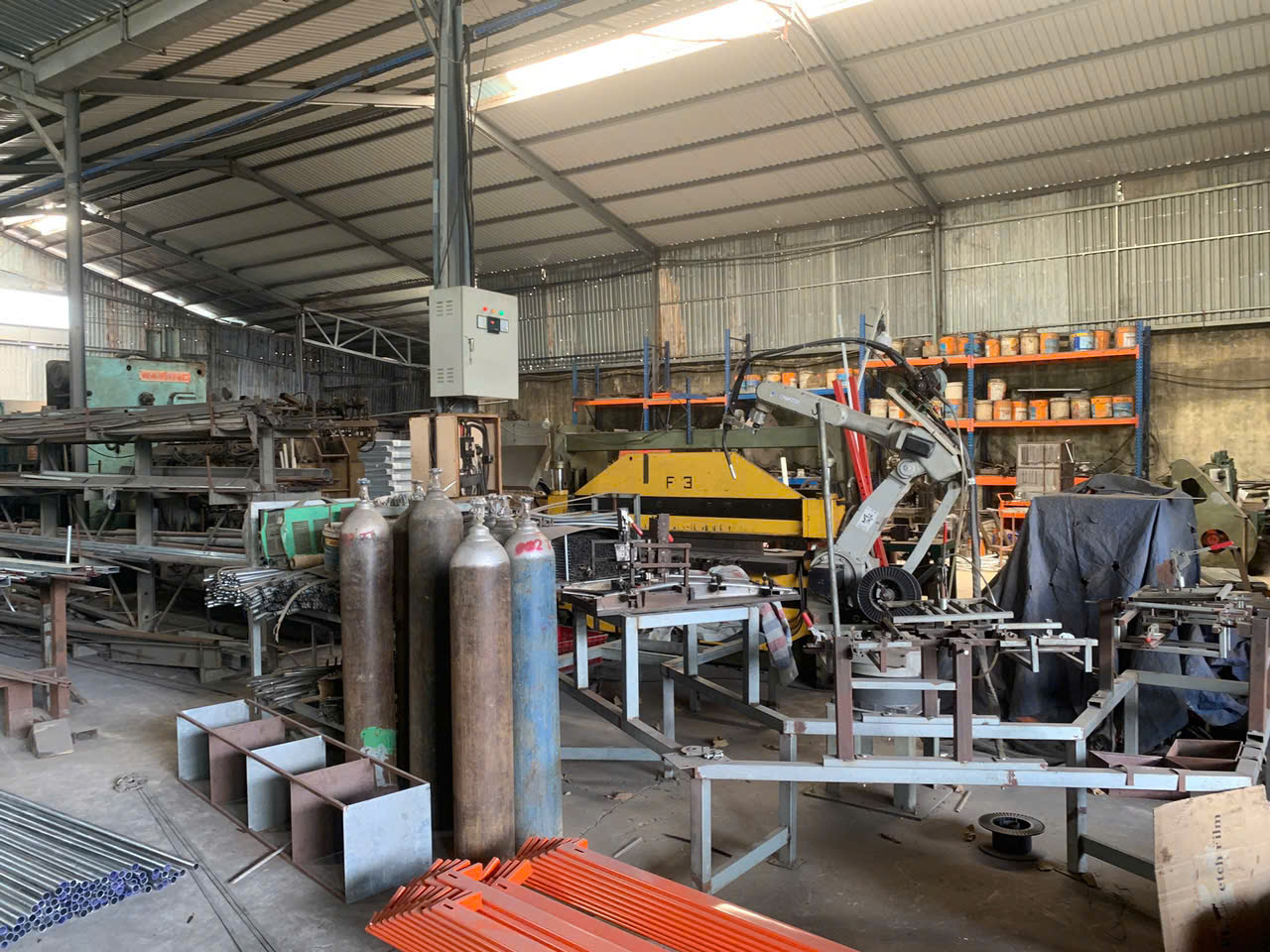
When should buyers choose robotic welding over conventional manual TIG welding for sheet metal enclosures?
Robotic welding outperforms conventional manual TIG welding when high-volume progressive stamping and consistent joint repeatability are required for sheet metal enclosures. Automated cells using OTC or Panasonic robots streamline production for heavy stamping assemblies, monitor arms, desk frames, and automotive brackets while maintaining tight dimensional accuracy.
Key Takeaways
- Robotic welding cells equipped with OTC and Panasonic systems support high-volume sheet metal fabrication alongside progressive stamping presses up to 315T.
- Standard sheet metal enclosure materials include SPCC and SS304 in 2.0 mm to 4.0 mm gauges, integrated with laser cutting and CNC bending.
- Quality inspection relies on 2D/3D tolerance analysis, ZEISS CMM dimensional verification, 240-hour ASTM B117 salt spray testing, and cyclic load testing.
High-volume sheet metal enclosure production requires consistent weld geometry, controlled heat input, and rapid throughput that manual TIG welding struggles to match at scale. Automated robotic welding cells utilizing OTC and Panasonic multi-axis robots maintain precise torch trajectory and arc parameters across complex enclosure seams.
By integrating laser cutting, progressive dies, and high-tonnage stamping presses, automated welding cells reduce labor bottlenecks in production hubs across China and Vietnam. This process integration is critical for commercial hardware, monitor arms, desk frames, and automotive steering brackets.
- 9 OTC and Panasonic robotic welding cells for high-repeatability seam joining
- 33 stamping presses with capacities up to 315T for precision blanking and forming
- Laser cutting integration for complex edge profiles prior to automated assembly

What sheet metal materials and thickness gauges support progressive stamping and robotic welding?
Precision sheet metal enclosure manufacturing supports materials such as SPCC cold-rolled steel and SS304 stainless steel in 2.0 mm to 4.0 mm gauges. High-tonnage progressive stamping presses up to 315T combine with laser cutting and CNC bending to form structural enclosure components before robotic welding.
Precision sheet metal fabrication handles structural materials tailored for industrial safety products, brackets, and structural enclosures. Key raw materials include SPCC cold-rolled steel and SS304 stainless steel in thickness gauges ranging from 2.0 mm to 4.0 mm.
Manufacturing operations pair progressive stamping dies with CNC bending and automated MIG or TIG robotic welding. Components receive surface finishes such as outdoor-grade polyester powder coating designed for demanding operating environments.
- Material selections: SPCC steel and SS304 stainless steel
- Thickness range: 2.0 mm to 4.0 mm sheet metal gauge
- Forming methods: Progressive dies, CNC bending, and high-tonnage pressing
- Surface protection: Outdoor-grade polyester powder coating
How do engineering teams inspect robotic welds and stamped enclosure assemblies?
Engineering teams inspect welded sheet metal assemblies through 2D and 3D tolerance analysis, DFM drawing reviews, and ZEISS CMM dimensional inspection. In-process quality control includes material certs, cyclic load testing, 240-hour ASTM B117 salt spray testing, and 1,500-hour UV powder coat evaluations.
Quality verification begins during early engineering review with pre-quote 2D and 3D tolerance analysis, DFM drawing evaluation, and progressive die design. On the factory floor, resident quality engineers verify weld integrity and structural alignments.
Final verification combines ZEISS CMM 3D dimensional metrology with physical testing labs. Enclosure hardware undergoes rigorous environmental and mechanical verification to ensure compliance with demanding OEM standards.
- ZEISS CMM dimensional inspection and full PPAP Level 3 documentation
- 240-hour ASTM B117 salt spray environmental testing
- 1,500-hour UV powder coat exposure evaluation
- Cyclic load testing for structural frame assemblies

Engineering & Production Specification Matrix
| Process Parameter | Prototype / Short-Run Standard | Production Progressive / Hard-Tool Standard | Verification Method |
|---|---|---|---|
| Linear Dimensional Tolerance | ±0.10 mm to ±0.15 mm (ISO 2768-m) | ±0.03 mm to ±0.08 mm (ISO 2768-f) | Optical 2D/3D CMM & Go/No-Go Check Fixtures |
| Edge Burr Height Limit | ≤ 10% of material thickness | ≤ 5%–8% of material thickness | Digital Micrometer & Cross-Section Audit |
| Material & Coating Traceability | Mill Test Certificate (EN 10204 3.1) | Heat-lot MTC + RoHS/REACH + ASTM B117 Salt-Spray | Spectrometer (OES) & XRF Screening |
| Standard Tooling & Lead Time | Laser + CNC Press Brake (5–10 days) | Progressive / Transfer Die (3–5 weeks T1) | First Article Inspection (FAI) & CPK ≥ 1.33 |
Frequently Asked Questions
What machinery is utilized in high-volume sheet metal stamping and robotic welding facilities?
Production facilities utilize 33 stamping presses up to 315T Aomate capacity, 22 robotic CNC milling machines, 9 OTC or Panasonic welding robots, and dedicated laser cutting equipment.
Which quality controls verify the environmental durability of welded enclosure components?
Durability controls include outdoor-grade polyester powder coating verified through 240-hour ASTM B117 salt spray testing, 1,500-hour UV exposure testing, and cyclic load testing.
How are initial DFM reviews and dimensional standards managed during pre-production?
Engineers perform pre-quote 2D and 3D tolerance analysis, progressive die design, and DFM drawing reviews, followed by ZEISS CMM dimensional reporting and PPAP Level 3 documentation.