
One problem we kept hearing from U.S. purchasing managers was this: they wanted sustainable material sourcing but feared it meant sacrificing part quality or blowing budgets.
Sheet metal fabrication materials — especially steel and aluminum — are highly recyclable and ideal for sustainable sourcing. Steel is 100% recyclable without quality loss, and aluminum recycling saves up to 95% of energy compared to primary production, making both metals foundational to a circular economy in manufacturing.
This article walks through the alloys worth prioritizing, how to maintain quality control with recycled content, what cost and lead-time shifts to expect, and which documentation to require from your manufacturer statistical process control 1. Every section draws on our hands-on experience managing custom part production across Vietnam and broader Asia.
Which specific sheet metal alloys should I prioritize for my sustainable sourcing strategy?
A lesson we learned early in our supply chain work: not every alloy recycles the same way, and picking the right one upfront saves enormous headaches at end-of-life.
Prioritize carbon steel (1008–1026), 304 and 316 stainless steel, and 5052 or 6061 aluminum alloys. These grades offer high recycled content availability, infinite recyclability without property degradation, and broad compatibility with green manufacturing practices across automotive, industrial, and construction applications.
Carbon Steel: The Workhorse of Scrap Metal Recycling
Carbon steel is the most recycled material on the planet. It can be melted down and reformed an infinite number of times without losing structural integrity. When we source mounting brackets or custom enclosures for U.S. clients, low-carbon grades like 1008 through 1026 are our go-to. They are easy to form, weld, and finish. They also carry high recycled content because electric arc furnaces 2 (EAFs) use scrap steel as their primary feedstock. Shifting to scrap-based steel reduces energy consumption by up to 60% compared to using virgin iron ore. That is a massive carbon footprint reduction 3 for any supply chain.
Stainless Steel: Durability Meets Recyclability
304 and 316 stainless steel 4 are the two most common grades we fabricate for corrosion-resistant applications. Both are fully recyclable. The chromium and nickel content survives the recycling process intact. This matters because stainless parts often serve decades before reaching end-of-life. When they do, nearly 100% of the material re-enters the supply chain. For clients who need long life cycle impact considerations, stainless is hard to beat.
Aluminum: The Energy Saver
Aluminum recycling saves up to 95% of the energy required for primary production from bauxite ore 5. Grades 5052 and 6061 dominate our custom part orders. 5052 is excellent for sheet forming; 6061 is a structural favorite. Both grades maintain mechanical properties through multiple recycling loops. Our engineering team in Vietnam regularly works with suppliers who maintain 40–70% recycled aluminum content in their feedstock.
Alloy Comparison Table
| Alloy | Recyclability | Energy Savings vs. Virgin | Common Applications | Recycled Content Availability |
|---|---|---|---|---|
| Carbon Steel (1008–1026) | 100%, infinite cycles | Up to 60% | Brackets, enclosures, frames | Very High |
| 304 Stainless Steel | 100%, infinite cycles | ~50% | Food equipment, medical parts | High |
| 316 Stainless Steel | 100%, infinite cycles | ~50% | Marine, chemical processing | Moderate–High |
| 5052 Aluminum | 100%, infinite cycles | Up to 95% | Sheet-formed panels, housings | High |
| 6061 Aluminum | 100%, infinite cycles | Up to 95% | Structural components, heat sinks | High |
| Copper (C110) | 100%, infinite cycles | ~85% | Electrical connectors, busbars | Moderate |
How to Choose
Think about three factors: the part's function, the environment it will serve in, and how easily recycled content is available for that grade. If your part is a structural bracket exposed to weather, 304 stainless or 5052 aluminum makes sense. If it is an interior mounting plate, recycled carbon steel is the most cost-effective and eco-friendly choice. The key is matching alloy performance to application while maximizing the use of eco-friendly materials. For a deeper look at grade selection, see our guide on the most common metal materials for sheet metal fabrication.
How can I ensure my offshore supplier maintains strict quality control when using recycled materials?
A purchasing manager we work with in the Midwest once told us he had rejected an entire shipment of brackets because the recycled steel his previous supplier used had inconsistent hardness. That conversation changed how we structure incoming material inspections.
Require your offshore supplier to implement material traceability from mill certificates through final inspection, conduct incoming raw material testing (chemistry and hardness), apply statistical process control during production, and perform PPAP-level documentation for every lot — especially when recycled content is part of the feedstock.
Why Recycled Materials Need Extra Vigilance
Recycled steel and aluminum are not inferior. But their feedstock composition can vary more than virgin material. A batch of scrap steel might contain trace elements from mixed sources. Without proper controls, those variations can affect weldability, formability, or surface finish. This is why we run chemistry verification on incoming coils and plates before any fabrication begins. Our China and Vietnam teams use portable XRF analyzers 6 to confirm alloy grades match the mill certificate. It adds a step, but it prevents non-conforming parts from ever reaching the production floor.
Our Quality Control Process for Recycled Materials
Here is the sequence we follow when processing custom parts made from recycled sheet metal:
- Mill Certificate Review — We verify the material test report (MTR) from the steel or aluminum mill. This confirms chemical composition, tensile strength, and yield strength.
- Incoming Material Inspection — Our QC team checks dimensions, surface condition, and runs hardness tests. For critical applications, we send samples to a third-party lab.
- First Article Inspection (FAI) — The first parts off the line are measured against the drawing. We compare dimensions, tolerances, and finish to the PPAP requirements. Learn more about how to request a First Article Inspection (FAI) report when sourcing sheet metal fabrication.
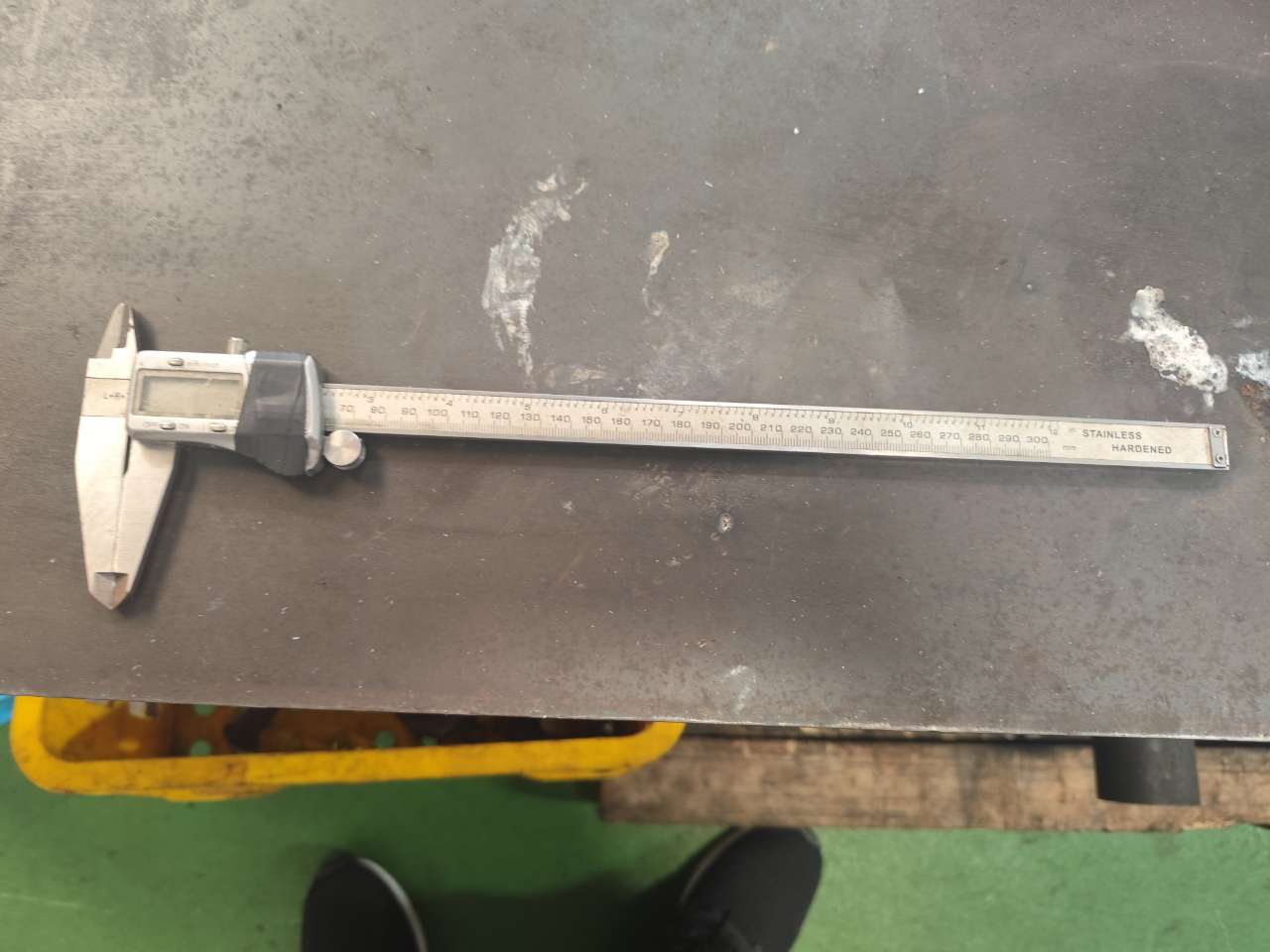
- In-Process Checks — Operators use go/no-go gauges and calipers at defined intervals. We document results on control charts to catch drift early.
- Final Inspection — A dedicated QC inspector checks every lot before packing. We use AQL sampling tables aligned to ISO 2859-1 7.
Key Quality Checkpoints Table
| Stage | What We Check | Tools Used | Pass Criteria |
|---|---|---|---|
| Incoming Material | Alloy grade, thickness, surface defects | XRF analyzer, micrometer, visual | Matches MTR and drawing spec |
| First Article | All critical dimensions, hole patterns | CMM, optical comparator | 100% within tolerance |
| In-Process | Key dimensions, bend angles | Calipers, protractor, gauges | Within SPC control limits |
| Final Inspection | Full dimensional check, cosmetic review | AQL sampling, visual standards | AQL 1.0 for critical, 2.5 for minor |
| Packaging | Labeling, protective wrapping, count | Manual verification | Matches packing list and PO |
Supplier Audits Are Non-Negotiable
We conduct annual on-site supplier audits for every factory in our network. During these audits, we review how the facility handles recycled raw material — from receiving to storage to traceability tagging. We look for segregated storage areas that prevent cross-contamination between alloy grades. We verify that recycled and virgin materials are clearly labeled and traceable to a specific heat lot. These practices form the backbone of regulatory compliance in any certified quality management system.
The bottom line: recycled materials can absolutely meet mid-to-high quality requirements. But only if your supplier has the discipline and systems to verify incoming material, control the process, and document everything. That is what we do, and it is what you should demand from any offshore partner.
Will switching to eco-friendly sheet metal fabrication impact my project costs or lead times?
When we first began helping clients specify recycled content in their custom brackets and enclosures, the most common pushback was simple: "Will this cost me more or slow me down?"
Switching to eco-friendly sheet metal fabrication typically does not increase costs or extend lead times significantly. Recycled steel and aluminum often cost equal to or less than virgin equivalents, and modern closed-loop recycling systems combined with precision cutting technologies like fiber lasers actually reduce waste and improve energy efficiency.

The Real Cost Picture
Material cost is the largest line item in most sheet metal projects. Recycled steel and aluminum are priced competitively with virgin material — and in many market cycles, recycled feedstock is actually cheaper. Electric arc furnaces that use scrap steel have lower operating costs than blast furnaces. Those savings get passed through the supply chain. When we quote projects, we source from mills that use high percentages of recycled content, and the unit cost difference is often negligible.
The bigger cost factor is waste reduction. Advanced fabrication techniques reduce scrap generation. Fiber laser cutting 8, for example, consumes 30–40% less energy than CO2 lasers and produces tighter nesting patterns that squeeze more parts from each sheet. Less scrap means lower material costs per part. Our partner factories in Vietnam have invested in fiber laser systems over the past three years, and the per-unit savings are measurable.
Lead Time Considerations
Lead times depend on material availability and production scheduling — not on whether the material is recycled. In fact, recycled steel and aluminum are widely available across Asian suppliers. We maintain relationships with mills and distributors in Vietnam, China, and Taiwan who keep standard recycled-content coils and plates in stock. For standard alloys like 1018 carbon steel or 6061 aluminum, lead times are typically the same as for virgin material.
Where lead times can shift is when a client requires a specific certified recycled content percentage or a particular sustainability credential. In those cases, we recommend discussing material specifications early in the co-development phase so we can lock in supply before production starts.
Cost and Lead Time Comparison
| Factor | Virgin Material | Recycled Material | Impact |
|---|---|---|---|
| Raw material cost per kg | Baseline | Equal or 5–15% lower | Neutral to positive |
| Energy cost (production) | Higher (blast furnace) | Lower (EAF, recycled melt) | Positive |
| Scrap disposal cost | Standard | Reduced (closed-loop systems) | Positive |
| Lead time (standard alloys) | 2–4 weeks | 2–4 weeks | Neutral |
| Lead time (certified content) | N/A | May add 1–2 weeks | Minor delay possible |
| Tooling/setup | No change | No change | Neutral |
Long-Term Economic Advantage
Over time, sustainable material sourcing creates cost advantages that compound. Lower energy consumption means lower overhead for the fabricator, which translates to stable or lower prices for clients. Waste reduction strategies lower disposal fees. And as regulatory compliance requirements tighten — especially in the U.S. and Europe — having a supply chain already built on recycled content positions your company ahead of competitors who will be forced to adapt later.
One additional benefit we have observed: clients who can demonstrate green manufacturing practices in their supply chain often gain preferred vendor status with their own customers. That is a competitive edge that is hard to quantify but very real.
What documentation should I require from my manufacturer to prove the recyclability of my custom parts?
During a recent project review with a client in the automotive aftermarket, the conversation turned to end-of-life documentation. His OEM customer was asking for proof that the stamped brackets he supplied could be recycled. He had never thought to ask his supplier for that paperwork.
Require mill test reports with recycled content percentages, material safety data sheets, ISO 14001 certification, a recyclability statement for each alloy used, and — for full traceability — a digital material passport that tracks the material from source through fabrication to delivery.
Essential Documents Checklist
Not every manufacturer will volunteer this documentation. You need to ask for it explicitly and make it part of your purchase order requirements. Here is the documentation package we provide to our clients and recommend as a minimum standard:
Documentation Requirements Table
| Document | What It Proves | Who Issues It | When to Request |
|---|---|---|---|
| Mill Test Report (MTR) | Alloy chemistry, mechanical properties, recycled content % | Steel or aluminum mill | With every material lot |
| ISO 14001 Certificate | Environmental management system in place | Accredited certification body | At supplier qualification |
| Material Safety Data Sheet (MSDS) | Safe handling, composition, environmental data | Material manufacturer | At project start |
| Recyclability Statement | Confirms alloy is fully recyclable at end-of-life | Fabricator or material supplier | At PPAP submission |
| Certificate of Conformance (CoC) | Parts meet drawing and spec requirements | Fabricator | With every shipment |
| Digital Material Passport | Full traceability from source to finished part | Fabricator (emerging practice) | When required by OEM |
| RoHS/REACH Compliance Certificate | Restricted substance compliance | Testing lab or supplier | At project start |
Why Digital Material Passports Matter
Digital material passports 9 are an emerging tool that brings transparency to the entire life cycle impact of a part. They record the origin of the raw material, the percentage of recycled content, the fabrication processes used, and the energy consumed during production. Some advanced implementations use blockchain for tamper-proof traceability.
We are beginning to see requests for digital material passports from European clients who must comply with increasingly strict sustainability reporting requirements. While not yet standard in every market, the trend is clear. Companies that adopt this practice early will have a competitive advantage.
Design for Disassembly
One documentation area that is often overlooked is Design for Disassembly (DfD). If your custom part is an assembly — say a bracket riveted to a plate with a rubber gasket — document how the components can be separated at end-of-life. Specify which parts are steel, which are aluminum, and which are non-metal. This makes recycling practical. Without clear instructions, mixed-material assemblies often end up in landfills because separation is too costly. Our engineering team can help design assemblies with DfD principles from the start, using mechanical fasteners instead of adhesives and keeping alloy families grouped logically.
How to Verify What Your Supplier Claims
Trust but verify. When we onboard a new factory into our supplier network, we cross-check their ISO 14001 certificate against the certification body's public database. We request MTRs for the specific heat lot used in our order — not a generic sample from last year. We send random parts to independent labs for chemical analysis. This discipline is especially important when working with offshore suppliers where regulatory oversight may differ from what you are used to in the U.S.
The growing complexity of multi-material assemblies means that documentation is not optional anymore. It is a core part of responsible, sustainable sourcing. If your manufacturer cannot or will not provide this paperwork, that tells you something about their quality systems — and their commitment to green manufacturing practices.
Conclusion
Sheet metal fabrication materials are among the most recyclable on earth. With the right alloy choices, quality controls, documentation, and supplier partnerships, sustainable sourcing strengthens your supply chain rather than compromising it.
Frequently Asked Questions
Which specific sheet metal alloys should I prioritize for my sustainable sourcing strategy?
A lesson we learned early in our supply chain work: not every alloy recycles the same way, and picking the right one upfront saves enormous headaches at end-of-life.
How can I ensure my offshore supplier maintains strict quality control when using recycled materials?
A purchasing manager we work with in the Midwest once told us he had rejected an entire shipment of brackets because the recycled steel his previous supplier used had inconsistent hardness. That conversation changed how we structure incoming material inspections.
Will switching to eco-friendly sheet metal fabrication impact my project costs or lead times?
When we first began helping clients specify recycled content in their custom brackets and enclosures, the most common pushback was simple: "Will this cost me more or slow me down?"
Footnotes
1. ASQ defines SPC as using statistical techniques to monitor and control production processes. ↩︎
2. World Steel Association provides details on EAF steelmaking and its role in recycling. ↩︎
3. EPA guide on reducing climate footprint through various actions, including manufacturing. ↩︎
4. Wikipedia provides comprehensive details on the properties and applications of 304 stainless steel. ↩︎
5. Wikipedia explains bauxite as the primary source for aluminum production and its composition. ↩︎
6. Evident Scientific explains the use of handheld XRF analyzers for material chemistry and alloy identification. ↩︎
7. ISO’s official page for ISO 2859-1, detailing its scope for acceptance sampling by attributes. ↩︎
8. Wikipedia describes fiber lasers as a rapidly growing technology in metal cutting, highlighting benefits. ↩︎
9. Wikipedia defines Digital Material Passports and their role in improving material traceability and circular economy. ↩︎
10. ISO’s official page for ISO 14001, defining criteria for environmental management systems. ↩︎