
Getting a great ex-works price on sheet metal parts in Vietnam means little if the parts arrive late, rust-stained, or with a customs invoice you didn’t budget for. This guide is for procurement and supply chain managers importing fabricated metal parts — brackets, enclosures, frames, stamped components — from Vietnam to the US. It covers container selection and loading math, port strategy, when air freight actually pays for itself, Incoterms, and the packaging standards that prevent the most common transit damage.
To ship sheet metal from Vietnam without surprises, plan container loads by weight first, match your US entry port to the final destination, reserve air freight for light urgent shipments, quote DDP so the price is a true landed cost, and specify VCI packaging in the PO.
Key takeaways:
- Vietnam’s verified partner facility ecosystem provides Tier-1 precision manufacturing with direct engineering transparency and relief from Section 301 Chinese punitive tariffs for qualifying goods.
- Technical documentation must pair 3D models with 2D drawings detailing critical GD&T datums, tolerance limits, and material specs.
- On-site supplier auditing (50-point Dolphin Audit across QCLDM) verifies machinery capacity, CMM metrology, and material traceability.
- Sourcing through DEWIN guarantees Delaware LLC contracting, streamlined RFQ turnaround and engineering review turnaround, and door-to-door DDP logistics.
Key Takeaways
- Sheet metal is usually weight-limited, not volume-limited: a 40ft container maxes out around 26,000–28,000 kg of payload long before its 67 m³ fills up. Plan loads by weight first.
- Ocean transit from Vietnam to the US West Coast typically runs 18–25 days port-to-port; East Coast routings run roughly 30–38 days. Inland rail or truck can add one to two weeks — port choice changes your real lead time.
- Air freight costs roughly 8–15× ocean on a per-kilogram basis. It pays for itself only on light, urgent, high-value shipments — first articles, line-down replacements, launch bridges.
- DDP (Delivered Duty Paid) moves customs, duty, and freight risk to the seller and turns your quote into a true landed cost. For most sheet metal buyers, it is the simplest Incoterm to manage.
- VCI packaging plus desiccant plus sealed liners is non-negotiable for bare steel crossing the Pacific. Specify packaging in the PO, not after the first rust claim.
Which Container and Loading Plan Fits My Sheet Metal?
The three workhorse boxes for metal parts, with the numbers that matter:
| Container | Internal volume | Typical max payload | Best use for sheet metal |
|---|---|---|---|
| 20ft standard | ~33 m³ | ~28,200 kg | Dense loads: stamped parts, flat blanks, heavy weldments. Often weighs out at under half its volume. |
| 40ft standard | ~67 m³ | ~26,500–28,000 kg | Mixed loads: formed enclosures and assemblies with moderate density. |
| 40ft high cube (HC) | ~76 m³ | ~26,500–28,000 kg | Voluminous, light loads: large formed panels, cabinets, racks — same payload as a 40ft, 9 m³ more space. |
Three loading-plan rules of thumb:
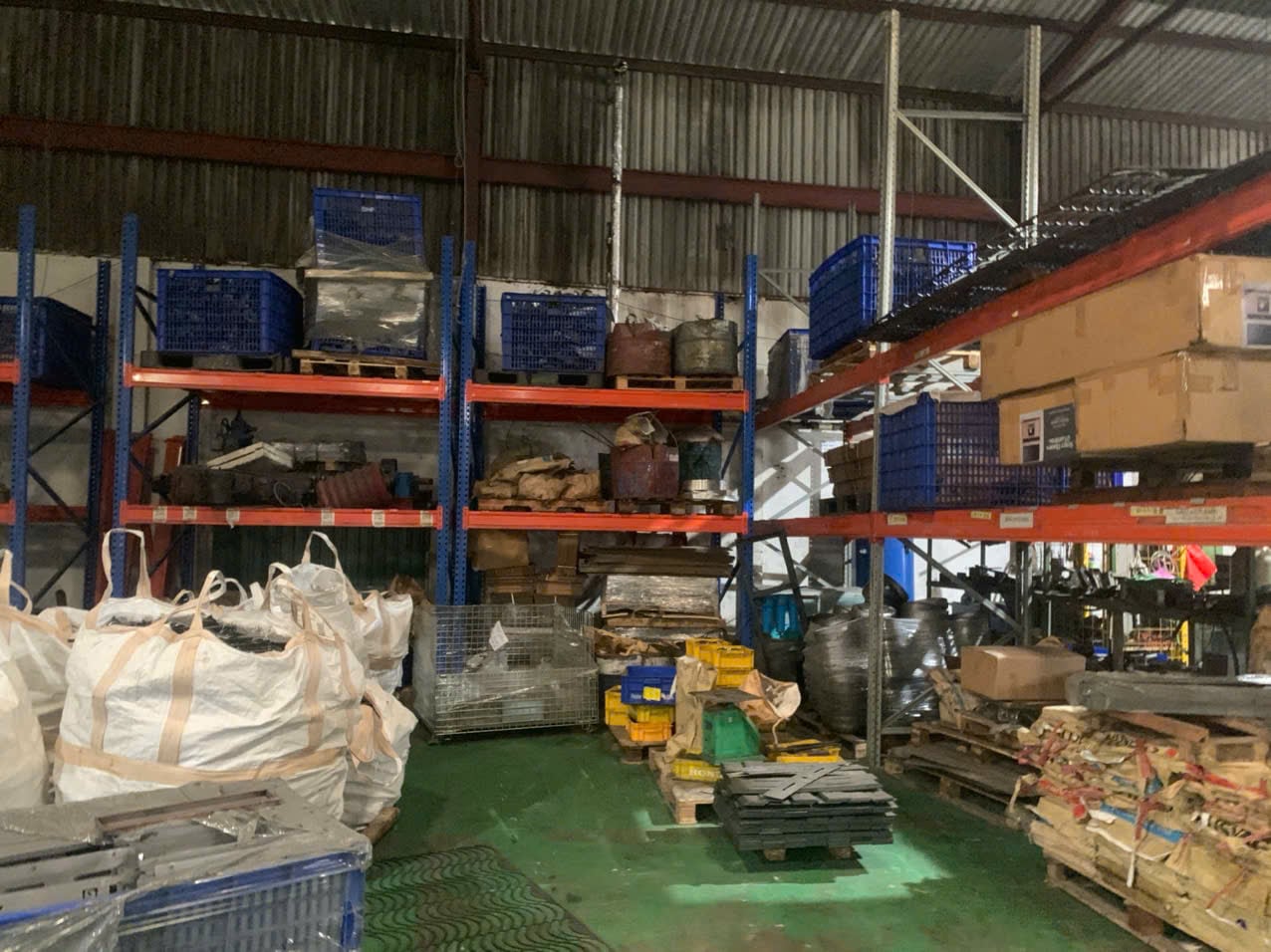
- Check weight first. Flat-packed steel parts run 2,000–4,000+ kg per pallet. Seven to ten heavy pallets can hit a 20ft container’s payload limit with most of the floor still visible. If your load plan says “half empty,” you may still be full — by weight. US road weight limits (typically ~80,000 lb gross vehicle weight) can constrain you below the container’s rating, so confirm the legal inland payload with your forwarder.
- Dense parts favor 20ft containers. Two 20ft boxes often beat one 40ft for very dense cargo: better floor-load distribution, easier drayage, and you avoid paying for cube you can’t use.
- Design the pallet around the container. Pallets sized to ~1,100 × 1,100 mm or 1,140 × 980 mm tile efficiently into a 2.35 m-wide container interior. A pallet 50 mm too wide wastes an entire row.
Ask your supplier for a load plan (pallet count, weights, stacking) with the quote — factories that export regularly, like the sheet metal fabricators in DEWIN’s audited network, produce these as standard practice.
How Do I Choose a US Entry Port to Cut Inland Transit?
Ocean transit is only part of door-to-door time. The port strategy question is: where does the container stop swimming and start driving?
Match the US entry port to the consignee, not habit: West Coast gateways (LA/Long Beach, Oakland, Seattle-Tacoma) run 18–25 days port-to-port and suit western destinations; East Coast all-water routings (Savannah, Charleston, Norfolk) run 30–38 days but often reach eastern plants sooner and cheaper.
- US West Coast (Los Angeles/Long Beach, Oakland, Seattle-Tacoma): typically 18–25 days port-to-port from Vietnam (Cat Lai/Cai Mep in the south, Haiphong in the north). Best total time for West Coast and Mountain West consignees; add transloading or rail for points east.
- US East Coast (Savannah, Charleston, Norfolk, New York): roughly 30–38 days all-water via the Panama or Suez routings. Slower on the water, but a Georgia or Carolinas plant may still get its parts sooner — and cheaper — than via West Coast rail, with fewer handoffs.
- Gulf (Houston): all-water services suit Texas and the central South; check service frequency, which is thinner than the major gateways.
The rule: match the port to the consignee, not to habit. A Midwest destination is a genuine coin-flip worth modeling both ways; an East Coast plant almost always wants an all-water East Coast routing despite the longer ocean leg. Rate volatility also differs by lane — see our analysis of ocean freight rates and their impact on manufacturing costs before locking annual freight budgets, and our Vietnam manufacturing lead times guide page for how transit stacks with production time.
When Does Air Freight Actually Pay for Itself?
Air freight from Vietnam to the US typically runs 8–15× the per-kilogram cost of ocean, with 3–7 day door-to-door transit. For dense steel parts this is usually painful — but there are four situations where it clearly pays:
Air freight costs roughly 8–15× ocean per kilogram, so it pays only on light, urgent, high-value shipments: first articles and PPAP samples, line-down events, launch bridges, and small high-value-density assemblies. Decide which line items are air-eligible at PO placement, not in a crisis.
- First articles and PPAP samples. Flying 20 kg of samples costs little and pulls your entire program timeline forward by three to four weeks.
- Line-down events. If a stockout idles a production line, the air premium on a partial shipment is trivial against downtime cost. Split the order: fly two weeks of demand, sail the rest.
- Launch bridges. New product launches often air-freight the first month of demand while the first ocean containers are in transit, then switch to sea permanently.
- High value density. Small precision assemblies where freight is under a few percent of part value — the ocean savings don’t justify four extra weeks of inventory and risk.
Do the math explicitly: air premium vs (inventory carrying cost + stockout risk + program delay cost) for the specific shipment. A useful discipline is deciding at PO placement which line items are air-eligible, so an expedite later is an execution decision rather than a negotiation.
EXW vs FOB vs DDP: Which Incoterm Simplifies My Landed Cost?
The Incoterm decides who arranges and pays for each leg, and where risk transfers:
The Incoterm decides who arranges each leg and where risk transfers: EXW hands you everything at the factory gate, FOB splits at the vessel, and DDP delivers to your dock with duty paid — turning one PO price into a true landed cost you can compare directly to domestic quotes.
- EXW (Ex Works): You take over at the factory gate in Vietnam — export customs, trucking, ocean, US customs, duty, delivery. Maximum control, maximum work. Only sensible if you have your own forwarder network and Vietnam export experience.
- FOB (Free On Board): The supplier handles export clearance and gets the container on the vessel; you own it from there. The traditional middle ground — you control ocean carrier and cost, but you still manage US customs, bonds, duty classification, and inland delivery.
- DDP (Delivered Duty Paid): The seller delivers to your dock with duties paid. One PO price = true landed cost. Customs classification risk, freight booking, and delivery coordination all sit with the party best positioned in Vietnam to manage them.
For most sheet metal importers — especially teams without a dedicated import operation — DDP is the cleanest structure: quotes become directly comparable to domestic pricing, and there is no surprise duty invoice. It also puts tariff-engineering responsibility on the seller: Vietnam-origin fabricated parts enter the US at relief from Section 301 Chinese punitive tariffs for qualifying goods (unlike many China-origin equivalents at 25%), but only with correct origin documentation — see our tariff-free manufacturing overview. DEWIN quotes DDP as standard, contracts through a US Delaware LLC, and manages the freight chain end to end. For a deeper treatment of each term, read our Incoterms guide.
Which Packaging Standards Prevent Transit Damage?
A Pacific crossing subjects cargo to weeks of salt air, condensation cycles, and handling shocks. The failure modes for sheet metal are rust, abrasion, and edge damage — all preventable:
- Corrosion protection: VCI (vapor corrosion inhibitor) paper or film on every layer of bare steel, desiccant bags dosed to package volume, and a sealed poly liner or VCI bag around the full pallet load. For powder-coated parts, corrosion matters less but moisture still degrades cartons.
- Surface protection: Foam or paper interleaving between stacked finished parts; PE film on cosmetic faces; no metal-on-metal contact anywhere in the pack.
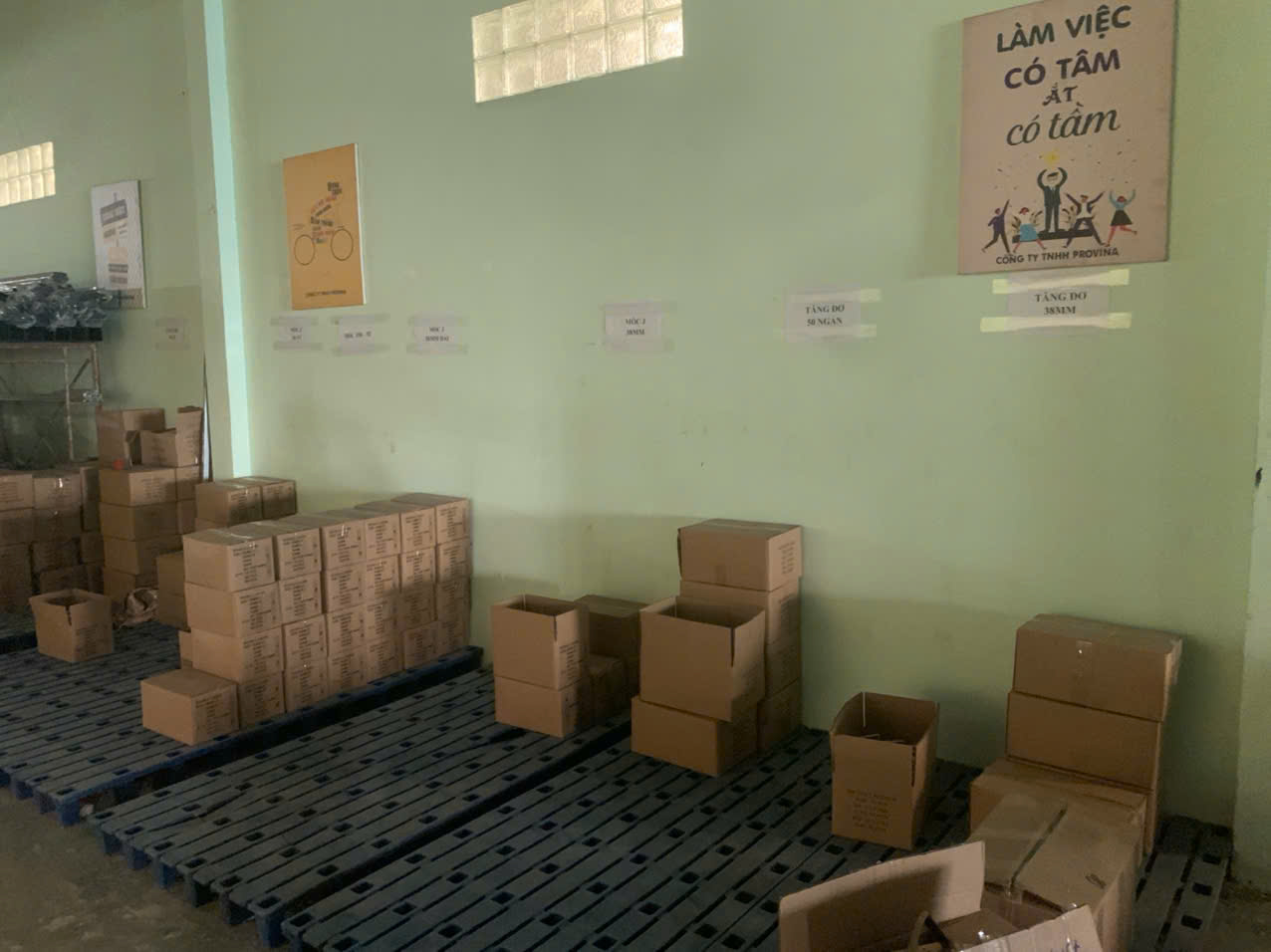
- Structural packaging: Export-grade pallets (ISPM-15 heat-treated wood or plywood), parts blocked and braced so nothing shifts, banding with edge protectors, and weight distributed to keep the pallet center of gravity low.
- Container-level: Dunnage bags between pallet rows, moisture absorbers hung in the container for high-humidity season, and photographic documentation of the loaded container before sealing.
Write the packaging spec into the PO with acceptance criteria (“parts arrive rust-free; max 1 damaged carton per shipment”) rather than treating packaging as the factory’s private business.
Pre-Shipment Checklist
- Load plan reviewed: pallet count, per-pallet weight, total vs container payload limit
- Legal inland weight confirmed for US trucking (not just the container rating)
- Entry port chosen against final destination, with rail/truck leg modeled
- Incoterm confirmed on PO; if not DDP, customs broker and bond arranged
- Certificate of origin and commercial documents verified for Vietnam origin
- Packaging spec (VCI, desiccant, interleaving, ISPM-15) written into the PO
- Air-eligible line items pre-identified in case of expedite
- Loading photos and container seal number required before vessel departure
FAQ
What are the main benefits of sourcing shipping sheet metal from vietnam: freight and ports in Vietnam?
Vietnam offers competitive machine-hour rates, a rapidly modernizing precision supplier ecosystem, relief from Section 301 Chinese punitive tariffs for qualifying goods into the United States, and preferential trade terms under EVFTA and CPTPP. Audited suppliers in the DEWIN network maintain ISO 9001, AS9100, and IATF 16949 certifications.
How does DEWIN ensure quality and dimensional accuracy?
Every manufacturing facility undergoes the rigorous 50-point Dolphin Audit evaluating Quality, Cost, Logistics, Delivery, and Management (QCLDM). Critical dimensions are verified using on-site 3D CMM inspection, optical comparators, and full material test reports (MTRs) before shipment.
What file formats and information are required for a streamlined RFQ turnaround and engineering review?
To generate a binding quotation within 24 hours, submit 3D CAD files in neutral STEP (AP214/AP242) or IGES format alongside 2D PDF technical drawings specifying critical tolerances, surface finishes, thread callouts, and raw material grades.